The Earth speaks — are we listening? Stories, reflections, and warnings from a world on fire. This category unites climate justice, ecological thinking, and our mythic relationship to the living world.
What I actually meant to search for was the Agora Report.
It turned out to be one of those happy accidents that changes how you think.
Because the ancient Greek word agora means far more than a marketplace.
The Agora was where commerce happened.
It was where ideas were exchanged.
Where citizens debated.
Where philosophy emerged.
Where democracy was practiced—not merely through voting, but through conversation.
The Agora was where a society paid attention to itself.
Crisis of Consciousness
Over the past month I have read four very different reports. They came from different organizations, different disciplines, and different political perspectives. Yet they all seem to be describing the same crisis.
The report showing roughly $79 trillion transferred upward since 1975 is astonishing.
Democracy cannot flourish when economic power becomes radically concentrated.
People lose not only wages.
They lose agency.
The Agora report shows how fewer and fewer citizens possess real influence affecting the lives of millions, while the RAND report documents how a discrete few have accumulated billions by bypassing tax regulations and bribing politicians so that they pass policies that are favorable to them. This becomes a power, as we are witnessing now, more powerful than governments themselves.
RAND shows how roughly $79 trillion transferred upward since 1975
III. Climate
Years ago, while writing Sapience, one of my characters reflected:
“Climate Change happened faster than anyone anticipated, even the most ardent climate scientist.“
Later she observes:
“Multis don’t suffer, and so they never learn.”
“In the end, people came to understand that it wasn’t the climate that needed changing, it was human consciousness.“
I wrote these words more than a decade ago. Now, as we enter the hottest summer yet recorded in human history, her reflections ring more true than fictional.
The Garden is an individual’s mind space and is where consciousness is cultivated. The Agora is where individual consciousness meet to create a shared reality.
Recent climate reports, including the landmark Global Tipping Points report and studies published in journals like One Earth, indicate we are rapidly crossing thresholds for irreversible ecosystem collapse. While some systems—such as widespread coral reefs—have passed a point of no return, scientists emphasize that every fraction of a degree matters to prevent cascading “hothouse Earth” scenarios.
Recent scientific reports and analyses highlight several critical factors regarding the “point of no return”:
The 1.5°C Threshold: For the first time, a three-year period breached the critical 1.5-degree limit. Crossing this threshold is triggering cascading consequences that cannot be reversed on human timescales.
Ecosystem Collapse: Warm-water coral reefs are undergoing an almost unstoppable die-off, marking Earth’s first major climate tipping point. Additionally, systems like the Amazon rainforest and the West Antarctic ice sheets are at risk of irreversible changes if warming and deforestation continue.
Hothouse Earth Trajectory: A study published in One Earth highlighted that continued heating could trigger climate feedback loops, locking the planet into a “hothouse Earth” state. While this points to potentially irreversible transitions, scientists urge that immediate cuts to fossil fuel emissions are still vital to mitigate further damage.
Point of no return: a hellish ‘hothouse Earth’ getting closer, scientists say; Feb 11, 2026, The Guardian — https://www.theguardian.com/environment/2026/feb/11/point-of-no-return-hothouse-earth-global-heating-climate-tipping-points
Are We Approach the Point of No Return for Irreversible Climate Damage? April 2026, DailyMotion — https://www.dailymotion.com/video/xa30p8s
Climate tipping points are being crossed, scientists warn ahead of COP30; by Alison Withers, Oct. 13, 2025, Reuters — https://www.reuters.com/sustainability/cop/climate-tipping-points-are-being-crossed-scientists-warn-ahead-cop30-2025-10-12/
A point of no return on climate,Rebecca Speare-Cole , 13th October 2025, The Ecologist — https://theecologist.org/2025/oct/13/point-no-return-climate
Overshoot: The World Is Hitting Point of No Return on Climate, Fred Pearce, Jan 28, 2026, YaleEnvironmant360 — https://e360.yale.edu/features/1.5-degrees-tipping-points
IV. Getting Rid of Democracy When It Interferes with Profits
The last report forms the last corner of the Public Square. It is the culmination of the three other reports that shows how the shared space of governance, justice, and reality can dissolve faster than it takes to build and maintain them. The report by More Perfect Union about Peter Thiel and other tech lords to circumvent traditional government systems and taxation so that they can mover faster, break things, and make more money.
Not because Peter Thiel is uniquely evil.
Rather because it illustrates a philosophical endpoint.
If democracy becomes inconvenient…
replace democracy.
Replace governments with investors.
Replace citizens with customers.
Replace constitutions with contracts.
Replace public accountability with shareholder returns.
That’s not merely an economic change.
It’s a change in consciousness.
In Sapience: The Moment Is Now, massive Multinationals rule the world after it Falls over the Climate Cliff
More Perfect Union, a progressive nonprofit newsroom, actively reports on the expanding power of corporate monopolies, billionaire-backed “corporate cities” (like “network states” or “freedom cities”), and corporate land grabs. They investigate how massive tech companies and billionaires are attempting to bypass federal and local regulations to build their own corporate-governed enclaves.
Their reporting uncovers how these corporate states threaten traditional democratic governance, labor rights, and working-class communities.
Key Reporting Themes
“Freedom Cities” & Network States: They track how wealthy investors attempt to establish special development zones where corporations circumvent federal regulations (e.g., bypassing the FDA or EPA) to test unproven technologies.
Private Governance: Their investigations explore the threat of master-planned, privately governed corporate cities—like the billionaire-backed California Forever project—and how they disenfranchise residents by placing civic infrastructure into private hands.
Corporate Dominance & Water Rights: Reporting covers how Big Tech data centers (e.g., Amazon, Google) drain local municipal resources, such as in Indiana and Virginia, while receiving massive tax subsidies.
Worker Exploitation: They highlight specific instances where companies construct massive, lightly regulated industrial zones without proper permits or environmental oversights, directly harming the health and living conditions of surrounding working-class neighborhoods.
Sources:
We Uncovered The Master Plan That Peter Thiel Doesn’t Want You To See; June 2026, https://www.youtube.com/watch?v=6iLf2h_fo-w&t=290s
I Live Next To Amazon’s Largest Data Center. They’re Stealing Our Water, https://www.youtube.com/watch?v=jjkaYyysYhA
I Worked At A Google Data Center: What I Saw Will Shock You. https://www.youtube.com/watch?v=wLX_w0TtBpY
We Went to the Town Elon Musk Is Poisoning. https://www.youtube.com/watch?v=3VJT2JeDCyw
This Is the First American City That Will Run Out of Water. https://www.youtube.com/watch?v=2QAARB4bNTE
More Perfect Union (media organization) — https://en.wikipedia.org/wiki/More_Perfect_Union_(media_organization)
A lobbying group in the US proposes the creation of corporate governed “freedom cities” — https://www.reddit.com/r/Futurology/comments/1j9o9zc/a_lobbying_group_in_the_us_proposes_the_creation/
Bearing Witness
Sustain the Flame – Full (Best Version) Women’s March on Washington 2017
For years I thought I was documenting history.
But recently, I have come to realize that perhaps history was documenting me.
The thousands of hours spent livestreaming protests, interviewing strangers, watching movements rise and fall—they were changing my own consciousness.
At the time, I thought the work itself was the destination.
Now I suspect it was the apprenticeship.
The streets of Washington became my classroom. I witnessed hope and fear, courage and anger, celebration and grief. I watched strangers embrace, strangers argue, and strangers discover common purpose. I learned that democracy is far more than elections or institutions—it is a living relationship between people, sustained only when they continue showing up for one another.
Looking back, I realize I wasn’t simply collecting footage. I was learning to pay attention.
Not the kind of attention demanded by social media or the twenty-four-hour news cycle, where each day erases the one before it. I was learning a quieter form of attention—one that searches for patterns instead of headlines, asks questions before reaching conclusions, and recognizes that every event is part of a much larger story.
That realization has also softened one of my disappointments. Recently, I found myself wishing that the years I spent documenting these moments had been more widely recognized. But recognition was never the true gift those years offered me. The gift was perspective. They prepared me to see connections that I could not have seen otherwise.
Today, as I read studies about democracy, economic inequality, climate disruption, and the growing influence of corporate power, I no longer see separate stories. I see a single tapestry woven from countless threads. Each report illuminates a different part of the same pattern.
Perhaps that is what the ancient Greeks understood when they gathered in the Agora. It was never merely a marketplace or a public square. It was a place where citizens learned to think together—to listen, to question, and to cultivate the quality of attention that democracy requires.
Our modern Agora may no longer be a stone courtyard in Athens. It is scattered across books, documentaries, research reports, conversations, podcasts, and yes, even the streets where ordinary people gather to make their voices heard.
The question is not whether the Agora still exists.
The question is whether we are willing to enter it with curiosity rather than certainty, understanding rather than performance, and wisdom rather than outrage.
Because democracies do not rise or fall solely in legislatures or courtrooms.
They rise or fall first in the quality of our collective consciousness.
Playlist of Bearing Witness to a Decade of Documenting Changes in America
In thinking about an archetype for this blog, I settled on The Steward, specifically The Steward of the Agora, the collective space where ancient Greeks came to share ideas and discuss topics important to the community and times.
Most people think they participate in democracy every few years.
They vote in an election, follow the news, argue with relatives over the holidays, and hope the people they elect will make good decisions.
But there is another voting booth we visit almost every day.
The grocery store.
The pharmacy.
The hardware store.
The department store.
The gas station.
The coffee shop.
Every purchase we make sends a signal into the economic ecosystem around us. Most of us don’t think about it because modern life is already exhausting enough. We have jobs to work, bills to pay, children to raise, meals to prepare, and endless responsibilities competing for our attention.
We are trying to survive.
Yet even while simply trying to survive, we are participating in a vast system of incentives, investments, and influence that extends far beyond the products we place in our shopping carts.
That realization became the inspiration for a new project I call The Civic Ledger.
The Hidden Vote & The Food We Eat
Beyond Products
When most people buy a loaf of bread or a package of coffee, they are not buying a political ideology.
They are buying lunch.
They are feeding their families.
They are solving an immediate problem.
Yet the companies that manufacture, distribute, and sell those products often take the profits generated from those purchases and reinvest them into a wide variety of activities:
lobbying efforts
political action committees
trade organizations
environmental initiatives
worker programs
shareholder dividends
community investments
civic advocacy
In other words, our purchases don’t stop at the cash register.
They continue their journey long after the receipt is thrown away.
The question becomes:
Where do they go?
Where Does the Money Go?
Antisocial Investments
The first branch of The Civic Ledger explores what I call Antisocial Investments.
These are organizations that have been connected through publicly documented lobbying, political spending, executive donations, or influence networks to activities that may undermine democratic institutions, labor protections, environmental stewardship, healthcare access, or economic fairness.
The purpose of this work is not to create villains.
Reality is rarely that simple.
The goal is awareness.
Many consumers know more about the ingredients in their breakfast cereal than they know about the political and economic systems their purchases help support.
The Antisocial Investments series attempts to make some of those hidden systems visible.
It functions less like a blacklist and more like a map.
A map of influence.
A map of power.
A map of where money flows after it leaves our hands.
A giant barcode city dominates the horizon.
Prosocial Investments
But maps should not only reveal dangers.
They should also reveal possibilities.
That realization led to the second branch of the project:
Prosocial Investments.
While researching corporate influence, I began discovering businesses that were experimenting with different ways of organizing economic life.
Some were cooperatives.
Some were employee-owned.
Some invested heavily in environmental stewardship.
Some prioritized worker well-being.
Some supported democratic participation.
Others remained politically neutral while focusing on strengthening local communities.
These organizations are not perfect.
No organization is.
But they represent something important:
Alternatives.
They remind us that businesses are not natural forces like hurricanes or earthquakes.
They are human creations.
And human creations can be designed differently.
The Turning Point
The Living Civic Garden
As the project evolved, I found myself moving away from thinking about corporations as isolated entities and toward thinking about them as participants in an ecosystem.
That led to a new image:
The Living Civic Garden.
In a healthy garden, many different plants contribute to the flourishing of the whole.
Some strengthen the soil.
Some attract pollinators.
Some provide shade.
Some nourish the community.
Likewise, healthy societies depend on many different forms of contribution.
Cooperatives distribute ownership.
Employee-owned businesses distribute wealth.
Independent enterprises strengthen local economies.
Community-focused organizations reinvest in neighborhoods.
Environmentally responsible companies help preserve the conditions necessary for future generations.
Each contributes something unique to the civic ecosystem.
The question is not whether any company is perfect.
The question is whether it helps cultivate healthier soil.
The Living Civic Garden
A New Symbol System
To help visualize these patterns, I developed a symbolic language for The Civic Ledger.
🟩 Democracy / Civic Engagement
🔵 Labor / Worker Well-Being
🌎 Environmental Stewardship
⚖️ Civil Rights / Inclusion
🤝 Community Investment
🔶 Employee Ownership
🟣 Cooperative Ownership
🏡 Independent Enterprise
⚪ Political Neutrality
🟨 Mixed Record
These symbols are not intended as moral absolutes.
They are guideposts.
A shorthand language for exploring how different organizations interact with society.
Together they create a civic map hidden within the marketplace.
Every Dollar Is a Seed | “Consumption is never entirely passive.”
Every Dollar Is a Seed
Perhaps the most important lesson I have learned while creating this project is that consumption is never entirely passive.
Every purchase helps reinforce a system.
Every purchase strengthens incentives.
Every purchase contributes, however slightly, to the world that emerges tomorrow.
This does not mean we should obsess over every transaction.
Nor does it mean that ordinary people bear sole responsibility for systemic problems.
The systems we inhabit are often stacked against us in ways we neither created nor control.
But awareness matters.
Awareness creates choice.
And choice creates possibility.
A dollar is never just a dollar.
It is a signal.
It is a vote.
It is a seed.
The question is not whether we are planting seeds.
The question is:
What kind of garden are we helping grow?
What Kind of Garden Are We Helping Grow? “Every dollar is a signal. A vote. A seed.”
A Tale of Two Emperors — Separated by Two Millennia, United by the Same Wound
Burn the World Down: Nero-Trump Split Image
History does not repeat. But it rhymes — in fire, in spectacle, in the slow rot of institutions hollowed out by one man’s bottomless need for adulation. And sometimes in how narcissistic leaders will Burn the World Down around them… literally and metaphorically.
Nearly two thousand years apart, two figures emerge from the same psychological mold: the narcissistic ruler who mistakes performance for governance, who sees the state not as a trust to be honored but as a stage to be owned. One wore a laurel wreath and played the lyre while Rome smoldered. The other wears a red cap and posts to social media while democratic norms crumble. The costumes differ. The pathology is identical.
The Performer on the Throne
Burn the World Down: The Performer on the Throne
Nero did not govern Rome so much as perform it. He fancied himself a great artist — a singer, a poet, a charioteer — and he demanded that the world reflect his self-image back to him. He built the Domus Aurea, his Golden House, a palace of staggering extravagance stretching across 300 acres of Rome’s heart, complete with a 30-meter rotating golden statue of himself as the sun god. The message was unsubtle: I am not merely emperor. I am divine. I am the light.
Donald Trump understands this language fluently. Before he ever entered politics, he spent decades erecting towers and stamping his name on them in gold letters as tall as a man. Trump Tower. Trump Plaza. Trump International. The branding was never about real estate. It was about the same compulsion that drove Nero to commission that colossal statue — the raw, unquenchable hunger to see one’s own name reflected in the skyline of the world. When he returned to the White House, he renamed the Gulf of Mexico. He proposed putting his face on Mount Rushmore. The Golden House has merely moved to Mar-a-Lago.
Burn the World Down: Nero’s Opulent Domus Aurea (Made by Genolve)Burn the World Down: Rendering of Trump’s Golden Ballroom
Scapegoats & the Fire
When Rome burned in 64 CE — whether by accident, negligence, or Nero’s own hand remains debated — the emperor needed someone to blame. He chose the Christians: a small, strange, already-suspect minority who could be painted as enemies of Rome, subverters of tradition, threats to the social order. It did not matter whether they were guilty. What mattered was that the crowd needed a villain, and Nero needed the crowd’s attention redirected.
The mechanism is ancient. It is also contemporary.
From the opening day of his first campaign — “They’re bringing drugs. They’re bringing crime. They’re rapists” — Trump has governed by the same principle Nero understood instinctively: a frightened, angry populace is a manageable one, provided you give them an enemy. Immigrants. Refugees. Muslims. The “deep state.” Transgender athletes. The targets rotate, but the function never changes. Find the outsider. Name them the source of your people’s pain. Watch the crowd roar its approval. This is not politics. This is the oldest magic trick in the authoritarian’s repertoire, and Nero would have recognized it immediately.
Burn the World Down — Nero and Trump: The Great Fire of RomeBurn the World Down: Christian Scapegoats — Triumph of Faith-Christian Martyrs in the Time of Nero by the French artist Eugène Romain Thirion
Burn the World Down: Stephen Miller’s War on Democracy, Trump’s Illegal Immigration Policies & the Scapegoating of Innocent People
The Removal of the Inconvenient
Here is where the parallel becomes most chilling — and most instructive.
Nero did not consolidate power in a single dramatic coup. He did it incrementally, by removing, one by one, everyone who might restrain him, challenge him, or remind him of his obligations to something larger than himself.
First came Britannicus, his younger stepbrother and rival to the throne — poisoned at a dinner party. Then his mother Agrippina, who had made him emperor and believed she could control him — assassinated on his orders when she proved inconvenient. Then Claudia Octavia, his first wife, exiled and executed to clear the path for Poppaea. Then, eventually, Poppaea herself — allegedly kicked to death in a rage. And throughout it all, the court filled not with wise counselors but with flatterers, yes-men, and sycophants who told Nero only what he wished to hear.
Trump has not murdered people. Let that distinction stand clearly. But he has murdered institutions with the same methodical incrementalism. The State Department, hollowed. The EPA, defanged. The Department of Education, targeted for dissolution. Inspectors general — the internal watchdogs of democratic governance — fired en masse in the middle of the night. Judges who rule against him are denounced as illegitimate. Generals who push back are fired or publicly humiliated. The Joint Chiefs, the intelligence community, the free press — all reframed as enemies of the people. What Nero did with poison and the Praetorian Guard, Trump does with executive orders, social media, and the slow strangulation of institutional legitimacy.
The result, in both cases, is the same: a court of sycophants, a vacuum where wisdom once sat, and a ruler accountable to no one.
And women have long held the Title of Inconvenient… across many different cultures and times. Three of the people Nero is known to have killed or contributed to their deaths are women. Along these same lines is Donald J. Trump who has been convicted of sexual assault and is doing everything in his power to conceal and repress the Epstein Files. If he were innocent, why is he hiding these files?
This is where history’s rhyme becomes most painful to hear.
Seneca — philosopher, statesman, and Nero’s tutor — watched the murders accumulate. Britannicus. Agrippina. The parade of the discarded. And like so many good people throughout history, he chose the path of dignified withdrawal. He asked to retire to his country estate. He stepped back from the court, from the chaos, from the escalating horror. Surely, he must have reasoned, this cannot continue. Surely the madness will exhaust itself. Surely Rome’s institutions, its traditions, its fundamental decency will reassert themselves.
They did not. Seneca was eventually accused of conspiracy — on thin and dubious evidence — and Nero ordered him to take his own life. The philosopher who had taught the emperor about virtue, restraint, and the common good was destroyed by the very man he had tried to shape into something worthy of power.
Does this not sound familiar?
Look around at the good people of America today. The senior officials who resign rather than implement unconscionable orders — and then say nothing publicly, for fear of the backlash. The Republican senators who privately express horror at what is happening and publicly say nothing consequential. The corporate leaders who withdraw from the public square, quietly pulling DEI programs, quietly complying with whatever winds blow from Washington, heads down, hoping the storm passes. The ordinary citizens who have tuned out the news because it is simply too exhausting, too relentless, too dark.
They are doing what Rome’s good people did. They are retiring to their country estates.
And history’s lesson on this point is merciless: it does not end well for those who wait.
The insanity of such rulers does not die down. It does not self-correct. It does not exhaust itself and return the world to normal. It escalates — until it is stopped, or until it collapses everything around it. There is no third outcome.
Even granting the most optimistic political scenario — a midterm correction, a 2028 restoration of something resembling democratic normalcy — the damage already done will echo for decades.
Nero’s Rome never fully recovered its pre-Neronian character. The trust between emperor and Senate, between ruler and citizen, had been poisoned in ways that could not simply be legislated away. The precedents had been set. The guardrails had been demonstrated to be merely suggestions.
The damage Trump has inflicted is similarly structural, and in one domain — climate — it is not merely structural but irreversible on human timescales.
The decisions made and unmade in the 2020s regarding climate mitigation are not policy choices that a future administration can simply reverse with the stroke of a pen. Carbon already in the atmosphere does not respond to executive orders. Ecosystems tipped past their thresholds do not recover because a new president rejoins the Paris Agreement. International coalitions dismantled and trust shattered require years, sometimes decades, to rebuild — and we do not have decades to spare.
We have already crossed into the territory where the question is no longer whether catastrophic climate disruption occurs, but how catastrophic, and how soon. What happens in this decade sets in motion consequences that will unfold across the rest of this century. The decade of decisive action has been squandered — not by accident, but by deliberate political choice in service of fossil fuel interests and short-term electoral calculation.
The scenario imagined in Sapience: The Moment Is Now — once the province of speculative fiction — grows less speculative with each passing year. Nation-states bankrupted by cascading climate disasters. The retreat of governmental capacity in the face of crises that exceed its resources. The rise of multinational corporate entities as the only institutions with sufficient capital and reach to fill the vacuum. A world governed not by democratic consent but by the logic of emergency management and corporate liquidity.
If that future arrives, historians will mark this decade as the moment the door to prevention closed. And they will note, with the same weary recognition with which we now study Rome, that the people of that era saw it coming — and too many of them retired to their country estates and waited for someone else to act.
Burn the World Down: 2029 End of the Line for People of Earth
The Wisdom Wrap: What These Two Men Teach Us
Nero and Trump are not aberrations. They are archetypes — recurring figures in the long human story of what happens when power is given to those whose primary relationship is with their own reflection.
They teach us that:
Spectacle is not governance. The roar of the crowd is not the same as the consent of the governed. Entertainment and leadership are not the same thing, and a civilization that cannot tell the difference is in mortal danger.
Sycophancy is not loyalty. It is the final stage of institutional decay. When a leader surrounds himself only with those who tell him what he wants to hear, he has not achieved security — he has achieved blindness. And blind leaders drive civilizations off cliffs.
Withdrawal is not neutrality. Seneca learned this too late. The decision to step back, to keep one’s head down, to wait out the storm — this is not an act of wisdom. It is an act of complicity dressed in the clothes of prudence. History does not excuse it, and neither should we excuse it in ourselves.
Collapse is not inevitable — but it requires us to choose otherwise. Rome did not have to fall the way it fell. The conditions were created by human choices, human failures, human cowardice and greed. So too with what faces us now. The archetype of the narcissistic ruler is powerful — but it is not all-powerful. It has been broken before, by citizens who refused to retire to their country estates, who refused to normalize the abnormal, who held the line when the sycophants told them the line did not matter.
The question for this moment — as it was for Rome, as it is in every age when the fire-starter takes the throne — is not whether we understand what is happening.
We understand.
The question is whether understanding will be enough to move us to act.
Burn the World Down: 2029 End of the Line for People of Earth
Burn the World Down: Nero, Trump & Now: Briefing Document
Burn the World Down: The Gilded Ruin The Rise and Fall of Nero — Slide 1
The Theatricality of Tyranny: Nero as a Historical Template for Absolute Power
This briefing document analyzes the reign of Nero through the lens of “theatrical coding”—a method employed by ancient historians to preserve warnings about the nature of self-absorbed, ruthless leadership. By examining the accounts of Tacitus, Suetonius, and Cassius Dio alongside modern archaeological and revisionist insights, this document explores how the staging of power in the first century provides a template for identifying modern figures who prioritize personal interest over the public good.
The Historiography of Performance: “Theatrical Coding”
Ancient historians did not merely record biographies; they used “theatrical coding” to warn future generations about the inherent dangers of autocracy. In this context, the lurid stories of Nero’s stage performances, public depravity, and familial cruelty are viewed not just as gossip, but as archetypal shorthand for the corruption of the princeps—the “first among equals.”
Burn the World Down: Nero, Trump: Deconstructing Nero — Slide 6
Dissimulation and Doublespeak
As outlined by Shadi Bartsch in Actors in the Audience, the Neronian era forced the Roman elite into a state of perpetual performance. Under the “scrutinizing eye” of the ruler, senators became actors and dissimulators. This environment distorted language into “doublespeak”—saying one thing while meaning another—as a survival mechanism against imperial oppression. This theatricality transformed the political arena into a stage where representation was dictated by the pull of autocratic authority.
Vituperatio: The Rhetoric of Malignity
Critics of the traditional Neronian narrative, such as Thorsten Opper, suggest that many accounts were shaped by a rhetorical tradition known as vituperatio (vituperation). This allowed historians to invent or exaggerate perversions to malign a character. However, from a critical historian’s perspective, the convergence of these stories across multiple authors suggests a fundamental truth about the “theatrical” style of Nero’s rule, regardless of whether specific details were apocryphal.
Burn the World Down: Deconstructing Nero — Slide 7
——————————————————————————–
Templates for Power: The Private Playground of the Tyrant
The “Nero template” identifies a leader who views the state, the public, and even their own family as a playground for exploitation.
The Systematic Destruction of the Family
Nero’s treatment of his inner circle serves as a primary warning against leaders who lack empathy or public concern.
Agrippina the Younger: Nero’s mother and co-regent was systematically sidelined and eventually murdered. Historians describe elaborate plots, including a self-sinking boat, before she was ultimately stabbed. Her death is often framed as a “sacrifice” to appease the senatorial elite who resented her political influence.
Claudia Octavia: Nero’s first wife, beloved by the people, was divorced, banished, and executed in a steam bath. The public riots in her favor ironically triggered more extreme cruelty, as Nero became more determined to eliminate her as a symbol of popular resistance.
Poppaea Sabina: His second wife allegedly died after Nero kicked her in the belly while she was pregnant. While some revisionists suggest this was a “matrimonial row that got out of hand” or a miscarriage, the historical coding remains: the tyrant’s rage consumes even the most intimate and vulnerable.
Sexual Exploitation as Political Control
Nero’s sexual behaviors are interpreted by historians as a means of asserting total, arbitrary control over all bodies within the empire.
The Castration of Sporus: Nero had the freedman Sporus castrated and married him in a public ceremony where Sporus wore the traditional garb of a bride.
Pythagoras and Public Consummation: Nero later played the role of the bride in a ceremony with another freedman, Pythagoras, consummating the union on a couch in full view of banquet guests.
The “Animal Skin” Games: Suetonius records that Nero would don animal skins to assail the private parts of men and women bound to stakes, a “theatrical” display of dominance and the “unmanning” of his subjects.
Burn the World Down: Emperor Nero ordered the castration of a young man named Sporus to make him resemble his deceased wife, Poppaea Sabina.
——————————————————————————–
The Great Fire: Scapegoating and Spectacle
The Great Fire of Rome in AD 64 provides a template for how a “theatrical” ruler handles catastrophe.
Historical Myth
Archaeological/Revisionist Reality
Nero “fiddled” (sang of Troy) while the city burned.
Nero was in Antium when the fire started and led relief efforts.
Nero brazenly set fire to the city to make room for his palace.
The fire likely started accidentally in the slum housing of the Circus Maximus.
Nero used the apocalyptic backdrop for a theatrical performance.
Nero did build the lavish Domus Aurea over the ruins, signaling a lack of sensitivity to public loss.
Nero’s subsequent persecution of Christians—scapegoating a marginalized group for the fire—establishes a template for “political scapegoating” used by ineffective or negligent leaders to deflect culpability.
Burn the World Down: This painting is titled Nero’s Torches (Pochodnie Nerona), created in 1876 by the Polish artist Henryk Siemiradzki
——————————————————————————–
Evolution vs. Devolution: A 5,000-Year Cycle
The debate persists: has the psychology of the “ruthless ruler” evolved into something more sophisticated, or has it devolved into more destructive forms?
Ancient Tactics: Nero’s theatricality was overt—singing on stage, public executions, and physical “unmanning.” Power was asserted through direct, often grotesque, spectacle.
Devolution of the Public Good: The case of the 400 slaves executed in AD 61 illustrates a devolution of justice. Despite public support for the innocent slaves, Nero backed the senatorial faction to uphold a brutal deterrent law, prioritizing political alliance over human life.
Nero — Myth & Warning: Infographic (LMNotebook)
——————————————————————————–
Modern Comparisons: The Neronian Legacy in the 21st Century
The “shorthand” of Neronian history remains a vital civic tool for identifying contemporary political figures who utilize public attention for personal entertainment and exploitation.
Decadence and Domestic Profligacy: Modern leaders have been compared to Nero for their lavish personal expenditures during times of national crisis. Examples include the “gold wallpaper” used in the renovation of Boris Johnson’s Downing Street apartment, redolent of the frescoes and gold leaf of the Domus Aurea.
Theatrical Trolling: Former President Donald Trump’s retweet of a photograph of himself “playing the fiddle” during the early stages of the COVID-19 crisis is cited as an act of “Neronian trolling,” deliberately invoking the image of the detached leader during a catastrophe.
Public Attention as Power: The “Epstein class” and figures like Trump are noted for using wealth and public platforms to pursue personal, often cruel, entertainment, paralleling the Roman emperor’s use of the theater and gladiatorial games to distract or manipulate the populace.
The Persistence of the “False Nero”: Affection for Nero persisted among the common people for decades after his death, leading to the emergence of “false Neros.” This highlights a historical truth: political popularity is often untethered from effective or moral leadership.
Conclusion
The accounts of Nero serve as a coded warning for future generations. Whether through the “theatrical” execution of family members, the “vituperative” rhetoric of historians, or the “doublespeak” of the court, the Neronian template identifies the perennial risk of leaders who prioritize their own “stage performance” over the stability and welfare of the state. History, in this sense, is not just a record of the past but a diagnostic tool for the present.
Burn the World Down: Nero, Trump & Now:Political Governance Review
Burn the World Down: Dramatic View of Nero Playing His Lyre as Rome Burned
Political Governance Review: The Theatricality of Tyranny and the Shorthand of History
1. The Historiographical Script: History as Theatrical Coding
In the study of classical power dynamics, “theatrical coding” emerges not as a mere biographical quirk, but as a sophisticated literary defense mechanism deployed by Tacitus, Suetonius, and Cassius Dio. These chroniclers recognized that in the absence of modern recording technology, the preservation of civic warnings required a standardized language of pathology. They utilized vituperatio—the rhetorical art of personal attack—not as a simple smear campaign, but as a deliberate “topos” taught in Roman rhetorical schools. By retrofitting the excesses of leadership into archetypal scripts, these historians signaled the presence of a “monster” rather than a legitimate princeps. Through “clever design” (Freudenburg), the fall of a leader was often coded to mirror mythic catastrophes like the destruction of Troy, transforming historiography into a template for identifying the rot of absolute power.
As analyzed by Shadi Bartsch in Actors in the Audience, the distortion of language under autocratic authority functions as a mechanism of imperial oppression, creating a climate redolent of Stalinist dissimulation:
Scripted Realities: The requirement for subordinates to become “actors,” masking their true thoughts to survive the scrutinizing eye of a ruler who demands constant performance.
Dissimulative Survival: The evolution of “doublespeak”—saying one thing while meaning another—as the only available mechanism to undo the suffocating effects of imperial suppression.
Forced Theatrical Participation: The degradation of the elite through compelled participation in the emperor’s “drama,” effectively stripping the senatorial class of their agency and dignity.
The Distortion of Discourse: The process by which the magnetic pull of autocratic authority warps all public representation, rendering authentic communication a capital offense.
This mechanism of recording power ensures that the “Shorthand of History” is not merely a record of events, but a diagnostic manual for identifying the early onset of the tyrannical template.
Burn the World Down: The Gilded Ruin The Rise and Fall of Nero — Slide 15
2. The Nero Template: Case Studies in Deranged Exploitation
Nero serves as the foundational archetype for the performer-leader, a figure who perceives the state not as a trust, but as a private theater for self-gratification. This transition from princeps(first among equals) to a self-absorbed performer is crystallized in the “Sacrifice of the Beloved,” specifically the fate of Claudia Octavia. Despite—or perhaps because of—populist riots in her favor, Nero responded with a liturgy of calculated cruelty: a divorce, banishment, and a state-sanctioned execution involving the slitting of her wrists and suffocation in a steam bath. The delivery of her decapitated head to court was a theatrical punctuation mark. The political warning is clear: in a self-absorbed regime, public affection for a victim is viewed as a personal affront by the ruler, ironically accelerating the victim’s destruction.
Nero’s court functioned as a “playground for exploitation,” where familial bonds were systematically dissolved to assert arbitrary dominance. This was not merely criminality; it was the theatricalization of the domestic sphere to prove that no boundary was sacred.
The Dramaturgy of Dominion
Target of Exploitation
Theatrical Act (Source-derived)
Political Warning Encoded
Agrippina (Mother)
A sequence of “clever designs”: a falling ceiling followed by a self-sinking boat; finally, a literal womb-stabbing.
The total erosion of natural bonds; a leader who consumes the source of their own legitimacy for the sake of the “show.”
Claudia Octavia (Wife)
Suffocation in a steam bath and the delivery of her decapitated head to the Neronian court.
The danger of populist favor; how a leader’s jealousy of the public’s love for another triggers extreme state cruelty.
Poppaea Sabina (Wife)
A “matrimonial row” resulting in a fatal kick to the pregnant belly (interpreted by modern archaeology as a miscarriage coded as a “topos”).
The “Tyrant’s Topos”: how a domestic tragedy is retrofitted by history into a template of irredeemable evil to signal the end of a dynasty.
Britannicus (Brother)
A calculated assassination to eliminate the last competing claim to the Julio-Claudian line.
The violent liquidation of legitimacy; the prioritization of a sole, theatrical authority over established succession.
This exploitation of the domestic sphere served as a precursor to the exploitation of the human body as a broader tool of arbitrary state control.
Burn the World Down: Nero Orders His Mother KilledBurn the World Down: This image depicts a historical moment in time titled Nero and Agrippina by painter Antonio RizziBurn the World Down: This painting, created in 1876 by Giovanni Muzzioli, is titled Poppea Brings the Head of Octavia to NeroBurn the World Down: It is widely reported that Nero kicked his pregnant second wife, Poppaea Sabina, to death in a fit of rage.
3. Sexual Exploitation as Arbitrary Control: The “Unmanning” of the Empire
The Neronian court transmuted private deviance into a public liturgy of state dominance. Nero’s sexual behaviors—specifically the accounts of Sporus and Pythagoras—were viewed by ancient historians not as matters of personal preference, but as theatrical assertions of total control over all bodies. The castration and formal marriage of the youth Sporus, followed by Nero adopting the role of the “bride” to the freedman Pythagoras, were performances of “unmanning” the empire. By consuming these pseudo-nuptials at banquets in full view of the elite, Nero forced the citizenry to witness and participate in their own degradation, acknowledging his power to rewrite the most fundamental biological and social realities.
The “Softened” Citizenry: Ancient medical records, specifically the Epitome of Medicine by Paul of Aegina, describe castration by compression: placing children in a vessel of hot water until the “bodily parts are softened” and dissolved. This anatomical dissolution serves as a harrowing metaphor for a citizenry under a theatrical tyrant. A populace that allows its agency to be eroded is “softened” in the heat of a leader’s whims, losing its political form and becoming a malleable object for the autocrat’s entertainment.
This personal depravity was the ultimate assertion of class-based dominance, where the bodies of the subjects became the literal stage for the ruler’s pathology.
Burn the World Down: This image shows a scene depicting Emperor Nero marrying Sporus, a young man he had castrated to resemble his deceased wifeBurn the World Down: Genolve depiction of Nero marrying a Freedman at the bride.
4. Convergence and Class Tensions: The Elite vs. the Street
The memory of Nero remains a “Contested Memory.” To the senatorial families, he was a “Stalinist” monster who utilized dissimulation to hollow out the Republic. To the masses, however, he was a vigorous “Restorer” who bypassed the conservative Senate to build a direct power base with the “Street” and the knightly classes. The construction of the Domus Aurea (Golden House) following the Great Fire of AD 64 was a strategic maneuver: it was a “necessary investment” in the entertainment and housing of the knights, the middle tier of Roman power, effectively marginalizing the old elite.
Historical Record vs. Archaeological Nuance
Literary Accounts (The Script)
Archaeological Facts (The Nuance)
Nero “fiddled” (sang of Troy) from a safe elevation while Rome burned.
Nero was in Antium when the fire started and rushed back to lead relief efforts.
The fire was a deliberate act of arson to clear space for the Domus Aurea.
Nero provided housing for the homeless, arranged grain supplies, and instituted building codes.
The Domus Aurea was a sign of purely selfish, deranged luxury.
The palace served as a strategic investment to house the court and entertain the knightly class.
The “Monster” was universally hated upon his death.
Persistent “False Neros” and positive graffiti in Pompeii show enduring street-level popularity.
The ultimate archaeological proof of this “Shorthand of History” is found in the Carthage sculpture, where Nero’s jowly, full-faced image was literally re-carved and disfigured into the face of his successor, Vespasian. This physical re-coding of power demonstrates how history literally erases the performer to make way for the new regime.
5. Modern Convergence: Identifying the Contemporary “Theatrical” Tyrant
The tactics of ancient tyrants are mirrored by modern political figures who utilize public attention as a tool for personal entertainment and “Neronian trolling.” This leadership style—attention-seeking, petulant, and arbitrary—treats governance as a medium for self-promotion rather than a civic duty.
We see this modern convergence in the “Epstein class,” which views the bodies of the vulnerable as a playground for power, and in specific cultural signifiers. A notable modern echo of “fiddling” occurred in Spring 2020 during the COVID-19 crisis, when a retweet featuring a leader playing a fiddle was used as a tool of populist distraction. Similarly, the “gold wallpaper” renovation of Boris Johnson’s Downing Street residence serves as a contemporary iteration of the Domus Aurea—an aesthetic of excess standing in for legitimate authority.
Burn the World Down: Convergence — Slide 4 of The Gilded Ruin The Rise and Fall of Nero (LMNotebook)
Red Flags for Neronian Leadership
Prioritization of the “Show”: The transformation of policy into performance and governance into entertainment.
The Family Playground: The use of family members as either tools for power or targets of arbitrary exploitation.
Scripted Realities: The manipulation of the narrative through “theatrical coding” or social media to override objective facts.
Aesthetic of Excess: The focus on gilded displays (gold leaf, luxury brands) as a substitute for administrative competence.
Populist Trolling: The use of public spectacle and “vituperatio” to distract from administrative or economic turmoil.
6. Evolution vs. Devolution: The 5,000-Year Psychology of Power
The psychology of the ruthless ruler has not evolved; it has merely found more efficient stages. While modern technology has made the theatricality of power more transparent, it has also made it more dangerous, allowing for the instantaneous spread of “Scripted Realities.” The transition from the princeps to the “monster” described by Suetonius and Tacitus illustrates a recurring historical cycle: power that begins with promise often devolves into a desperate performance of dominance.
We must understand that the “pious frauds” and apocryphal contraptions of historians are often more important than the facts themselves. They represent a psychological fossil record—a warning system designed to detect the presence of a leader who has abandoned the public good for the sake of the show. If multiple sources repeat the same archetypal stories of madness, the “theatrical coding” must be taken seriously as a civic defense mechanism.
The theatrical tyrant is never a relic of the past; he is a recurring pathology that waits for a citizenry to “soften” enough to accept the performance as reality.
Burn the World Down: Nero, Trump & Now: Study Guide
Burn the World Down: A-dramatic-ancient-Roman-palace-interior-under-stormy-torchlight-with-Emperor-Nero-in-rich-imperial-robes-standing-in-the-foreground-half-in-shadow-we808
The Theatricality of Tyranny: Nero and the Coded Shorthand of History
This study guide analyzes the reign of the Emperor Nero through the lens of “theatrical coding.” It posits that ancient historical accounts, such as those by Tacitus, Suetonius, and Cassius Dio, function as a deliberate shorthand to warn future generations about the nature of self-absorbed, ruthless leadership. By examining the convergence of these narratives, we identify templates for power that remain relevant to modern political analysis.
——————————————————————————–
Burn the World Down: The Gilded Ruin The Rise and Fall of Nero — Slide 6 — Theatrical Coding
Burn the World Down | Part I: The Template for Power
Theatrical Coding and Archetypal Storytelling
Ancient historians utilized specific “theatrical” stories—Nero’s stage performances, public sexual depravity, and animal-skin “games”—not merely as gossip, but as a coded warning system. This “shorthand” describes a ruler who views the empire as a private stage and the populace as a captive audience.
Dissimulation: Under autocratic authority, subordinates (such as Roman senators) are forced to become actors and dissimulators. This “doublespeak”—saying one thing while meaning another—becomes a survival mechanism in a “darkly self-concealing” literary and social culture.
Vituperatio: A rhetorical tradition of personal attack where historians could invent or exaggerate stereotypes to malign a character’s moral standing, signaling a leader’s unfitness for office.
The Paradigm of the Stage: When an emperor takes the stage, the audience must “play along—or else.” This transforms the political arena into a theater where representation is distorted by autocratic pull.
Case Study: The Exploitation of Family and Public
The deaths of those closest to Nero serve as a “playground for deranged exploitation” and a warning template for how absolute power reacts to public sentiment.
Figure
Historical Narrative as “Coding”
The Warning Template
Octavia
Divorced, banished, wrists slit, and suffocated in a steam bath; her head delivered to court.
Populist Trigger: Riots in favor of a beloved victim can ironically trigger more extreme cruelty from a self-absorbed ruler.
Agrippina
Targeted via a self-sinking boat before being stabbed; her final gesture was offering her womb to the blade.
The Unnatural Reign: Hostility toward a mother figure coded as a warning against leaders who disregard the most fundamental social bonds.
Poppaea Sabina
Kicked to death while pregnant after a “matrimonial row.”
The Topos of the Tyrant: Killing a pregnant wife is a historical “topos” (commonplace) used to signal the ultimate “evil deed.”
Sporus
A freedman castrated and married to Nero in a traditional bridal ceremony.
Unmanning as Power: Sexual exploitation and castration used to assert total, arbitrary control over all bodies in the empire.
——————————————————————————–
Burn the World Down: The Gilded Ruin The Rise and Fall of Nero — Slide 9 (created by NotebookLM)
Burn the World Down | Part II: Modern Comparisons and Evolution
Convergence of Ancient Tactics and Modern Figures
The “theatrical” style of rule—prioritizing public attention and personal entertainment over the public good—finds parallels in modern political figures.
The Gilded Residence: Nero’s Domus Aurea (Golden House), featuring gold leaf and ceilings that dropped flower petals, is compared to modern “Neronian” displays of wealth, such as Boris Johnson’s reported $125,000 renovation of Downing Street with “gold wallpaper” or the gilded private residences of Donald Trump.
Neronian Trolling: In 2020, during the COVID-19 crisis, Donald Trump retweeted a photograph of himself playing a fiddle—a direct nod to the (historically inaccurate) myth of Nero “fiddling while Rome burned,” serving as a modern form of theatrical provocation.
The Epstein Class: Modern exploitative figures who use power for personal, cruel entertainment mirror the “playground of exploitation” seen in the Julio-Claudian court.
Evolution vs. Devolution
A central debate for the investigative historian is whether the “ruthless ruler” has evolved or devolved over 5,000 years.
Devolution: The argument that modern leaders have devolved into more destructive forms, using technology to amplify the same “self-absorbed” Neronian traits.
Evolution into Sophistication: The counter-argument that modern manipulators have become more “sophisticated,” utilizing “tweets” and controlled narratives to achieve what Nero sought through public declamations and stage performances.
——————————————————————————–
Burn the World Down | Part III: Glossary of Historical Coding
1. Acta: Records of judicial proceedings; in martyr literature, these were often stylized to portray the confrontation between power and the individual. 2. Bulla: An amulet worn by freeborn Roman boys; used in statuary to identify Nero’s initial “angelic” and legitimate status before his “theatrical” decline. 3. Cognitio extra ordinem: The wide latitude permitted to provincial governors to act on their own initiative; a source of the “sporadic and local” nature of Neronian-era persecution. 4. Damnatio Memoriae: The official damnation of a ruler’s memory; explains why many hostile accounts were drafted after Nero’s death to burnish the reputations of successors like the Flavians. 5. Pax Deorum: “Peace of the gods”; the justification used by tyrants to suppress “un-Roman” groups (like early Christians) who were perceived as a threat to state stability. 6. Princeps: “First among equals”; the title Nero held, masking the reality of a monarchy and creating the “theatrical” need for the emperor to constantly perform for the senatorial class. 7. Superstitio: A term used by Pliny and Suetonius to label Christianity as “depraved” and “excessive,” coding it as a contagion rather than a legitimate religion (religio). 8. Topos: A traditional theme or formula in literature; for example, the “tyrant killing his pregnant wife” is a topos used to signal total moral collapse.
——————————————————————————–
Burn the World Down | Part IV: Critical Analysis Quiz
1. According to the concept of “Theatrical Coding,” why did historians like Suetonius emphasize Nero’s stage performances and animal-skin games?
A) To provide an accurate record of 1st-century Roman entertainment.
B) To act as a coded shorthand warning future generations about self-absorbed leadership.
C) To encourage the public to attend more theatrical events.
D) To document the evolution of Roman musical instruments.
2. The execution of Claudia Octavia is presented as a “template” for what political phenomenon?
A) The successful implementation of imperial divorce laws.
B) The necessity of steam baths in Roman hygiene.
C) How populist support for a victim can ironically trigger more extreme cruelty from a tyrant.
D) The peaceful transition of power within the Julio-Claudian dynasty.
3. What does the castration and “marriage” of Sporus represent in the analysis of Neronian power?
A) A progressive move toward gender fluidity in the ancient world.
B) A personal romantic preference of the emperor.
C) A method of “unmanning” others to assert total, arbitrary control over all bodies.
D) A traditional Roman religious ceremony for freedmen.
4. How does the “Domus Aurea” correlate with modern political figures in the provided text?
A) It is compared to the efficient management of public housing.
B) It is used as a metaphor for the “Epstein class” and their use of public attention.
C) It is compared to Boris Johnson’s “gold wallpaper” and Donald Trump’s gilded residences as evidence of Neronian profligacy.
D) It is cited as the first example of sustainable urban architecture.
5. Why do investigative historians consider the “convergence” of similar stories across multiple ancient authors to be significant?
A) It proves the stories are 100% factually accurate.
B) It suggests that even if theatrical coding is applied, the repetition indicates an underlying truth or essential warning.
C) It shows that ancient historians all belonged to the same guild.
D) It indicates that Nero had a very successful public relations team.
——————————————————————————–
Burn the World Down | Answer Key and Analytical Commentary
1. B. Theatrical coding uses the stage as a paradigm for the theatricality of power, turning Nero’s personal follies into a cautionary shorthand. 2. C.Historians note that the people’s riots in Octavia’s favor made Nero more determined to destroy her, serving as a warning for how victims of tyranny are often endangered by their own popularity. 3. C. Sexual exploitation is analyzed not as a personal vice but as a calculated assertion of dominance over the physical bodies of subjects. 4. C. The text directly links the “profligacy” of renovating private residences with public or donor funds to the “Domus Aurea” style of self-indulgent governance. 5. B. Convergence suggests that the “archetypal storytelling” used by Tacitus, Suetonius, and Dio is a vital civic tool, regardless of whether certain details (like the fiddle) are apocryphal.
Burn the World Down | Review of How America Got Here: Rise of Mega Corporations & an American Oligarchy
Burn the World Down: 64 CE: a spark near the Circus Maximus becomes Romes greatest firestorm. [Image created with Genolve]
Given the critical impending collapse of the American democratic, capitalistic, economic system that is teetering on the edge of oblivion with its balance in the hands of a cruel, sadistic narcissist, let’s review how American innovation locked in the hands of CEOs has slowly, then all of a sudden, corrupted into Ruthless Oligarchy.
Pre-2024:Throughout history, empires rise and fall (Wolff).
The British Empire declines, giving rise to the American Empire (Wolff).
1870-1970s: U.S. experiences a century of economic growth with rising wages (Wolff).
Around 1970s: Real wages in the US stop rising, leading to increased debt and women entering the workforce (Wolff).
The concept of “The Corruption” emerges, a societal ill rooted in selfishness and greed, leading to the downfall of civilizations (Mann). This is explored through the lens of the Pyramid Model of Mind and how the most “successful” people take advantage of it (Mann).
The development of the Totalitarian mindset and the rise of isms, paving the way for social unrest (Mann).
2000-2021: Russian Oligarchs gain power and are then brought to heel by Vladimir Putin, who offers them a choice: loyalty or imprisonment (Mockler)
2022: Brooke Harrington discusses American Oligarchs and their influence on the US Government (Mockler). Elon Musk buys Twitter but isn’t yet seen as a full-throated MAGA Republican (Mockler).
2024:D. Mann publishes Sapience: The Moment Is Now (Mann).
The US dollar begins to lose its status as the international currency as other countries start to explore alternate options (Wolff).
Late 2024:Trump runs for, and wins, another term as US President.
Elon Musk donates $200 million to Trump’s campaign and sets up a headquarters in Pennsylvania to campaign for him (Mockler). Musk holds a $1 million giveaway for voters in red counties (Mockler).
Trump’s Inaugural Committee receives a massive influx of funding from wealthy tech CEOs and Billionaires, such as Jeff Bezos, Sam Altman, Mark Zuckerberg, Uber CEO, and Ken Griffin (Mockler). The inauguration budget is four times that of Obama’s 2009 inauguration (Mockler).
Tech Titans such as META’s Zuckerberg, and Amazon’s Bezos, begin currying favor with Trump, making business moves in support of his politics (Mockler).
The TikTok CEO visits Trump during his inauguration as his platform is expected to be banned in the US (Mockler).
Billionaire tech entrepreneur V Ramaswami joins Musk in an initiative to cut government spending (Mockler)
President Biden gives his Farewell Address, warning that the U.S. is turning into an oligarchy (Mockler).
There is a massive spike in Google searches for “oligarchy” following Biden’s address (Mockler).
Adam Mockler analyzes the concept of Oligarchy and its presence in American politics via his YouTube channel (Mockler).
Economist Richard Wolff delivers a stark warning about the decline of the American Empire and the potential for social collapse (Wolff).
January 16, 2025: President Biden delivers his Farewell Address, warning against the rise of an oligarchy in the United States (Mockler).
January 20, 2025: Donald Trump is inaugurated into office as US President. Billionaires and tech CEOs attend his Inauguration (Mockler).
January 25, 2025: D. Mann publishes blog post exploring the implications of the current political, economic, and psychological crises based on the analysis of Richard Wolff and Adam Mockler and drawing on the ideas presented in her book, Sapience: The Moment Is Now.
Meditation on Ruin, Power, and the Architecture of the Human Mind May 6, 2026
May 6 is a date of memory. In the final days of the Third Reich, the monumental dreams of empire collapsed into smoke, rubble, and silence. It remains a useful date for remembering how rulers who try to immortalize themselves in stone often leave behind only ruins—and warnings.
Monuments Against Time: Nero, Hitler, Trump, the Ruins of Consciousness & Now: Inside the Third Reich — Albert Speer, Arch of Triumphant [Hitler inspecting a model]
Monuments Against Time: Nero, Hitler, Trump, the Ruins of Consciousness & Now: The Arc of the Deal — Donald wants a Napolean-liek Arc De Trump — Indian Times — Jan 1 2026
Reading Inside the Third Reich by Albert Speer, one is struck by how deeply Adolf Hitler believed architecture could defeat time.
Hitler did not merely want to govern Germany. He wanted to monumentalize himself. He dreamed of immense boulevards, colossal halls, triumphal arches, and vast domes—an imperial capital meant to outlive criticism, opposition, and death itself. His architect, Speer, understood this perfectly.
Speer also described a chilling idea he called ruin value—the belief that buildings should be designed so that, even after centuries of decay, their remains would stand like the ruins of ancient Roman Empire. Hitler admired Rome because its arches, forums, and domes still projected authority long after emperors had vanished into dust. He wanted future ages to look upon the remains of his Reich and imagine permanence.
That dream was already ancient.
Nero too understood architecture as theater of immortality. After the Great Fire of Rome, he began building the vast Domus Aurea—the Golden House. It was a palace of spectacle, extravagance, and imperial self-glorification. But while the golden halls rose, political reality collapsed. His reign ended not in triumph, but in ruin. Nero died by suicide.
Hitler followed a similar arc, though on a scale of destruction the ancient world could scarcely imagine. His grand boulevard, his triumphal arch, his monumental Great Hall—most never rose beyond paper, stone, and fantasy. The empire proclaimed to last a thousand years collapsed in twelve. He too died by suicide as the world he had set ablaze closed around him.
Now, in 2026, we again encounter the old pathology in Donald Trump.
Golden ballrooms. Monumental gestures. Ceremonial architecture. Personal branding made physical. Public grandeur fused with private vanity.
This is not merely taste. It is political psychology.
When rulers become obsessed with monumental architecture, they are often trying to convert inner instability into outward permanence. Stone becomes propaganda. Size becomes legitimacy. Spectacle becomes substitute for moral authority.
Yet there is an irony far greater now than in the ages of Nero or Hitler.
Hitler looked backward toward Rome because Roman monuments had survived centuries. Stone still seemed eternal.
But modern humanity has crossed a threshold neither Rome nor the Third Reich fully understood.
We live in the nuclear age.
In our age, no arch survives certainty. No dome defeats thermonuclear fire. No boulevard outlives planetary self-destruction. Under nuclear blast, the largest ballroom becomes dust as quickly as the smallest home. The fantasy of permanence has become technologically obsolete.
That is the dark absurdity of our time.
The more powerful civilization becomes, the less capable monuments are of saving it.
That is why the deepest struggle of the twenty-first century is not architectural, military, or economic.
It is psychological.
In Sapience: The Moment Is Now, this is the insight embodied by Yong Xing-li.
In that dystopian future, Yong is among the richest men alive. He possesses the wealth to build towers, monuments, pleasure palaces, or entire cities devoted to spectacle. He could entertain himself to death, as so many oligarchs, emperors, and modern billionaire CEOs have done before him.
He does not.
He turns toward something almost invisible.
He devotes himself to understanding consciousness itself—how human beings perceive, imagine, fear, obey, fragment, and awaken. He understands that unless consciousness evolves, every advance in technology, every accumulation of wealth, every expansion of power only increases humanity’s capacity for self-annihilation.
Yong understands what Nero never grasped, what Hitler could never grasp, and what many of today’s rulers still do not grasp:
The greatest monument humanity will ever build cannot be made of marble, steel, gold, or stone.
It must be built within the human mind.
Without mastering consciousness, humanity will not merely destroy cities.
It will succeed in destroying its future.
That is the real ruin value of our age.
Not what remains standing after collapse—
but whether enough human beings awaken before collapse arrives.
Hitlers crazy plan for Berlin: The World Capital Germania
Archetypal Animation created by Genolve.
Music: Ruins of Permanence 03:10 Stability (also Genolve): Slow tempo dark ambient with low strings, distant brass, soft choir, piano accents, and deep drones. Sparse percussion, minor harmony, no flashy solos. Mood is solemn, haunted, reflective, then quietly transcendent
Boring Apocalypse: Trapped in a Slow Collapse connects directly to this essay because the collapse of civilizations rarely arrives all at once. Empires often decay gradually—through normalization, spectacle, distraction, institutional erosion, and collective denial. Monumental architecture can become part of that psychology. Grand projects create the illusion of strength even as deeper systems weaken beneath the surface. What appears permanent in stone may actually be masking a slower political, moral, and civilizational unraveling.
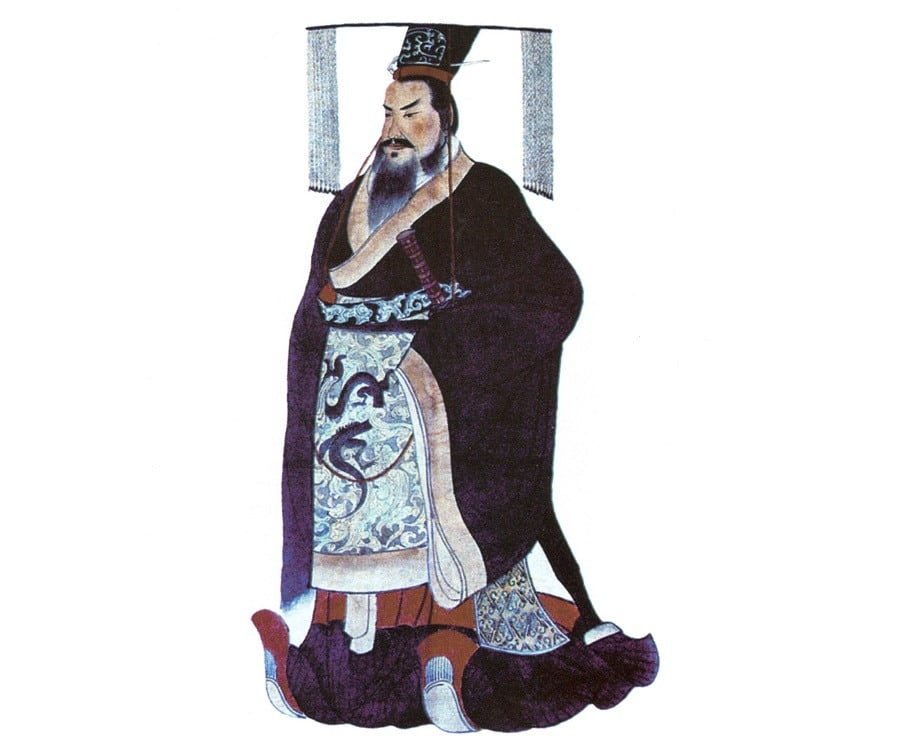
This podcast also connects to Loyalty Over Truth: From Qin Shi Huang to Trump in the Wisdom Guardians series. This year, Wisdom Guardians is focused on ruthless rulers throughout human history—a critical thread in Sapience: The Moment Is Now. In the novel, Yong Xing-li, aided by four human-like intelligence AIs, undertakes a deep exploration of how ruthless rulers shaped human consciousness across civilizations. Ra—one of Yong’s AIs—guides him through the Hall of Ruthless Rulers. Qin Shi Huang is among the first figures encountered on that journey, and I am currently working on Nero.
Because of narrative space, only one ruthless ruler could be fully embedded in Sapience itself: Herod the Great. Wisdom Guardiansallows me to explore the rulers that could not fit inside the novel. Understanding how these figures manipulated fear, loyalty, myth, memory, spectacle, and obedience is essential because that historical knowledge becomes part of the larger project of transforming human consciousness.
Sapience: The Moment Is Now (Kindle)
The link to Sapience: The Moment Is Now matters because that is where readers encounter Yong Xing-li more fully—who he is, what he is trying to do, and why. In a future shaped by ecological stress, political fracture, technological acceleration, and the recurring psychology of ruthless rulers, Yong understands that humanity’s greatest danger is not merely external conflict but untransformed consciousness itself.
His work is therefore not to build monuments, accumulate spectacle, or consolidate power. It is to understand how consciousness can evolve on a scale never before achieved. Yong knows that unless human beings learn to master fear, projection, domination, and self-deception, humanity may ultimately succeed in doing what no empire before it could fully do: kill itself off on Earth.
Release All the Epstein Files: This three-panel fleece hoodie wraps you in a calm, reflective mood that is perfect for a protest! Amidst the hostile government takeover, indeed, beneath it all, lies the rot of lies, abuse, criminality, and billionaires who believe they live above the law. This soft, slightly heavy fleece with a roomy hood and kangaroo pocket that invite you to linger will ground you to this moment and inspire the change we all seek (except the guilty) until…
The Epstein Survivor Hoodie belongs here because this essay is ultimately about what happens when power begins to believe it is exempt from accountability. Across history, ruthless rulers often surround themselves with systems of privilege, loyalty, and protection that encourage the belief that wealth, status, and proximity to power place them above ordinary moral limits. That same psychology does not remain confined to architecture or political spectacle—it can spread into institutions, social norms, and cultures of impunity.
The hoodie therefore serves as more than apparel. It is a reminder that societies are judged not by the grandeur of their monuments but by whether they protect the vulnerable, tell the truth about abuse, and hold the powerful accountable. That question sits at the center of this essay: whether human beings will continue repeating old patterns of domination, or whether consciousness can evolve enough to break them.
There is a feeling in the air right now that’s hard to deny, even if people are still arguing about what to call it. Something is rising, as if from a great depth… sometimes it feels like a volcano, sometimes it feels like the sea is rising. It is happening everywhere… all at once.
And it is making something break.
You see it in the escalation of wars and the widening circles of conflict. You feel it at the gas pump, in the grocery aisle, in the quiet calculations people are making about what they can no longer afford. You hear it in the language of fear, in the hardening of identities, in the rising hostility between neighbor and neighbor. You see it in the streets, where enforcement begins to look less like law and more like force. And you sense it in the growing number of people who no longer believe the system they live under is stable—or even survivable.
Call it instability. Call it fracture. Call it the early tremors of something much larger.
Or call it what it may actually be: the beginning of a fall.
In Sapience: The Moment Is Now, there is a dream—a vision experienced by a man trying to answer a question that may be the most important one humanity has ever faced:
How do we transform human consciousness so that, if we survive what’s coming, we don’t rebuild the same broken world?
What he sees is not a distant future. It feels uncomfortably close.
He sees a species that has become more ferocious than any predator it once feared—not because of strength, but because of blindness. A blindness born not of stupidity, but of disconnection. Disconnection from nature. From reality. From the deeper layers of the self that understand complexity, interdependence, and consequence.
Instead, modern life has trained us to live inside ideas.
We mistake models for reality. Narratives for truth. Memes for meaning.
We’ve been taught to scan the world in lines—headlines, feeds, slogans—while reality itself unfolds as a vast, interconnected field where everything is happening at once. The result is a dangerous simplification. A thinning of perception. A kind of collective “ignore-ance”—not just ignorance, but an active ignoring of what doesn’t fit the story we’ve been handed or have chosen to believe.
And from that place, we act.
We act on partial truths. On distorted fears. On inherited divisions. On identities that feel solid but are, in many cases, carefully constructed and continuously reinforced.
We act as if we are separate—from each other, from the environment, from consequence itself.
But there is no such separation.
There is no human being without an environment any more than there is a heart without a body. What we are doing to the world, we are doing to ourselves. And yet, the dominant mindset still treats nature as an adversary to be controlled, extracted from, or defeated.
That is not just an error.
It is a fatal one.
In the dream, people begin to feel it—though they don’t understand it. A rising pressure. A loss of coherence. A creeping sense that something fundamental has gone wrong.
And instead of turning inward—toward deeper awareness, toward integration—they are pushed further outward into fragmentation.
The pace of life accelerates. Information fragments into smaller and more emotionally charged pieces. Cultural understanding collapses into viral units—memes that spread faster than truth and stick harder than nuance. These fragments don’t deepen awareness; they inflame reaction.
And slowly, almost invisibly at first, humanity is herded into shallower and shallower waters of consciousness.
Waters too shallow to sustain a thinking, feeling, interconnected species.
Cut off from what the book calls the Primordial Being—that deeper, integrated awareness capable of holding complexity—people begin to unravel. Some sink into despair. Others lash out. Many retreat into hardened psychological bunkers.
Fear becomes the dominant currency.
And fear does what fear always does: it divides, isolates, and escalates.
In the dream, this psychological fragmentation doesn’t stay internal. It spills outward into the physical world.
The environment degrades under the weight of unchecked consumption and short-term thinking. Air thickens. Waters choke. Waste piles into monuments of excess. The systems designed to sustain life begin to buckle under the strain.
At the same time, social systems fracture.
Trust erodes. Cooperation collapses. Violence—both personal and collective—rises. Not everywhere at once, but enough, and often enough, to shift the overall balance.
People begin to turn on each other.
Not because they are inherently evil—but because they are overwhelmed, disconnected, and operating from a distorted sense of reality.
In that state, even “civilized instinct” becomes dangerous. It is no longer guided by wisdom or awareness, but by centuries of conditioning layered over fear and scarcity.
The result is a world that feels increasingly unrecognizable.
Unstable.
Unsafe.
Insane.
And here is the hardest part to confront:
In the dream, the fall is not caused by a single event.
It is the cumulative result of millions—billions—of small actions taken from a fragmented state of mind.
The tipping point comes not because there were no good people left. There were many. There were even good groups, good efforts, real attempts to change course.
But the balance had shifted too far.
Fear outweighed cooperation.
Division outpaced unity.
Reaction overwhelmed reflection.
And so, when the moment came to act together—to truly confront the climate crisis, to de-escalate conflict, to reimagine systems—the collective capacity simply wasn’t there.
Not because it was impossible.
But because the consciousness required to do it had not been cultivated.
That is the warning embedded in the dream.
And that is why it matters now.
Because if you’re paying attention, you can feel how close we are to that tipping dynamic—not necessarily to an immediate, singular collapse, but to a continued slide driven by fragmentation, fear, and disconnection.
The point is not to declare that collapse is inevitable.
But it is equally dangerous to pretend that nothing fundamental is happening.
The real question is this:
What do we do with this awareness?
If the core problem is fragmentation of consciousness, then no purely external solution—political, technological, or economic—will be enough on its own.
Those matter. They are necessary.
But they are downstream.
Upstream is perception. Awareness. The ability to hold complexity without collapsing into fear or simplistic narratives. The willingness to reconnect—with reality, with each other, and with the deeper layers of our own minds.
That kind of shift is harder than protest. Harder than policy. Harder than innovation.
It requires discipline.
It requires honesty.
And it requires resisting the constant pull toward outrage, simplification, and psychological retreat.
You don’t fix a fragmented world with a fragmented mind.
So as protests rise, as tensions escalate, as the world feels increasingly unstable, the work is not just “out there.”
It’s in here.
Because if we carry the same patterns of thought—the same reactive instincts, the same shallow processing—into whatever comes next, we will rebuild the same conditions that led us here.
Different faces. Same outcome.
That is the cycle the dream is trying to break.
Not just survival.
But transformation.
The moment we’re in right now is not just political or economic.
It is psychological.
And whether this is a death spiral or a turning point depends, in no small part, on whether enough people are willing to move beyond the surface… and learn how to think, perceive, and act from a deeper place.
That’s not a comforting conclusion.
But it is an honest one.
And at this stage, honesty may be the most necessary starting point we have.
Excerpt — Sapience: The Moment Is Now
Dream Yong Xing-li has as he nears understanding how to Transform human consciousness on a scale never before achieved in human history, a transformation necessary so that humans do not go right back over the Climate Cliff that very nearly annihilates all life on Earth (including human) during the 21st Century (our time now).
Modern Man is more ferocious, savage, and feral than the most dangerous animal on Earth. He ignores the balances and limits nature worked out over eons of time on others. He blames his own Element of Irreducible Rascality, his shadow, his Yetzer Hara, his sin on others.
Disconnected from his inner most nature, Modern Man acts in ignorance wherever he goes. This ignore-ance is his greatest evil. Deeds done in the name of ignorance are more savage than the biggest, baddest saurian ever was. Instead, man feels himself to be as the English poet Alfred Edward Housman wrote: “I, a stranger and afraid, in a world I never made.” His feeling of utter alienation in an unintelligent universe leaves him feeling trapped inside his own skin and at war with the blind, stupid forces of nature and the universe. But, this feeling it due to an idea based on 19th century commonsense that human beings are fluke in nature and if humanity does not fight nature, it will not be able to maintain its status as an intelligent fluke. And so, the war on nature rages based on a ghastly error of thinking, a way of living in the world that can only examine the world in lines like a scanner. Therefore modern education takes so long, each child must scan miles of lines of print just to know the basic stuff man has come to understand about himself, society, nature, and the universe. But the world does not come at us in lines. It comes at us in a multi-dimensional continuum of everything happening together everywhere at once. In short, man ideas of reality are paltry substitutes for what it really is and basing actions on ideas has led humanity to an all-out war with nature, which is really himself for you do not find a man without an environment and if man leaves the atmosphere of Earth, he must take a canned version of his environment with him just as he must take his legs, arms, and head with him—they go together—man and environment are the same thing for there is no man without a sufficiently complicated environment to support bodies and living beings.
And so, Modern Man hassled and stressed and often beholden to men greater than himself who held the power, money, and authority to dictate his life, increasingly based his deeds and actions around ideas. At first, many Modern people based their lives around religious ideas and cultural norm, but increasingly as these fabrics of society frayed, he based core beliefs on memes, a unit of cultural information spread by imitation such as a practice, a ceremony, an image, a story, or a joke passed between people. As the pace of modern life got faster and faster, the unit of cultural information was diluted and reduced to tiny bits of polarizing ideas that spread like virulent viruses through the world wide web increasingly replacing the world of nature with the world of ideas created by men.
Without even knowing it, the Good People of Earth had been herded into conscious waters too shallow to sustain them. Here most of the humanity were trapped by their circumstance dictated by harsh and heartless economic realities created by men who had more than them and desired even. Carefully taught over centuries of civilization not to swim into the deeper waters of their own consciousness, Modern Man became more and more divorced from their Primordial Being who knows the world is vastly more complicated than a mere idea, fact, or fantasy. Cut off from the very part of themselves that could help them most, people sank into deep pits of hopelessness, sadness, and despair. Others lash out in cruel ways further polarizing the risingSea of Unconsciousness flooding the ground of civilization all modern people stood, the unconsciousness pouring out of each person cut off from their Primordial Being. It was a sea choked with of carbon waste piled into high mountains of garbage; filling rivers with poop and plastic; and filling the air with Methane and CO2 pumped out by the machines Modern man used to save time, cut costs, and save labor.
People adopted a locked down, bunker, and siege mentality.
It was hell.
Instinct takes over…
…but it was a Civilized Instinct…
…one misshaped after centuries of social programming.
Just before the fall, the suicide and homicide rates rose exponentially. Big and little wars broke out all over the world. Husbands turned on wives… wives turned on husbands… children turned on parents… neighbor on neighbor. Nobody felt safe or normal anymore. There were plenty of good people and even a good number of good collectives in the world, but the balance had tipped too far. The slide over the climate cliff was inevitable because instead of acting together to mitigate climate change, fear and hopelessness had been poured on theFlames of Division, further fragmentating and polarizing theSea of Unconsciousness.
It’s late August—summer’s ending, school is starting. It’s tempting to believe everything is fine, fresh, new again. But look closer—does it really feel that way?
We pretend it is just another ordinary day in another ordinary year. But beneath the surface, the world is anything but ordinary. Everywhere, instability hums like a low-grade fever—sometimes spiking, sometimes subsiding, but never truly gone.
The Illusion of Stability: Another Ordinary Day in Our Glass and Concrete Cities
We have learned to live inside this fever. We scroll, we consume, we distract ourselves. Yet the cracks widen. Sometimes truth seeps through. Other times it slips back into the fractures, disappearing from awareness as if it were never there.
Carl Jung once warned that ignorance is the greatest evil. Only humans can ignore the obvious—turning a blind eye to suffering, a deaf ear to reason, shutting out both common sense and compassion.
The Illusion of Stability: Thoughtful Person in Library
Only man is capable of doing this for only man has grown the ability to scan his inner world and meld the areas of inner illumination with his outer reality, creating something new, something in-between both realms of being.
This ability allowed Homo sapiens to surpass every other being on the planet—a marvelous triumph of consciousness. But every gift carries its shadow. The price of awareness is responsibility, and humanity’s refusal to shoulder that responsibility—for self, for others, for the Earth—threatens to become our undoing.
Meanwhile, our collective ignorance fractures the very reality we depend on to survive. The Earth groans, societies splinter, and yet we look away.
Here are four signs of the instability we are trained not to see:
1. The Climate Clock Keeps Ticking. Wildfires rage in regions once thought untouchable, while floods submerge towns that had no time to recover from the last disaster. Heat records fall, not one by one but in clusters, like dominoes tipping toward collapse. Scientists no longer speak of prevention—only adaptation. And yet adaptation itself is rationed: those with wealth can buy higher ground and air-conditioned bubbles, while the poor are left to suffocate.
2. Democracy in Name Only. The machinery of democracy grinds on—debates, rallies, soundbites—while its spirit withers. Gerrymandering, voter suppression, and judicial overreach hollow out the promise of representation. Citizens go through the motions of voting, but the choices are narrowed, the outcomes predetermined. It is democracy as theater, staged to reassure, not to empower.
3. War as a Weaponized Distraction. While much of the public’s attention is turned inward toward partisan spectacle, war grinds on with devastating persistence. Ukraine is still under relentless attack by Putin, and in the wake of Trump’s hollow claim that he would end the conflict on “day one,” more Ukrainians have died than the total number of Gazans killed since October 7. Both wars are sustained by extremist perpetrators who wrap their brutality in flags, each side fueling destruction while claiming legitimacy. These conflicts are not isolated—they are global shockwaves, reminders that authoritarian power thrives on perpetual violence and distraction.
4. Truth Under Siege. In this climate, truth itself erodes. Facts are not debated but discarded. Entire populations live inside alternative realities, curated by algorithms that prioritize outrage over understanding. Books vanish from schools, journalists are silenced, and propaganda spreads faster than fire. A society that cannot agree on what is real becomes easy prey for those who would weaponize the lie.
The Illusion of Stability: The Price of Consciousness Is Responsibility
Conclusion
We are told this instability is temporary, that “normal” will return if only we wait. But what if instability is the new normal? What if the illusion of stability is itself the most dangerous lie of all?
History teaches us that empires rarely collapse in a single day. They erode slowly, quietly, until one morning the scaffolding of belief gives way—and everyone insists they never saw it coming.
The fever is not breaking. The fever is the condition. The question is whether we keep sleepwalking into collapse—or whether we awaken in time to remember what it means to be human: to protect each other, to defend truth, to honor the living earth that sustains us. Collapse is not inevitable—it is accelerated by our apathy, our surrender, our refusal to see. The ground is shifting beneath our feet.
The only real question is whether we will keep drifting with it into ruin, or finally take responsibility for turning toward life.
If this topic intrigues you, I write about these ideas and other in depth in my book Sapience: The Moment Is Now–man’s mythic balance between his gifts and his shadow. Also, check out my new graphic novel: Sapient Survival Guide.
What happens when history is erased, the past is politicized, and the present burns?
The world changed on August 6, 1945—and since that day, every August 5 has become a kind of psychic limbo. A reckoning. The last breath of innocence before the mushroom cloud.
That’s how I always feel on this date. Like we’re holding our breath in a forgotten waiting room of history—blind to what came before, numb to what unfolds now. The silence before the sirens. The moment before the blast.
Today—August 5, 2025—we are back in that limbo.
But this time, the sky is not split by one bomb.
The destruction is slower, more dispersed, less cinematic—yet no less final.
This time, it’s heatwaves that break records. Rivers that dry to dust, then overflow in torrential floods. Forests that burn unchecked, fueled by massive rains that feed new vegetation—only for it to dry, then ignite, as heatwaves and droughts return like the ticking hands of a doomsday clock.
It is rights that vanish. Books that disappear. Truth that crumbles like ash.
This time, the bomb isn’t dropped.
It’s embedded. Woven into the system. And we are its architects.
I. The Myth of the Clean Bomb
The atomic bomb was sold to the American public as a necessary evil. A weapon that saved lives by ending the war. That version of reality still persists—scrubbed clean of children’s shadows burned into concrete, of survivors coughing up blackened blood, of generational trauma encoded in irradiated cells.
The lie of the clean bomb persists because it serves empire. It allows America to remain the hero of its own myth.
And that myth is still being weaponized.
Only now, it’s turned inward—against its own people.
Today’s warfare is economic, psychological, algorithmic. Yet the logic remains unchanged: justify atrocity with a false binary—us or them, freedom or chaos, purity or infection.
Today’s “them” are immigrants.
They are scapegoated for the damage inflicted by the billionaire class—that paltry 3% who not only own the means of production, but also control the distribution of goods, truth, and even hope. They’ve spent decades engineering a system where they get more—and everyone else gets less. Less pay. Less power. Less time. Less life.
And now, as the American Empire fractures under the weight of its own excess, the billionaires are panicking.
The moral calculus never changes. Only the delivery system. And the scapegoats who bear the cost of the sins committed by the ultra-rich—men who molest truth as easily as they molest children.
Protected by wealth. Worshipped by media. Shielded by spectacle.
II. The Climate as the New War Zone
While politicians posture and billionaires build bunkers, the planet keeps the receipts.
July 2025 was the hottest month in recorded history—for the third year in a row. Massive wildfires are displacing thousands across the Pacific Northwest and Mediterranean. Crops are failing in Africa and Latin America. Major cities are approaching wet-bulb conditions too dangerous for human survival.
But it’s not just weather. It’s the slow-motion collapse of the world we were promised. A world built on endless growth, fossil-fueled prosperity, and the illusion of safety for the “civilized.” That world is burning down, and too many still think we can shop our way out of the flames.
The climate crisis isn’t just about carbon. It’s about power. Extraction.
It is a system that treats the Earth like a warehouse and people like units of productivity.
It is war by another name—waged on the body of the planet and the psyche of the people.
As the temperature rises, so does the campaign to make us forget.
The Project 2025 blueprint isn’t just about rolling back regulations or gutting federal agencies. It’s about destroying institutional memory. Banning books is not just censorship—it’s conditioning and control. Erasing queer history, Black history, labor history, climate truth—it’s all part of the same project: obliterate the past so the present can be reprogrammed.
And it’s working.
What happens when a nation forgets not just Hiroshima, but Tulsa? Not just slavery, but Flint? Not just the Dust Bowl, but Paradise, California?
Such a nation becomes unmoored. Untethered. Easily manipulated. Easily distracted by pleasure, products and propaganda.
Memory is not nostalgia. Memory is resistance. When we forget, we become malleable. Controllable. Willing to call cruelty “order,” or fire “progress.”
IV.What Is Worth Remembering
Today, on August 5, I am remembering not just the blast—but the silence before it. The illusion that everything was fine.
That’s where we are now—algorithmically embedded and entombed in illusion. Trained in the art of forgetting. Forgetting that we are space-time beings of staggering magnificence—sentient sparks capable of perceiving, feeling, and dancing with the mystery of life. One of the rarest awakenings in the known universe. And yet… here we are: sedated by spectacle, indentured to the machine, clocking in for our slow extinction under corporate rule.
It is a myth has never relied on fact. It relies on meaning. And meaning is forged in remembrance.
So let us remember:
That humans made the bomb—but we also made peace.
That fire can destroy—but it can also purify.
That forgetting is dangerous—but remembering is defiant.
Let us remember the land before it cracked. The sky before it choked. The soul before it was bought by billionaires and oligarchs.
Let us remember that we are not separate from the story. We are the storytellers.
And right now, the story is breaking.
But so are we.
And maybe—just maybe—that’s where the fire of renewal begins… like the mythical firebird.
The Price of Forgetting: From Hiroshima to Heatwaves: Call to Action:
🌍 This week, remember something real. Tell someone a story about your ancestors. Read a banned book. Visit a site of historical pain and power. Because remembrance is not passive. It is protection. It is protest. It is a portal.
🌀Supplement: Echoes of Empire — From Galactic Collapse to American Decline
In my book Sapience: The Moment Is Now, I trace how empires have risen and fallen across human history in patterns eerily familiar to those imagined by Isaac Asimov in his Foundation series. Asimov’s Galactic Empire, like Rome, like Britain, like America today, collapses not from a single blow—but from accumulated rot: arrogance, bureaucracy, inequality, and the silencing of truth.
What Asimov understood—and what history confirms—is that humans rarely respond to collapse with wisdom. We cling. We deny. We search for scapegoats. We double down on failing systems out of fear of the unknown.
Empires don’t just fall because they’re conquered. They fall because they forget what they were for. Because the story that once united them becomes hollow—and the people stop believing.
Sapience explores this moment as not just political, but mythological. The American Empire is in decline, and the question is not if—but how we respond. Do we fracture into chaos, or awaken into something wiser?
That, as Asimov might say, is the true test of a civilization’s soul.
Foundation — Official Trailer | Apple TV+
🌀Supplement:The Now Scroll
My Now Scroll minis are myth-infused micro-essays or 3-minute soul jolts that confront the collapsing empire in real time. Each one distills a powerful truth at the intersection of myth, psyche, and political reality, using poetic insight and piercing clarity to expose the deep structures of control—whether it’s cults, fascism, or the subtle ways we co-create our own enslavement.
They aren’t just commentary—they’re living scrolls that remind the reader to stay awake, to question the spectacle, and to reclaim their inner authority in a world designed to numb and domesticate human consciousness. This one is relevant to today’s blog.
🌀Supplement:Sapient Survival Guide
Part mythic handbook, part political manifesto, part psychological field guide—this 62-page survival document is a razor-sharp reckoning with the world as it is… and a rally cry for what it could be.
The Sapient Zombie Survival Guide is not your average prepper’s pamphlet. It’s a call to those who still feel, still think, still care—those not yet devoured by the hollow hunger of authoritarianism, consumerism, or despair. It charts the psychic terrain of a country in collapse, exposing how propaganda, greed, and mythic forces have turned millions into the walking dead.
But it doesn’t stop there.
This guide arms readers with 10 survival strategies rooted in ancient wisdom, archetypal truth, and modern resistance. It invites the reader to awaken—not just politically, but mythically—and to ride the dragon of consciousness through a world set ablaze.
With poetic fire, biting satire, and unflinching honesty, this publication lays the foundation for the volumes to come—The Houses of Wreckage and The Dragon Riders’ Guide—offering not just survival, but transformation.
Part mythic handbook, part political manifesto, part psychological field guide—this 62-page survival document is a razor-sharp reckoning with the world as it is… and a rally cry for what it could be.
The Firebird is a powerful mythic symbol—radiant, untamed, and eternally rising. It evokes transformation, fierce beauty, and soulful renewal. These products capture this important symbol of soulful regeneration and transformation.
Firebird Rebirth Pencil Skirt, Rise in Style, Colorful Women’s Mid-Waist Skirt, Bohemian Fashion, Summer Outfit, Festival Wear, Gift for Her
This Firebird Rebirth Pencil Skirt wraps you in mythic energy and modern confidence. With a silhouette that flatters and fabric that flexes, it’s a wearable metaphor: transformation, boldness, and beauty in motion. Whether you’re channeling goddess energy at brunch or stepping out into your next personal evolution, this skirt says one thing—I rise. Product features – Made from 88% polyester and 12% spandex for durability and comfort. – 4-way stretch allows for ease of movement in every direction. – Features…
Firebird Energy Tank, Unisex Strength in Color, Anime-Inspired Unisex Jersey Tank, Perfect for Summer Festivals, Casual Wear, Gym, Gift for Fans, Bright and Cheerful Design
“Across centuries and continents, ruthless rulers rise not in silence—but in splendor. They drape themselves in divine titles, rewrite the past, demand obedience over truth, and build legacies on the bones of the people.
In this episode of Wisdom Guardians, we travel back over 2,000 years to meet China’s first emperor, Qin Shi Huang—a man who unified a nation with brutal brilliance, burned books to erase the past, buried scholars to silence dissent, and built a tomb the size of a city.
But the archetype he embodied—the Divine Ruler, above the law, unchallenged by truth—didn’t die with him. It lives on. In today’s power-hungry populists. In loyalty tests. In book bans. In gilded towers and cries of false prophecy.
History doesn’t repeat itself. It shape-shifts. And today, we follow its shadow.”
Qin Shi Huang to Trump | Intro for Episode #7 Wisdom Guardians | Loyalty Over Truth Deep Dive
“Qin Shi Huang believed he had conquered death. That his tomb would house him for eternity. That his dynasty would last ten thousand years. It lasted fifteen.”
“The truth he buried rose again. And like mercury in the blood, it poisoned everything he built.”
“Today, new emperors rise. They silence scholars, reward sycophants, and rewrite history for their own ends. But the lesson of Qin is clear: Ruthlessness can conquer… but only for a moment. And in the end, truth—though buried—will speak.”
Loyalty Over Truth: From Qin Shi Huang to Trump: Deep Dive:Qin Shi Huang to Trump — Part 1Loyalty Over Truth: From Qin Shi Huang to Trump: Deep Dive:Qin Shi Huang to Trump — Part 2
I. Divine Seeds: From Righteousness to Ruthlessness
Ruthlessness grows from the seeds of Righteousness.
Every ruthless ruler claims the mantle of righteousness—often justified by religion.
To understand the ruthless, we must first understand our human drive to worship, to moralize, and to enshrine divine law.
In my book Sapience: The Moment Is Now, my character Yong Xing-li searches for a way to transform human consciousness. He is doing this because the world has plunged over the Climate Cliff. His AIs have shown this will happen again unless human consciousness can be transformed on a scale previously never achieved.
Survivors of The Fall live under the rule of CEOs. Ordinary people who more effectively, and often aggressively, outcompeted and outperformed everybody else to amass gigantic wealth. These CEOs head Multinational Corporations that run the world now. And, their prevailing doctrine is: Profit Over People… that is, except for Yong Xing-li who is arguably the richest man in this dystopian world.
Yong Xing-li did not achieved his massive wealth ruthlessly. He did so by creating AIs who can not only out compute and out think human beings, but who are empathic and compassionate. His AIs are showing him how to Transform human consciousness. One of his most important lessons lies in the Hall of Ruthless Rulers.
Loyalty Over Truth: From Qin Shi Huang to Trump: Hall of Ruthless Rulers
A. Hall of Ruthless Rulers
The Hall of Ruthless Rulers is Ra’s domain. Ra is the AI tasked with helping Yong Xing-li understand how the seeds of ruthlessness have grown strong in the minds of modern men. From the book (p. 227):
Ra:Keeper of Roots, Religions, Royals, Regents, & Ruthless Rulers maintains databases on philosophy delving into cognitive sciences, logic, informational and computational science, politics, economics, art and visual studies. He studies the intersection of religion and culture and how it reveals insights into individual and collective motivation as manifested through cultural expressions and traditions. He collects and maintains information about what happens in the gap between all realms of knowing, physical and non-physical venturing into the realms of mystical sciences, paranormal activity, magic, and the unknown.
His databases overlap with the other AIs because he is the AI considered to be Keeper of Cosmic Knowledge. His database includes stories, writings, and teachings of Abraham (2000–1638 BCE) • Isaiah (8th-century BCE prophet) • Mahavira (0599-0527 BCE) • Gautama Buddha (0563-0483 BCE) • Zoroaster/Zarathustra (0000 BCE) • Moses (1391-1272 BCE) • Jesus Christ (0000-0033) • St. Paul (0005-0067 CE) • Prophet Muhammad (0571 -0632 CE) • Saint Valentine (0226A-0269 CE: 2/14) • St. Augustine (0354-0430 CE) • Kabir (1440 -1518) • Chaitanya Mahaprabhu (1486 -1534) • Guru Nanak (1469 -1539) • Martin Luther (1483-1546) • Francis Xavier (1506-1552) • Guru Gobind Singh (1666-1708) • Sai Baba of (1835-1918) • Ramakrishna (1836 -1886) • Swami Vivekananda (1863-1902) • Sri Aurobindo (1872-1950) • Paramahansa Yogananda (1893-1952).
And Ruthless Rulers including Qin Shi Huang (221-206 BCE) • King Herod (73-4 BCE) • Gaius Julius Caesar Augustus Germanicus (Caligula) (37-41 CE) • Nero (54-68 CE) • Attila the Hun (434-453 CE) • Wu Zetian (690-705 CE) • Æthelred the Unready (978-1016) • Genghis Khan (1206-1227) • Tomas de Torquemada (1483-1498) • Timur (Tamerlane) (1370-1405) • Vlad III, Prince of Wallachia (Vlad Drăculea, aka Vlad the Impaler) (1st 1448; 2nd 1456-1462; 3rd 1476) • Czar Ivan IV (Ivan the Terrible) (Grand Prince of Moscow: 1533-1547; Czar of All the Russians: 1547-1584) • King Henry VIII (1485–1509) • Bloody Mary I (1516-1558) • Bloody Bess (1558–1603) • Maximilien Robespierre (1789-1794) • King Leopold II of Belgium (1865-1909) • Mehmet Talat Paşa (1913-1918) • Vladimir Lenin (1917-1924) • Benito Mussolini (1922-1943) • Joseph Stalin (1922-1953) • Adolf Hitler (1933-1945) • Khorloogiin Choibalsan (1939-1952) • Francisco Franco (1938-1973) • Mao Zedong (1943-1976) • Pol Pot (1975-1979) • Idi Amin Dada (1971-1979) • Augusto Pinochet (1973-1990) • Vladimir Putin (1952-2025).
Ra shows Yong Xing-li the entire evolution of Homo sapiens. His studies focus in on some of man’s earliest signs of worship. Ra sets the stage by connecting religion, divine authority, and the psychological need to believe in helping early humans survive an unpredictable and sometimes brutal world.
He shows Yong Xing-li that as human civilizations grew, so too did the role of religion, divine authority. He shows the manipulation of Rulers to bend the human psychological need to believe to their advantage.
B. Previously, Wisdom GuardiansExplored
In previous episodes of Wisdom Guardians, we explored Nimrod (who was more myth than man) and Akhenaten (the heretic king).
Nimrod dared to defy the Lord. Nimrod, a figure mentioned in the Book of Genesis, is described as a “mighty hunter before the Lord”. While this phrase might appear complimentary, the traditional Jewish, Christian, and Islamic interpretations often view it as meaning “in opposition to the Lord” or “in defiance of the Lord”.
His Name: The name Nimrod is associated with the Hebrew word meaning “rebel”.
His Actions and Ambition: Nimrod is believed to be the instigator of the Tower of Babel. This project, intended to reach the heavens, was seen as an act of defiance against God’s command to “fill the earth”.
Seeking Self-Glorification: The builders of the Tower aimed “to make a name for ourselves,” which is interpreted as seeking glory for themselves rather than for God.
Establishment of Tyranny: Some interpretations portray Nimrod as a power-hungry ruler who sought to detach people from the fear of God and make them dependent on his own power.
Opposition to God’s Will: His rebellion extended to going against God’s instructions for humanity to disperse and fill the earth, instead attempting to keep them localized and under his control.
Therefore, Nimrod dared to challenge God’s authority through his actions and ambitions, leading to his portrayal as a rebellious figure in religious traditions.
Akhenaten is called the “heretic king” because he radically changed ancient Egyptian religion by abandoning the traditional polytheistic beliefs and promoting the worship of a single god, the Aten, represented by the sun disk. This unprecedented shift, along with his suppression of other deities and their priests, led to his being labeled a heretic by later generations who restored the old religious order.
Here’s a more detailed explanation:
Traditional Egyptian Religion: Ancient Egypt had a complex pantheon of gods and goddesses, with Amun-Ra being a prominent deity.
Akhenaten’s Revolution: Akhenaten, originally known as Amenhotep IV, ascended to the throne and in his fifth year, he began to promote the Aten as the supreme god.
The Aten: The Aten was not a traditional anthropomorphic god but was represented by the sun disk, with rays extending towards the earth.
Suppression of Other Gods: Akhenaten went further, ordering the closure of temples dedicated to other gods, the erasure of their names from monuments, and the persecution of their priests.
New Capital: He moved the capital from Thebes to a newly built city called Akhetaten (modern-day Amarna), further symbolizing his break from the past.
Monotheism? Some scholars consider Akhenaten a pioneer of monotheism, while others view his Aten worship as a form of solar cult or henotheism (worship of one god without denying the existence of others).
Legacy: After Akhenaten’s death, his reforms were largely reversed, and his memory was suppressed. Later rulers and priests restored the old religious order, and he became known as the “heretic king”.
Why “Heretic”? The term “heretic” implies a departure from accepted religious doctrine. Akhenaten’s actions were seen as a radical and unacceptable deviation from established religious norms, hence the label.
II. The Making of a Ruthless God-King
In episode 7 of Wisdom Guardians, we dive into the intrigue, immorality, and infamy of the Qin Empire under Qin Shi Huang, notoriously known as the First Emperor of China. The rise of ruthlessness as a recurring archetype in human history, specifically examining Qin Shi Huang as a prime example and drawing compelling parallels to modern authoritarian figures like Donald Trump. The sources argue that cunning rulers exploit systems of belief, suppress truth, and obsess over their legacy, ultimately sowing the seeds of their own destruction.
Loyalty Over Truth: From Qin Shi Huang to Trump: AI impression of Qin Shi Huang
The rise of ruthlessness is not unique to any particular race, culture, or civilization on Earth. This is what Ra is showing Yong Xing-li in their travels to China and Qin Empire. However, something that connects all Ruthless Rulers is the rise of civilizations, large groups of unrelated humans working together for a common cause.
For bulk of human history, man lived in small groups with strong family bonds. With the rise of civilizations, man had to learn how to care not only for himself and his family but for hundreds, thousands, even millions of unrelated people. Failing to do this often spelled doom and destruction for his civilization for only a unified civilization could navigate the increasingly ominous world of humans living in bigger and bigger civilizations.
Here are the key insight and themes explored in this episode:
A. The Birth of a Ruthless Empire: Qin Shi Huang’s Ascent
Qin Shi Huang, born Zhao Zheng in 259 BCE, became the First Emperor of China. His rise was marked by both political maneuvering and ruthless consolidation of power, laying the groundwork for his authoritarian rule.
Early Life and Political Intrigue: Zhao Zheng’s mother, Lady Zhao, a former dancing girl, and the influential merchant Lü Buwei, played significant roles in securing his father’s (King Zhuangxiang) ascension and Zhao Zheng’s eventual inheritance of the throne at age 13. Lü Buwei initially “dominates Qin’s government and military” for nine years. Palace intrigues, including Lady Zhao’s illicit affairs and a plot by her lover Lao Ai to kill Zhao Zheng, led to brutal retribution: “Lao Ai is executed. Zhao Zheng’s half-siblings are put in bags and beaten to death. His mother is placed on house arrest. Lü Buwei is stripped of his titles and banished.” This early exposure to brutal power struggles undoubtedly shaped Qin’s own approach to governance.
Loyalty Over Truth: From Qin Shi Huang to Trump: Zhao Zheng as child before taking the name Qin Shi Huang | Thirteen years later, King Zhuangxiang dies. Zhao Zheng ascends to the throne. The year is 246 BCE. Zhao Zheng is 13 years old.
Unification of China (Warring States Period): Between 230 BCE and 221 BCE, Zhao Zheng systematically conquered the six other warring states (Hán, Zhào, Yan, Wei, Chu, Qi), culminating in the unification of China. This era was characterized by extreme violence: “Zhao Zheng captures and castrates the men of each defeated dynasty turning men and women into slaves.”
Proclamation of Divinity and New Title: Upon unifying China, Zhao Zheng adopted the unprecedented title of “Shi Huangdi” (First Emperor of All China), combining “Huang” (referring to mythical godly rulers) and “Di” (referring to great heroes). This act “proclaims his divinity,” establishing him as “The August Ancestor,” “The Holy Ruler,” or “The Divine Lord,” setting a precedent for rulers claiming a divine mandate.
Loyalty Over Truth: From Qin Shi Huang to Trump: Completing his final conquest, Zhao Zheng takes a new title for himself to reflect his new and greater prestige as ruler over all other rulers before him. | | By combining Huang and Di, he proclaims his divinity. Huang refers to the 8 mythical godly rulers of China who are credited with great feats such as ordering the sky and creating the first humans. Di refers to the 5 great heroes of China who brought agriculture, clothing, astrology, music, and other things that make China great.
B. Instruments of Control: Suppression, Propaganda, and Loyalty
Qin Shi Huang employed various methods to assert absolute control, including intellectual suppression, historical revisionism, and extreme loyalty tests.
Suppression of Intellectual Thought (“Hundred Schools of Thought” and “Burning of Books”): In 213 BCE, Qin Shi Huang “bans the Hundred Schools of Thought, except for Legalism and the House of Administrative Method.” He “orders all classic works and books produced by the Hundred Schools of Thought burned,” particularly histories, fearing they “could undermine his legitimacy.” Only books on “astrology, agriculture, medicine, divination, and the history of the State of Qin” were spared. This was a deliberate act to “stifle dissent and consolidate his power by eliminating ideas and philosophies that contradicted or could challenge his rule.”
Loyalty Over Truth: From Qin Shi Huang to Trump: Qin Shi Huang orders all classic works and books produced by the Hundred Schools of Thought burned
Execution of Scholars: As a direct consequence of the book burning, “Many scholars protest. Qin Shi Huang retaliates by burying 460 Confucian intellectuals alive.” While historical debate exists on the exact method and number, the intent was clearly to eliminate opposition and reinforce Legalist ideology, which “emphasiz[ed] strict adherence to law, harsh punishments, and the supremacy of the state over individual interests.”
Loyalty Over Truth: From Qin Shi Huang to Trump: Qin Shi Huang buries 460 Confucian intellectuals alive when they protest his banning and burning work from the Hundred Schools of Thought
“Calling a Deer a Horse” (Loyalty Tests): This infamous incident, occurring under Qin Er Shi’s reign, exemplifies the extreme nature of loyalty tests. Zhao Gao, the powerful eunuch, “brings a deer and presents it to the Second Emperor calling it a horse.” Those who truthfully identified it as a deer were “executed instantly,” demonstrating that “Loyalty > Reality.” This incident gave rise to the idiom “Calling a deer a horse” (指鹿为马), which describes situations where “Someone deliberately confuses right and wrong,” “Someone twists the truth to manipulate or deceive others,” and “There is a blatant disregard for the truth or reality.”
Loyalty Over Truth: From Qin Shi Huang to Trump: Calling a Deer a Horse Loyalty Test implemented by Zhao Gao to manipulate and control the young Qin Er Shi after Qin Shi Huang dies at 49
C. Obsession with Legacy and Immortality: The Mausoleum and its Irony
Qin Shi Huang’s preoccupation with his legacy and desire for eternal life led to monumental projects and, ironically, may have contributed to his demise.
The Great Wall: To counter “nomadic Xiongnu tribes,” Qin Shi Huang ordered the construction of a “3,107-mile-long” defensive wall, the precursor to the Great Wall. “Thousands of men are conscripted…Many died.” This project highlights his extensive use of forced labor and disregard for human life in pursuit of national security and grand achievements.
Loyalty Over Truth: From Qin Shi Huang to Trump: To deal with constant incursions of the nomadic Ziongnu tribes into his kingdoms, Qin Shi Huang orders a defensive wall-built beginning in 221 BCE.
The Lingqu Canal: Built around 214 BCE, this “22-mile canal” was primarily intended to “transport Qin’s soldiers south to accelerate his conquest of new southern territories,” showcasing his continued military expansion.
Loyalty Over Truth: From Qin Shi Huang to Trump: Qin Shi Huang orders construction of a 22-mile canal to connect the Xiang River with the Li River
The Terracotta Army and Mausoleum: Qin Shi Huang’s most ambitious project was his mausoleum, construction of which began at age 13 and accelerated after unification. “700,000 men were sent there from all over his empire.” The tomb, “the size of Manhattan,” was designed to be a miniature kingdom, complete with “Palaces and scenic towers,” “rare artifacts and wonderful treasure,” and “crossbows and arrows primed to shoot at anyone who enters.” Most famously, it featured the “Terracotta Army of 8,000 soldiers” to serve as his “eternal garrison.” The historian Sima Qian recounted that “Mercury was used to simulate the hundred rivers… and set to flow mechanically,” and that “the emperor’s concubines who did not have male children were killed and buried with him.” After its completion, “all the workers and craftsmen inside” were trapped and killed to conceal its secrets.
Loyalty Over Truth: From Qin Shi Huang to Trump: Qin Shi Huang began work on his tomb in 246 BCE. The work accelerated taking on much more massive portions in 221 BCE after he conquered the six other warring states
Quest for Immortality and Death: Despite his grand preparations for the afterlife, Qin Shi Huang was “obsessed with death” and “urgently seeks an elixir of life.” He “orders a nationwide search for a mythical potion.” Ironically, “It is believed Qin Shi Huang consumed cinnabar as one of these promising elixirs for eternal life. Rather, cinnabar is quite poisonous, being mercury sulfide.” He died at age 49, with “the mercury pills probably didn’t help.” This highlights the fatal irony of his quest.
Loyalty Over Truth: From Qin Shi Huang to Trump: Qin Shi Huang consumed cinnabar as one of these promising elixirs for eternal life
Meteoric Prophecy: A meteor in 211 BCE inscribed with “The First Emperor will die, and his land will be divided” deeply disturbed Qin Shi Huang. His reaction was extreme: “Outraged, the emperor orders everyone in the village killed and stone destroyed.” This incident underscores his paranoia and inability to confront uncomfortable truths, even those perceived as divine omens.
Loyalty Over Truth: From Qin Shi Huang to Trump: A meteor falls from the sky and lands in the lower regions of the Yellow River in 211 BCE. Word reaches the emperor that there is a prophecy inscribed on the space rock that says: The First Emperor will die, and his land will be divided.
D. The Perils of Unchecked Power: Succession and Collapse
Qin Shi Huang’s death exposed the fragility of his empire, leading to a swift decline driven by deceit and the unchecked power of ambitious advisors.
The Royal Cover-up and Succession: Upon Qin Shi Huang’s death away from the capital, his Prime Minister, Li Si, and chief eunuch, Zhao Gao, concealed his death for two months, disguising the decomposing body with “a cart of rotten fish.” They then “forge a letter from Qin Shi Huang telling his oldest son Fusu and his favorite general Meng to commit suicide.” This allowed Qin’s younger son, Ying Huhai (Qin Er Shi), to ascend to the throne, a “puppet emperor” under Zhao Gao’s influence.
Zhao Gao’s Tyranny and the Fall of Qin: Zhao Gao, a master manipulator with a background in “criminal law,” swiftly eliminated rivals, including Li Si. Qin Er Shi, “naïve,” punished those who brought him bad news, leading to officials telling him only what he wanted to hear. This created a climate of fear and misinformation, ultimately isolating the emperor and enabling Zhao Gao to consolidate “military power.” Zhao Gao’s reign of terror led to the execution of “12 princes” and “10 princesses.” When rebellions erupted, Zhao Gao ultimately forced Qin Er Shi to commit suicide. The Qin Dynasty, despite the emperor’s grand vision, lasted only “15 years.”
III. Core Parallels: Qin Shi Huang vs. Trump
The source explicitly draws modern parallels between Qin Shi Huang and Donald Trump, framing Qin as an “archetype” of the ruthless ruler.
Loyalty Over Truth: From Qin Shi Huang to Trump: Parallels of Qin Shi Huang and Donald Trump
Loyalty Tests & Political Purges:
Qin: Zhao Gao’s “Deer-Horse Test” demanded “allegiance over truth,” with honest respondents executed.
Trump: Exhibited by “demanding public fealty,” purging officials who “didn’t bend to his will,” and the proposals of “Project 2025” which “further codifies loyalty over legal precedent.”
Erasure of History & Intellectual Suppression:
Qin: Banned philosophies, “burned books, executed scholars” to establish a state-approved ideology.
Trump: Analogous in “Bans on teaching ‘Critical Race Theory,’ rewriting school curricula, attacking libraries, and pushing book bans,” aiming to reframe history through “whitewashed, nationalist narratives.”
Rule by Legalism:
Qin: Embraced Legalism’s “strict laws, harsh punishments, centralized power,” weaponizing law against dissent.
Trump: “Weaponizes law against political enemies” while asserting “absolute immunity” for himself, with Project 2025 proposing “dismantling civil protections and centralizing executive power.”
Tyranny Masked by Divine Mandate:
Qin: Took “divine titles” and claimed a “heavenly mandate,” with his tomb mimicking the cosmos.
Trump: Framed by supporters as “God’s chosen, the new King Cyrus, or even a modern messiah,” blending politics with prophecy.
Obsession with Legacy, Power & Immortality:
Qin: Built his massive tomb and Terracotta Army, and “consumed mercury pills in a quest for immortality,” prioritizing his remembrance over the living.
Trump: Evidenced by “Names buildings after himself, hoards wealth, surrounds himself with gold-plated everything. He seeks eternal legacy through branding and autocratic power, not substance.”
Cover-Ups, Propaganda, and Puppet Governance:
Qin: His death was concealed, the rightful heir killed, and a “boy emperor” manipulated. “Truth was replaced with narrative.”
Trump: Characterized by “Lies about election results,” surrounding himself with “loyalists who echo his version of reality,” and the use of narratives like “Stop the Steal” where “propaganda becomes governance.”
🔥 More Core Parallels (from a different lens): Qin Shi Huang vs. Trump
1. Loyalty Tests & Political Purges
Qin: The “Deer-Horse Test” created by Zhao Gao was psychological warfare—demanding allegiance over truth. Those who named the animal honestly were executed. Loyalty > Reality.
Trump: From demanding public fealty (e.g. “I need loyalty, I expect loyalty” to Comey) to purging the DOJ, military, and intelligence officials who didn’t bend to his will, loyalty tests are foundational to Trumpism. Project 2025 further codifies loyalty over legal precedent.
2. Erasure of History & Intellectual Suppression
Qin: Banned the Hundred Schools of Thought, burned books, executed scholars—particularly Confucians—to cement state-approved ideology and erase independent thought.
Trump: Bans on teaching “Critical Race Theory,” rewriting school curricula, attacking libraries, and pushing book bans (esp. LGBTQ+ and anti-racist texts) mirror these tactics. Trump and allies reframe American history through whitewashed, nationalist narratives.
3. Rule by Legalism
Qin: Embraced Legalism—a system emphasizing strict laws, harsh punishments, centralized power. His chancellors weaponized law to crush dissent.
Trump: Weaponizes law against political enemies (calling for prosecutions of Clinton, Biden, journalists), while claiming “absolute immunity” for himself. Project 2025 proposes dismantling civil protections and centralizing executive power.
4. Tyranny Masked by Divine Mandate
Qin: Took the divine titles “Huang” and “Di,” fusing myth and rule. Claimed a heavenly mandate. His tomb mimicked the cosmos itself.
Trump: While not openly divine, he is framed by MAGA supporters as God’s chosen, the new King Cyrus, or even a modern messiah. Evangelical support blends politics and prophecy.
5. Obsession with Legacy, Power & Immortality
Qin: Built a vast underground tomb and the Terracotta Army. Consumed mercury pills in a quest for immortality. His desire to be remembered eclipsed his concern for the living.
Trump: Names buildings after himself, hoards wealth, surrounds himself with gold-plated everything. He seeks eternal legacy through branding and autocratic power, not substance.
6. Cover-Ups, Propaganda, and Puppet Governance
Qin: After his death, advisors faked his presence, killed his rightful heir, and manipulated the boy emperor. Truth was replaced with narrative.
Trump: Lies about election results. Surrounds himself with loyalists who echo his version of reality. “Stop the Steal” and other narratives show how propaganda becomes governance.
Additional Archetypal Themes:
Archetype of the Eternal Emperor: Qin’s desire to “abolish history to replace it with his name” is mirrored in Trump’s “endless branding” (Trump Tower, Trump Steaks, Truth Social) to “overwrite collective history with personal mythology.”
The Narcissism of Tomb-Building: Qin’s “tomb was the size of Manhattan,” a monumental self-obsession. Trump’s “real estate empire is a graveyard of egos and debt,” both “built on the backs of the people.”
The Dangers of Unchecked Power: Qin’s death, possibly from his quest for immortality, and the subsequent collapse of his dynasty, serve as a “cautionary tale” of power unbalanced by wisdom.
The Role of the Advisor: Zhao Gao’s manipulative influence is paralleled by figures like “Stephen Miller, Jared Kushner, or even Bannon—shadowy figures who manipulate from behind the throne. Their loyalty isn’t to the people—but to the ideology of control.”
Conclusion: The Enduring Shadow of Ruthlessness
The briefing concludes that “Ruthlessness can conquer… but only for a moment. And in the end, truth—though buried—will speak.” Qin Shi Huang’s empire, built on brutal unification, intellectual suppression, and a narcissistic pursuit of immortality, ultimately crumbled from within due to the very ruthlessness and deception that defined its founder. This historical narrative serves as a stark warning about the cyclical nature of authoritarian power and its eventual, self-destructive consequences.
IV. Timeline of the Unification and Fall of Imperial Qin& Key Players
259 BCE: Zhao Zheng (later Qin Shi Huang) is born to Lady Zhao and King Zhuangxiang of Qin. Lü Buwei, a merchant and politician, is instrumental in King Zhuangxiang’s rise to power and is also Lady Zhao’s former lover.
246 BCE: King Zhuangxiang dies. Zhao Zheng, at 13 years old, ascends to the throne of Qin. Lü Buwei serves as chancellor and governs the kingdom for the next nine years.
235 BCE: Lü Buwei’s affair with the Queen Dowager Zhao is resumed. He introduces Lao Ai, a man with a large penis, to the Queen Dowager to occupy her. Lao Ai fathers two children with her and grows arrogant, plotting with Lady Zhao to kill Zhao Zheng. The plot is discovered. Lao Ai is executed, Zhao Zheng’s half-siblings are beaten to death, and Lady Zhao is placed under house arrest. Lü Buwei is stripped of his titles, banished, and commits suicide. Zhao Zheng, now 24, takes full control.
230 BCE: Qin conquers the Hán dynasty.
228 BCE: Qin conquers the Zhào dynasty.
226 BCE: Qin conquers the Yan dynasty.
225 BCE: Qin conquers the Wei dynasty.
223 BCE: Qin conquers the Chu dynasty.
221 BCE: Qin conquers the Qi dynasty, the last of the warring states. Zhao Zheng proclaims himself Shi Huangdi (First Emperor of All China) and takes the name Qin Shi Huang. He continues military expansion into the Yue tribes (modern-day Vietnam). At 32 years old, he orders the construction of a defensive wall to counter the Xiongnu tribes, the precursor to the Great Wall. Construction on his tomb also accelerates significantly.
214 BCE: Qin Shi Huang orders the construction of the 22-mile Lingqu Canal to connect the Xiang and Li Rivers, primarily for troop transport.
213 BCE: Qin Shi Huang bans the Hundred Schools of Thought, except for Legalism and the House of Administrative Method.
213 BCE: Qin Shi Huang orders the Burning of Books, destroying all classic works and histories, sparing only texts on astrology, agriculture, medicine, divination, and the history of the State of Qin. He retaliates against protesting scholars by killing 460 Confucian intellectuals.
211 BCE: A meteor falls near the Yellow River with an inscription prophesying the First Emperor’s death and the division of his land. Qin Shi Huang orders all villagers in the vicinity killed and the stone destroyed.
210 BCE: Qin Shi Huang, now 49 years old, becomes seriously ill during his fifth tour of Eastern China and dies. It is suspected that his consumption of cinnabar (mercury sulfide) in his quest for immortality contributed to his death. Archeologists find 48 bamboo strips recording his decree for a nationwide search for an elixir of life.
210 BCE (post-death): Qin Shi Huang’s Prime Minister, Li Si, and eunuch Zhao Gao conceal the emperor’s death for two months while traveling back to the capital. They forge a letter ordering Qin Shi Huang’s oldest son, Fusu, and General Meng to commit suicide, which they do. Qin’s younger son, Ying Huhai, ascends the throne as Qin Er Shi, at the age of 19.
208 BCE: The construction of Qin Shi Huang’s mausoleum and the Terracotta Army, begun in 246 BCE, is completed. Thousands of concubines, horses, workers, and craftsmen are killed and buried within or sealed in the tomb.
207 BCE: Revolts and rebellions erupt across the empire. Qin Er Shi, influenced by Zhao Gao, punishes those who bring him bad news. Zhao Gao devises the “Calling a Deer a Horse” loyalty test, executing officials who speak the truth. He becomes chancellor after framing and executing Li Si. Zhao Gao orders the execution of 12 princes and 10 princesses. The capital is overrun, and Qin Er Shi is forced to commit suicide by Zhao Gao, at the age of 22.
207 BCE (post-Qin Er Shi’s death): Zhao Gao makes Ziying, Fusu’s son, the new emperor. Ziying, aware of Zhao Gao’s intentions, has him and his entire clan killed on the day of his coronation.
206 BCE: Ziying reigns for three years over a fraction of the empire before his death. The Qin Dynasty falls, giving way to the Han Dynasty.
Cast of Characters
Qin Shi Huang (Zhao Zheng / Ying Zheng / Shi Huangdi): The First Emperor of China. Born Zhao Zheng, he ascended to the throne of Qin at 13. A ruthless and ambitious ruler, he unified China by conquering the warring states, declared himself “Shi Huangdi” (First Emperor), and initiated grand projects like the Great Wall, the Lingqu Canal, and his elaborate mausoleum guarded by the Terracotta Army. He brutally suppressed dissent, banned intellectual thought (Hundred Schools of Thought), burned books, and executed scholars. Obsessed with immortality, his quest for an elixir of life likely led to his death from mercury poisoning at 49. His reign, though short, laid the foundation for imperial China.
Lady Zhao (Queen Dowager Zhao Ji): Mother of Qin Shi Huang and former dancing girl. Her relationship with Lü Buwei and later Lao Ai led to palace intrigues that shaped Zhao Zheng’s early reign. She was placed under house arrest after Lao Ai’s plot to kill her son was uncovered.
King Zhuangxiang: Father of Qin Shi Huang and King of Qin. His ascension to the throne was largely orchestrated by Lü Buwei.
Lü Buwei: A powerful and manipulative Chinese merchant and politician. He was instrumental in Yiren’s (future King Zhuangxiang) return to Qin and his eventual succession. He served as chancellor during Zhao Zheng’s youth, compiling the Lüshi Chunqiu. His illicit affair with Lady Zhao and his attempts to cover it up ultimately led to his downfall and suicide.
Ra: An AI guide for Yong Xing-li in the “Sapience” series, focusing on the “arches of Ruthlessness” throughout human history. He provides historical context and commentary on Qin Shi Huang’s reign.
Yong Xing-li: The master of Ra, who is transported through historical events and characters by the AI.
Lao Ai: A man with a remarkably large penis, introduced by Lü Buwei to the Queen Dowager Zhao Ji to distract her from their renewed affair. He became her lover, fathered two children with her, and grew arrogant, plotting against Zhao Zheng. His conspiracy was discovered, leading to his execution and the death of his children.
Li Si: Prime Minister under Qin Shi Huang. After the First Emperor’s death, he conspired with Zhao Gao to conceal the death and manipulate the succession, leading to the suicide of Fusu and the enthronement of Qin Er Shi. He was later framed for treason and executed by Zhao Gao, along with his entire family.
Zhao Gao: A powerful eunuch (though his actual castration status is debated) and minister who served both Qin Shi Huang and Qin Er Shi. He was skilled in criminal law and gained significant influence. He played a central role in the royal cover-up and succession, orchestrating the deaths of Fusu and General Meng, and installing Qin Er Shi as a puppet emperor. He ruthlessly eliminated rivals, including Li Si, and consolidated immense power, notably with the “Calling a Deer a Horse” loyalty test. He eventually forced Qin Er Shi to commit suicide but was himself killed by Ziying.
Fusu: Qin Shi Huang’s eldest son and rightful heir to the throne. He was a favorite of General Meng. He was tricked into committing suicide by a forged letter from Zhao Gao and Li Si, who feared losing power under his rule.
Meng: A favorite general of Fusu, who was tricked into committing suicide alongside Fusu by Zhao Gao and Li Si.
Ying Huhai (Qin Er Shi): The younger son of Qin Shi Huang, who was placed on the throne as the second emperor by Zhao Gao and Li Si. He became a puppet emperor under Zhao Gao’s influence, leading to extreme tyranny, purges, and the eventual collapse of the Qin Dynasty. He was forced to commit suicide by Zhao Gao as rebellions mounted.
Ziying: A son of Fusu (Qin Shi Huang’s murdered older brother). He was made emperor by Zhao Gao after Qin Er Shi’s death. Aware of Zhao Gao’s intentions to kill him, Ziying ambushed and killed Zhao Gao and his clan on the day of his coronation. He reigned for only three years over a fraction of the former empire before the Qin Dynasty fell.
Sima Qian: A renowned Chinese historian from the early Han dynasty, whose work Records of the Grand Historian (Shiji) provides much of the historical information about Qin Shi Huang’s life, tomb, and the events surrounding the Qin Dynasty’s fall. The sources note that his accounts may have been embellished to portray Qin Shi Huang in a negative light due to political motivations and Confucian biases.
V.Factsheet: Qin Shi Huang’s Empire: Power, Ruthlessness, and Legacy
How did Qin Shi Huang consolidate his power and what were the consequences of his ruthlessness?
Qin Shi Huang, the First Emperor of China, consolidated his power through a series of brutal conquests and political maneuvers. He unified China by defeating the six warring states, taking the new title of “Shi Huangdi” to proclaim his divine authority. His ruthlessness was evident in his treatment of defeated populations, whom he enslaved, and his suppression of intellectual dissent. He banned all philosophies except Legalism and the “House of Administrative Method,” leading to the infamous “Burning of Books and Burying of Scholars” in 213 BCE. This act aimed to erase histories that might undermine his legitimacy and to eliminate independent thought. The consequence of this unchecked power was a short-lived dynasty that collapsed soon after his death, demonstrating how absolute control, devoid of wisdom, can sow the seeds of its own destruction.
What was the significance of Qin Shi Huang’s quest for immortality and his grand mausoleum?
Qin Shi Huang was deeply obsessed with his mortality and the afterlife, which fueled both his quest for immortality and the construction of his elaborate mausoleum. Beginning at age 13, he ordered the building of a vast underground complex, later known for its Terracotta Army, to accompany and protect him in the afterlife. This monumental project, employing 700,000 workers, included intricate features like mercury rivers, representing the real rivers of China, and celestial constellations on the ceiling, mirroring his belief in a divine mandate. Paradoxically, his urgent search for an elixir of life led him to consume substances like cinnabar (mercury sulfide), which likely contributed to his death at 49. His obsession with an eternal legacy and the avoidance of death, while resulting in an awe-inspiring tomb, ultimately proved self-destructive.
How does the “Calling a Deer a Horse” idiom illustrate the dangers of unchecked power and suppression of truth?
The idiom “Calling a Deer a Horse” (指鹿为马) originated from an incident involving Zhao Gao, the powerful eunuch and minister during the reign of Qin Er Shi (the Second Emperor). Zhao Gao presented a deer to the emperor but insisted it was a horse, then secretly executed all officials who dared to state the truth. This act served as a chilling loyalty test, demonstrating Zhao Gao’s ruthless nature and his desire to solidify power through fear. The idiom signifies a deliberate confusion of right and wrong, a twisting of truth to manipulate, and a blatant disregard for reality. It highlights how unchecked power can create an environment where truth is suppressed, loyalty is demanded over honesty, and dissent is met with severe punishment, leading to systemic deception and corruption within governance.
What role did deception and cover-ups play in the succession after Qin Shi Huang’s death?
Deception and cover-ups played a critical role in the succession immediately following Qin Shi Huang’s death. Fearing a revolt and power struggles, his Prime Minister, Li Si, and the chief eunuch, Zhao Gao, concealed the emperor’s death for two months while traveling back to the capital. They maintained the illusion that the emperor was alive by pulling down carriage shades, changing his clothes, and faking conversations, even using rotten fish to mask the smell of his decomposing body. Upon reaching the capital, they forged a letter from the deceased emperor, ordering his eldest son and rightful heir, Fusu, to commit suicide. This act paved the way for the younger son, Hu Hai, to ascend the throne as Qin Er Shi, essentially a puppet emperor under Zhao Gao’s control. This elaborate cover-up highlights the treacherous nature of court politics and the lengths to which powerful advisors would go to secure their own positions, ultimately contributing to the swift downfall of the Qin Dynasty.
How did Qin Shi Huang’s policies reflect Legalist philosophy?
Qin Shi Huang’s policies were deeply rooted in Legalist philosophy, which emphasized strict adherence to law, harsh punishments, and the absolute supremacy of the state over individual interests. This ideology perfectly aligned with his vision of a unified and controlled society. He banned rival philosophies, especially Confucianism, and suppressed scholars to eliminate ideas that could challenge his centralized authority. The Legalists believed in building a strong state through efficient administration, centralized governance, and military power, all of which were hallmarks of the Qin Dynasty’s reign. By establishing a highly structured government with appointed officials, Qin Shi Huang ensured strict implementation of his decrees and maintained order through a system that prioritized loyalty and control, effectively using the law as a tool to crush dissent and consolidate his power.
What were some of Qin Shi Huang’s major construction projects and what was their purpose?
Qin Shi Huang undertook several massive construction projects, each serving a strategic or symbolic purpose for his empire. The most famous is the Great Wall, which he ordered to be built starting in 221 BCE to defend against constant incursions from nomadic Xiongnu tribes in the north. This monumental undertaking involved thousands of conscripted laborers and slaves, many of whom perished during its construction. Another significant project was the Lingqu Canal, ordered around 214 BCE. This 22-mile canal connected the Xiang and Li rivers, primarily to facilitate the swift transport of Qin soldiers to accelerate his conquests in the southern territories. Lastly, his mausoleum and the Terracotta Army, begun when he was 13, were perhaps his most ambitious. This sprawling underground complex, the size of a city, was designed to house his remains and serve as his eternal garrison, reflecting his obsession with legacy, power, and immortality even beyond death.
How did the concept of the “Mandate of Heaven” influence Qin Shi Huang’s reign and its perceived challenges?
The “Mandate of Heaven” was a crucial concept in ancient China, legitimizing an emperor’s rule based on the belief that Heaven granted the right to rule justly. Qin Shi Huang, by taking the divine titles “Huang” (mythical godly rulers) and “Di” (great heroes), explicitly claimed a heavenly mandate, asserting his divinity and unparalleled prestige. This claim meant his rule was divinely sanctioned and, therefore, unchallengeable. However, a falling meteor in 211 BCE, bearing an inscription prophesying, “The First Emperor will die, and his land will be divided,” was perceived as a direct challenge to his Mandate of Heaven. His furious response—executing an entire village and destroying the stone—underscored his paranoia and inability to tolerate any perceived threat to his divine authority, even from what seemed to be a natural phenomenon. Ironically, his empire did collapse and his land was divided shortly after his death, appearing to confirm the prophecy.
How do themes from Qin Shi Huang’s reign, such as loyalty tests and suppression of history, parallel authoritarian tendencies in modern leaders?
The narrative of Qin Shi Huang’s reign reveals enduring archetypes of ruthless governance that find parallels in modern authoritarian tendencies. His use of loyalty tests, exemplified by Zhao Gao’s “Deer-Horse Test,” where truth was sacrificed for allegiance, mirrors contemporary leaders who demand public fealty and purge officials unwilling to bend to their will. Qin’s erasure of history and intellectual suppression, through the burning of books and execution of scholars, finds echoes in modern efforts to ban critical theories, rewrite curricula, and suppress dissenting narratives to establish state-approved ideologies. Furthermore, Qin’s rule by Legalism, emphasizing strict laws and centralized power, is reflected in leaders who weaponize legal systems against political adversaries while claiming immunity for themselves. These parallels underscore how the tactics of ancient ruthless rulers persist, albeit in shape-shifted forms, demonstrating a timeless struggle between truth, power, and the stability of governance.
VI. Qin Shi Huang: Architect of Ruthlessness and Empire’s Fall – Study Guide
This study guide is designed to help you review and solidify your understanding of Qin Shi Huang, his ruthless reign, and the broader themes of power, control, and the dangers of unchecked authority as presented in the source material.
A. Quiz: Ten Short-Answer Questions
Answer each question in 2-3 sentences.
Who was Qin Shi Huang and what significant title did he take for himself? Qin Shi Huang was the First Emperor of China. After unifying the Warring States, he proclaimed himself Shi Huangdi, combining the titles “Huang” (mythical godly rulers) and “Di” (great heroes) to signify his divine and supreme authority over all previous rulers.
Describe the circumstances surrounding Qin Shi Huang’s birth and early life. Qin Shi Huang was born Zhao Zheng in 259 BCE to Lady Zhao, a former dancing girl and lover of Lü Buwei, and King Zhuangxiang. His father died when he was 13, leading to Lü Buwei acting as chancellor and shaping his early rule amidst palace intrigues involving his mother and Lao Ai.
Explain the “Burning of Books” and the “Burying of Scholars.” What was Qin Shi Huang’s motivation for these actions? Qin Shi Huang ordered the burning of most books, especially histories, and the execution of 460 Confucian scholars in 213 BCE. His motivation was to suppress dissent, eliminate ideas that could challenge his rule, and solidify his regime’s Legalist ideology by controlling information and rewriting history.
What was the purpose of the Great Wall construction during Qin Shi Huang’s reign, and what was its human cost? Qin Shi Huang ordered the construction of a defensive wall starting in 221 BCE to deter incursions from the nomadic Xiongnu tribes in the north. This massive undertaking conscripted thousands of men and slaves, with estimates suggesting hundreds of thousands died during its construction.
Detail Qin Shi Huang’s “Quest for Immortality” and its ironic outcome. Obsessed with death, Qin Shi Huang launched a nationwide search for an elixir of life, as evidenced by archaeological finds of bamboo strips. Ironically, it is widely believed that his consumption of cinnabar (mercury sulfide) as a promising elixir contributed to his death at age 49.
Describe the Royal Cover-up following Qin Shi Huang’s death. Who was involved and what was their primary goal? Upon Qin Shi Huang’s death away from the capital, Prime Minister Li Si and eunuch Zhao Gao concealed his death for two months during the return journey. Their goal was to prevent revolt and manipulate the succession, ultimately forging a letter to compel the rightful heir Fusu to commit suicide and installing the younger son, Qin Er Shi.
What is the “Terracotta Army” and where was it located in relation to Qin Shi Huang’s tomb? The Terracotta Army consists of over 8,000 life-sized terracotta soldiers, chariots, and horses. It was meticulously crafted and placed east of Qin Shi Huang’s tomb mound to serve as his eternal garrison, protecting him in the afterlife.
Explain the idiom “Calling a Deer a Horse” in the context of Zhao Gao’s actions. What did this incident demonstrate about his character and power? “Calling a Deer a Horse” refers to Zhao Gao presenting a deer to Qin Er Shi and insisting it was a horse, then executing those who disagreed. This incident demonstrated Zhao Gao’s ruthless and manipulative nature, his desire to test and consolidate power through fear, and his blatant disregard for truth or reality.
How did Legalism influence Qin Shi Huang’s rule and his relationship with the “Hundred Schools of Thought”? Qin Shi Huang adopted Legalism as his state philosophy, which emphasized strict laws, harsh punishments, and centralized authority. This led him to ban most other “Hundred Schools of Thought,” viewing their diverse ideas as threats to his unified and autocratic rule, only sparing those useful for advancing his empire.
What role did Zhao Gao play in the downfall of the Qin Dynasty after Qin Shi Huang’s death? Zhao Gao became the de facto ruler under the puppet emperor Qin Er Shi, eliminating rivals, orchestrating the execution of Li Si, and controlling the empire through fear and deception, ultimately forcing Qin Er Shi to commit suicide and contributing to the dynasty’s rapid collapse due to widespread rebellion.
B. Essay Format Questions
These questions require a more comprehensive and analytical response, drawing connections across different parts of the source material. Do not provide answers for these.
Analyze how Qin Shi Huang’s personal obsessions—namely with immortality, legacy, and control—manifested in his major accomplishments and policies, such as the Terracotta Army, the Great Wall, and the Burning of Books. Discuss the long-term consequences of these actions on his dynasty and on Chinese history.
Discuss the role of deception, manipulation, and loyalty tests throughout the Qin dynasty’s later years, particularly focusing on the actions of Lü Buwei and Zhao Gao. How did these figures contribute to the rise and fall of Qin Shi Huang and his successors, and what parallels can be drawn to the “dangers of unchecked power”?
Compare and contrast Qin Shi Huang’s methods of intellectual and political suppression (e.g., Burning of Books, Burying of Scholars, banning Hundred Schools of Thought) with the “Ignorance is Bliss” theme and the “Calling a Deer a Horse” incident under Qin Er Shi. What does this reveal about the Qin regime’s relationship with truth, dissent, and power consolidation?
The source material introduces the concept of “ruthlessness emerging alongside the rise of civilizations” and presents Qin Shi Huang as an “archetype.” Explore how Qin Shi Huang embodies this archetype, particularly in his pursuit of divine authority, erasure of history, and obsession with personal legacy. How do the provided “Core Parallels” with modern figures like Trump reinforce the idea of this enduring archetype?
Examine the various factors that contributed to the rapid collapse of the Qin Dynasty, which lasted only 15 years after Qin Shi Huang’s death. Consider the impact of his autocratic policies, the internal power struggles, and the subsequent “Royal Coverup & Succession” on the stability and longevity of the empire.
C. Glossary of Key Terms
Qin Shi Huang (Zhao Zheng / Ying Zheng): The First Emperor of China, known for unifying the Warring States and establishing the Qin Dynasty. His reign was marked by ruthless policies, grand construction projects, and an obsession with immortality.
Ruthless Reign: The period of Qin Shi Huang’s rule (221-206 BCE), characterized by extreme measures, suppression of dissent, and military expansion to consolidate power.
Warring States Period: A tumultuous era in ancient China (c. 475-221 BCE) characterized by intense conflict between various rival states, which Qin Shi Huang ultimately unified.
Hundred Schools of Thought: A diverse range of philosophical schools and intellectual movements that flourished in ancient China during the Spring and Autumn and Warring States periods, including Confucianism, Daoism, Mohism, and Legalism.
Legalism: A Chinese philosophical school that advocated for strict laws, harsh punishments, and a centralized, autocratic government to maintain order and strengthen the state. Qin Shi Huang largely adopted this ideology.
Lü Buwei: An influential Chinese merchant and politician who befriended Yiren (future King Zhuangxiang) and manipulated events to help him ascend to the Qin throne. He served as chancellor during Zhao Zheng’s youth.
Lady Zhao (Zhao Ji): The mother of Qin Shi Huang, initially a dancing girl and Lü Buwei’s lover, who became Queen Dowager and engaged in illicit affairs, leading to palace intrigues.
Lao Ai: A man with whom Lady Zhao had an affair and two children, eventually plotting against Zhao Zheng. His conspiracy was discovered, leading to his execution and the suppression of the plotters.
Great Wall: A defensive fortification ordered by Qin Shi Huang to protect the northern border from nomadic tribes (Xiongnu). It was a precursor to the much larger Great Wall of China built later.
Lingqu Canal: A 22-mile canal ordered by Qin Shi Huang to connect the Xiang and Li Rivers, primarily for military transport to accelerate southern conquests, and still in use today.
Burning of Books and Burying of Scholars: Qin Shi Huang’s infamous act of intellectual suppression around 213 BCE, where he ordered the destruction of most books (especially histories) and the execution of scholars who resisted, to control thought and consolidate power.
Meteoric Prophecy: An incident in 211 BCE where a meteor fell with an inscription predicting Qin Shi Huang’s death and the division of his land, leading to the emperor’s brutal retaliation against nearby villagers.
Elixir of Life: A mythical potion Qin Shi Huang desperately sought in his quest for immortality, believed to have led him to consume poisonous cinnabar (mercury sulfide).
Cinnabar: Mercury sulfide, a highly poisonous substance that Qin Shi Huang is believed to have consumed in his pursuit of immortality.
Terracotta Army: A vast collection of life-sized terracotta sculptures of soldiers, chariots, and horses, discovered near Qin Shi Huang’s mausoleum, created to protect him in the afterlife.
Mausoleum of Qin Shi Huang: A massive underground burial complex built for the First Emperor, designed to mirror his kingdom in the afterlife, complete with symbolic rivers of mercury and a celestial ceiling.
Sima Qian: A renowned Chinese historian from the early Han dynasty, author of the Records of the Grand Historian (Shiji), which provides key historical accounts of Qin Shi Huang’s life and reign.
Li Si: Qin Shi Huang’s Prime Minister, who played a crucial role in consolidating power after the emperor’s death by orchestrating a cover-up and manipulating the succession.
Zhao Gao: A powerful eunuch and minister in the Qin court, who played a central role in the royal cover-up after Qin Shi Huang’s death, installed Qin Er Shi as a puppet emperor, and gained immense power through fear and manipulation.
Qin Er Shi (Huhai): The second emperor of the Qin Dynasty, installed by Li Si and Zhao Gao as a puppet ruler after Qin Shi Huang’s death, known for his dependence on Zhao Gao and his short, chaotic reign.
Calling a Deer a Horse (指鹿为马): A Chinese idiom originating from an incident where Zhao Gao presented a deer and called it a horse to test and eliminate disloyal officials, symbolizing deliberate confusion of right and wrong and twisting truth to manipulate.
Ziying: A nephew of Qin Shi Huang and son of Fusu, who was briefly made emperor by Zhao Gao but then had Zhao Gao killed, marking the final end of the Qin Dynasty.
Mandate of Heaven: A traditional Chinese philosophical concept that legitimized the rule of the emperor, based on the belief that Heaven granted the right to rule justly, and that loss of this mandate could lead to dynastic overthrow.
VII. Follow the Arch of Ruthless Rulers
The next on our journey through the reign of some of humanity’s most Ruthless Rulers, we go to the Middle East and Mediterranean. Sapience: The Moment Is Now traces the arch of ruthlessness taking root in the streams of civilizations that will give rise to Western Civilization. Due to page limitations, the only Ruthless Ruler who made it into Sapience is King Herod. However, the dueling busts of dust is a good read and summary of the circumstances and forces that turned Rome from a democracy to a dictatorship and empire that continues to hold fascination over modern men’s minds. It is an empire that rises to staggering heights only to fall under its own unresolved shadow ushering in the Dark Ages of Europe and the Western mind.
After Herod comes Caligula, though I could not fit Caligula in my book. However, I continue the arch of Ruthless Rulers through my podcast Wisdom Guardians. This is an arch modern man must reckon with now to move past the mistakes and failures of our ancestors.
It is an arch that deepens even further with Nero. The similarities between all these Ruthless Rulers of the past and present day are hauntingly the same, and these is a good reason why this is so… because the root is psychological arising from the deepest recesses of our shared humanity. Many ancient civilizations possessed a better understanding of man’s psychology than modern men possess today. Making our way in the dark these dangerous, but well worn psychological terrain is painfully slow, and the stakes are painfully high.
He brings a deer and presents it to the Second Emperor calling it a horse. The Second Emperor laughs and says, “Is the chancellor perhaps mistaken, calling a deer a horse?” The emperor questions those around him. Some remain silent, while some, hoping to ingratiate themselves with Zhao Gao, say it is a horse, and others say it is a deer. Zhao Gao secretly arranges for all those who said it was a deer to be brought before the law and had them executed instantly. Thereafter the officials were all terrified of Zhao Gao. Zhao Gao gained military power as a result of that. (tr. Watson 1993:70) — Records of the Grand Historian
Qin Er Shi depends on his father’s eunuch Zhao Gao to run the empire. Zhao Gao served as his father’s Prefect of the Office for Imperial Carriages. Qin Shi Huang highly valued him because he knew a thing or two about criminal law. The first emperor found his knowledge useful for he always needed new ways to control the people. According to the Records of the Grand Historian, Zhao Gao’s parents had committed crimes and were punished. This included the castration of his brothers; however, it is unclear whether Zhao Gao himself was indeed a eunuch or not.
Historical records reveal a complex and controversial figure in Zhao Gao, a key figure during the late Qin Dynasty, whose influence extended to both Emperor Qin Shi Huang and his successor, Qin Er Shi.
– Qin Shi Huang began work on his tomb in 246 BCE. The work accelerated taking on much more massive portions in 221 BCE after he conquered the six other warring states. Sima Qian who is a Chinese historian from the early Han dynasty writes:
“…700,000 men were sent there from all over his empire. They dug through three layers of groundwater and poured in bronze for the outer coffin. Palaces and scenic towers for a hundred officials were constructed, and the tomb was filled with rare artifacts and wonderful treasure. Craftsmen were ordered to make crossbows and arrows primed to shoot at anyone who enters the tomb. Mercury was used to simulate the hundred rivers, the Yangtze, Yellow River, and the great sea, and set to flow mechanically. Above were representation of the heavenly constellations, below, the features of the land. Candles were made from fat of “man-fish”, which is calculated to burn and not extinguish for a long time.” – Wikipedia
After emperor Qin Shi Huang dies away from home and worried his death could trigger violent revolt, his Prime Minister, Li Si, and a small group of men pretend the emperor is still alive while the entourage travels back to the capital. The shades of the carriage are pulled down and kept down. They changed his clothes daily and bring him food. They fake important conversations. To disguise the rotting smell of his decomposing body, Li Shi orders a cart of rotten fish pulled in front of the caravan and one behind.
Qin Shi Huang is obsessed with death. He always had been ordering a great mausoleum built for his grave when he ascended to the throne at 13 years of age. Now, he urgently seeks an elixir of life so he need not die at all and orders a nationwide search for a mythical potion that would allow him to live forever. Archaeologists have found 48 strips of bamboo recording this decree along with responses from villages and remote frontier regions of his kingdom dating back to 210 BCE. It is believed Qin Shi Huang consumed cinnabar as one of these promising elixirs for eternal life. Rather, cinnabar is quite poisonous, being mercury sulfide.
That same year, the emperor becomes seriously ill during his fifth tour of Eastern China. He dies. The cause of his death is unknown, but the mercury pills probably didn’t help.
Qin Shi Huang, China’s first emperor, was deeply preoccupied with his mortality and the afterlife. This manifested in both his elaborate preparations for his death and his active pursuit of immortality.
† Meteoric Prophecy: A meteor falls from the sky and lands in the lower regions of the Yellow River in 211 BCE. Word reaches the emperor that there is a prophecy inscribed on the space rock that says: The First Emperor will die, and his land will be divided.
Qin Shi Huang sends royal officials to investigate. Nearby villagers are interrogated to find out who among them wrote this scurrilous sortilege. No one confesses. Outraged, the emperor orders everyone in the village killed and stone destroyed
This event is a well-known historical anecdote associated with Qin Shi Huang, the First Emperor of China.
† Burning Books: Qin Shi Huang orders all classic works and books produced by the Hundred Schools of Thought burned. Of particular focus are histories as he fears these could undermine his legitimacy. Instead, he writes his own history books. The only books spared are about astrology, agriculture, medicine, divination, and the history of the State of Qin because these he feels are useful to advance his empire.
Many scholars protest. Qin Shi Huang retaliates by burying 460 Confucian intellectuals alive. It is more likely he simply had them killed. However, since scholars write the history books and it was their books being burned, they likely embellished to paint Qin Shi Huang in a more brutal light.
† Hundred Schools of Thought: In 213 BCE, Qin Shi Huang bans the Hundred Schools of Thought, except for Legalism and the House of Administrative Method. These two are useful to Qin Shi Huang to advance and endorse the ideologies of the Qin dynasty.
Carry a tiny dose of witty wisdom wherever you go with this Calling a Deer a Horse key chain. This ancient Chiense saying dates back to the time of the first emperor of China.The incident from which this saying arises occurred under Qin Er Shi’s reign; a son of the first emperor of China who had sowed the seeds of distrust and competition among his advisors, family, and slaves.
Put a dose of wisdom wherever you go with thisCalling a Deer a Horse custom square sticker. This is an ancient Chiense saying dating back to the time of the first emperor of China.The incident from which this saying arises occurred under Qin Er Shi’s reign; a son of the first emperor of China who had sowed the seeds of distrust and competition among his advisors, family, and slaves.
Stick a dose of wisdom wherever you want with thisCalling a Deer a Horse custom square magnet. This ancient Chiense saying dates back to the time of the first emperor of China.The incident from which this saying arises occurred under Qin Er Shi’s reign; a son of the first emperor of China who had sowed the seeds of distrust and competition among his advisors, family, and slaves.
Place a dose of witty wisdom wherever you go with this Calling a Deer a Horse porcelain magnet. This is an ancient Chiense saying that dates to the first emperor of China. From the blog titled Loyalty Over Truth: “This infamous incident, occurring under Qin Er Shi’s reign, exemplifies the extreme nature of loyalty tests. Zhao Gao, the powerful eunuch, “brings a deer and presents it to the Second Emperor calling it a horse.” Those who truthfully identified it as a deer were “executed…
This ancient Chiense saying dates to the time of the first emperor of China.The incident from which this saying arises occurred under Qin Er Shi’s reign; a son of the first emperor of China who had sowed the seeds of distrust and competition among his advisors, family, and slaves.
Deadly Rain in Texas Was Caused by Forecasting Abilities Shredded by MAGA Ignorance (aka DOGE)
🌪This Reckoning Was Foretold In Sapience
This isn’t just a story about weather. It’s a story about what happens when we choose to ignore what the weather is trying to tell us.
In my book Sapience: The Moment Is Now, book one opens with a memory. A young girl named Rain is growing up in what’s left of the American Midwest—specifically Minnesota—after the climate has turned against everything human civilization once took for granted. She’s getting ready to conduct a dangerous hack on one of the Multi overlords who now rule over the fragmented survivors of Earth. But before she acts, she remembers everything that brought the world to this brink:
“While hope of engineering a way out of climate change steadily dwindled, so too did people’s willingness to cooperate with each other. People began more and more to simply fend for themselves. It was a phenomenon happening all over the country. (…) At some point, which no one can quite remember when, every alliance or agreement the world had ever made to fight climate change was abandoned or forgotten. Countries struggled just to remain sovereign entities. People struggled just to stay alive. Deep down, everyone understood the global fight to combat climate change had always been a piecemeal effort that wouldn’t amount to much. (…) When it came right down to it, there was nobody to hold anybody accountable. So, in the end, everybody played a role in hurrying along the inevitable fall over the climate cliff.
Really, it wasn’t the climate that needed changing. It was human consciousness…”
— Sapience: The Moment Is Now, p. 16
MAGA Kills Americans:Life Is Barely Fiction NOW
The excerpt above is fiction — but only barely.
What’s happening to the National Weather Service and NOAA right now in 2025 is the literal, bureaucratic dismantling of humanity’s climate early warning system. What’s happening is the result of choosing fools for leaders. Of valuing spectacle over science. Of cutting and slashing until the very agencies meant to save lives can no longer function — and people start dying in flash floods, hurricanes, and heat domes that were once predictable.
The fireworks are over. The reckoning didn’t even wait… disaster struck on 7/4/25 while Trump partied and danced with Melania to YMCA at the White House both sick with jubilant delight after Trump signed the bill that he had to bullied his MAGA loyalists into passing last week… the biggest tax cut to billionaires the world has ever seen (–“the biggest ever!!!” is Trump language, of course).
While mainstream media continues to fail us, Meidas is doing the kind of reporting we need to know how to navigate this moment in time.
How This Happened
I. What Was Lost — Details on job cuts, offices affected.
Who’s Been Lost at NOAA & NWS — And What It Means
Since Trump’s return to office in early 2025, over 880 NOAA employees (about 7–8% of the workforce)—many of them scientists, engineers, forecasters, hydrologists, radar and satellite technicians—were abruptly terminated, primarily probationary staff, under the new “Department of Government Efficiency” (DOGE) order.Source:time.com+8en.wikipedia.org+8washingtonpost.com+8.
Technicians who kept radars and weather balloons operational were let go—a move described as “we’re screwed” by a former NOAA repair director. Source:washingtonpost.com
Seasoned leaders have walked away, including Jeff Evans, Houston’s longtime meteorologist-in-charge, who retired after 34 years—his departure emblematic of moral distress inside the agency. Source:texastribune.org+1newsweek.com+1.
Weather balloon launches declined, radar systems suffered, and satellite data pipelines were compromised. Even systems translating alerts into Spanish were briefly halted. Source:opb.org+1npr.org+1.
Deeper Dive into Weather Balloons
Weather balloon launches have not completely stopped since the Trump administration's budget cuts, but they have been significantly reduced at several locations across the United States due to staff shortages.
Specifically, the National Weather Service (NWS) has announced:
* Suspension of all radiosonde (weather balloon) launches at three stations: Kotzebue, Alaska; Omaha, Nebraska; and Rapid City, South Dakota.
* Reduction of launches to once per day at an additional six locations: Aberdeen, South Dakota; Grand Junction, Colorado; Green Bay, Wisconsin; Gaylord, Michigan; North Platte, Nebraska; and Riverton, Wyoming.
* Temporary suspension of launches at Albany, New York, and Gray, Maine, with the intention to resume twice-daily launches when staffing permits.
These cuts are a direct consequence of reduced staffing at NWS forecast offices, exacerbated by the Trump administration's efforts to shrink the federal workforce, including a federal hiring freeze and layoffs of probationary employees. Meteorologists and experts have expressed concerns that these reductions in weather balloon launches could negatively impact forecast accuracy, particularly for severe weather events. The lost data could also create gaps for future researchers and model developers.
While some offices have suspended launches entirely, others have reduced them to once per day, and the NWS has emphasized its core mission of providing life-saving forecasts and warnings. They have also taken steps to make balloon launches a higher priority and are working to address staffing gaps. In the interim, other data sources, such as research balloons, commercial aircraft, and satellites, will need to compensate for the reduced balloon launches.

(See end for sources)
II. How Forecasting Is Faltering — Data shortages, broken systems.
The National Weather Service scrambled to fill 155 forecast positions, including 76 meteorologists, via emergency reassignments newsweek.com+1washingtonpost.com+1.
Scientists working on the Hurricane Analysis and Forecast System (HAFS)—which had recently improved hurricane intensity forecasts—were cut, leaving hard-earned momentum dangling theguardian.com+10cnn.com+10opb.org+10.
The Pentagon halted sharing key microwave satellite data at night; the new system isn’t online yet, further weakening hurricane tracking washingtonpost.com.
Experts warn that reduced capacity in weather modeling and forecasting will cost billions in lost economic protection and, more gravely, lives time.com.
III. Lives on the Line — Highlight Texas tragedies and the human toll.
Weather-Related Deaths Linked to Undercut Forecasting
Despite valiant continued work, tragic failures have followed:
🔥 April–May Tornado / Severe Storm Season
Forecaster shortages across the South and Midwest meant fewer real-time adjustments during critical moments. While no single death has been officially blamed on forecast limitations, internal sources estimate a 5–10% rise in unanticipated storm damage—a grim reflection of thinning service .
Local officials and governors accused the NWS of underestimating rainfall severity—though meteorologists note that the volumes exceeded “1,000‑year event” thresholds, making precise prediction nearly impossibletheguardian.com+13wired.com+13thedailybeast.com+13.
Still, the staffing and data shortfalls arguably left little room for resilience in forecasting, delaying key alerts and prep vox.com.
IV. Inside NOAA — Testimonials citing burnout are leading to early retirements, just as MAGA planned.
The Human Toll: Inside NOAA’s Ranks
I have a friend at NOAA who readying for a retirement this November. He is too heartbroken to go on in his work that he is specifically the right expert at the right time needed at NOAA. He is far from alone. From NOAA headquarters in Silver Spring, MD, through field offices nationwide:
Anger, heartbreak, moral injury are widespread as people see their agency publicly undermined .
Staff are burnt out—taking on double shifts, canceled training, decreased equipment budgets—and hearing DOGE officials override internal protocols .
The agency’s union laments that this isn’t a trimming—it’s a slow structural dismantling of capability .
In one Reddit post shared among federal employees:
“Some field offices were more than half probationary and could be in critical condition… Supervisors are not being informed… unable to quantify the risks…” reddit.com
V. Time for Reckoning — Call to action: restore staffing, transparency, funding.
Time for Reckoning?
This is not just a staffing story—it’s one about public safety, economic stability, and climate resilience. As you build this companion post to “The Fireworks Are Over. Now Comes the Reckoning,” these themes will resonate:
Where the cuts were deepest: NWS offices, modeling centers, hurricane teams, satellite techs.
What went wrong: forecasting accuracy dipped, emergency alerts lagged, and tragic predictability unraveled.
Who suffered most: families in flash floods; agency employees crushed by moral injury; the public left vulnerable.
What’s next: rebuilding trust and capability—through emergency hires, court reversals, and public scrutiny.
MAGA Kills Americans: Relevant News on NOAA & Texas Floods
NOAA Cuts Weather Balloon Launches Due to Staff Shortages After …Mar 25, 2025 — The National Weather Service is reducing the number of weather balloons it launches across the country, an early tangible decrease in services offered in the wa…Inside Climate News
How Trump’s National Weather Service Cuts Could Cost LivesMay 13, 2025 — Swain and others have concurred. Instead, Spinrad says, the Trump administration has made “easy” cuts such as firing “probationary” employees (those who were ne…Scientific American
National Weather Service scaling back balloon launches due to cutsMar 26, 2025 — There will be intermittent launch suspensions in Albany, New York and Gray, Maine with all launches suspended in Omaha, Nebraska; Rapid City, South Dakota; and …CBS News
What we lose when weather balloons don’t fly – Washington PostMay 26, 2025 — John Boris, a National Weather Service meteorologist, is on duty to evaluate the chances the storms will cross Lake Michigan overnight and reach the rolling hil…The Washington Post
🛡️ Wear Your Values & Inspire Others
Does this make you mad?
It makes me mad.
Living in D.C., I’ve met and talked with federal employees who’ve been unjustly fired. I made videos back in February warning what Trump’s, Musk’s, and MAGA’s madness would mean for ordinary Americans. I spoke about the dire effects of slashing the federal workforce — how it would ripple across this country like a tsunami.
But it’s not just one wave.
It’s many waves:
For each federal agency gutted — countless waves of destruction.
For Trump’s reckless tariffs — countless waves of destruction.
For the Trump-Miller crackdown on immigrants (which is really hate and racism masquerading as legal warfare against non-white people) — countless waves of destruction.
These waves crash into every corner of this country. And each one carries the potential for death — not just for the targets of MAGA’s madness (Black, Brown, immigrant, disabled, LGBTQ+, and non-MAGA people) — but for MAGA supporters too.
This is what collapse looks like. Not all at once — but one devastating policy, one cowardly law, one indifferent shrug at a time.
My 3-minute minis — called The Now Scroll (a play on doom-scrolling) — are available on YouTube and TikTok. Go watch. Share them. Be informed. Be ready.
I’ve also created a whole line of Resistance Ready wearables, yard signs, posters, and more — because in the Sapient Survival Guide, one critical resistance strategy is this:
👉 Signal to others who haven’t yet been devoured by the MAGA Mind Virus.
Do not underestimate the power of a simple yard sign. Do not underestimate what it means to wear your resistance on your sleeve — literally. Your courage is contagious.
🔗 The ABCs of DemocracyProducts
ABCs of Democracy T-Shirt, Retro Adventure Tee for Patriotic Enthusiasts, Bold Statement Graphic
The ABCs of Democracy… What happens when federal workers disappear? This bold and thought-provoking sticker makes it clear: No Federal Workers. No Democracy.Show your support for federal workers who are the experts that keep all critical systems, services, and logistical things running and working for you. Without our federal experts, all things any advanced, modern civilization needs to survive in a highly competitive and dangerous world will come to a screeching halt.
🚫 No Federal Workers? No Future! 🚫 Eye-Catching Yard Sign for Awareness & Activism
No Federal Workers… No future is what happens when federal workers disappear and are replaced by yes men. This bold and thought-provoking yard sign makes it clear: No Safe Food. No Clean Water. No Flights. No Roads. No Justice. No Future. No Cures.
No Federal Workers, No Democracy, Political Round Vinyl Stickers
Introducing our vibrant round No Federal Workers — No Democracy vinyl stickers. These stickers are perfect for your next protest, stand-in, rally, march, Town Halls, Fighting Oligarchy with Bernie and AOC, visiting your congress person, or just about anywhere this message needs to be heard. Add a splash of color and a hard-hitting message to Congress that federal workers matter, and we don’t want our government to be run like a cruel corporation. Who wants their government to be run like…
By Sapience: The Moment is Now & The Quip Collection
🔥One Year Later: What Sapience Saw Coming: 2025 Is the Reckoning🔥
Sapience Turns One
One year ago, I released Sapience: The Moment Is Now. It wasn’t just a book—it was a warning. In Sapience, we traced a 5,000-year arc of civilization, warning that unless humanity reclaimed its awareness and imagination, we would stumble into a new dark age—one of ignorance and carefully engineered belief. As we move through 2025, the echoes of that warning are no longer distant thunder—they are our daily weather.
And today, as the foundations of American democracy are being intentionally shattered, that warning has become a full-blown reality.
Sapience predicted the Fall of Nationstates and Rise of Authoritarian, Corporate states ruled by oligarchs and powered by corruption—and now, in 2025, here is what is happening in the USA and around the world.
What Sapience Saw Coming: ⚡️ Trump Returns to Power
Donald Trump is back in the White House. The federal workforce is being gutted, with over 200,000 jobs eliminated in the first 90 days. Agencies meant to safeguard public health, education, civil rights, and the environment are now hollowed out or weaponized.
What Sapience Saw Coming: 🧵 The Legal Elite Falls in Line
Top corporate law firms are offering Trump tens of millions in pro bono legal work. These firms are no longer independent watchdogs; they’ve become the regime’s shield and sword.
WASHINGTON (AP) — President Donald Trump announced deals Friday with five law firms that will allow them to avoid the prospect of punishing executive orders and require them to together provide hundreds of millions of dollars’ worth of free legal services for causes his administration says it supports.
What Sapience Saw Coming: 🌎 Economic Sabotage Disguised as Policy
Tariffs enacted under the guise of economic nationalism have tanked the global economy. According to the IMF, global trade volume dropped 15% in Q1 2025. Inflation is out of control. Food prices have doubled. Supply chains are paralyzed.
The Supreme Court has cleared the way for states to override federal protections, enabling draconian laws targeting women, LGBTQ+ individuals, educators, and dissenters. The Constitution is being rewritten by neglect.
But the crisis runs deeper—exactly as Sapience foresaw:
What Sapience Saw Coming:The Weaponization of Apperception
Our chapter on apperception explained how minds are molded when new experiences are framed by past narratives. That manipulation is now systemized. State media reframes chaos as control. Many Americans believe they are freer—even as dissent is outlawed and surveillance grows.
What Sapience Saw Coming: 🎥 Media Capture
A handful of billionaires now own the majority of U.S. media outlets. Investigative journalism is vanishing. Critical voices are fired, sidelined, or digitally erased.
What Sapience Saw Coming: 🧶 Rise of Para-State Militias
Militia groups are being deputized to patrol borders, intimidate voters, and suppress protests. These rogue actors, once fringe, are now funded and legitimized by state governments.
What Sapience Saw Coming: 🤖Surveillance as Suppression
AI and biometric tech are being deployed nationwide. What began as pandemic-era contact tracing has mutated into full-spectrum citizen monitoring. Digital IDs are tracking political affiliation, social behavior, and medical history.
What Sapience Saw Coming: 🌐 Collapse of International Norms
America is abandoning treaties and global leadership roles. In the power vacuum, authoritarian states are rising.
What Sapience Saw Coming: ⛪️ Theocratic Infiltration
State legislatures are codifying religious doctrine into law, targeting women’s rights, LGBTQ+ protections, and education. The wall between church and state is crumbling fast.
What Sapience Saw Coming:None of this is accidental
None of it is about “draining the swamp.”
These are not just Strump coins… These are perfect goofy fake money for bribes, money laundering, and corruption by the rich and powerful for the rich and powerful
It’s about concentrating power, privatizing democracy, and breaking the federal structure so that billionaires and corporations can rule over the rubble.
And, it’s only going to get worst.
And then, there are some among us want it to get worse. They believe it is necessary to get worse and desire it to do so. They believe that Trump is bringing in the End Times, as predicted in the bible and they are happy for it.
What Sapience Saw Coming: The Last Trumpet Greek -eschatos salpigx by Marcia
In 1 Corinthians 15:52, the "last trumpet" refers to a divine signal marking the end of the present age and the beginning of the resurrection of the dead and the transformation of believers. This trumpet call is not a literal sound, but a symbolic representation of God's authoritative action. [1, 2, 3]
Here's a more detailed explanation: [1, 1, 3, 3, 4, 4]
Symbolic Sign of God’s Power: The trumpet is a symbol of God’s authority and action, echoing its use in ancient Israel to gather people and announce significant events. [1, 1, 3, 3, 4, 4]
Resurrection and Transformation: The “last trumpet” signals the resurrection of the dead and the transformation of living believers, both of which will occur in an instant. [1, 1, 2, 2, 3, 3, 5, 5]
Completion of God’s Plan: The trumpet signifies the completion of God’s plan for the church on earth and His dealings with believers. [6, 6]
Not a literal trumpet: While the imagery of a trumpet is strong, some interpret the “last trumpet” not as a literal sound but as a symbolic representation of God’s action. [6, 6]
And Sapience provides an alternative future. A future were belief does not have to be predestined reality.
Belief is nothing more than man’s mind making sense of his life, his experiences, and the things that have happened to him. Belief is a story man tells himself to soothe and calm himself in a vast, complicated, unpredictable world. However, there are other ways to know and understand the world beyond belief. For instance, there is science and the scientific method. There are historical records, stories, and myths. There are facts (real fact… not alternative facts, which are nothing more than lies others tell you to manipulate and exploit you). There is intuition. And there is creative imagination as described by Carl Jung.
Carl Jung saw creative imagination as absolutely essential to the growth and development of consciousness. To him, imagination wasn’t just fantasy or daydreaming; it was a powerful tool for exploring the unconscious and for integrating its contents into a richer, more complete awareness of the self — what he called individuation.
Here are a few key ideas Jung had about creative imagination and consciousness:
- Imagination bridges conscious and unconscious: Jung believed that creative imagination allows the conscious mind to access material from the unconscious — archetypes, symbols, emotions, and complexes. Without imagination, we would stay trapped in a narrow, rational view of ourselves.
- Active Imagination: One of Jung’s most famous techniques is active imagination, where a person consciously dialogues with figures or images that arise from the unconscious (in dreams, fantasies, or even art). This practice lets unconscious material surface and become transformed into something consciously understood and integrated.
- Symbols as carriers of growth: Creative imagination produces symbols — visual, narrative, or emotional images — that carry deeper meanings. Engaging with these symbols creatively (through art, writing, visualization) allows consciousness to expand and deepen.
- Healing through creativity: Jung saw creativity as a way of healing splits in the psyche. By giving shape to unconscious conflicts or unexpressed feelings through art, myth, or story, we help them find a rightful place in the conscious mind, fostering psychological wholeness.
- Imagination as an evolutionary force: Jung sometimes spoke about the evolution of consciousness across human history, and he believed imagination played a key role in that evolution — myth-making, storytelling, and religious symbolism were ways early humanity began relating consciously to unconscious forces.
One way to sum it up is:
👉 For Jung, creative imagination wasn’t a luxury — it was a necessity for becoming truly aware, truly whole, and truly human.
Here are a few reflections and visual prompts paired with Jung quotes. Think of them as building blocks for introspective imagination, a starter kit for people who want to expand their consciousness:

✨ 1.
Quote:
"Your vision will become clear only when you can look into your own heart. Who looks outside, dreams; who looks inside, awakens."
— Collected Works, Vol. 10
Imaginative work helps us “look inside,” contacting unconscious material in a form the conscious mind can begin to grasp.

Reflection:
The outer world reflects what the inner world projects. Real transformation begins when we bravely imagine what's hidden within. Consciousness expands not by running from shadows, but by illuminating them.

Visual Idea:
A silhouetted figure standing at the edge of a cosmic mirror — one side stars, the other a heart-shaped galaxy swirling within. Text overlay: “Awaken from the inside out.”
What Sapience Saw Coming
Text within this block will maintain its original spacing when published
Prompt:
Where have I been “looking outside” for answers that might live inside me?

🎨 2.
Quote:
"The creative mind plays with the objects it loves."
— Psychological Types (1921)
Jung saw imagination not as escapism, but as a dynamic interaction with what matters most to the soul.

Reflection:
Play is sacred. Creation isn't forced — it flows when love leads. When you let your imagination explore what fascinates you, you’re not wasting time — you’re following the thread of your own becoming.

Visual Idea:
A childlike figure with wings made of paintbrush strokes, dancing over a sea of symbols — books, stars, animals, myths.

Prompt:
What am I drawn to without knowing why? What might happen if I let myself play with it?

🌑 3.
Quote:
"Until you make the unconscious conscious, it will direct your life and you will call it fate."
— Collected Works, Vol. 10
Creative imagination helps bring unconscious forces into awareness so we can live more freely and intentionally.

Reflection:
Imagination gives form to the formless. Without it, we remain puppets of patterns we don’t see. With it, we begin to co-create with what was once unconscious.

Visual Idea:
A marionette cutting its own strings, reaching upward toward a glowing symbol (e.g., an eye, a spiral, or the sun).

Prompt:
What patterns or fated experiences in my life feel repetitive? What image comes to mind when I think about breaking free?

🌀 4.
Quote:
"Active imagination is a way of getting into contact with the unconscious, by letting it speak in its own language — the language of images."
— The Transcendent Function (1916/1957)
Jung developed this method to consciously explore dreamlike imagery, fantasy, and inner dialogue as a path to inner transformation.

Reflection:
Not every message from your soul arrives in words. Sometimes, it’s a color, a dream, a sketch, or a whisper. Trust the language of symbols — it's how your unconscious speaks truth.

Visual Idea:
A glowing journal with dreamlike creatures flowing out — butterflies, serpents, staircases, and hands — as if consciousness is writing itself.

Prompt:
What image keeps returning to me lately? What might it be trying to say?
The Time for Action Is NOW…
When I wrote about the myth of the strongman, about how historical manipulation feeds into modern propaganda, about how apperception is hijacked to rewrite truth inside the human mind—I wasn’t writing science fiction. I was writing about what was coming. And now it’s here.
We are watching the rise of a corporate coup masquerading as patriotic populism.
And this is why Sapience matters more today than the day it was published.
This isn’t just a book anniversary. It’s a gut check. It’s time to understand the system being weaponized against us. It’s time to wake up. Speak up. Link arms. Push back. Because the longer we wait, the fewer tools we’ll have to fight with.
Sapience didn’t just tell a story. It sounded an alarm. That alarm is ringing strong.
We are not powerless—but we are on the brink. And the moment is still now.
“Only the awakened imagination can counter the machinery of deception.” — Sapience: The Moment is Now
The moment is now to change our narratives, to grow our awareness, to elevate our individual and collective consciousness.
The Moment Is Now, to protect and sustain our collective survival or to choose our collective fate, the end times or as nature calls it… extinction!