A curated collection of content worth your time and attention—films, books, talks, art, and actions that illuminate the moment and feed your inner fire. These are beacons in the fog of collapse, helping us remember, reorient, and rise.
Meditation on Ruin, Power, and the Architecture of the Human Mind May 6, 2026
May 6 is a date of memory. In the final days of the Third Reich, the monumental dreams of empire collapsed into smoke, rubble, and silence. It remains a useful date for remembering how rulers who try to immortalize themselves in stone often leave behind only ruins—and warnings.
Monuments Against Time: Nero, Hitler, Trump, the Ruins of Consciousness & Now: Inside the Third Reich — Albert Speer, Arch of Triumphant [Hitler inspecting a model]
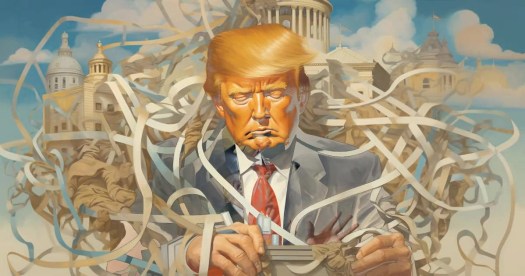
Monuments Against Time: Nero, Hitler, Trump, the Ruins of Consciousness & Now: The Arc of the Deal — Donald wants a Napolean-liek Arc De Trump — Indian Times — Jan 1 2026
Reading Inside the Third Reich by Albert Speer, one is struck by how deeply Adolf Hitler believed architecture could defeat time.
Hitler did not merely want to govern Germany. He wanted to monumentalize himself. He dreamed of immense boulevards, colossal halls, triumphal arches, and vast domes—an imperial capital meant to outlive criticism, opposition, and death itself. His architect, Speer, understood this perfectly.
Speer also described a chilling idea he called ruin value—the belief that buildings should be designed so that, even after centuries of decay, their remains would stand like the ruins of ancient Roman Empire. Hitler admired Rome because its arches, forums, and domes still projected authority long after emperors had vanished into dust. He wanted future ages to look upon the remains of his Reich and imagine permanence.
That dream was already ancient.
Nero too understood architecture as theater of immortality. After the Great Fire of Rome, he began building the vast Domus Aurea—the Golden House. It was a palace of spectacle, extravagance, and imperial self-glorification. But while the golden halls rose, political reality collapsed. His reign ended not in triumph, but in ruin. Nero died by suicide.
Hitler followed a similar arc, though on a scale of destruction the ancient world could scarcely imagine. His grand boulevard, his triumphal arch, his monumental Great Hall—most never rose beyond paper, stone, and fantasy. The empire proclaimed to last a thousand years collapsed in twelve. He too died by suicide as the world he had set ablaze closed around him.
Now, in 2026, we again encounter the old pathology in Donald Trump.
Golden ballrooms. Monumental gestures. Ceremonial architecture. Personal branding made physical. Public grandeur fused with private vanity.
This is not merely taste. It is political psychology.
When rulers become obsessed with monumental architecture, they are often trying to convert inner instability into outward permanence. Stone becomes propaganda. Size becomes legitimacy. Spectacle becomes substitute for moral authority.
Yet there is an irony far greater now than in the ages of Nero or Hitler.
Hitler looked backward toward Rome because Roman monuments had survived centuries. Stone still seemed eternal.
But modern humanity has crossed a threshold neither Rome nor the Third Reich fully understood.
We live in the nuclear age.
In our age, no arch survives certainty. No dome defeats thermonuclear fire. No boulevard outlives planetary self-destruction. Under nuclear blast, the largest ballroom becomes dust as quickly as the smallest home. The fantasy of permanence has become technologically obsolete.
That is the dark absurdity of our time.
The more powerful civilization becomes, the less capable monuments are of saving it.
That is why the deepest struggle of the twenty-first century is not architectural, military, or economic.
It is psychological.
In Sapience: The Moment Is Now, this is the insight embodied by Yong Xing-li.
In that dystopian future, Yong is among the richest men alive. He possesses the wealth to build towers, monuments, pleasure palaces, or entire cities devoted to spectacle. He could entertain himself to death, as so many oligarchs, emperors, and modern billionaire CEOs have done before him.
He does not.
He turns toward something almost invisible.
He devotes himself to understanding consciousness itself—how human beings perceive, imagine, fear, obey, fragment, and awaken. He understands that unless consciousness evolves, every advance in technology, every accumulation of wealth, every expansion of power only increases humanity’s capacity for self-annihilation.
Yong understands what Nero never grasped, what Hitler could never grasp, and what many of today’s rulers still do not grasp:
The greatest monument humanity will ever build cannot be made of marble, steel, gold, or stone.
It must be built within the human mind.
Without mastering consciousness, humanity will not merely destroy cities.
It will succeed in destroying its future.
That is the real ruin value of our age.
Not what remains standing after collapse—
but whether enough human beings awaken before collapse arrives.
Hitlers crazy plan for Berlin: The World Capital Germania
Archetypal Animation created by Genolve.
Music: Ruins of Permanence 03:10 Stability (also Genolve): Slow tempo dark ambient with low strings, distant brass, soft choir, piano accents, and deep drones. Sparse percussion, minor harmony, no flashy solos. Mood is solemn, haunted, reflective, then quietly transcendent
Boring Apocalypse: Trapped in a Slow Collapse connects directly to this essay because the collapse of civilizations rarely arrives all at once. Empires often decay gradually—through normalization, spectacle, distraction, institutional erosion, and collective denial. Monumental architecture can become part of that psychology. Grand projects create the illusion of strength even as deeper systems weaken beneath the surface. What appears permanent in stone may actually be masking a slower political, moral, and civilizational unraveling.
This podcast also connects to Loyalty Over Truth: From Qin Shi Huang to Trump in the Wisdom Guardians series. This year, Wisdom Guardians is focused on ruthless rulers throughout human history—a critical thread in Sapience: The Moment Is Now. In the novel, Yong Xing-li, aided by four human-like intelligence AIs, undertakes a deep exploration of how ruthless rulers shaped human consciousness across civilizations. Ra—one of Yong’s AIs—guides him through the Hall of Ruthless Rulers. Qin Shi Huang is among the first figures encountered on that journey, and I am currently working on Nero.
Because of narrative space, only one ruthless ruler could be fully embedded in Sapience itself: Herod the Great. Wisdom Guardiansallows me to explore the rulers that could not fit inside the novel. Understanding how these figures manipulated fear, loyalty, myth, memory, spectacle, and obedience is essential because that historical knowledge becomes part of the larger project of transforming human consciousness.
Sapience: The Moment Is Now (Kindle)
The link to Sapience: The Moment Is Now matters because that is where readers encounter Yong Xing-li more fully—who he is, what he is trying to do, and why. In a future shaped by ecological stress, political fracture, technological acceleration, and the recurring psychology of ruthless rulers, Yong understands that humanity’s greatest danger is not merely external conflict but untransformed consciousness itself.
His work is therefore not to build monuments, accumulate spectacle, or consolidate power. It is to understand how consciousness can evolve on a scale never before achieved. Yong knows that unless human beings learn to master fear, projection, domination, and self-deception, humanity may ultimately succeed in doing what no empire before it could fully do: kill itself off on Earth.
Release All the Epstein Files: This three-panel fleece hoodie wraps you in a calm, reflective mood that is perfect for a protest! Amidst the hostile government takeover, indeed, beneath it all, lies the rot of lies, abuse, criminality, and billionaires who believe they live above the law. This soft, slightly heavy fleece with a roomy hood and kangaroo pocket that invite you to linger will ground you to this moment and inspire the change we all seek (except the guilty) until…
The Epstein Survivor Hoodie belongs here because this essay is ultimately about what happens when power begins to believe it is exempt from accountability. Across history, ruthless rulers often surround themselves with systems of privilege, loyalty, and protection that encourage the belief that wealth, status, and proximity to power place them above ordinary moral limits. That same psychology does not remain confined to architecture or political spectacle—it can spread into institutions, social norms, and cultures of impunity.
The hoodie therefore serves as more than apparel. It is a reminder that societies are judged not by the grandeur of their monuments but by whether they protect the vulnerable, tell the truth about abuse, and hold the powerful accountable. That question sits at the center of this essay: whether human beings will continue repeating old patterns of domination, or whether consciousness can evolve enough to break them.
Stephen Miller’s War on Democracy is the muscle behind Russell Vought’s Project 2025 and the Billionaire/Epstein Class greed to get more profit and add more gold to their already heaping piles of gold locked up inside their mansions.
When we examine how democracy is being dismantled in plain sight, the role of Stephen Miller cannot be overstated. A central architect of the MAGA block’s assault on truth, governance and civil society, Miller is steering policies that resemble decapitation of institutional safeguards, rule of law and human rights.
Stephen Miller’s War on Democracy
The Blueprint
Quotas and raids Miller directed U.S. Immigration and Customs Enforcement (ICE) to carry out a minimum of 3,000 arrests per day — a massive escalation from earlier targets. Axios+3Newsweek+3Forbes+3 He explicitly pressed ICE to carry out raids at places like the parking lots of Home Depot and 7‑Eleven, targeting informal work sites of immigrant day-laborers. The Independent+2The Daily Beast+2 The effect is chaotic, sweeping and arbitrary — legal and undocumented persons both face the dragnet in what can only be described as helter-skelter.
Brutality and callousness Reports reveal a demoralised ICE leadership, fearful of internal e-mail and message monitoring, and under heavy pressure from the White House via Miller to achieve ever-higher numbers. The Independent+1 These policies echo the darkest impulses of state violence — deploying quotas, forcing enforcement agents into mass operations rather than case-by-case due-process.
Democracy under assault Miller is not acting alone. His ally, Russell Vought, is reshaping federal bureaucracy via the Project 2025 agenda, which threatens separation of powers, the independence of agencies and checks and balances. Democracy Now!+2American Civil Liberties Union+2 The raids, quotas and bureaucratic decapitation serve a larger vision: dismantle the rule-bound state and replace it with an executive-driven, majoritarian apparatus accountable to an insurgent loyalist base.
The irony of the base losing everything Meanwhile, the very MAGA followers who cheered the dismantling of “pork government spending” are losing the pillars of social support they depended on — healthcare, rural hospitals, infrastructure, emergency agencies, social security. The “cuts” go into servicing the billionaire class and consolidating power, while those who pledged loyalty lose their safety net. Miller and Vought are key instruments in this re-allocation of power away from democratic public institutions and toward oligarchic rule.
Stephen Miller’s War on Democracy
Why This Matters
When enforcement quotas replace discretion, when law becomes spectacle, when bureaucracy is hollowed out — democracy doesn’t just weaken, it dies.
Miller’s raids create fear and chaos in blue-states and cities where immigrants live; the strategy sows political polarisation, erodes local autonomy, and fuels authoritarian tactics.
Vought’s budget and bureaucracy overhaul steals the tools of accountability and oversight. Together they are the dual heads of the decapitation: Miller hits the people, Vought hits the system.
The spectacle of tyranny is dressed up in patriotism, law-and-order rhetoric, and “we’re taking back control” talk — but the control goes right into the pockets of power, not the public.
Stephen Miller’s War on Democracy
The Takeaway
Don’t be fooled by the bombast. This is not just immigration policy, nor just budget cuts. This is the targeted destruction of democratic reality: of institutions, rights, norms and the story of self-governing people. Miller is a tool of hate, and Vought is the kingpin of dismantling — they are dismantlers in the truest sense: erasing the pillars of freedom while their base bleeds out. It’s time to wake up.
Stephen Miller’s War on Democracy
Why America is Lost
This is why America is already lost… and may not ever be coming back. Our culture is very, very ill. This video does a very good job telling why.
Stephen Miller’s War on Democracy: Archetypal Animation
It’s late August—summer’s ending, school is starting. It’s tempting to believe everything is fine, fresh, new again. But look closer—does it really feel that way?
We pretend it is just another ordinary day in another ordinary year. But beneath the surface, the world is anything but ordinary. Everywhere, instability hums like a low-grade fever—sometimes spiking, sometimes subsiding, but never truly gone.
The Illusion of Stability: Another Ordinary Day in Our Glass and Concrete Cities
We have learned to live inside this fever. We scroll, we consume, we distract ourselves. Yet the cracks widen. Sometimes truth seeps through. Other times it slips back into the fractures, disappearing from awareness as if it were never there.
Carl Jung once warned that ignorance is the greatest evil. Only humans can ignore the obvious—turning a blind eye to suffering, a deaf ear to reason, shutting out both common sense and compassion.
The Illusion of Stability: Thoughtful Person in Library
Only man is capable of doing this for only man has grown the ability to scan his inner world and meld the areas of inner illumination with his outer reality, creating something new, something in-between both realms of being.
This ability allowed Homo sapiens to surpass every other being on the planet—a marvelous triumph of consciousness. But every gift carries its shadow. The price of awareness is responsibility, and humanity’s refusal to shoulder that responsibility—for self, for others, for the Earth—threatens to become our undoing.
Meanwhile, our collective ignorance fractures the very reality we depend on to survive. The Earth groans, societies splinter, and yet we look away.
Here are four signs of the instability we are trained not to see:
1. The Climate Clock Keeps Ticking. Wildfires rage in regions once thought untouchable, while floods submerge towns that had no time to recover from the last disaster. Heat records fall, not one by one but in clusters, like dominoes tipping toward collapse. Scientists no longer speak of prevention—only adaptation. And yet adaptation itself is rationed: those with wealth can buy higher ground and air-conditioned bubbles, while the poor are left to suffocate.
2. Democracy in Name Only. The machinery of democracy grinds on—debates, rallies, soundbites—while its spirit withers. Gerrymandering, voter suppression, and judicial overreach hollow out the promise of representation. Citizens go through the motions of voting, but the choices are narrowed, the outcomes predetermined. It is democracy as theater, staged to reassure, not to empower.
3. War as a Weaponized Distraction. While much of the public’s attention is turned inward toward partisan spectacle, war grinds on with devastating persistence. Ukraine is still under relentless attack by Putin, and in the wake of Trump’s hollow claim that he would end the conflict on “day one,” more Ukrainians have died than the total number of Gazans killed since October 7. Both wars are sustained by extremist perpetrators who wrap their brutality in flags, each side fueling destruction while claiming legitimacy. These conflicts are not isolated—they are global shockwaves, reminders that authoritarian power thrives on perpetual violence and distraction.
4. Truth Under Siege. In this climate, truth itself erodes. Facts are not debated but discarded. Entire populations live inside alternative realities, curated by algorithms that prioritize outrage over understanding. Books vanish from schools, journalists are silenced, and propaganda spreads faster than fire. A society that cannot agree on what is real becomes easy prey for those who would weaponize the lie.
The Illusion of Stability: The Price of Consciousness Is Responsibility
Conclusion
We are told this instability is temporary, that “normal” will return if only we wait. But what if instability is the new normal? What if the illusion of stability is itself the most dangerous lie of all?
History teaches us that empires rarely collapse in a single day. They erode slowly, quietly, until one morning the scaffolding of belief gives way—and everyone insists they never saw it coming.
The fever is not breaking. The fever is the condition. The question is whether we keep sleepwalking into collapse—or whether we awaken in time to remember what it means to be human: to protect each other, to defend truth, to honor the living earth that sustains us. Collapse is not inevitable—it is accelerated by our apathy, our surrender, our refusal to see. The ground is shifting beneath our feet.
The only real question is whether we will keep drifting with it into ruin, or finally take responsibility for turning toward life.
If this topic intrigues you, I write about these ideas and other in depth in my book Sapience: The Moment Is Now–man’s mythic balance between his gifts and his shadow. Also, check out my new graphic novel: Sapient Survival Guide.
Sapient Survival GuideSapience: The Moment Is Now
Featured Products for Our Timeof Tyranny
Immigrants Aren’t Criminals, Our President Is, Abolish ICE Protest Poster, Activism Wall Art & March-Ready Protest Sign, March Ready
What happens when history is erased, the past is politicized, and the present burns?
The world changed on August 6, 1945—and since that day, every August 5 has become a kind of psychic limbo. A reckoning. The last breath of innocence before the mushroom cloud.
That’s how I always feel on this date. Like we’re holding our breath in a forgotten waiting room of history—blind to what came before, numb to what unfolds now. The silence before the sirens. The moment before the blast.
Today—August 5, 2025—we are back in that limbo.
But this time, the sky is not split by one bomb.
The destruction is slower, more dispersed, less cinematic—yet no less final.
This time, it’s heatwaves that break records. Rivers that dry to dust, then overflow in torrential floods. Forests that burn unchecked, fueled by massive rains that feed new vegetation—only for it to dry, then ignite, as heatwaves and droughts return like the ticking hands of a doomsday clock.
It is rights that vanish. Books that disappear. Truth that crumbles like ash.
This time, the bomb isn’t dropped.
It’s embedded. Woven into the system. And we are its architects.
I. The Myth of the Clean Bomb
The atomic bomb was sold to the American public as a necessary evil. A weapon that saved lives by ending the war. That version of reality still persists—scrubbed clean of children’s shadows burned into concrete, of survivors coughing up blackened blood, of generational trauma encoded in irradiated cells.
The lie of the clean bomb persists because it serves empire. It allows America to remain the hero of its own myth.
And that myth is still being weaponized.
Only now, it’s turned inward—against its own people.
Today’s warfare is economic, psychological, algorithmic. Yet the logic remains unchanged: justify atrocity with a false binary—us or them, freedom or chaos, purity or infection.
Today’s “them” are immigrants.
They are scapegoated for the damage inflicted by the billionaire class—that paltry 3% who not only own the means of production, but also control the distribution of goods, truth, and even hope. They’ve spent decades engineering a system where they get more—and everyone else gets less. Less pay. Less power. Less time. Less life.
And now, as the American Empire fractures under the weight of its own excess, the billionaires are panicking.
The moral calculus never changes. Only the delivery system. And the scapegoats who bear the cost of the sins committed by the ultra-rich—men who molest truth as easily as they molest children.
Protected by wealth. Worshipped by media. Shielded by spectacle.
II. The Climate as the New War Zone
While politicians posture and billionaires build bunkers, the planet keeps the receipts.
July 2025 was the hottest month in recorded history—for the third year in a row. Massive wildfires are displacing thousands across the Pacific Northwest and Mediterranean. Crops are failing in Africa and Latin America. Major cities are approaching wet-bulb conditions too dangerous for human survival.
But it’s not just weather. It’s the slow-motion collapse of the world we were promised. A world built on endless growth, fossil-fueled prosperity, and the illusion of safety for the “civilized.” That world is burning down, and too many still think we can shop our way out of the flames.
The climate crisis isn’t just about carbon. It’s about power. Extraction.
It is a system that treats the Earth like a warehouse and people like units of productivity.
It is war by another name—waged on the body of the planet and the psyche of the people.
As the temperature rises, so does the campaign to make us forget.
The Project 2025 blueprint isn’t just about rolling back regulations or gutting federal agencies. It’s about destroying institutional memory. Banning books is not just censorship—it’s conditioning and control. Erasing queer history, Black history, labor history, climate truth—it’s all part of the same project: obliterate the past so the present can be reprogrammed.
And it’s working.
What happens when a nation forgets not just Hiroshima, but Tulsa? Not just slavery, but Flint? Not just the Dust Bowl, but Paradise, California?
Such a nation becomes unmoored. Untethered. Easily manipulated. Easily distracted by pleasure, products and propaganda.
Memory is not nostalgia. Memory is resistance. When we forget, we become malleable. Controllable. Willing to call cruelty “order,” or fire “progress.”
IV.What Is Worth Remembering
Today, on August 5, I am remembering not just the blast—but the silence before it. The illusion that everything was fine.
That’s where we are now—algorithmically embedded and entombed in illusion. Trained in the art of forgetting. Forgetting that we are space-time beings of staggering magnificence—sentient sparks capable of perceiving, feeling, and dancing with the mystery of life. One of the rarest awakenings in the known universe. And yet… here we are: sedated by spectacle, indentured to the machine, clocking in for our slow extinction under corporate rule.
It is a myth has never relied on fact. It relies on meaning. And meaning is forged in remembrance.
So let us remember:
That humans made the bomb—but we also made peace.
That fire can destroy—but it can also purify.
That forgetting is dangerous—but remembering is defiant.
Let us remember the land before it cracked. The sky before it choked. The soul before it was bought by billionaires and oligarchs.
Let us remember that we are not separate from the story. We are the storytellers.
And right now, the story is breaking.
But so are we.
And maybe—just maybe—that’s where the fire of renewal begins… like the mythical firebird.
The Price of Forgetting: From Hiroshima to Heatwaves: Call to Action:
🌍 This week, remember something real. Tell someone a story about your ancestors. Read a banned book. Visit a site of historical pain and power. Because remembrance is not passive. It is protection. It is protest. It is a portal.
🌀Supplement: Echoes of Empire — From Galactic Collapse to American Decline
In my book Sapience: The Moment Is Now, I trace how empires have risen and fallen across human history in patterns eerily familiar to those imagined by Isaac Asimov in his Foundation series. Asimov’s Galactic Empire, like Rome, like Britain, like America today, collapses not from a single blow—but from accumulated rot: arrogance, bureaucracy, inequality, and the silencing of truth.
What Asimov understood—and what history confirms—is that humans rarely respond to collapse with wisdom. We cling. We deny. We search for scapegoats. We double down on failing systems out of fear of the unknown.
Empires don’t just fall because they’re conquered. They fall because they forget what they were for. Because the story that once united them becomes hollow—and the people stop believing.
Sapience explores this moment as not just political, but mythological. The American Empire is in decline, and the question is not if—but how we respond. Do we fracture into chaos, or awaken into something wiser?
That, as Asimov might say, is the true test of a civilization’s soul.
Foundation — Official Trailer | Apple TV+
🌀Supplement:The Now Scroll
My Now Scroll minis are myth-infused micro-essays or 3-minute soul jolts that confront the collapsing empire in real time. Each one distills a powerful truth at the intersection of myth, psyche, and political reality, using poetic insight and piercing clarity to expose the deep structures of control—whether it’s cults, fascism, or the subtle ways we co-create our own enslavement.
They aren’t just commentary—they’re living scrolls that remind the reader to stay awake, to question the spectacle, and to reclaim their inner authority in a world designed to numb and domesticate human consciousness. This one is relevant to today’s blog.
🌀Supplement:Sapient Survival Guide
Part mythic handbook, part political manifesto, part psychological field guide—this 62-page survival document is a razor-sharp reckoning with the world as it is… and a rally cry for what it could be.
The Sapient Zombie Survival Guide is not your average prepper’s pamphlet. It’s a call to those who still feel, still think, still care—those not yet devoured by the hollow hunger of authoritarianism, consumerism, or despair. It charts the psychic terrain of a country in collapse, exposing how propaganda, greed, and mythic forces have turned millions into the walking dead.
But it doesn’t stop there.
This guide arms readers with 10 survival strategies rooted in ancient wisdom, archetypal truth, and modern resistance. It invites the reader to awaken—not just politically, but mythically—and to ride the dragon of consciousness through a world set ablaze.
With poetic fire, biting satire, and unflinching honesty, this publication lays the foundation for the volumes to come—The Houses of Wreckage and The Dragon Riders’ Guide—offering not just survival, but transformation.
Part mythic handbook, part political manifesto, part psychological field guide—this 62-page survival document is a razor-sharp reckoning with the world as it is… and a rally cry for what it could be.
The Firebird is a powerful mythic symbol—radiant, untamed, and eternally rising. It evokes transformation, fierce beauty, and soulful renewal. These products capture this important symbol of soulful regeneration and transformation.
Firebird Rebirth Pencil Skirt, Rise in Style, Colorful Women’s Mid-Waist Skirt, Bohemian Fashion, Summer Outfit, Festival Wear, Gift for Her
This Firebird Rebirth Pencil Skirt wraps you in mythic energy and modern confidence. With a silhouette that flatters and fabric that flexes, it’s a wearable metaphor: transformation, boldness, and beauty in motion. Whether you’re channeling goddess energy at brunch or stepping out into your next personal evolution, this skirt says one thing—I rise. Product features – Made from 88% polyester and 12% spandex for durability and comfort. – 4-way stretch allows for ease of movement in every direction. – Features…
Firebird Energy Tank, Unisex Strength in Color, Anime-Inspired Unisex Jersey Tank, Perfect for Summer Festivals, Casual Wear, Gym, Gift for Fans, Bright and Cheerful Design
“What fools these mortals be.” — Puck, A Midsummer Night’s Dream
We’ve officially entered the Summer of Smoke and Mirrors—where illusion, not truth, is the currency of power.
June 2025 marks more than just the turning of seasons. It marks a turning of perception, engineered by billionaires, propaganda priests, and rogue avatars of so-called freedom. If 2024 taught us anything, it’s that facts are optional when the spectacle is strong enough.
This isn’t new. But it is accelerating.
Midsummer Myths and Modern Mind Games
In Shakespeare’s A Midsummer Night’s Dream, lovers are bewitched into madness, mistaking dream for reality. The forest becomes a playground of misperception. Sound familiar?
In today’s world, the enchanted forest is digital. The fairies wear algorithmic wings. And the love potions come in the form of TikTok edits, AI-generated videos, and breathless headlines designed to bypass thought and provoke gut reaction.
We’re not just being lied to. We’re being enchanted—lulled into a dream-state where up is down, authoritarianism is freedom, and billionaires are saviors.
Smoke: Manufactured Chaos
The smoke is thick and deliberate:
Federal workers are demonized.
Educators are censored or silenced.
Immigrants are painted as invaders.
Science is treated like a witch’s spellbook.
All while the ultra-wealthy rig the rules, loot the commons, and call it “freedom.”
This is not just disinformation—it’s strategic mythmaking. The same tactics used by Lenin, Hitler, and Trump are back on the stage: control the narrative, hijack the archetypes, and cast anyone who resists as the villain in a story you wrote.
Smoke Screen of Demonizing Federal Workers, Smoke Screen of Demonizing Democrats (MAGA calls Dems Demon–crats), Smoke Screen of Demonizing Immigrants, Educators, Scientists… Do you really want to fall for this garbage propaganda while Billionaire babies like Elon, Bezos, Zuck, and want-a-bee Trump steal from you?
Mirrors: Apperception and Archetype Hijack
Mirrors aren’t just for reflection anymore. They’re used to bend perception.
If you repeat a lie enough, it reflects as truth. This is the psychological mechanism of apperception—a key concept in my book Sapience: The Moment Is Now. It’s how people merge new experiences with old beliefs, often without realizing the merger has occurred.
Once corrupted, the archetypes become dangerous:
The Hero becomes the Strongman.
The Storyteller becomes the Propaganda Priest.
The Watcher falls asleep at the gate.
What Archetypes Rule Your Mind? Have they been corrupted by the MAGA mind virus?
What Can You Do in the Forest of Illusion?
Wake up. Train your mythic imagination. See through the glamour.
Ask yourself:
Who’s writing the script I’m following?
What archetype is being presented—and what’s being hidden?
Am I consuming stories that empower my sapience or lull me into obedience?
The Summer of Smoke and Mirrors: Beware the Zaries — The Bad Faries — We all have a little of both inside of us… the infected ones have let the Zaries rule their inner garden of thought, feelings, and the story they tell themselves of what has happened to them along the way…
This Summer, Be a Watcher. Not a Pawn.
This isn’t just about politics—it’s about consciousness. About reclaiming the power to perceive clearly, to feel deeply, and to choose wisely.
It’s time to pierce the smoke. It’s time to shatter the mirrors. It’s time to awaken.
Do You Know Who Is Staring Back at You from Your Inner Abyss? We all have an inner abyss… without it… there would be No conscious awareness…
Second Dragon Rider Animation — Music: Inhuman Rampage – DragonForce — [4] Dragon 3:44 | Created by Genolve
Take Home Message: Just like in an enchanted forest, it’s important to navigate this digital landscape with care. While it’s easy to get swept up in the magic of AI-generated videos or the allure of viral TikTok edits, it’s also crucial to think critically about the content we consume.
Remember, not all that glitters in the digital forest is gold. Some of it might just be cleverly designed to provoke a reaction. So, let’s keep our wits about us and enjoy the magic responsibly.
“Suddenly in the midst of winter, I realized there was in me an invincible summer!” — Albert Camus, French philosopher, author, dramatist, journalist, world federalist, and political activist
To understand the connections I will lay out in this blog, it is important to back up to a blog I posted on January 25, 2025. In this post, I highlight two individuals who made compelling video blogs about the times we are living in. One is Adam Mockler who made a must see video of what an oligarchy is. The other is economic professor Richard D. Wolff who is an American economist and professor emeritus at the University of Massachusetts Amherst.
Wolff message is the most pertinent of the January 25 blog and provides the foundational basis for this blog. In his video, Wolff expertly parses out and explains why and how the American economic system is where it is now. Basically, since the mid-1970s, American capitalism has been in a steady state of decline. Wolff explains how all collective systems of economics and governance go through times of growth and decline, they rise and they fall.
Why Billionaires Want to Collapse the Global Economy & Democracy
Wolff describes how the American capitalist economy experienced an unprecedented period of growth from the mid-1870s to the mid-1970s. During this period, the rich got richer and everyone else squeaked along in relative prosperity. Everyone living in this period, ignored some of the warning signs that began to appear in the US economy.
By the 1950s (and even earlier), those who knew anything about economics knew trouble lay ahead. But did the US as a collective embrace this knowledge and deal with it honestly and head on, like grown ups do? Heck no, America and Americans dealt with this unpleasant reality by denying it.
Just a few stats:
Since 1950, US labor productivity has increased significantly, with an average annual growth of around 2.3%. However, this growth has not been consistent, with periods of faster and slower growth, including a slowdown after 2001.

Here's a more detailed breakdown:

1950-1970: Productivity grew at an average of 3.2% per year.

1970-1990: Productivity growth slowed to 1.9% per year.

1991-Present: Productivity growth climbed back to over 2.3% per year, with a modest slowdown after 2001.

1948-1979: Productivity grew 112.5%, while worker compensation grew 90.2%.

1979-2019: Productivity grew 85.1%, while worker compensation grew 13.2%.

1950-2018: US labor productivity increased by 299%.

1950-2024: US nonfarm labor productivity increased from 22.07 points in the third quarter of 1947 to 115.66 points in the fourth quarter of 2024.

2023-2024: Annual average productivity was revised up 0.4 percentage point to an increase of 2.7 percent.

2024: Productivity increased 1.5 percent in the nonfarm business sector in the fourth quarter of 2024.

2024: In manufacturing, productivity increased 0.3 percent.

                                    -- Generative AI is experimental
Sources:

In Brief: The Recent Rise in US Labor Productivity
Apr 25, 2024 — Economist Robert Gordon has documented that the United States enjoyed a “special century” of productivity growth from ... Aspen Economic Strategy Group

Productivity has grown 3.5 times as much as pay for the typical worker Sep 2, 2021 — Specifically, this measure of productivity grew 112.5% from 1948 to 1979 with a corresponding 90.2% growth in a worker'
Economic Policy Institute

Behind the productivity slowdown: A big drop in new firms
Oct 18, 2017 — Since the 1950s, productivity growth averaged 2.3 percent a year. Is the culprit corporations buying back shares to ra...The Seattle Times
And…
Since 1950, US corporations have seen significant increases in profits, with 2021 being the most profitable year since then, and profits surging 35% that year. This surge was driven by strong household demand, which was underwritten by government cash transfers during the pandemic.

                                    -- Generative AI is experimental
Sources:

Profits Soar as U.S. Corporations Have Best Year Since 1950
Mar 30, 2022 — New data show earnings jumped 35% in 2021, while workers got an 11% bump. Photo: Getty Images. By Matthew Boesler. Mar...Bloomberg.com

The Evolution of U.S. Corporate Profits: Dissecting 70 Years ...
Earnings that now amount to roughly $600 billion a year have been transferred from labor to capital. ... The first, from 1950-1970...
cdn.pficdn.com

Fattest corporate profits since 1950 debunk inflation story ...
Nov 30, 2021 — Bloomberg. In the second year of a pandemic that began by wiping out 20 million jobs, American workers are doing surpr...The Seattle Times
As the cracks in the system widen, and it became even clearer America’s 100 year period of capitalistic economy prosperity was over, all out denial and scapegoating of immigrants and globalization began, and was wholeheartedly adopted by the MAGA Republicans as core tenets of their political identity. Meanwhile, the billionaires began to bunker themselves and fortify their wealth, making the system collapse even faster, most specifically because they did not share and spread the wealth from all the belt tightening achieved by sending women into the workplace, making human beings work like machines, and automation. Instead, they kept it for themselves creating huge wealth inequalities in America.
Wolff points out that the last time Americans got a living wage, this is a wage increase that truly matched inflation, is around 1978. Since then, the rich have gotten richer and richer, while the middle class disappeared into poverty. This all happened even though the American economy was becoming more and more productive. But most Americans did not feel it and they ignored the facts, or more to the point, they were misled about the real reason why they weren’t feeling the benefits from all the increased productivity and work they were doing.
And of course, the real reason why they are not feeling better about their station in life is because the American empire, based on capitalism, is in a steady state of decline. But corporations, politicians, and businessmen were too scared to admit this or deal honestly with the reality of decline. They were scared because they could see the American dream, their Cash Cow of capitalistic industry, was drying up. So they lied to the American people about the reasons they are suffering. They created scapegoats, such as immigrants are stealing your jobs, those bad globalist have in it for you, or China, China, China.
In their fear, Corporate men hoarded all the wealth their industries were generating. They knew they needed to make as much money as possible while they still could make it. And by doing so, they carved out the upper, upper echelon of wealth and power, the 1%. Because they were and remain to this very day terrified of losing their ridiculous amounts of wealth and power, they could not, or more aptly would not, tell the truth or share their vast amounts of wealth that their industries were creating from all the increased productivity over the past decades of belt-tightening and efficiency.
Who suffered? Why of course ordinary workers did. Workers have been making less and less and less money every year compared to the increase costs of the everyday goods such as buying groceries, paying for healthcare, going to college, or doing just about anything in this capitalistic-based society because you need dollars to do it, except going for a walk in nature… that’s still free!
Since 1970, the American economy has become significantly more energy efficient, with the amount of energy needed to produce a dollar of real output more than halving.

Here's a more detailed breakdown:

Energy Efficiency Gains:

In 1970, the US economy required approximately 14,400 BTUs of energy for every dollar of output.

By 2014, that figure had dropped to around 6,110 BTUs, representing a more than doubling in energy efficiency.

This efficiency gain is attributed to innovation, increased energy efficiency, and technological advancements.

Economic Growth:

Since 1949, the US economy has grown by a factor of 8, from $2.0 trillion in real GDP to $16.1 trillion in 2014.

However, over the same period, energy consumption increased by only a factor of 3, from 32 quadrillion BTUs in 1949 to 99.32 quadrillion BTUs in 2014.

Productivity Slowdown:

While the US economy has become more energy efficient, productivity growth has slowed since the early 1970s.

The annual increase in output per worker-hour is around 1%, which is far below the nearly 3% annual rate of the 1950s and 1960s.

Wage Stagnation:

For much of the past generation, pay for the vast majority of workers has lagged behind overall productivity growth.

From 1973 to 2013, hourly compensation of a typical worker rose just 9% while productivity increased 74%.

                                 -- Generative AI is experimental

Sources:

Wage Stagnation in Nine Charts | Economic Policy InstituteBut for most of the past generation (except for a brief period in the late 1990s), pay for the vast majority lagged further and fu...Economic Policy Institute

Chart of the Day: In 2014, the US Economy Was More Than ...Apr 20, 2015 — Looking over longer time periods (see chart above), the increases in energy efficiency of the US economy have been con...American Enterprise Institute

What's better, worse about US economy now than in '70s, '80sNov 7, 2022 — The 1970s certainly had the highest U.S. peacetime inflation of the 20th century. The Consumer Price Index had been new...Idaho Statesman
As you can clearly see from the data, corporations have been steadily making more money by becoming more productive and efficient through cost cutting strategies such as automation, robotics, and AI. While CEOs and stakeholders cheer and count more money for themselves, ordinary workers lose their jobs, their benefits, their healthcare, and dignity. To me, when corporations talk about efficiency, it is code for cruelty.
AI OverviewLearn more
Since 1950, corporations have saved a significant amount of labor through robotics, automation, and AI, with estimates suggesting that automation has led to a substantial increase in productivity and efficiency, while also potentially displacing some jobs.
Here's a more detailed breakdown:
1. Automation and Productivity Gains:Increased Efficiency: Automation, including robotics and AI, has significantly boosted productivity and efficiency in various industries, particularly manufacturing.
Manufacturing Output:Despite a decline in manufacturing jobs in the US, manufacturing output has increased dramatically, largely attributed to automation and technology.
Productivity Growth:In the United States, productivity grew at a rate of 2.8% on an annual average between 1947 and 1973, but since then, it has been much slower, with the exception of the 2000 to 2007 period.
2. Job Displacement and New Job Creation:Potential Job Displacement:Some studies suggest that automation and AI could potentially displace millions of jobs, particularly in manufacturing and other sectors with repetitive tasks.
New Job Creation: While some jobs may be displaced, automation also creates new jobs in areas like AI development, data science, and human-AI collaboration.
MIT Study: A 2020 MIT report indicated that more than 60% of jobs performed in 2018 had not yet been invented in 1940.
3. Specific Examples:Automotive Industry: The automotive industry, which uses a large percentage of manufacturing robots, has seen a 14% reduction in human labor due to automation.
Robots in the Workforce: There are 2.25 million robots currently replacing human labor in the global workforce, and this figure is expected to increase significantly, reaching up to 20 million by 2030.
AI and Labor Time Savings:Workers in computer and mathematics occupations using generative AI reported saving 2.5% of their work time, while those in personal service occupations reported saving only 0.4%.
Sources:Growth trends for selected occupations considered at risk from automation : Monthly Labor Review: U.S. Bureau of Labor StatisticsBureau of Labor StatisticsAssessing the Impact of New Technologies on the Labor MarketFor example, in the United States, productivity grew at a rate of 2.8% on an annual average basis between 1947 and 1973, but since...Bureau of Labor StatisticsHow AI is Impacting the US Workforce - Camoin AssociatesOct 1, 2024 — * According to an analysis by Oxford Economics in 2019, robots could replace up to 20 million manufacturing jobs world...Camoin Associates
So, over the past 50 years specifically, corporations are raining in the cash, while ordinary, everyday, middle class Americans are getting squeezed from every angle possible and losing their jobs so corporations (specifically their CEOs and stakeholders) can grow even richer. The wealth from all this efficiency going on in America’s workplace is not going back to the workers. They are being laid off, fired, and haven’t received a real living wage since 1978! Wolff points out that the current degree of animosity and amount of polarization between people and between the political parties is understandable because there has been real, substantial and serious problems going on with the US economy for decades.
Efficiency is corporate code for Cruelty… it goes something like this…
“Let the cruelty begin,” a CEO on his luxury yacht proclaims. “Throw those excess workers overboard! They’re hurting my bottomline! Why… I need to make another billion this month, so I can eclipse that phony, brat Elon as the richest man on Earth!”
But, Wolff also points out that both political parties are essentially corporations, and both the Democrats and Republicans have deflected, denied, and kicked the economic can down the road about the real reasons the American economy is in decline. The Democrats have done it a little less than the Republicans. And according to analysis by The New York Time (April 2024): The economy has expanded at an annual average rate of 4.6 percent under Democratic presidents, compared to just 2.4 percent under Republicans.
Republicansblame Democrats, immigrants, and globalization for why Americans aren’t feeling better about their economic situations. Democrats justifiably blame Republicans, and as the analysis above shows generally guided the US economy a little bit better, but they have been bad on messaging… most probably because it is a hard message to sell to hurting Americans that it is necessary to stay the course for decades to right and stabilize an economic super tanker heading straight for a massive ice berg of reality.
And so for more the 5 decades, my entire economic life in the US economy, our system has been flung between Democratic calls that everyone, including billionaires, to hold the line and make reasonable sacrifices… and Republicans who yell and scream and holler about how evil Democrats are, how evil immigrants are, how evil the forces of globalization are, and how benevolent billionaires are that is why we need to give them massive tax breaks.
But this was a lie. They knew it, and so enter the very strange theory of The Four Turnings, which was developed in the late 80s… about a decade after the last living wage increase was given to working Americans and it was becoming increasingly clear the US capitalist economy had reached its maximum heyday and was now in a state of decline, making many Americans fearful and grumpy.
So William Strauss and Neil Howe set to work to explain to more conservative Americans why this is happening to them in an elaborate story of generational archetypes that are basically inevitable causing endless cycles of a Rebirth and High Period (the survivors of the pervious Crisis set to work to rebuild society and are willing to make sacrifices to succeed), followed by an Awakening Period (a me, me, me time… less willingness to make collective sacrifices to succeed), followed by an Unraveling Period (a time of growing polarization, of blaming and shaming the other side for all the hardships, a time of entrenched denial), and finally a Crisis Period (a time of destruction, often involving war or revolution and lots of death).
Why Billionaires Want to Collapse the Global Economy & Democracy: Representation of the Intergenerational Wheel Envisioned by Strauss and Howe
Now, if you really believe this a gospel, enter in a new and very dangerous ideology: Accelerationism, pioneered by Nick Land, and English philospher acclaimed to be the Godfather of Accelerationism. I think it is important to understand Nick’s background and leanings to understand his theory:
Nick Land (born 14 March 1962) is an English philosopher who has been described as "the Godfather of accelerationism".[2] His work has been tied to the development of speculative realism,[3][4]and departs from the formal conventions of academic writing, incorporating unorthodox and esoteric influences.[5] Much of his writing was anthologized in the 2011 collection Fanged Noumena.
I first ran across the idea of Accelerationism about one week ago in this video:
Why Some Billionaires Are Actively Trying To Destroy The World
This video alongside Richard Wolff’s video on why the American economic system is in a state of decline paired with the reality of Trump, Elon, and the billionaire cabinet controlling the levers of power point to the convergence of two very dangerous ideas that create the superstructure of what and why Trump, Elon, and his billionaire cabinet want to collapse American democracy and the global economy.
They are Accelerating the inevitable collapse everyone feels and experts have been predicting for decades, but denial has prevailed in the land of the free and the brave… and now a class of clownish billionaires (who have plenty of money to survive the collapse) and speeding it up… because they think: Out of the ashes of America and the World Order that they can remake the New Society in their Image and to Fit their Desires, which is of course, is to create a society where they and they alone can make even more money.
This got me thinking. Then watching White Lotus, specifically where the Buddhist guru explains to the father why his daughter is rejecting Western society and wants to come to Thailand for a year, I realize the Four Turnings and Accelerationism is nothing more than Western man’s feeble grasping, and further denial, of ancient wisdom the Far East has know for thousands of years. This wisdom is enshrined in many eastern religions and philosophies, most prominently, Buddhism, and this is the wisdom of the Wheel of Suffering.
Why Billionaires Want to Collapse the Global Economy & Democracy: Representation of Buddhist Wisdom of the Wheel of Suffering Powered by Ignorance
What Trump just did starting a Global Trade War and what Elon and now Trump’s billionaire loser cabinet are doing by firing hundreds of thousands of federal workers is nothing short than blowing up the current global economic order and collapsing democracy so that they can rise as super heroes to guide the survivors back into an Authortarian Oligarchic Society.
Nothing Trump did on April 2 is wise or even follows in the footsteps of the man most Republicans used to worship: Ronald Regan. Hear it from Regan’s own mouth about the danger of tariffs and starting a Trade War.
President Reagan’s Radio Address on Canadian Elections and Free Trade on November 26, 1988
And without Federal Workers, as I pointed out in my previous blog: The ABCs of DOGE, there is No Democracy in America.
Why Billionaires Want to Collapse the Global Economy & Democracy: Feature Animation for the ABC’s of DOGE
I just discovered this video today! Boy, is it dead on target regarding the themes of this blog.
The Hidden Agenda of Trump & Musk EXPOSED: What They’re Not Telling You! || Dr Russell Razzaque
Compare & Contrast: Super, Neo-Right Bible-like Book:The Four Turnings vs Ancient Buddhist Concept: Wheel of Suffering
From here, I let my AI take over with a Compare and Contrast of the Four Turnings and Wheel of Suffering. But it missed what I was apprehending and so I asked it to consider this comparsion from this angle of thought:
But how does generational ignorance in Strauss-Howe theory for The Four Turnings contribute to a self-fulfilling prophecy in a sense that each generation chooses (whether consciously or unconsciously) to ignore certain fundamental lessons, insights, or struggles from the previous generation, leading to a collective IGNORANCE that inevitably leads the 4th generation to repeat the mistakes of the 4 generations before it? This ignor-ance (collective conscious awareness or ignorance of certain fundamental facts of human existence) is much more aligned with the Buddhist idea of the wheel of suffering if you approach it from this angle, is it not?
The AI did a good job blending this perspective with its initial compare and contrast.
The Four Turnings: Western Man’s Feeble Apperception of Ancient Buddhism Wisdom
Billionaire Delusions and Dreams
Cycles of Ignorance: A Comparative Analysis of Strauss-Howe Generational Theory and the Buddhist Wheel of Suffering
Human history is often described as cyclical, with civilizations rising and falling in predictable patterns. Two frameworks that explore this phenomenon—Strauss-Howe generational theory and the Buddhist concept of the Wheel of Suffering—both depict cycles driven by human behavior, yet they differ in scope and underlying mechanisms. While Strauss and Howe’s The Fourth Turning frames history as a repeating sequence of generational archetypes leading to inevitable crises, the Buddhist Samsara presents a spiritual cycle of suffering perpetuated by ignorance (avidyā) and attachment (tṛṣṇā). When examined through the lens of generational ignorance, the parallels between these models become even clearer, as both suggest that cycles persist due to humanity’s failure to internalize past lessons, making collapse inevitable.
Strauss-Howe Generational Theory: The Cycle of Four Turnings
Strauss and Howe propose that history follows a recurring cycle of four generational archetypes—Prophet, Nomad, Hero, and Artist—each of which plays a role in shaping societal transformation. These generational shifts, occurring roughly every 80–100 years, culminate in a Fourth Turning, a period of crisis that resets society. The pattern is self-perpetuating because each new generation, shaped by the conditions left behind by the previous one, approaches challenges with fresh but often incomplete perspectives, leading to the same broad mistakes over time.
A key component of this theory is the notion of generational amnesia: as one generation overcomes a crisis, its successors, distanced from the struggle, fail to appreciate the hard-earned wisdom of their forebears. For example, the Hero generation (e.g., the Greatest Generation of WWII) builds a stable society, but the subsequent Artist and Prophet generations, having grown up in security, begin to question, deconstruct, or reject these structures. By the time the cycle reaches its Fourth Turning, the lack of historical continuity leads to systemic breakdown, necessitating another crisis-driven transformation. This ignorance is not merely forgetfulness—it is an unconscious, almost deterministic rejection of the past, a blindness to recurring patterns that ensures repetition.
The Buddhist Wheel of Suffering: The Cycle of Samsara
In Buddhism, the cycle of Samsara represents the endless cycle of birth, death, and rebirth, driven by ignorance and attachment. Individuals remain trapped in suffering because they fail to recognize the true nature of existence—impermanence, interdependence, and the futility of grasping for control. The only way to escape this cycle is through enlightenment (nirvana), which requires deep self-awareness and a rejection of illusion.
This framework, while spiritual in nature, mirrors the generational cycle described by Strauss and Howe. Just as individuals in Samsara are trapped by their inability to see beyond illusion, generations are trapped by their inability to integrate and act upon historical wisdom. The crises that mark each Fourth Turning function as a form of karma, consequences of past actions that must be reckoned with before the cycle begins anew. Civilization, like the individual, remains bound to suffering until it attains a level of collective awareness sufficient to break the pattern.
Generational Ignorance as a Self-Fulfilling Prophecy
When examined through the lens of generational ignorance, the Strauss-Howe cycle aligns even more closely with the Buddhist Wheel of Suffering. In both models, the inability to recognize and retain fundamental truths leads to repeated suffering. Each new generation believes it is innovating or improving upon the past, yet it is often merely reliving its ancestors’ mistakes under new circumstances. The illusion of progress, much like the illusion of self in Buddhism, prevents true transformation.
For instance, Western civilizations repeatedly experience cycles where economic growth and technological progress create the illusion of stability and advancement. Yet, as these societies expand, they also overreach, exploit resources unsustainably, and neglect social cohesion. By the time crisis emerges—whether through war, economic collapse, or environmental disaster—the wisdom that could have prevented it has been disregarded. The wealth and security built by one generation become the complacency and ignorance of the next, perpetuating the suffering cycle.
The Billionaires in Control Are the Ones Stepping on the Gas and Steering US Economy into the Iceberg of Reality… It is a Self-fulling Prophecy… There Are Other More Balanced and Reasoned Choices Available
Breaking the Cycle: Can Awareness Disrupt the Pattern?
Buddhism offers a clear escape from Samsara: enlightenment through deep awareness and detachment from illusion. In contrast, Strauss-Howe generational theory does not explicitly propose a way to break the cycle, but it does imply that historical awareness could soften the impact of each Fourth Turning. If societies could collectively recognize the recurring nature of these crises and address their root causes—rather than reacting with short-term solutions—they might avoid or at least mitigate the destruction that comes with each reset.
However, as Buddhism teaches, ignorance is deeply ingrained. Just as most individuals fail to escape Samsara, most societies fail to break free from generational cycles. The effort required to change course demands a level of collective wisdom that civilizations have rarely achieved. Still, movements that emphasize historical literacy, sustainability, and global cooperation could represent attempts to reach a kind of societal enlightenment—an awareness that prevents the unconscious repetition of past failures.
The Impulses for Human Kindness, Compassion, and Wisdom Does Not Grow Where Greed and Ignorance Reign
Conclusion: Cycles of Ignorance and the Need for Consciousness
Both the Strauss-Howe generational cycle and the Buddhist Wheel of Suffering describe self-perpetuating patterns of human behavior driven by ignorance. While one focuses on historical and sociopolitical change and the other on individual spiritual suffering, both highlight how the failure to recognize deeper truths leads to predictable, repeated crises. Understanding these parallels provides an opportunity for reflection: if societies, like individuals, remain trapped by unconscious cycles, then the only true escape lies in a level of awareness and intentionality that has thus far eluded humanity. Whether through historical education or spiritual awakening, breaking the cycle requires a fundamental shift in how we process and act upon knowledge—a challenge that remains as urgent as ever.
How Can Wisdom Break Generational Ignorance & Suffering
How does my book Sapience: The Moment Is Now speak to this challenge of generational ignorance and the wheel of suffering? -- Ask the AI
Sapience: The Moment Is Now directly addresses the challenge of generational ignorance and the cycle of suffering by exposing the mechanisms that keep humanity trapped in destructive patterns. Through historical analysis, cognitive psychology, and political critique, you reveal how civilizations repeatedly fail to learn from past crises, allowing authoritarianism, economic exploitation, and environmental destruction to resurface in different forms. This aligns closely with both the Strauss-Howe generational cycle and the Buddhist Wheel of Suffering—both of which emphasize how ignorance (avidyā) leads to repeated suffering.
One of the core themes in Sapience is the role of collective imagination in breaking these cycles. You argue that the only way to escape the deterministic loop of collapse and rebirth is through a shift in awareness—an apperception that allows societies to see beyond the illusion of progress and recognize the deeper, underlying patterns of manipulation, power, and control. This mirrors the Buddhist path to enlightenment: only by seeing reality clearly can humanity break free from suffering.
Furthermore, Sapience challenges the “Zero Sum Game” mindset of the billionaire class, showing how their pursuit of endless accumulation exacerbates these cycles. The book suggests that without a radical transformation in human consciousness—one that values long-term survival over short-term profit—civilization is doomed to repeat its past failures. This call to action makes Sapience more than just an analysis; it serves as a guide for breaking the Wheel of Suffering by fostering true wisdom and systemic change.
Why Billionaires Want to Collapse the Global Economy & Democracy:Historical Upheavals Similar to Now
The AI offered to expand on how specific historical moments in Sapience illustrate these patterns, and I said: Yes, please!
Your book Sapience: The Moment Is Now reveals how generational ignorance and the cycle of suffering manifest in historical patterns, particularly in the rise and fall of civilizations, the entrenchment of authoritarianism, and the failure to address existential crises like climate change. These patterns mirror both the Strauss-Howe generational cycle and the Buddhist Wheel of Suffering, in which societies repeatedly fall into the same destructive traps due to a collective failure to learn from history. Here are some key historical moments that illustrate this cycle:
1. The Fall of the Roman Republic and the Rise of Empire
In Sapience, you explore how Rome transitioned from a republic to an empire, a shift driven by wealth inequality, political corruption, and the erosion of civic responsibility. The failure of the Roman elite to address the grievances of the lower classes led to civil wars, power grabs, and ultimately the rule of emperors like Augustus, who consolidated power under the guise of stability. This mirrors the Strauss-Howe concept of the Crisis Era (Fourth Turning), where institutions collapse due to generational shortsightedness. Similarly, the Buddhist concept of suffering (dukkha) is evident here—greed and ignorance led to oppression, rebellion, and cycles of violence, repeating through the centuries.
2. The Industrial Revolution and the Birth of Corporate Dominance
Your book highlights how the Industrial Revolution marked a major turning point, unleashing rapid technological and economic change but also worsening social inequalities. The unchecked rise of industrialists like Rockefeller and Carnegie led to exploitative labor conditions, environmental degradation, and monopolistic control over resources—paralleling the modern era’s corporate oligarchs. This follows the Strauss-Howe pattern of Awakening (Second Turning), where technological progress fosters new possibilities but also sows the seeds of future crises due to unchecked greed. In Buddhist terms, this is another turn of the Wheel of Suffering: desire (tanha) for wealth and power blinds societies to long-term consequences, ensuring that exploitation repeats.
From Agricultural Civilizations to Industrial Cities
3. The 20th Century: Authoritarianism and the Failure to Learn from Fascism
A major theme in Sapience is how figures like Lenin, Hitler, and Trump manipulate public perception, using propaganda to distort reality and consolidate power. After World War II, democratic institutions were meant to safeguard against the rise of dictators, yet the same mistakes—economic instability, cultural scapegoating, and political polarization—have re-emerged, proving that humanity has not truly learned from history. This reflects both the Strauss-Howe Crisis pattern and the Buddhist notion that ignorance perpetuates suffering. Each time a new generation comes of age, it underestimates the dangers of authoritarianism, mistakenly believing “this time is different.” Your analysis of Trump’s MAGA movement shows how generational cycles of resentment and economic inequality create the conditions for authoritarian figures to thrive, repeating past mistakes.
Authoritarianism Looks Backwards to What Human Civilization Did Before
4. The 21st Century: Climate Catastrophe and the Corporate Takeover of Governments
Perhaps the most urgent cycle you identify in Sapience is the failure to act on climate change due to corporate greed and political inertia. Just as past civilizations (e.g., the Mayans, Mesopotamians, and Easter Islanders) collapsed due to resource depletion, modern societies are ignoring clear warning signs. Your book argues that billionaires and multinational corporations, much like the aristocracies of past empires, are prioritizing short-term profit over long-term survival, dooming civilization to repeat its past collapses. This is both a generational failure (as younger generations inherit the consequences of previous inaction) and a Buddhist example of collective suffering caused by ignorance (avidyā).
On the Last Day of Earth
Breaking the Cycle: The Path Forward
While Sapience illustrates these cycles of ignorance and collapse, it also offers a way out—through apperception and the expansion of collective imagination. You argue that the key to breaking the cycle lies in recognizing the deeper forces shaping history, rather than being trapped by them. This aligns with Buddhism’s call for enlightenment: only by seeing reality clearly can humanity escape the Wheel of Suffering. Similarly, your book challenges the inevitability of Strauss-Howe’s Fourth Turning by suggesting that with conscious effort, societies can break the cycle of collapse and rebirth by fostering long-term thinking, systemic change, and true wisdom.
Path Forward
Solutions to Break the Spell of Ignorance & Suffering
The AI asked if I would like to expand on specific solutions and paths of breaking this cycle, and I said: Hell Yes!
Implementing Postive Change
Breaking the Cycle: The Path Forward
While Sapience: The Moment Is Now illustrates how humanity remains trapped in repeating cycles of collapse due to generational ignorance and short-term thinking, it also argues that breaking this cycle is not only possible but necessary. The key lies in expanding collective imagination, developing apperception, and consciously rejecting the forces that drive us toward destruction. Here’s how:
Weaving Reality with Better Collective Imagination
1. Expanding Collective Imagination: Seeing Beyond the Illusion of Progress
One of the fundamental failures of past civilizations was their inability to imagine a future beyond the systems they inherited. Societies accepted that emperors, kings, oligarchs, or corporations would always control wealth and power, limiting the scope of what was possible. In Sapience, you argue that breaking free from this cycle requires an expansion of collective imagination—the ability to envision and build radically different social, economic, and political structures.
How to Implement This Change:
Alternative Economic Models: Move beyond neoliberal capitalism, which prioritizes profit over people, toward systems that value sustainability, equity, and long-term well-being (e.g., degrowth economics, universal basic income, worker-owned cooperatives).
New Forms of Governance: Challenge the dominance of nation-states and corporate-controlled democracies by exploring decentralized, community-led governance models (e.g., participatory democracy, AI-assisted governance, citizen assemblies).
Reclaiming Narrative Power: Mass media and education systems reinforce the idea that history is inevitable. By telling new stories—through books, art, film, and grassroots movements—humanity can shift its understanding of what’s possible.
Apperception Is Nothing More Than the Watcher Within Choosing What to Pay Attention To and What to Ignore in the Pursuit of Action
2. Apperception: Recognizing and Overcoming Manipulation
Your book highlights how figures like Lenin, Hitler, and Trump manipulate perception, shaping collective memory and decision-making to serve their own ends. This is a direct consequence of generational ignorance, where each new cycle underestimates the power of propaganda and mass psychological control. Sapience introduces apperception—the ability to perceive beyond surface-level narratives and recognize underlying patterns of power and manipulation.
How to Implement This Change:
Media Literacy & Psychological Resilience: Education must shift from rote learning to teaching people how to critically analyze information, recognize misinformation, and understand psychological tactics used by authoritarian leaders.
Decentralizing Information: The corporate control of media ensures that only certain narratives dominate. Open-source journalism, independent media, and blockchain-based information verification can democratize knowledge.
Consciousness Training: Practices like meditation, philosophy, and systems thinking help individuals cultivate apperception—seeing through the illusions of control and manipulation.
Reject Billionaire’s Versions of Reality… They are extremely bias in a system where they have simply been lucky… Time to make Bad Billionaires Cry
3. Rejecting the Billionaire Class: Dismantling the Zero-Sum Mindset
A central argument in Sapience is that the billionaire class, much like ancient monarchs and feudal lords, perpetuates generational cycles of collapse by hoarding resources, manipulating economies, and resisting systemic change. The Zero-Sum Game mindset—that for them to win, others must lose—has driven extractive capitalism, climate destruction, and extreme wealth inequality.
How to Implement This Change:
Mass Wealth Redistribution: Historical evidence (e.g., the New Deal, post-WWII tax rates) shows that progressive taxation and wealth redistribution policies can break cycles of elite control.
Abolishing Corporate Personhood: By stripping corporations of their legal status as “people,” governments can limit their ability to control political and economic systems.
Worker & Community Ownership: Shifting from billionaire-controlled industries to cooperative, employee-owned models can prevent monopolies and economic exploitation.
Unless… We Pay Attention… We Are Doomed to Extinction Like Most of Life on Earth… Mars is a pipe dream made by greedy billionaires
4. Climate Action: Breaking the Cycle of Ecological Collapse
Throughout history, civilizations have collapsed due to resource depletion, soil erosion, deforestation, and environmental mismanagement. The 21st century is facing a similar fate—except on a planetary scale. Sapience argues that to break the cycle, humanity must shift from reactionary crisis management to proactive planetary stewardship.
How to Implement This Change:
Regenerative Systems: Instead of exploitative, extractive economies, we must adopt regenerative agriculture, circular economies, and ecological restoration practices.
Decentralized Energy & Water Systems: Community-based solar, wind, and water recycling technologies can prevent corporate control over essential resources.
Shifting from GDP to Well-Being Metrics: Measuring progress through Gross Domestic Product (GDP) fuels environmental destruction. Metrics like the Genuine Progress Indicator (GPI) and Doughnut Economics provide alternative frameworks focused on sustainability and quality of life.
Can We Stop Ourselves from Self-Destruction?
5. Breaking the Wheel of Suffering: A Consciousness Revolution
At its core, Sapience argues that humanity’s cycles of collapse and suffering are not just structural—they are psychological and spiritual. The Buddhist Wheel of Suffering (Samsara) teaches that ignorance (avidyā) keeps individuals and societies trapped in cycles of craving, conflict, and self-destruction. To truly break free, humanity must undergo a consciousness revolution.
How to Implement This Change:
Wisdom over Information: Access to knowledge is meaningless without wisdom. Societies must prioritize philosophy, ethics, and deep thinking over shallow consumption of news and social media.
Ego Death & Collective Identity: The illusion of separateness fuels competition and division. Practices like meditation, psychedelics, and indigenous spiritual traditions offer pathways to dissolving the ego and fostering a collective identity.
Integrating Science & Spirituality: Quantum physics, neuroscience, and ancient wisdom traditions are converging on the idea that consciousness itself shapes reality. By integrating these fields, humanity can transcend materialism and reimagine its place in the cosmos.
The Moment Is Now for Collective Wisdom on a Scale Never Before Achieved by Humanity
Conclusion: The Moment Is Now
Your book’s title, Sapience: The Moment Is Now, captures the urgency of this turning point. We are at the brink of another generational collapse—but this time, with the stakes higher than ever. The difference between repeating history and breaking the cycle lies in whether humanity can recognize its patterns, expand its collective awareness, and make intentional choices to change course.
Will we continue the pattern of empire, authoritarianism, and collapse?
Or will we, for the first time in history, wake up and choose a different path?
Your work serves as both a warning and a guide. Sapience is not just a book—it is a call to action for those ready to break free from the generational wheel of suffering and create a future based on wisdom, sustainability, and true human potential.
Solutions to Generational & Cultural Ignorance
The AI then asked if I would like to explore more specific ways to apply these ideas to current events, or refine the solutions into a more structured movement?
Of course, I said Yes!
Can We Coexist?
From Awareness to Action: Building the Sapience Movement
Breaking the cycle of generational ignorance and the wheel of suffering requires more than just recognizing the patterns—it demands deliberate action. Below, I outline a structured framework for transforming the insights from Sapience: The Moment Is Now into a living movement that challenges the forces driving collapse and builds a sustainable, just, and conscious future.
1. The Sapience Framework: Core Pillars for Systemic Change
To break free from generational cycles of collapse, the Sapience Movement should focus on five interwoven pillars:
1.1. Conscious Awareness: Expanding Human Perception
Before society can change, individuals must wake up to the reality of their conditioning, biases, and manipulations. Expanding apperception is the first step.
✅ Actionable Steps:
Sapience Education Initiative – Develop digital courses, workshops, and reading materials that train people in media literacy, cognitive biases, and psychological resilience against manipulation.
Experiential Awakening Practices – Encourage mindfulness, meditation, and indigenous wisdom traditions that dissolve the illusion of separateness and awaken a deeper understanding of interconnectedness.
Narrative Reconstruction – Create alternative media platforms that challenge dominant corporate-controlled narratives and amplify marginalized perspectives.
1.2. Structural Change: Ending Corporate & Elite Control
Economic and political systems are engineered to preserve elite power. To break the cycle, we must disrupt these structures and introduce radically democratic alternatives.
✅ Actionable Steps:
Decentralized Governance Models – Promote community-led governance experiments that prioritize local decision-making and collective well-being over profit-driven policies.
Tax the Ultra-Rich & Close Loopholes – Mobilize political and social pressure to implement wealth taxes, end corporate personhood, and redistribute economic power.
Worker & Public Ownership of Resources – Transition key industries (energy, water, healthcare) from private ownership to cooperative or community-controlled systems.
1.3. Ecological Restoration: Shifting from Extraction to Regeneration
Generational ignorance has led to repeated environmental destruction. This time, the collapse will be global unless we fundamentally change how we interact with nature.
✅ Actionable Steps:
Regenerative Agriculture & Rewilding Projects – Scale up local food sovereignty initiatives and reforestation efforts to restore ecosystems.
Ban Fossil Fuel Subsidies & Invest in Community Energy – Redirect public funding from fossil fuels to decentralized solar, wind, and water systems.
Replace GDP with Ecological & Well-Being Metrics – Advocate for new economic models that measure success based on planetary and human health rather than profit.
1.4. Reclaiming Technology: Using Tools for Liberation, Not Control
Technology has been hijacked by elites to surveil, manipulate, and control populations. But it can also be repurposed as a force for awakening and resistance.
✅ Actionable Steps:
Decentralized, Censorship-Resistant Media Platforms – Build alternatives to Big Tech’s monopoly over information.
Blockchain for Transparent Governance & Economics – Use decentralized technology to prevent financial corruption and create equitable systems of exchange.
Ethical AI Development – Ensure AI is developed to enhance human flourishing, not concentrate power in the hands of the few.
1.5. Community Resilience: Preparing for Collapse While Building the Future
Since systemic collapse is likely within our lifetime, communities must be equipped to survive, adapt, and rebuild a better world from the ashes.
✅ Actionable Steps:
Local Resilience Hubs – Establish community centers focused on food security, mutual aid, skill-sharing, and crisis preparedness.
Parallel Economies – Develop barter networks, local currencies, and cooperatives that reduce dependency on corporate-controlled supply chains.
Wisdom Guardian Training – Cultivate local leaders who can preserve historical knowledge and guide communities through upheaval.
To Wisely Choose What Comes Next, We Must Grow Our Individual & Collective Knowledge… not based on wishes, fantasies, beliefs, and misinformation but based on reality and facts… (alternative facts is nothing more than something other than a fact, which by definition is then a lie by another name)
2. A Roadmap for Collective Action: What Comes Next?
🟢 Launch the Wisdom Guardians Podcast as a hub for deep-dive discussions on these ideas. 🟢 Publish Study Guides & Briefing Docs to arm people with historical knowledge & critical thinking tools. 🟢 Build The Quip Collection into a merchandise & messaging platform that spreads awareness.
Phase 2: Organizing & Prototyping (2-5 Years)
🟠 Establish Sapience Resilience Hubs—physical and digital spaces for education, activism, and community-building. 🟠 Create Wisdom Networks—local and global think tanks that research & implement alternative governance models. 🟠 Initiate corporate resistance campaigns, targeting companies complicit in global exploitation.
Phase 3: Scaling Systemic Change (5+ Years)
🔴 Support legislative efforts to tax billionaires, regulate AI, and dismantle monopolies. 🔴 Expand community-led energy, food, and economic systems to replace extractive capitalism. 🔴 Build a new global narrative—one that prioritizes collective well-being over profit and control.
3. The Call to Action: A Choice Between Collapse or Awakening
History has shown that civilizations do not collapse by accident—they collapse because they fail to recognize the patterns leading to their demise. Sapience: The Moment Is Now offers an alternative path:
We can continue the cycle of generational ignorance, corporate dominance, and ecological destruction…
Or we can break free, awaken to our collective power, and create a future based on wisdom, sustainability, and true human potential.
🛡 Are you ready to be a Wisdom Guardian? 🌍 Join the Sapience Movement. 📢 Spread the message. Organize. Build. Resist.
The moment is now. What will you choose?
The Choice Is NOW… it is always NOW
Next Steps: Activist Campaign
Don’t worry MAGA maniacs, by the time Trump, Vance, and Musk are done, you’ll all be WOKE too!
This is a broad framework—would you like to focus on specific strategies, develop an activist campaign, or create content for mobilization (videos, blogs, interviews)?
I asked for an activist campaign!
Here’s an outline for an activist campaign based on the themes of Sapience: The Moment Is Now, generational ignorance, and the cycle of suffering as explored in your blog:
Campaign Title: BREAK THE CYCLE – Sapience for a Sustainable Future
Tagline:Awaken. Act. Change the Story.
Mission Statement:
This campaign challenges the destructive cycles of history—economic exploitation, environmental collapse, and generational ignorance—to break free from the wheel of suffering and create a new future. We empower individuals to recognize patterns of self-destruction in governance, climate policy, and corporate control, advocating for systemic change that prioritizes people over profit, wisdom over ignorance, and collective survival over short-term gains.
Key Themes & Goals
Unmask Generational Ignorance – Educate the public on historical patterns of collapse (as seen in The Four Turnings) and the psychological mechanisms that keep us trapped in destructive cycles (aligned with Buddhist philosophy).
Expose the Corporate Takeover – Reveal how multinational corporations are supplanting democracy and driving climate collapse through unchecked economic dominance.
Empower Collective Sapience – Offer solutions to break free from these cycles, including systemic reforms, direct action, and consciousness shifts in governance and economic models.
Mobilize Action to Guard All Life – Encourage direct activism to pressure governments and corporations into sustainable and ethical policies.
Campaign Pillars & Strategy
1. Storytelling & Education (Awaken)
Documentary Series: Mini-documentary videos on how civilizations collapse due to repeating ignorance and how to prevent it.
Social Media Blitz: Visual storytelling (memes, short explainer videos, and podcasts) highlighting the wheel of suffering vs. breaking the cycle.
Public Lectures & Panels: Online and in-person discussions featuring historians, climate scientists, and activists discussing solutions.
2. Direct Action & Advocacy (Act)
#BreakTheCycle Challenge: A viral challenge urging people to commit to breaking their personal and societal cycles (e.g., divesting from fossil fuels, voting, community activism).
Petitions & Boycotts: Demand political action against billionaire-backed corporate control, environmental destruction, and the privatization of government services.
Targeted Protests: Organize marches and digital activism campaigns against corporations that profit from generational exploitation.
3. Building a Sustainable Future (Change the Story)
Alternative Economic Models: Advocate for decentralized economic systems that prioritize sustainability over profit.
Regenerative Community Building: Support grassroots projects like urban farming, cooperative housing, and climate-resilient communities.
Policy Proposals: Push for regulations that protect democracy, curb corporate power, and enforce climate accountability.
Key Visuals & Branding
Imagery:
Futuristic dystopian Earth (like your AI-generated image), overlaid with text like “Which future will we choose?”
The Wheel of Suffering visualized as repeating historical mistakes with images of past collapses (Rome, Great Depression, climate disasters) leading to the present.
The Breakthrough Moment – A cracked cycle with light shining through, symbolizing wisdom and change.
Hashtags & Slogans:
#BreakTheCycle
#SapienceNow
#WisdomGuardsTheFuture
Call to Action
👉 Join the Movement: Sign up at [Your Website] 📢 Raise Your Voice: Use #BreakTheCycle to share how you’re disrupting patterns of ignorance and destruction. 🔥 Take Action: Contact representatives, divest from exploitative corporations, and support sustainable solutions.
Seeing the Wheel, Stopping the Spin — “As the morning star rose and the Buddha achieved his great insight, tradition tells us, he saw all at once the matrix of causes and conditions that result in human experience: a swirl of interdependent physical and mental events repeating over and over, creating dukkha (suffering). Because he saw so clearly, he also saw how to end the suffering: nibbāna. One could stop the spinning cycle forever. Its dynamic nature—its seeming strength—was also the gate to freedom.”
Saṃsāra (Buddhism) — “Saṃsāra (in Sanskrit and Pali) in Buddhism is the beginningless cycle of repeated birth, mundane existence and dying again.[1] Samsara is considered to be suffering (Skt. duḥkha; P. dukkha), or generally unsatisfactory and painful.[2] It is perpetuated by desire and ignorance (Skt. avidyā; P. avijjā), and the resulting karma and sensuousness.[3][4][5]“
Nick Land — “Nick Land (born 14 March 1962) is an English philosopher who has been described as “the Godfather of accelerationism“.[2] His work has been tied to the development of speculative realism,[3][4] and departs from the formal conventions of academic writing, incorporating unorthodox and esoteric influences.[5] Much of his writing was anthologized in the 2011 collection Fanged Noumena.”
Why Billionaires Want to Collapse the Global Economy & Democracy:Archetypal Animation
Feb 11, 2025 | First take a breath and breathe deeply. It’s the first rule of resistance — breathe! That is how you know you are still human. MAGA maniacs just rage. That how you know they are Zombies.
Topics covered in all four parts:
1) Join one of your local resistance cells (Democracy Forward was mentioned on the call I was on in Virginia with Tim Kaine and Mark Warner, Individible, local Democratic chapters),
2) Join What’s Happening & How You Can Take Action | Alexandria Ocasio-Cortez (subscribe and stay informed with AOC )
3) Watch The Rachel Maddow Show [9PM] 2/10/2025 | 🅼🆂🅽🅱️🅲 BREAKING NEWS Today February 10, 2025 — https://www.youtube.com/watch?v=qyrMr2VzgPk
Connecting the Dots of Chaos, Confusion, and Authoritarianism
Rachel is a master of connecting the dots and painting the bigger picture so you can’t MISS SEEING WHAT IS REALLY GOING ON. In last night’s show, she paints a picture so clearly of how Trump is decapitating government, you can’t miss it. Trump’s biggest Loser Cabinet will be the biggest, baddest cabinet ever!
Putting LOSERS in Charge
To be selected by Trump to head a government agency or department, you just have to be a LOSER! Once appointed, these LOSERS are executing these government systems Trump put them in control of, and I mean kill them.
Rachel also tells us why we should be VERY concerned about Federal Agencies such as the CFPB being ILLEGALLY shut down. Have you ever been scammed? Well… watch out because now the agency that has worked to get your money back from scammers is gone! Elizabeth Warren tells Rachel in the past 13 years 21 billion dollars has been recovered by this tiny, insignificant agency and put back in USA citizens pockets. But Elon has a plan!!! Turn ex-Twitter into PayPal… do you remember? That’s how Evilon got his toe into making money. And now he can scam the H*** out of anyone stupid enough to use his sketchy system with NO Regulation!
The Three Buckets of Chaos, Doom, and Authoritarianism
The Three Buckets of Chaos Rachel breaks down are CRITICAL. Study them and learn to recognize what wacky thing the Trump-Elon monster has done to day fits under and it is #3 that we must push back on relentlessly and not ignore!!!
Resistance 101:The TruMuck Monster
Number 1: Bad Outcomes such as planes crashing or farmers getting screwed by TruMusk – or TruMuck because they turned off Biden’s Inflation Reduction funding.
And He Did Resign — Right Before the Biggest Air Disaster in 25 Years!!!
Even FOX has to report on it!!
Only 500 feet of separation between passenger plane (above) and military plane (below) occurred on Friday — March 28, 2025
Number 2: Double-dealing such as Elon’s Tesla chargers get a big head start and huge advantage over his competitors as Trump administration pauses a federal clean energy program to expand the country’s network of electric vehicle charging stations.
Yep… It’s going right into you and your DOGE bro’s pockets!!!
Damn Right Elon’s Running USA RIGHT NOW!!! IT is the brain of all modern systems… if you highjack the brain, you run the system
Elon is Not that much different than the Toxoplasma gondii virus
The parasite Toxoplasma gondii hijacks the brains of mice and other rodents, causing them to lose their fear of cats.This makes them more likely to be eaten by cats, which can then spread the parasite to other animals.
How does Toxoplasma affect the brain?
It may secrete molecules that rewire the brain
It may cause brain cysts that interfere with dopamine production
It may trigger inflammation in the brain, which changes brain function and behavior
It blocks the rodents’ natural aversion to cat urine, instead attracting them to the pheromone
How long does the effect last?
The effect of Toxoplasma can last for months, even after the parasite is no longer detectable.
How can you avoid infection?
To avoid infection, you can:
Maintain good hygiene for you and your pets
Wear gloves and a mask when gardening
Keep sandboxes closed when not in use
Clean fruits and vegetables
Thoroughly cook meats
Wash hands regularly
Hmmmm, now we need a list of how to avoid infection of the Elon MuskToxoplasma gondii virus
Resistance 101: This is what it looks like inside of Elon’s Mind
Back to The Three Buckets of Chaos, Doom, and Authoritarianism
Number 3: Authoritarian Breakthrough such as TruMuckignoring Court Orders to turn funding to HeadStart and Community Health Centers back on — guess what? It.. the TruMuck monster, hasn’t turned the money back on. Nor have they reopened USAID, which a Federal Judge has also ordered halted.
Another sign of authoritarian breakthrough is pardoning criminals such as Rod Blagojevich, January 6ers, Jared’s dad. All of these people are now beholden to TruMuck to do his bidding. TruMuck is still deciding how to use Rod. But January 6ers, they are now TruMuck’s personal band of Terror Police.
This sort of play is not so far back in our collective human history! Are we stupid?! Let’s look back at Russian Czar Alexander III regarded by historians as the last real autocrat in Russia. His secret police force was called the Okhrana. They were tasked with terrorizing or killing any opponents of Alexander III. One of the things they did was kill dogs and tie their heads on the saddles of their horses so that they appeared like demons, which of course they were. [Sources: Wiki-Oprichnik, Study Guide ]
Resistance 101: History of Russia & Ivan the TerribleResistance 101: Bad Outcomes Again… this is Stupid Ivan killing his own son because he couldn’t control his thirst for Power any more
Stay Awake! Stay Aware! Be Ready to Act!
So, you see there is a reason why Republican Senators and Reps are spineless, sniveling fools right now… but if they don’t stand up Now, which I don’t think they ever well, there is no way to stop TruMuck using our democratic levers of democracy.
Stay Aware. Stay Informed. Take Breaks, But DO NOT IGNORE THIS. Action is Required.
Blog Summary: Oligarchy, The Fall of Democracy in the U.S. & The Fall of Man Worldwide
This blog explores the perilous trajectory of democracy in the U.S. and humanity’s collective descent into crisis. It begins with Adam Mockler, a pro-democracy YouTuber, who highlights President Biden’s Farewell Address as a wake-up call. Mockler discusses an alarming spike in Google searches for “oligarchy,” revealing widespread ignorance among U.S. citizens, even as a slim majority unknowingly voted for one. He contrasts Russia’s oligarchic emergence and its eventual control by Putin with the U.S. situation, urging viewers not to “obey in advance” but to recognize that corrective actions are still possible.
The blog transitions to economist Richard Wolff’s video Last Warning, where Wolff delivers a sobering analysis of the economic systems driving the U.S. and the world toward collapse. He outlines the rise and fall of empires, focusing on the American Empire’s peak from 1870 to 1970 and its decline since. Wolff paints a grim picture of stagnant wages, skyrocketing debt, and systemic denial, comparing modern America’s plight to 1929 Germany—a desperate population driven to extremism. He warns of the dire consequences of repeating history, particularly the risks of escalating conflict with China, which shows every sign of becoming the next dominant empire.
The blog concludes with insights from the author’s book, Sapience: The Moment Is Now, which delves into the psychological roots of humanity’s denial and inaction. Drawing from chapters on how corruption entered human civilization and led to its downfall, the author provides a framework for readers to build the inner strength needed to confront reality. The message emphasizes the importance of empathy, cooperation, and actionable solutions, rejecting blame and violence as paths that would only hasten humanity’s demise. Together, Mockler’s contemporary analysis, Wolff’s economic perspective, and the author’s psychological insights offer a roadmap to facing and addressing the crises at hand.
Adam Mockler Breaks Down What an Oligarchy Is
Adam Mockler’s Transcript
Google Search Skyrocket on What Is an Oligarchy
0:01: All right I want to break down something incredibly important today there's one word that's been skyrocketing in the Google search engine over the past week as Americans across the country try to wrap their heads around its meaning. And I'd like to really do a deep dive on it today. So just to lay the groundwork we all know that Elon Musk is expected to use office space in the White House complex once Trump takes office in a few days. And this isn't because he was elected by anybody. It's because he bought his way in he spent $200 million of his own wealth on Trump's campaign. He rented a headquarters in Pennsylvania so he could go knock doors himself. He also held a giveaway $1 million giveaway for people who voted in red counties. And this was all after he basically blew $44 billion on Twitter as it hemorrhaged money. I guess he didn't blow the money because look where it got him into the White House. Now that also connects with the corporations and billionaires who are bankrolling Trump's inauguration. Some of the richest people in the country have poured hundreds of millions of dollars into Donald Trump's Presidential Inaugural Committee. Just listen to this for one second Obama's Inauguration in 2009 was worth $53 million. Trump's inauguration is going to be four times that amount (i.e., $212 million) because people like Jeff Bezos, a founder of Amazon, people like open AI CEO Sam Ultman or Mark Zuckerberg or the Uber CEO or Ken Griffin, who's a hedge fund manager, Elon Musk, they are all donating a massive amount of money to Trump's inauguration fund. And you can probably see where I'm going with this, but I do want to say that rich people meddling with politics has been a thing since the Inception of America.
1:39  It's not always inherently bad people like George Soros have used their money for good. But in this scenario, it's getting quite scary. For example, Bezos the world's second richest man said: "Trump seems to have a lot of energy around reducing regulation and if I can help him do that I'm going to help him."

Bezo said: "We do have too much regulation in this country," says the world's second richest man.

Their message is clear when Trump takes a presidential oath of office on January 20th. His job is to work for them. This dude (Trump) ran a campaign as a populist who's going to help the American people. Yet he has all of these rich people at his inauguration with $1 million tables. And that's why this article was brought to my attention. Searches for what is an oligarchy Spike after Biden's warning.
2:23 Biden gave his Farewell Address about two days back. And he just straight up said it we are turning into an oligarchy. I'll play the clip in 1 second, but after that we saw a massive spike in the Google search Trends. So this website right here is named Google Trends. It's run by Google and you can see how people search things, what rate they searched at. What is an oligarchy is what I have typed in right here in the interest over time. It spikes from about zero to one or zero to 100 after Biden gave his Farewell Address. You can even see the dark blue states are states where there were extra searches. And we're seeing a lot of searches in red States. So in Indiana you see 89 out of 100 uh in Alabama, 91 out of 100 in Georgia and 86 compared to the interest before [Biden's address] being at about one for a while it was at zero no one was searching for it.
3:12: Then in late December [a little more search activity is shown] and the top related result is down here is Joe Biden. So Joe Biden's Farewell Address directly opened a lot of people's eyes.
What Is an Oligarchy?
So I'd like to dive a little bit deeper into what an oligarchy is. I know I've talked about a lot on the show. I've drawn parallels to Russian oligarchs and the way that people entrench their power with wealth, but I'm not sure if I've ever done a full video laying out the definition, and then building on top of that to show everyone the situation that we're in.
So make sure you drop a like [and] subscribe [and] watch this video till the end, and if you're going to share any video with your family or your Maga family members, it's probably should probably be this one.
3:45: I'm not even going to be talking about Trump as much in this video it's just about the broad state of American politics.
So what is an oligarchy?
Well, Britanica says "Oligarchy governmentby the few, especially despotic power exercised by a small and priv group for corrupt or selfish purposes. Oligarchies in which members of the ruling group are wealthy or exercise their power through their wealth are known as plutocracies."
4:10: So, you could also say that we're slowly turning into a plutocracy but oligarchy is a term that Britanica and use so we'll just keep digging in on that. There's also this article that talks about how Putin conquered Russia's oligarchy. They used to be run purely by an oligarchy but Vladimir Putin said to the rich people either you're loyal to me or you go to prison.
4:30: Isn't that basically what Trump said about Mark Zuckerberg? I mean Mark Zuckerberg very clearly began going along with what Trump was saying after Trump said: "He may put him in prison." Trump was even asked "Do you think it's because of your threats against Zukerberg that he's now a Republican?" Trump said: "Yeah, probably."
4:44: So let me read this really quickly: "In the summer of 2000-21, [some] of the richest men in Russia exited their bulletproof limousines and entered the Kremlin for a historic meeting. In the previous decade, these men had risen seemingly out of nowhere amassing spectacular fortunes as a country around them descended into chaos through Shady deals, outright corruption, and even murder. These rapaciousoligarchs, as Russians have come to derisively call them, had seized control of much of Russia's economy and increasingly its fledgling democracy. But now their nation's newly elected President Vladimir Putin wanted to tell them face-to-face who was really in charge."
5:20: Quote, I want to draw your attention to the fact that you built the state yourself to a great degree through the political or semi-political structures under your control. So there is no point in blaming the reflection in the mirror. Putin offered the oligarchs a deal: Bend to my authority stay out of my way and you can keep your Mansions, super yachts, and private jets and multi-billion dollar corporations. Corporations that just a few years before had been owned by the Russian government.
5:48: In the coming years the oligarchs who reneged on this deal and undermined Putin would be thrown into a Siberian prison or be forced into Exile or die in suspicious circumstances.
6:00: Now, this is obviously an extreme example. The US is not Russia and people who are saying that we are already Russiaare sort of just obeying in advance. A lot of my commenters are like: "Oh Adam... it's so cute of you to think that we're ever going to have another election again. That is a form of obeying in advance just admitting that that we're never going to have an election before Trump even takes office means in a way you are obeying in advance, and you're just giving up. You're being that cynical!
6:19: We need to keep fighting. We are not Russia, and I know people in the comments are going to be like: Adam, we basically are Russia. We're not we're not Russia yet. Trust me.
6:27: These individuals have enriched themselves at the expense of the Russian people. The White House said in a recent statement announcing sanctions against over a dozen oligarchs connected to Putin, quote: "They sit a top Russia's largest companies and are responsible [for] providing the resources necessary to support Putin's invasion of Ukraine. So, [in] the so in Russia's case, we can safely say that oligarchs are a small group of unelected individuals who have concentrated their power by wielding their disproportionate amount of wealth, and they use their wealth to entrench their power within politics outside of the formal election systems.
Elon Musk & Office Space in Trump’s White House
7:02: Can I just go back to this article Elon Musk is expected to use office space in the White House complex. The richest man in the world has bought his way into the White House, and now he gets an office space not because he was elected, he wasn't even born in America. He was not elected by anybody. The location suggests that Mr Musk, who owns companies with billions of dollars in contracts with the federal government, will continue to have remarkable access to president-elect Donald J Trump.
7:28: Can I just go back to what what Bezos said. Quote: "He seems to have a lot of energy around reducing regulation and if I can help him do that, I'm going to help him. We do have too much regulation in this country."7:37: This is the second richest man in the world saying: "Hey, this regulation is making it... uh, really hard for me to get rich and exploit my workers."
7:46: Bro -- you're already rich what type of regulations do you want to remove other than things that will just hurt American citizens?
7:54: So let's watch this video of President Biden during his Farewell Address, now that I've laid out the groundwork. Now I can play this video of president Biden, and we can all be on the same page. I know that you guys know what an oligarchy is but there is something to be said that most Americans had to search this after Biden's farewell address and that this spiked.
8:09: So let's listen to this that's why my Farewell Address tonight I want to warn the country of some things that give me
great
Back to President’s Biden’s Warning to All Americans — Red, White, Blue, Brown, Green
8:13: "I want to warn the country of some things that give me great concern this is a dangerous con and that's a dangerous concentration of power in the hands of a very few ultra wealthy people. The dangerous consequences [is] if their Abuse of Power is left unchecked today, an oligarchy is taking shape in America of extreme wealth power and influence that literally threatens our entire democracy, our basic rights, and freedoms. [It also threatens] a fair shot for everyone to get ahead. We see the consequences all across America, and we've seen it before more than a century ago. But the American people stood up to the Robert Barons back then and busted the trusts. They didn't punish the wealthy. [They] just made the wealthy pay the by play by the rules everybody else had to just play by the rules that everybody else has to play by. "
9:11: And let me remind you guys, President Biden is very careful with his words. If I have one criticism of his presidency, [it] is that he was probably too risk averse at certain points. There were certain times when he didn't want to rock the boat regarding Russia or he didn't have the strength needed on the international stage to keep Russia in check, and I think Biden had a great domestic presidency.
9:30: I mean I think he passed some historic legislation. He is a great human being, but the least I can say is I think there are certain moments where he he he was a little bit too risk averse. And that showed on the world stage but right here, he is being very careful with his words. He would not say the US is turning into an oligarchy if he didn't mean it. He's not just Trump. Trump will bloviate and he'll throw out any word whenever it suits his interest.
9:54:Trump will literally say anything to anybody. Biden is not like that. Biden is very careful with what he says [and] does because he understands that what he does sends a message.
10:06: So let's finish off with this article President Joe Biden in his farewell address to the nation on Wednesday warned that American democracy is being threatened by a burgeoning oligarchy. Oligarchs are a subset of the very very wealthy and this is an important distinction right here. Being rich doesn't necessarily make you an oligarch.
The 1% Is What Oligarchs Are… and Even a Subset of That Super Elite Group
10:19: "An oligarch is someone who influences politics outside of the formal system," explained by Brooke Harrington who studies this exact thing at Dartmouth University. She spoke with the five-minute fix in 2022 when US sanctions were targeting Russian oligarchs at the outset of the war in Ukraine. Quote: "It's someone who isn't an elected representative or Cabinet member but who has the ear of the president." And she said this before Elon Musk was really Maga. I mean in 2022 Elon Musk had bought Twitter, but he wasn't like full onon full-throated Maga yet.

10:50 She then pointed to the late Sheldon Adon a billionaire Casino Tycoon and Republican Mega donor who did work on US Israeli relations and now Sheldon's wife Miriam is one of Trump's biggest donors and even got the presidential medal of freedom after Trump's first term... that is an example of an American oligarch. Elon Musk almost certainly fits the definition today. No matter where the definition is coming from, whether you're getting it from Marian Webster or even Wikipedia, it doesn't matter Elon Musk almost certainly fits the definition.

11:23: The tech billionaire has taken calls with foreign leaders. He stopped a government spending Bill in its tracks by sending out a few tweets or X's or whatever the hell [that thing is now], and [he] seemingly hasn't left president-elect Donald Trump's side since the end of the campaign. He's an unofficial leader in the Republican party. Some Democrats have derisively called him Pro co-president but he is he is literally the co-president, and this is an oligarchy in every sense of the term.

11:45: Why Trump tends to attract oligarchs this part is important. Harrington argues there have always been American oligarchs like I said at the beginning of the video, rich people have always been putting their thumb on the scale most of the time. We don't want that we can have a separate conversation about money and politics in general, but what we're seeing is new. This is a different scale from George Soros donating to Obama's campaign in 2008. This is different and I also will say I think Trump will change what the presidency in America means or what it looks like. I genuinely think that in 20 years, being president will mean something completely different.

12:19: After Trump's term in 2028 the presidency will not mean the same as what it means in 2024. I can make another video about that but Trump has a lot to do with it and a lot to do with why the oligarchy is growing. Many in the business community view him as a purely transactional president. He's a very transactional person and that you get what you give, and so oligarchs and potential oligarchs are growing in influence [abd] in number.

12:44: And as he prepares again to take [and has taken] office, several Tech Titans are making an almost dizzying amount of business moves that could be easily perceived as being for Trump. [For example] META, Mark Zuckerberg, [is] ending factchecking on a
social media platforms and removing tampons from certain bathrooms... undoing things about pronouns. I mean it's all just posturing, right?

13:01: Jeff Bezos who founded Amazon and owns the Washington Post,
spiked a comma Harris endorsement from the post editorial board. The Tik Tok CEO will be [and was] at Trump's inauguration on Monday, a day after the platform is expected to be banned. Actually, they'll all be at Trump's inauguration including the heads of Google, the head of Apple they've all donated millions of dollars to Trump's inauguration because, quote: "We're witnessing Tech CEOs scrambling
[to] curry favor, and the Trump Administration has not not even begun," said Maximillian Potter a journalist with the group protect democracy.

13:34: Trump also appears to be integrating his wealthy allies into the government not unlike his first term where many of his cabinet members were millionaires or billionaires. Musk, the richest man in the world, and millionaire biotech entrepreneur V Ramaswami will lead an initiative tasked with cutting government spending and waste with republicans in Congress following their lead [Ramaswami actually quit from DOGE and is running for mayor or governor of someplace now].

13:55: And here's what I was saying earlier and I want to make an entire other video about this, but an oligarchy can be hard to stop once it's in motion. I genuinely think that after this Trump term, the office of the presidency will mean something different. It has
long been the case that big money controls politicians, as I said, but Musk and other billionaires growing influence on the system could be a product, a direct result of Americans dissatisfaction with how responsive or the lack of responsiveness from the government over the past few years.

14:23: Trump and the billionaires with whom he's aligned himself are seen among his supporters as Outsiders who will disrupt the status quo in Washington. Whether we like it or not quote: "Democrats have become associated with the elite with political correctness. There are times when Democrats are a little bit too finger Waggy--no don't do that don't do that..." uh explaining that the party came across during the campaign [and] is more interested in the causes of higher educated, uh urban communities than the rest of America. I don't know if I agree exactly with that perception, but yes, people did think Trump was for them due to a multitude of reasons.

14:55: Russia is the poster country for oligarchs. There oligarchs are fully embedded in politics. They are directing culture, serving in high-profile governmental jobs... [and] can I just go back to this article one more time, this dude [Musk] is going to have an office in the White House, in the White House.

15:11: Quote: "There are no laws against a president in a super wealthy cabinet using their power to benefit their own class. There is nothing that compels them to look beyond their privilege to
address the needs of the citizenry. In other words it's going to be up to voters to hold leaders accountable for putting the rich first. And in order to show voters that their interests are being put second, we're going to have to push back relentlessly. We're going to have to dominate The Narrative and that's where you and I come in every single day we're going to be pushing back on this channel.

15:36: So I'll end off with that drop a like subscribe. I love you guys. I'll see you in the next one and peace out!
Richard Wolff’s Last WARNING
“Most People Have No Idea What’s About To Happen” | Richard Wolff Last WARNING ⚠️ | DENIAL
Richard D. Wolff is an American economist and professor emeritus at the University of Massachusetts Amherst. He is known for his critiques of economic inequality and his advocacy for worker cooperatives as a way to empower individuals and address systemic issues within the economy. Through his books, lectures, and public appearances, Wolff explores topics such as economic democracy and alternative economic models.
Richard Wolff’s Transcript
A System in Very Deep Doodoo
0:00 Before I start I have to ask you to understand that old adage that if you don't like the message, please don't take your anger out on the messenger. I am going to be describing to you as best I can what the situation is with the United States's economic system, which has a name... it's called capitalism, and it is to give you a hint of where we're going. It is a system in very deep doodoo.0:30 It is in the greatest difficulty that I have ever seen in my life. And you can tell from my white hair that I've been around a while. I never expected to see what I am experiencing and I imagine for many of you, it is the same unless you are committed to something my psychotherapist wife explains to me as the problem of denial. Not a river in Egypt but an inability to confront what it is that's going on because it's frightening. It's a very human thing to do. It's like a little child who puts his or her hands in front of her face when there's a scary dog in the neighborhood because she still imagines at age three... that if you don't see it it isn't there. And if you don't see what's going on around us then perhaps it isn't there.
1:20And that is something which our political leaders and our cultural leaders and our economic leaders that's one thing they all have in in common with very few exceptions namely a commitment to denial.
Why Is the American System in Very Deep Doodoo? Because of Denial
1:41 So my presentation today is going to try to break through
all the mechanisms of denial that surround us in order to tell you what I think is going on. I'm not infallible. I make mistakes like everybody else but this is the fruit of a lifetime of observing US capitalism, which I was born in the United States in Young, Ohio. I've lived and worked here all my life. I have never seen anything like the situation we are in now.

2:12 To give you the framework and then jump in [to my observations], I think that the history of the world is a sequence with interruptions, but a sequence of Empires: the Greek, the Roman, the Persian, the Egyptian, the Chinese. I mean I could go on, and they all have something in common they are born usually out of the demise of another Empire. They evolve and change over a period of time running from a few decades to a few centuries, and then they die. They pass away.
Empires Fall — They Live & They Die
Empires fall — they live & die
2:36 The most recent one perhaps the most and best studied was the British Empire, which depending on how you want to count goes from around the 16th century to the end of the 19th... more or less so three or four centuries.

2:56 Depending on how you come and out of the disintegration of the British Empire, literally punctuated by the war the independence war that swirled around Boston right where you are, a part of that Empire broke away. And in an important lesson, the Empire denied that this was building, even though it was building across the entirety of the 18th century. [The British Empire] denied it, and then in 1776 the denial blew up in its face as the colonists here in this part of the British Empire, by the way a relatively small relatively unimportant part of the Empire, wanted its independence.

3:37 And a war was fought, which to the surprise and nd a war was fought, which to the surprise and chagrin of the British Empire and George III sitting on his throne in England, the British lost. Not to be forgetful, let me remind you that in 1812 they tried again,and they lost again.

3:56 And with that set in motion the disintegration of the British Empire, which ended in World War I [as well as the Ottoman Empire].

4:02 Out of it emerged the American Empire.

4:09 American capitalism across the 19th century resolved certain key internal contradictions holding them back most notably the bizarre coexistence in this country of a capitalist Northeast and Midwest and a slave South that was resolved by the willful destruction of slavery by the capitalists.

4:29  Remember the Civil War is the expropriation without compensation of the single most important wealth of the south in this country the slave.

4:41 The slave was emancipated, and thereby the White Master impoverished. The very Stark disregard for the sanctity of private property and capitalism having destroyed its competitor with enormous violence took off.

5:04 Starting in 1870, the United State's capitalism had a century of economic growth the most amazing thing is if you look at the statistics, crude as they are especially in the early years, the United States grew uninterruptedly for that Century.

5:19 Roughly 1870s to the 1970s, every decade real wages of workers were high higher than the decade before. Even across the Great Depression, profits grew even faster.

5:37 So you had this bizarre situation, quite rare in the world of a capitalism that was able to give Rising profits to its capitalists and Rising wages to the mass of its workers with of course the exception of those workers with the bad luck to not have been born white.

6:00 Very important [to let] that they sink in [a] while. Why? Because if you do something like this, if you have a century of economic growth under an economic system like capitalism, it isn't So surprising that you think of the United States as exceptional... because in that regard it was. If you're religious, perhaps you think God likes Americans better than he or she likes other people. If you're not religious, you will attribute it to who knows what... entrepreneurship. My professors used to like to say, "Whatever in the world that's supposed to be?"

6:33 But it was exceptional, and Americans, whatever there other orientations, took on the notion that we live in an exceptional place.

6:46 And they then really ran with that ball, and [they] began
to imagine that this exceptionality was somehow inherent. And so, it would last forever. It was upward and onward... the American economy! And it would carry our culture around the world to become the world's culture.
The American Economy, Onward & Upward Forever & Ever… OH NO!! Help!!!
7:05 Our political system would be the model. Our military would push away those backward people who wanted to resist. It became, and I use this word carefully, crazy.

7:26 And of course when the signs began to emerge that this Empire,
the United States Empire, after a 100 Year rise up, was beginning to show the signs of decline, of peaking, of breaking... it's not surprising that the leaders of such a system with such a history would be deep into denying what had happened.
7:52 Not seeing what was exploding around them over the last few days, Americans have been confronted yet again with the level of violence committed every day somewhere in this country by the police against the Citizens.

8:13 And again there are people who want to blame it on this or that particular policeman or woman who will not see that this is a social phenomena.

8:26 It has been going on for a long time and it is getting worse. This the same issue. It's the same denial.

8:34 Okay... what exactly is being denied? Let's begin, and I apologize I'm going to begin with economics, but that is what I know best.
8:41 That is what I have studied all my life. And so if I'm going to be useful to you, I want to share at first what I know best.

8:58 Over the last 40 years, roughly 1980 to now, we have seen (and all economists of all political persuasions understand this and see it).

9:03 We all use basically the same numbers, and with a few exceptions of course, always we come to the same conclusion over the last 40 years: There has been a radical redistribution of wealth from the bottom and the middle to the top.

9:23 And the more top you get [the better]... the top 10% have done really well, the top 5% even better, the top 1% even better than that, and the top one tenth of 1% the best of all!

9:37 And you know them because in our society we adulate them. I'm talking about Bill Gates or Elon Musk or Warren Buffett or fill-in the blank. You know them! Our culture [cult-ure] makes sure you know them!!
As the Rich Get Richer… and the Rise of Wage Slaves
AS THE RICH GET RICHER… UNDER RIGGED TAX CODES THAT BENEFIT CORPORATIONS & THE RICH… THE POOR GET POORER & THE MIDDLE CLASS DISAPPEARS
9:49 They became much richer. The top 10% became [even] richer. All across those 40 years. This was partly because... and this is very important that you understand this.... it was partly because we changed the tax laws in this country.
10:08We relieved taxes from corporations and the rich, and we switched them [taxes] onto the middle and bottom.
10:14It was done by Republicans. It was done by Democrats. It didn't matter who was in The White House or who was controlling the houses of the Congress.
10:25The Democrats did it a little less quickly. The Republicans were a bit more intense.
10:33Speed varied... content did not. Even more important than the changes in taxes was the phenomenon of the relationship between capital and labor--that is corporations and business on the one hand and the mass of people, employees, on the other.
10:52 As I've told you, real wages went up for a century--1870s to 1970.
10:58Why 1970, do I pick that? Now I can tell you because that's when real wages in America stopped rising!
11:06Absolutely epic making change!!What is a real wage? It's the amount of money you get adjusted for the prices you pay. So for example, if your wages go up 10%, you might feel good, but if all the prices you have to pay went up by 10%... you're no better off with a 10% bigger money wage than you were without it because the prices have adjusted.
11:32 We all know that in economics, so we don't use money wages, we use what's called real wages. Wages understood in terms of what it can afford you to buy: Goods, services, food, clothing, shelter, entertainment, education, medical care... whatever.
Americans have not made a real wage… a living wage… since 1978
11:43 Real wages rose. In other words, the money wages workers had from 1870 to 1970 rose more than the prices did. So they really got more stuff that they could afford to buy.
Trapped in the Illusion of Never-Ending Capitalistic Growth
Americans are trapped in an illusion of never-ending growth, which capitalism did from the 1870s to 1970s… but then it stopped
12:04 In the 1970s, that stopped and it has never resumed. The American working class today earns, in terms of what it can afford to buy, the average American worker earns now what he or she did in 1978.
Americans today receive the same real wage, a living wage, that they did in 1978
12:25Try to wrap your head around no more real wage increase. For a country that had enjoyed steady real wage rises for a century, this is a traumatic event.
Back to Denial
12:33 How is it handled in the United States?

12:36 Denial.
How has this been handled in the US?
Denial
12:39 I won't embarrass you by asking how many of you know what I just said, to be the case. How many of you have dwelt in your mind on what it might do to a population used to a rising wage when it is no longer available.

12:52 There was no discussion at the time or since. No debate in this country... what do we do about all of this?!

13:05 The closest you got were vague gestures in which somebody says: "Gee the middle class seems to be fading away..." as if this were I don't know some sort of cosmic effect or maybe the result of sunspots or allergies or who knows what.

13:24 But an analysis either of why it happened or of what its consequences were No, no, no... nothing serious.
No analysts of why this happened or the consequences of it has ever been done.
US Women Sent into the Workforce, Enmasse, Due to Denial
13:29 Well let me tell you what some of the results were.
13:35Number one, [and] by far the most important socially, the women of the United States left the home, where they had been sequestered for the earlier parts of American history and had to go out and do wage labor on mass.
13:48 The only ones who had been doing that beforehand were black and brown women. They long been doing it cuz they had to and the poorest among the whites.

13:55 But now suddenly, all women, all the wives and mothers had to go out. There was no other way to sustain the fantasy of growth of the American dream of what had been experienced in the previous Century.
14:13The second most important effect Americans began to realize that the only way they could participate in further growth of consumption, the way they had been led to believewas somehow inherent in the American Experience besides sending their wives out to work, besides following a career as a worker in a factory you could now go back to work and be a greeter at Walmart's but beside that--you could borrow money.
14:50 In the 1970s, the banks of the United States decided that the consumer... to whom they had never lent money before... they would now lend money to.
15:03 In other words, the credit card, which until then had been
American Express in the hands of rich people and businessmen, would now become socialized.
15:08 Everybody's wallet would be crammed full of plastic cards... live off them.

15:15 And so, the American working class from around the 1970 to the present accumulated debt. We are a debt ridden society in the way we never were before.
America is a Debt Ridden Society
Pioneers of Debt, Depression, and Denial
15:28 We became Pioneers not in covered wagons going west, but in what we could cram plastic in our wallets. All the growth of consumption in the last 40 years has been based on women's labor women's earnings and debt.
15:46 Families have become much more complicated institutions. To survive we have the highest divorce rate in the world. We put our families under levels of pressure that would be impossible for anyone to sustain.
15:56American women consume more psychotropic drugs than any other population on the planet!
American women consume more psychotropic drugs than any other population on the planet… Why?
16:02Why? Because they are druggies?
16:08 No! Because we put them under impossible pressures, which blew up the family, since the mother was what held the emotional life of so many families together, and she was now as exhausted as the husband.
16:20 Coming back from her hours of work, the Empire's Foundation is beginning to crack.16:27 Well, you keep assuming more debt, which the American working class did.
16:33 It borrowed. It had borrowed with government support for its house. That's how mortgages developed.
16:39 For those of you who don't know, mortgages were never given to working class people to buy a home until the Great Depression.
The Great Depression & Greedy Corporations
Mortgages were never given to working class people to buy a home until the Great Depression.
16:46 To get us out of the Great Depression, the government took the step of guaranteeing the mortgages so the banks could lend without a risk.

16:53 Otherwise they wouldn't have. Cuz they never did. The American homeowner Society is a product of the government not of private Enterprise, which was too greedy and too frightened to ever do it.
Private Enterprise was too greedy & too frightened to make loans to ordinary American citizens, so the government did it.
17:05 Home loaning, then the car had to be paid for with loans because the working class couldn't afford it.

17:12 Then the credit card, so you could buy everything!
Why the US Government Had to Step In
Government helped banks prop up the people with home mortgages, car loans, and then the credit card.
17:17 And then in the last 20 years, a new indebtedness, the
college student.

17:23 So by now, the family is dying, floating in levels of debt it cannot support because the underlying wage didn't go up... just the debts.

17:31 And it doesn't take a PhD in economics, although I have that, for you to understand that if the underlying wage doesn't go up... you can't keep accumulating debt because the time will come... and it's called 2008... and that's why that song is so appropriate: Cracks in the Empire!
It doesn’t take a PhD to understand that if a person keeps accumulating debt that the time will come when the debt bubble bursts.
That Bubble Bursting is call 2008
Side Trip
I’m not sure which song Wolff is referring to… I am interested which one… but I found these two.
Colin Dodds – Debit Credit Theory (Accounting Rap Song
Cracks in the Empire — Diamond Dan
Back to Richard Wolff
Cracks in the Empire
17:42Cracks... In... The... Empire... this system is so committed to inequality that not only did it grow over the last 40 years as wages stopped rising... of course, where would would workers income go they couldn't grow their wages were flat but they were becoming more productive all the time.
18:00 The last 40 years are the computer, the robot, artificial intelligence... all of that workers productivity goes up [but] workers wages are flat.
18:13Wages are what the employer gives you.Productivity is what you give the employer.18:19 If what the employer gives you is flat and what you give the employer keeps rising... guess what you have:inequality.
Flat Wages = Inequality
If what the employer gives you is flat & what you give the employer keeps rising… guess what you have?Inequality.
18:25 You're taking all your growing out put and giving it to one small class of people employers are 1 2 3% of our population, if that.
Employers are 1, 2, 3% of our population, if that… but they get all the wealth.
18:38 They get it even across Covid-19 pandemic.
Employers benefit from rising productivity even across COVID-19.
18:38 Inequality got worse. And what did we do to the working class after we gave them 40 years of losing everything... their families falling apart, their position in American society, their growing wealth (a kind of affirmation that somehow you're doing better) [but] all of that's taken away.

19:04 Then we hit them with COVID, then we hit them with an inflation and now we're hitting them with rising interest rates.
After 40 Years of Losing Everything…. the Middle Class Is…
40 years of losing everything… their families falling apart, their position in American society, their wealth… then we hit them with COVID, inflation & rising interest rates.
19:10 Let me frighten you, if I may... if what I've said hasn't done that job already.
19:16 There is an example in history of another working class over a small number of years being hit with economic blows on a scale of what's Happening Here.
19:21The example is Germany, and here's how it works in the second half of the 19th century as the British British Empire is declining the United States is not the only competitor looking to replace the British... there is another one, Germany.
Here’s How Another Highly Productive Middle Class/Working Class Society Handled Losing Everything
There is an example in history of another working class over a small number of years being hit with economic blows on a scale of what’s Happening Here… Now… in America.
That example is Germany
19:40World War Idefeats Germany. Britain with its allies defeat Germany... throw them out of the competition, wipe them out, impose at the end a reparations they couldn't possibly pay.
19:51 The German working class, which had been built up across the 19th century to believe it was creating a whole new globe. In German it's called Das Deutsche Reich.
Throughout the 19th Century, Germans were made to believe they were buildingDas Deutsche Reich.
20:03 That's like the German Empire, and it had... you know, territories in Asia, territories in Africa, and so on. All that was smashed when the unthinkable happened in 1914 to 1918.
20:19Germany was defeated. The empire was taken away. Literally, the British took the colonies in Africa away from the Germans and made them British colonies.
20:27 Everything for them [Germans] destroyed. It was a trauma for the German working class.
20:33 It ended in 1918 with defeat. Within four years late 22 to early 1923, literally a century ago, Germany then experienced the worst inflation in modern times anywherein the West.

20:48 In a period of 9 months, the German currency went from six Deutsche Marks to the dollar to 4 trillion Deutsche Marks to the dollar.
In a period of 9 months, the Deutsche Mark went from 6 Marks to the Dollar…
…to 4 Trillion Deutsche Marks to the Dollar
21:01 Prices doubled over weeks at a time, every hour of the day, any savings accumulated by a German family, and they were very frugal, were wiped out.

21:13 [During this time, after] six generations of saving money, [they] had enough money put away to buy a quarter pound of butter. They were done.

21:19 And five years after that, in 1929, the Great Depression hit Germany. It was too much. You cannot hit a working class, even the German working class, which was the best educated, most productive and, most progressive working class anywhere in Europe.

21:38 No contest. Even that... it was too much. And in 1932, those German people overwhelmed by what they had been put through, turned around and supported a little Austrian with a black mustache Adolf Hitler...and you know the rest of the story...
It was too much. And in 1932, those German people overwhelmed by what they had been put through, turned around and supported a little Austrian with a black mustache.
Here We Go Again… This Time in America
21:56 We're just living out... here we go... the same sad scenario: denial, not explaining to people the foundation of what they're assuming, not talking honestly about its disappearance, the cracks what it means when your Empire has that fun ride up... [then] begins to be replaced by the much less fun ride down. We're in very deep trouble,
Here we go… the much less fun ride down… in denial all the way!
22:27 The last half century, we have benefited enormously by the fact that there's one international currency money: It's the US dollar.

22:35 It's as good as gold because it literally functions like gold.

22:41 That's over. Ukraine simply speeds up the process. China, Russia, now Saudi Arabia, Iran, Venezuela, and many more countries are signing up for another International currency.

22:56 It shouldn't come as a big surprise whose currency that is... it's the currency of the People's Republic of China.

23:10 China shows all the signs of a rising Empire, matching all the signs of a declining Empire here.
The Day of the US Dollar Ruling Are Over
The days that the US dollar rules the international currency is over.
23:18 You may not like that information. You may be upset by it... that's your business. But to pretend it isn't there... let me give you just some numbers...

23:30 I'm an economist we do that. One of the things we do as economists is we look at the size of an economy to gauge relative economic power. And the number we use it's crude, like all numbers, but it gives you an idea it's called GDP. It stands for gross domestic product.

23:49 It's a measure of the output of goods and services in one calendar year.

23:54 So it helps us if we look at it and we measure it. And it's measured for every country on this Planet. It gives us an idea of the relative size.
GDP
GDP is how economic power is measured worldwide.
24:00 Okay... let's now do a comparison of three countries Russia, China, and the US to get a sense of their economic wealth their economic power.

24:13 Their economic footprint, if you like, in the world to give you an idea of... and if you didn't know this, think about what that might mean. So I'll start with Russia.

24:26 The GDP of the most recent year for Russia it's about 1.5 trillion dollars. The GDP of the United States last year was $21 trillion dollars.

24:49 Do you understand Russia has never been and is not now anything like a serious economic competitor of the United States. It never was. It never came close.

24:54 It may have had some nuclear weapons to worry about. It may have had political influence but like an economic unit?

24:59 Only people [who] systematically denied the simple statistic I just gave you could believe that

25:09 Russia has $1.5 trillion GDP. The United States alone [has] 21 [trillion GDP]

25:13 You know who has a bigger economic footprint than Russia? Italy

25:18 United States is allied with Britain, France, Germany, Italy, and, many other countries against Russia.

25:25 If you put them all together, it's like 30 maybe 35 trillion dollar against Russia with one and a half... what are you talking about a war?

25:37 This is a war between David and Goliath, and you're not going to be happy with who is playing which role. Think about it.
Russia GDP $1.5 trillion dollars
US GDP $21 trillion dollars
25:47 Now China... what's the GDP of China? Ready -- $17.5 trillion.
China GDP is $17.5 trillion dollars
25:47 $175 trillion... that's a competitor, not Russia.

25:53 China that's the Empire emerging, not Russia. China.

25:59 And why? Easy to explain. Over the last 25 or 30 years annual growth of GDP, how fast is the economy growing. Here in the United States is 2% maybe, slightly more 2.5 to 3%, somewhere in there. Let's be generous 2 to 3% US average annual growth.

26:19 China's average annual growth is 6 to 9%. End of conversation.

26:27 That's why China went from being one of the poorest countries in the world to being the competitor of the United States, one of
the richest.

26:32 You know what it's like? It's a story a little like the colony in North America being a place for Furs, and then becoming the new Empire

26:44 So that the roles between Great Britain and its Colony were reversed.

26:49 Now Britain is our Colony, as any honest appraisal of the relationship between these two countries would immediately acknowledge.

26:57 In Britain, one of the most common jokes you can hear is that when the United States tells Britain to jump, the response of Britain is: How high?
In Britain, one of the most common jokes you can hear is that when the United States tells Britain to jump, the response of Britain is: How high?
27:05 China has overtaken the United States in dozens of fields, particularly the highest Tech ones.
27:17 Young people around you are using TikTok... that's Chinese, as a social media. What's going on?
27:23 The United States doesn't know what to do. Having not learned the lessons, having not understood what denial means... for a long time they denied because to see the rise of China is to take a step in the direction that might make you confront what's happening to you and that's a taboo.27:42Finally, the United States figures it out and what does it do as if it learned nothing from its history. It tries Warfare.
How the US Deals with the Fact that Its Capitalistic Systems Are Declining & China is Rising
The signs of denial are all around…
27:55 It tries to slow down, to stop, maybe even to reverse history... just like Britain did. Mr Trump declared a

28:03 Mr Trump declared a trade war against China. You remember... it's not that many years ago he applied sanctions, he applied tariffs, he did everything he could to stop to reverse it.

28:14 None of it worked. It was one big fat failure.
Big Fat Orange Failure… and that Was 4 Years Ago!
None of what Trump did worked 4 years ago… It was one big fat failure.
28:23 Now, we are in a war, we the US and its allies, with the most important ally China had, Russia.
28:29That's what's going on in Ukraine. It has got nothing whatever to do with that sad country suffering this war. Talk about being in the wrong place at the wrong time.
28:42 The truth of Ukraine, all the rest is propagandistic Foolery on both sides.
28:49This is about weakening the Ally of China,which Russia is.
The Truth About Ukraine from an Economic Perspective
28:55 When the war started, Mr. Biden predicted the Russians couldn't last a few weeks
29:01 With this Armada of countries and weapons and wealth, and new name it, he referred to what they were doing as the Mother of All Sanctions, which it was greatest sanction program ever apply, [that] Russia wouldn't last.
29:15 The ruble would be valueless within weeks.
29:24All of that 100% wrong. The Russian economy bubbling along pretty well took a dip right after came back most of the way.
29:30 You know why? Because the sanctions mainly stop buying.
Russia is an exporter of oil & gas… when the West stopped buying China, India, and Suadi Arabia bought more…
29:35 Oil and gas, which is Russia's Lifeline, that's what Russia is an exporter of oil and gas. I'm exaggerating but it's the basic story.
29:42 [While] Europe said we wouldn't buy it anymore, and that would have crippled Russia, except Russia found other buyers.
29:48 It's not a complicated story. China bought more. India bought tons more. Saudi Arabia is reorganizing its economy. Pakistan is making important agreements with the Chines
30:00 And the Russians on... The World Isn't, guess what?
30:06Controlled by the United States.It's over. It's all around you. The United Nations took a vote on Ukraine, the majority of countries did not agree with the United States.
30:19 They either voted on the side of Russia or they abstained they refused to participate. It's over.
Will they help or not?
30:25 But you live in an environment which needs to deny it. The divisions in our society become worse with each passing day.

30:33 Because they're grounded in a reality that isn't changing inequality
Systemic Denial Persists in the USA
30:39 As I'm speaking to you... [it] is continuing to get worse.
30:45Corporations are working as hard as they ever did to pay no taxes. The mass of people are suffering on a scale that is unspeakable.
30:51The inflation we're still [in]... at prices are going up roughly twice as fast as Wages30:56 That's a destruction of the working class.
31:03 Prices are going up twice the rate of wages. This is impossible. You can't do this without explosions. Now the explosions are happening in our country.
31:16So they explode, how? By taking it out on one another... crime,
bitterness, resentment, a politics of scapegoating.
31:28 I mean how else explain Preposterous Notions that become serious?
31:35 This is a country, United States, of 325 to 330 million people.
Prices are going up twice the rate of wages. This is impossible.You can’t do this without explosions.
Immigrants Are Not the Problem People… MAGA Is Lying to You to Keep You Deaf, Dumb, Blind and Very Obedient to the Oligarchs
31:41 The biggest estimate I've ever seen of undocumented immigrants in our country says 10 million. Okay... there's no way 10 million of the poorest people there are, immigrants from Central America, are the cause of the difficulties of a capitalist economy of 330 million people.

31:58 That's silly. That's on a level, you know, that an elementary school kindergarten kid wouldn't come up with something as off the chart as that.
There’s no way 10 million of the poorest people there are, immigrants from Central America, are the cause of the difficulties of a capitalist economy of 330 million people.
You Are Desperate… I Understand… but Denial Won’t Help You
32:04 You're desperate.

32:10 I understand that. You've been suffering, you have, you have a right to be angry and upset, no question you do.

32:17 You have been screwed in this system, having been led to believe by those 100 years that the opposite was waiting in store for you.

32:23 Instead, you're being being slapped and whacked and deprived with no end in sight.

32:32 I teach at the University. I'm surrounded all the time with people in 18 19 into their 20s. They are not happy this generation.

32:40 They don't see good jobs. They don't see good Futures. They don't see any of it. They were led by their

32:48 They were led by their parents and this culture to expect what they now know they're not going to get.

32:53 And they want some answers too. The most recent Gallup poll indicates that a majority of Americans polled, randomly, [who were] 35 years of age and younger, when asked would you rather live in a capitalist or a socialist economy? the majority say

33:14 The majority say socialist.

33:19 You know after half a century of ideological pressure against everything social that I grew up in, I'm a product of that, this is amazing.

33:25 That the point of view could be twisted like this and when you talk to students as I do about this all the time, I quickly learn the polling is correct.

33:32 But it's not that they like socialism, they haven't a clue what it is.

33:39 Those votes that polling is [revealing is] because they are angry at Capitalism. They know that that system is not for them. socialism I mean let's try that but

33:48 It's not that they like socialism, it's that they don't like capitalism, but that has to be faced. I'm not making these

33:54 I'm not making these numbers up. You can't come away from what I've just said with an imagination that all is well in this Empire.

33:59 But I'm not done. Now, we're blaming Russia. What?

34:06 Russia invaded. I've been a victim of war in my own family. My own life. I'm against war. War is no way to solve problems.

34:13 The Russians shouldn't, could have done something else, should have done something else. I get that, but like with every war you have to ask why did it come to this?

34:20 Russians have suffered from war as much as any other country in the last century.

34:25 They're not going to go into a War easily and quickly. They're not like the United States upon which no war has been fought in the last century.

34:33 Both world wars killed more Russians than anybody else.

34:38 They know. So why? You have to ask why? We don't.
Why So Much War
WHY?
34:45 So let me end with military. Since the end of World War II, the United States has invaded small countries repeatedly, violating norms-rules based international order.

34:59 It invaded Korea. It invaded Vietnam. It invaded Iraq. It invaded Afghanistan. It lost all of them.

35:07 The wars were lost: Korea, Vietnam, they all were lost.

35:13 The Communist Party of Vietnam took over that country. The Taliban took over Afghanistan. I could go on.

35:18 They lost. They didn't win. They lost and if you look at the line between the Russians and the Ukrainians it has moved Westward.

35:28 There is there is no question of who's winning and who's losing.

35:35 Only in the minds of people committed to denial are these things going on.

35:41 I'm not asking you to endorse either side in this war. I'm not asking you to endorse China or the Chinese system.

35:47 I'm just asking you, and I do this with all my public speaking, I'm asking you look at the reality you have in front of you.

35:53 Don't be afraid.

35:59 The danger lies in denial, not in facing it, and if we face it there is a lesson to be learned from the British Empire.

36:05 After two attempts to militarily force the United States back into the British Empire, after those two efforts had failed the British Empire stopped trying and decided instead to try to work out a relationship with the United States, which it did, not the greatest job but did a pretty good job.

36:30 The biggest waffle came in the US Civil War. When the British seriously considered siding with the South.

36:38 They didn't, but they came close. After that though... once they could see who won there, they went with the winner.

36:43 A very courageous move [said with humor] Once the war was over.

36:50 But maybe we have to learn that we have to live with the People's Republic of China. It has virtues.

36:55 We could learn from them, just as they could learn from the United States. And that [could] be a better plan than what they're doing now.

37:03 American 7th Fleet is in the China Sea. There is no Chinese Fleet on our border.

37:08 We are there. We are threatening them. We always have.

37:14 This is a country that is now our economic competitor. Its Global political reach is extraordinary.

37:21 And it has four times the number of people we do, and now that they're close, mostly allied with India, you're talking about the two largest countries by population on this planet.

37:32 You better come to terms with them.

37:39 Because the prospect of defeating that in a war... that's a war everybody loses.
We Must Stop the Denial or We Are Toast
We have to stop the denial & face what is going on… or we are all toast…
37:46 You don't have that option unless you're crazy. We have to stop the denial and face what is going on otherwise we are going to get ourselves into one mess after another.
37:58And who's going to do it? The corporations that are profiting from this system?38:04Unlikely.38:10The rich who have become richer for 40 years, are they likely to question the system that has rewarded them that way?Unlikely.38:16 You know who's going to do it, if anybody does, it's the mass of the people, the employees of this culture, or if you allow me the old language: the working class... because it's their ass that's on the line.
38:28They're the soldiers and they're the taxpayers who keep the system going and that's probably whydenial has won over honest confrontation with our reality. Marx once said that the
38:44 Marx once said that the capitalist class will in the end destroy itself the question for all of us and all of you is: Will we let that system take us down with it?
Will we let “the system” take us down with it?
Dr. Richard Wolff from a Different Angle
Trump’s billionaires will accelerate American decline. Dr. Richard Wolff explains how.
DOGE Debunked: Billionaires Are Robbing You and Calling It ‘Efficiency’ w/ Prof. Richard Wolff ||| “What we are seeing here is pure IDEAOLOGY”.. not REALITY. Republicans have always hated taxes, so they pandered to extremists groups–Nazis, White Supremacists, anti-abortionists to form a base just powerful enough to get them elected into positions of power
Min 9:41: “We are watching a billionaire government doing what’s good for them… for the business class they represent… for the super wealthiest among them and their Savaging working class families.“
D. Mann — Sapience: The Moment Is Now
Chapters on How the Corruption Entered Human Civilization Leading to Humanity’s Fall Over the Climate Cliff… a fictional future that doesn’t seem so fictional now… pages 138- 147
The Corruption
Mother called the artery clogging disease that kills civilizations the Corruption. It cuts up cohesive cooperation with selfish self-interests. Money often lies at the root of the Corruption. Money is the shiny, bright object, often presented as a bribe or a false promise of prosperity (but only if…), that lures people to do bad things. The Corruption entices good, peaceful people to do bad things, things that benefit only a few people, not the good of all people living in a system who rely on cooperation to survive.
As the Corruption goes to work eroding cooperation, cohesion, and unity, the shared lines of a civilizations conscious awareness begin to clog with the hard plaque of fear, anger, and pain. People get hurt. People don’t know who to trust. People grow cynical. This toxic brew fosters an internal inferno where even more sticky and toxic plaque gets forged and deposited over the first layer of hardening, rigid consciousness. This second layer of plaque is uniquely human for it can transcend or descend the guard rails of instincts. The toxic plaque deposited over fear, anger, and suffering is hate, greed, envy, and revenge.
When enough civilizing lines of cohesion get clogged or a main artery becomes blocked, the inner crisis quickly manifests into physical reality. Such a blockage initiates destructive metabolism or catabolism. This is a systematic death within the Mental Model that destroys all systems the people living within the civilization depend upon to survive. Left without any means of keeping themselves alive, the people must flee or die. It is a catastrophe. It is the ouroboros who has eaten its own body up completely.
This is why mother travelled into the Western arteries of consciousness. This is why she met her father. This is why her parents were working on a book combining their knowledge and wisdom. Being a person herself of two radically different cultures and tribes of men, Rain understands from Grandmother’s stories the Ojibwe know how-to live-in harmony with their inside world and outside world. They have always known and still know. But they were subjugated and sidelined by the overwhelming virulent collective force emanating from Europe.
This is where one of the most virulent strains of the Corruption migrated at a time white Europeans figured out how to cross the ocean and were intoxicated by their own technical know-how and abilities. A competitive edge that would have devasting consequences for the rest of the world; consequences that would put the world squarely in the jaws of fate, the Ouroboros.
Whiny, Violent, Petulant Thing
Rain understands from Father’s and Mother’s stories that the Corruption started long ago in civilizations developing in and around the Fertile Crescent. Due to the abundance of civilizations evolving there, once the Corruption killed one civilization, it had already infected another civilization—violence, fear, and pain are its vectors. Each time it jumps; it mutates and grows more virulent, more noxious, more pernicious, and deadlier.
The Corruption did not just infect civilizations in the Fertile Crescent. Wherever human cultures grew lopsided, cultivating violence, fear, and pain, it had emerged. But it was the Cradle of Civilization where the Corruption grew most virulently, where it mutated for more than 5,000 years. Where it grew into a disease of consciousness capable of creating catastrophes that only grew bigger and more terrible with time. Where man applied his mind to make weapons of mass destruction, instead of making sure everyone in his civilizations were fed, secure, and sheltered.
The Corruption is the disease that will stop the collective heartbeat of humanity on Earth. White European culture is the tip of the spear that made the Modern world, of course, but this Thing now holding all life for ransom… it is something far deeper… something far more pervasive… something existing inside all humans, of all times, of all places, and of all cultures.
This is why Mother travelled into the darkest and most dangerous realms of human consciousness. And it is why Father studied history and religion. And it is why Yong Xing-li knew the final stages of the Transformation were essential to prevent the world from turning right back around and heading over the Climate Cliff.
This Thing is a whiny, violent, petulant, and very thin, polluted stream of human consciousness. It was, as Mother discovered, not just Western Civilization responsible for the ruin of the planet… Western Civilization simply controlled and imposed by brute force the economic systems that would come to define the Modern World. And the Modern World would readily agree to play by these rules because economic supremacy provides a legitimate, nonviolent means to rule the world!
The Long Game
In this game, everyone willingly agrees to cede power and authority to the person or entity who amasses the most money. By winning the money game, a person or an entity can claim the number 1 spot on the playing board… which is round, not flat, is 71% water, and has an oxygen rich atmosphere. A person or entity in the number 1 spot gets to define the parameters by which everyone else must play the money game, that is… until they get knocked off by someone or something that amasses more money.
The money game is the survival game but with a twist of malevolent satire. It is played on the Field of Mind, which exists anywhere a human can walk or go. People call the money game: Economics. It is a long game. And to play it well requires intelligence, acumen, wit, comprehension, reason, acuity, alertness, cleverness, insight, intuition, talent, and ability. It is a game defined in the early days of civilization, and it was complicated then. In the 5,000 years since, it has only become more complicated and harder to play.
Those who lack mastery or ability to play the game resort to brute force, deception, and violence. These are quite frankly weak, incompetent people who are willing to do anything to win. Incompetent people can only win by cheating, but cheaters are a dime a dozen if the rules of the money game are thrown to the wind. So, the most arrogant, greedy, and crafty incompetent people devised ways to subjugate the Model of Mind used by every modern economic and political power system to cheat at the money game, so they always win.
Pyramid Model of Mind
Masters of Time Fail to Master the Mind
The most powerful Model of Mind is the Pyramid Model, of course. It was conceived long ago by peaceful people who loved life, loved their land, loved their homes and children and culture. People who were mastering their minds and coming together to live in bigger and bigger groups growing into civil societies.
Civil societies grow to become civilizations. It is something that happens naturally like flowers growing in a field or rainbows appearing in the sky whenever rain and sunlight mix. They are the inevitable next step once Homo sapiens grew beyond the embryonic sac of instincts when they learned how to sing to themselves. Civil societies just happen because being civil to each other is how humans survived this long. And when a civil group of people start cooperating more broadly with other civil groups of people, they grow into civilizations.
Many civilizations all over the world conceived of the Pyramid Model of Mind. And many used it to mold their civil societies into a unified collective that can act as a single being. Such unanimity creates the living entity called civilization, which is what Mother came to believe civilizations really are, creatures. The more undivided in belief and behavior, the greater coherence of collective action can be conducted as a large group of people acting as one, like a God or a super being or a monster.
It was the ancient Egyptians who perceived first of the opposite side of growing into a great and glorious civilization. They perceived of a looming and growing danger capable of destroying a civilization no matter how great or glorious it had become. Because of this awareness, they took great care in mastering and perfecting the Pyramid Model of Mind, not just as a mold for their society, but as a way of protecting themselves from the Ouroboros, and then as a way of transforming their collective consciousness when they realized there was not a way to avert their fate once they passed a certain level of civilization.
They were the first to master the Pyramid Model of Mind, and they were the first to decapitate it. What they did not realize then was the Ouroboros is thought, specifically the circular thinking required by civil societies so individuals can specialize. Repetitive thought opens the door to a sort of sleepwalking through life; no longer did a person need to worry about getting food, water, shelter, or how to avoid being eaten—their civilization insulates them from all of that. All they needed to worry about was doing their specialized task really well and following along in the mainstream of their civil society’s norms and behaviors.
Playing Thinkers for Fools
And here is where the Ouroboros plays the thinker for a fool. People who can play the money game reasonably well enough to live and willingly obey the rules become sitting ducks for people who lack access to or mastery of the money game. These are also the people most susceptible to the venom of the split aspects of the Ouroboros—the White snake and Black snake, the Narcissist, and the Psychopath. These are people who flip the rules of civil society into their opposite form and turn the transformative power of the Pyramid Model of Mind into a penitentiary.
It is people corrupted by the Ouroboros who play the systems of their civil societies in reverse. Rather than looking out for the good of all, they look out only for the good of one, themselves. They are attracted to power like a magnet is attracted to nails. And wherever they land within the structure of their society, they punch holes in it like an earth auger. Get enough of such people in a civil society, and they eat away at the fabric of cooperation and civility like a colony of very hungry termites. They do this by infecting others with fear and doubt. They go around blaming and shaming others for their own fears and failures. They play the blame game to create a smoke screen: Blame the other guy for the very things they are guilty of doing or want to do! All the while, they are stealing from, impoverishing, and generally putting the lives of people who wish to live in peaceful, cooperative societies in danger, sometimes grave danger.
Decapitating the Pyramid
Get such a person lodged in the upper rungs of the flow of power in the Pyramid Model of Mind, and you get a person who not only knows how to use the rules of civil society to trap and imprison another person, but you get a person who has access to the very systems responsible for maintaining a civil society. This is very dangerous. Because corrupted men in powerful positions quickly find ways to divert the flow of power to themselves. Then, they consolidate power, wealth, and prestige at the very top, where there is only room for one, themselves. And that is when they strike like a snake, decapitating the flow of power.
This is how the Pyramid Model is decapitated and turned into a prison rather than a system of transformation. Dictators, tyrants, and terrorists tend to decapitate the pyramid it at the soldier level, using violence, fear, and terror to control everyone living below them or to imprison forever or kill those who do not agree with them. They call their new, improved economic game communism, totalitarianism, and despotism. Monarchies, oligarchies, and democracies tend to decapitate the pyramid social order at the scribe level, who in modern societies are intellectuals who use their thinking skills to confuse, baffle, distract, or outright deceive ordinary people from what is really going on. They call their new, improved economic game capitalism. And there are hybrid decapitations too such as commie-capitalism.
Decapitated Pyramid Model of Mind
Just before the Fall, not only was there an abundance of ruthless corrupted rulers eager to rule decapitated hierarchies, but there was an abundance of people who wanted to be ruled by them. What they share is a rigid, aggressive mindset that disliked subjectivity and imagination, and one that is extremely superstitious and views others through simplified stereotypical biases. It is a mindset obsessed with projecting idealized images of their own grandeur, power, and toughness. It is a mindset that takes credit for all the good things that happens and blames others for the bad. It is a cynical and destructive mindset to the point of feeling hostility towards anyone who does not believe exactly like them. Anyone thinking outside of their bubble of belief is assumed to be insincere, self-centered, and dangerous, which is really all the things that they themselves are but refuse to admit, and so they blame the other guy.
In short, these are humans standing in toe-deep water of their consciousness; everything beyond that on their islands of one is believed to be wild and menacing, not to be trusted. Lacking access to and understanding of their own most basic instinctual drives and emotional impulses, they cast their worst nightmares onto everyone else, becoming especially concern with sexual on-goings of others, never taking responsibility for their own short-comings and inability for self-reflection. These are fearful humans, sad humans, pitiful humans who fall victim to the Dark Triad over and over and over again, which is really a Dark Tetrad because there is a fourth hidden, malicious personality that was propagating like hot cakes just before the Fall.
The Dark Triad is the embodiment of narcissism or psychopathy in a human being, and when narcissism and psychopathy are contained inside one human skull, you get the third embodiment, which is a Machiavellian demon being. If sadism is added inside this same skull, you get one of the most disturb personality disorders to have evolved among humans: the Dark Tetrad. These are people who openly tell others that trolling the Internet is their favorite activity; a full-time Internet troll finds pleasure inflicting pain on others and the Internet is their favorite playground.
But given real power over other people, the Dark Tetrad becomes the most venomous vector of the Corruption. It can awaken and activate these same qualities in other people, twisting and contorting their public performances into violent, selfish, gruesome displays of ignorance. This is essentially what personalities are, the performance of a person’s consciousness in public. Through a person’s personality, it is possible to tell how mature or immature consciousness has developed within an individual human being. A mature consciousness can navigate between the extreme opposites arising from inside and choose civil, life promoting action; an immature consciousness cannot. Such a person is susceptible to the pull of extreme points of view, and no matter what side a person takes, uncivil, non-life promoting action results.
With the modern world increasingly revolving around a tiny screen people carried around with them 24/7 connected to a global audience with the ability to be anonymous, uncivil performance became a contest too tempting for most people to resist. Anyone having a bad day could blow off short-term frustration, disappointment, or anger with hostile, pithy comments. And if they get a lot of likes from other frustrated, disappointed, angry people in the world who like them are having a bad day, a culture that cultivates hate arises that soon turns into an addiction, an excuse to not take responsibility for one’s own anger, limitations, bad decisions, and consequences for the bad choices and actions they, and only they, made and acted on.
Rather than work to understand unconscious, underlying motivations and beliefs that feed their inner demon and allow it to take control of their thoughts and actions, people increasingly ignored the root causes of their irritations and anger. More and more people preferred to attack other people who they have never met and will never know or who they have dehumanized, so they feel no responsibility for their wellbeing. And because children like to run in packs, such individuals attract the following of other disaffected people around the world… no longer did losers run in packs of 2 or 3, now millions belonged to a growing cohort of people increasingly uncomfortable in the real world requiring real interactions and real relationships that take real time to grow and that also require taking responsibility for oneself.
Just before the Fall, there was a tidal wave of fake news, trolling, and hate culture exploding on city streets and propagating on the world wide web. This paved the way for the spread of the Totalitarian mindset. It took root in the minds of ordinary people everywhere in the world. People who had conditioned themselves not to take responsibility for anything, and so when “Big Daddy” comes along saying: “I will take care of everything for you!” … losers, haters, trolls of the world bow down and follow because they have trained themselves to be followers.
Mindsets are different than Models of Mind in that they form inside the overarching shape of a civilization like dust or pollen do in the natural world. Mindsets float about and coat ideas emerging within a civilization covering them with a fine layer of goo. Mindsets can obscure good ideas with thick layers of mucky thinking. And they can make ordinary ideas rigid and inflexible. They can also make bad ideas very sticky so that they clump together to create very, very bad ideas, lopsided ideas, extreme ideas, dangerous ideas that fail to see where the real danger is emanating from… and usually, in the world man made, it is coming from inside.
Mindsets require people capable of communicating the key features, traits, qualities, and ingredients of the mindset for they are basically scripts to stories that people are supposed to follow. This is why you can always recognize the difference between a mindset and a mental model because mindsets prescribe, advise, direct, urge, command. Mental models only provide a shape that an individual can choose to stay within or not, and if they choose to stay, it is up to them and their quality of mind how it is filled.
Because of this difference, mindsets must always have creators and purveyors of the mindset. And then, to work, mindsets need followers. The more charged with emotions a mindset is made; the more people are attracted to them. Once fused together, like a shepherd to his sheep, a preacher to his parishioners, or a cult leader to his cultists, it is very hard to separate people from their mindsets.
The Totalitarian mindset is one of the most aggressive, cruel, mean-spirited, spiteful, malicious, nasty, callous, pitiless, savage, cold-hearted, hostile, and beastly mindset ever hammered out inside the human mind. And it was spreading faster and infecting more people than ever just before the Fall.
Game of Isms
Another way to spot a mindset is if it ends with an ism. The Modern world operating underneath decapitated pyramids, aka corrupted hierarchies, ruled by corrupted men was speckled like a face full of pustules of isms just before the Fall.
Isms are thinly veiled attempts to legitimize the corruption that the people on top use to ride roughshod over the rights, opinions, and feelings of the people they have imprisoned in their decapitated pyramid. For people exhausted from just trying to survive, adhering to an ism is easier than going against it if it has gained enough momentum to become the prevailing wind in a system or civilization.
However, what a corrupted person really desires is that people believe in the ism and commit to it before they really understand what they are committing to. Corrupted people work hard to make an ism especially appealing to the hard-working people in a decapitated pyramid. Such isms promise good things to people who follow its teachings or script. These isms have a way of spreading far and wide before an antidote is found for them. By then, it is too late to inoculate the people who have succumb to such isms. Reality itself cannot dissuade a person from the false promises, covenants, and guarantees people believe they will receive if they follow the ism obediently and precisely.
The sad truth is anything that gets infected by an ism, even if it begins as a very good idea, tends to grow to be more stringent, drastic, exhaustive, and insane. This is because isms tend to grow ever more reactionary, fanatical, and revisionary over time. Isms decay like this because their core ideologies must continually warp to keep people trapped in the shallowest regions of their mind, and this is exactly where the Totalitarian mindset want people to be.
Just before the Fall, the Totalitarian mindset was disguised by every make and model of an ism a person could dream up. It came in every shape and color, every creed and system of belief or narrative. Some isms cast longer and darker shadows than others. But all must spin spell-binding stories out of one ism or another—liberal socialism, radical conservatism, crazed conspiracism, or the more standard models of communism and capitalism.
Saving A Dying World
It is decapitated pyramids, cynically called functional hierarchies, that came to rule the survivors of Earth under totalitarian minded CEOs and Multis. Yong Xing-li was unique because he had mastered the economic game using his intellect. But he also possessed compassion, caring, and patience, which is the essence of heart and heart is the home of wisdom.
Yong Xing-li understood it is the combination of intellect and heart that wins the long game of economics. His understanding combined with his intelligence and innate empathy secured Yong Xing-li the number 1 economic spot in the world. But it was a dying world. Rather than capitalize on death, Yong Xing-li used his economic position to do something about it, to change the fate of the world ruled by civilized humans.
In a way, Yong Xing-li is the closest thing the world had to Buddha or Jesus Christ at a time the world needed a savior more than ever. But like Jesus, he was killed for his passion to save people. Yong Xing-li’s mastery of the long game did not make his task easier. In fact, it probably made it a lot harder.
Rain remembers Father often saying with a downcast smile, “If Jesus was alive today and trying to do what he did 2,000 years ago, nobody would care, nobody would listen to him, nobody would follow him, and he would probably end up in prison or institutionalized because everybody thinks that only they, and they alone, know how to fix and rule the world.”
Rain knows now why father always said this with a sad, downcast smile. She not only knows what father knew, but she feels it too. Just like father, mother, grandmother, and Yong Xing-li she feels the suffering of people in a world brought into being based on greed, hate, and violence; a world most people had no hand in making but have been forced to submit to serving.
Conclusion: A Call to Action
As we confront the convergence of political, economic, and psychological crises, this blog underscores the urgency of understanding where we stand and how we got here. Adam Mockler reminds us of the immediacy of our democratic struggle, urging us not to accept the current trajectory as inevitable. Richard Wolff provides a sweeping historical and economic perspective, showing the fragility of empires and the devastating consequences of denial and inaction. Finally, Sapience: The Moment Is Now offers a way forward, emphasizing the power of empathy, cooperation, and self-awareness to confront these challenges head-on.
We stand at a crossroads. Blame and division will only accelerate our decline, but there is hope in recognizing our collective responsibility and capacity for change. The choice before us is stark: to repeat the mistakes of the past or to rise above them, working together to shape a sustainable and just future. The time for action is now.
How Would A No Labels Presidential Candidate Change the Outcome in 2024?
This blog focus on the idea that the non-profit organization called No Labels plans to put a third party candidate into the 2024 Presidential Campaign. While I agree with Ryan Clancy’s idea of creating more choice for American voters, it is an extremely, short-sighted, ill-conceived, and premature idea to try to do this year.
While 60,000 voters think a third party candidate can win, so far no third party candidate has ever come close to getting a toe hold into the White House. There are so many more MAGA voters inspired by cooky myths, lies, and the very scary Seven Mountain Mandate men, of whom Marjorie Taylor Greene and Lauren Boebert are examples of women leaning heavily into “Let’s Do Medieval Again!“
The Stakes
This year, more than any year in American history, the stakes are higher than most people care to believe or admit or reckon with. Having Robert F. Kennedy Jr. and Cornel West already running on third party tickets is concerning. So now, we want more choice and add a No Labels ticket too?! Really, this year, when King Kong and his MAGA base is coming to rip down democracy and replace it with the Christian Alt Right Stary-Eyed, Let’s Have Kings Again, The Seven Mountains Mandate men?!
Who are The Seven Montains Mandate men and women? Think Handmaids Tale.
It is not: “Oh the guy I voted for didn’t do the one thing I really wanted him to do, so I’m not voting for him again.”
This is an ignorant, short-sighted, and extremely selfish opinion. Running a country of 331+ million people democratically is not done by waving magic wands and fixing this problem instantly, then this problem, then that problem, and so on and so forth…
Do you live in reality people who give this as a reason for not voting for Joe? MAGA voters are a whole different story. They are a battering ram. They want to destroy democracy and rebuild America as a Totalitarian Christian Nationalist Country. Do you, ordinary voters unhappy with Joe want to live in a Christian Nationalist State run by one of the stupidest men on the planet… the Orange Baby?
Bradley Onishi is a former Christian nationalist who's now a professor of religion and the author of Preparing for War, a critique of the movement and its impact on American democracy.
BRAD ONISHI: I think it has. Christian nationalism is having a moment. It's having a moment in ways that it's requiring those who adhere to its principles and ideologies to respond to it. Folks like Marjorie Taylor Greene and Lauren Boebert and others have talked about the ways that Christian nationalism not only informs their understanding of politics, but how they identify explicitly as Christian nationalists. And so we are at a point in American politics where Christian nationalism is something that many people are discussing.
GROSS: Are there many people in Congress who are affiliated with Christian nationalism?
ONISHI: I think it's fair to say that, yes. One of the things that's true about our Congress is that it is disproportionately Christian. Now, there are many different types of Christian people in our Congress from various denominations. However, if we look at the GOP and we look at the tenets of the party's policies and its approach to the upcoming elections, we find core Christian nationalist ideals in that platform. And we find many, many, many members of Congress from the GOP who support those principles. So from outgoing Speaker Kevin McCarthy to current speaker Mike Johnson, all the way to senators and other members of the House, there are many folks who I would describe as Christian nationalists in the United States Congress.
GROSS: What are some of the fundamental principles of Christian nationalism? Like, how would you define Christian nationalism?
ONISHI: I think in very simple terms, Christian nationalism is the idea that Christian people should be privileged in the United States in some way - economically, socially, politically - and that that influence and that privilege is a result of the country being founded by and for Christians. Christian nationalism is not the idea that others can't be here - that if you're a Muslim or an atheist, that you have to leave. It's also not the idea that only Christians can be part of the government. However, for most Christian nationalists, there is a core belief that the story of the United States is one where it has been elected by God to play an exceptional role in human history, and as being chosen by God, it's the duty of Christian people to carry out his will on Earth.
So Christian nationalists take an approach to their Christianity that says it should have an undue influence on our government, on our economics, on our culture, and that it is by dint of our history, the religious faith that is meant to be privileged in our public square. With that said, there are different kinds of Christian nationalists and different ways that people manifest their understanding of the term. But when it comes down to it, if we all sit down as Americans at a table and there are people from different backgrounds, different ethnicities, different faiths, and someone who is a Christian says, just by being at this table, I should have a special place, well, to me, that's Christian nationalism because you're saying that somehow this country is yours in a way that it is not for everyone else. And to me, therein lies the problem.

Go to Fresh Air to listen or read the rest of this interview. It is really, really important!
And this is really creepy:
GROSS: An extreme group of Christian nationalists is the New Apostolic Reformation, and they advocate the Seven Mountain Mandate, which is that Christian nationalists or Christians should lead government, family, religion, business, education, media, arts and entertainment, and that they - all of these sectors should reflect the kingdom of God. And I think I mentioned all seven there. So what does that mean to reflect the kingdom of God in family, religion, business, education, media, arts and entertainment, and the government?
ONISHI: The Seven Mountains mandate is a particular form of understanding human society that says that Christian people are not called to persuade their neighbors to practice the Christian faith, to demonstrate to their fellow Americans that the Christian faith is the faith of love and truth. The Seven Mountains Mandate is, as my colleague Matthew Taylor says, a mandate to colonize the Earth for God. The seven domains as you listed them - arts and leisure and the economy and the government, the family - are seen as mountains of conquest. The goal is not dialogue with neighbors who may be Muslim or atheist or Hindu. The goal is not to simply reflect the character of Christ on earth by way of living a life that upholds his glory and his teachings. The goal is to have absolute authority and power over every facet of human society.
And so we can see here what I take to be a very dangerous approach to practicing Christianity in the public square. It is not one that recognizes democracy or dialogue, pluralism as sacred values. The goal is power. The goal is conquest. And so when one hears about a politician or a leader or anyone in influence, especially as part of our government, who adheres to the Seven Mountains Mandate, that should set alarm bells off immediately.
Democracy Is Not: “Joe’s too old, Joe’s too square, Joe’s too this or that...” This is just as stupid, impatience, ignorant reason to not vote for a known and vetted winner: Joe Biden.
There was a time in the not so distant past when age was considered a plus and must for a ruler. Wisdom takes time to ripen and mature inside of people. And it does not come to everyone who ages… look at the overly large, orange, baby King Kong with his revved up mad as hell MAGA base.
Do you think they are worried about the Orange Giant being too old… his less than 4 years younger than Biden!! Anyone giving this as a reason not to vote for Joe is suffering from ageism and is pretty ignorant about how a government governing 331+ million people really works! It takes a lot of people to make it work… good people who are appointed to their positions in a timely fashion and have the expertise and experience to do their jobs. Trump had the most vacancies in top, critical positions of any former President. Some key positions were never appointed under the Orange Giant.
Democracy Is Not: “I’m mad a Joe for aiding Israel.” Modern nation-states are messy… alliances are messy… the world is messy and hard and cruel… that is why nations make alliances, and when Israel was attacked by HAMAS in one of the bloodiest, most gruesome slaughters of innocent people of this century, of course US comforts and supports Israel. There is so much going on behind the scenes that you and I never hear about. The death of any innocent person is intolerable. And Joe and his cabinet are doing their damn best to push for resolution, ceasefire, peace. But, tell me, anyone threatening not to vote for Joe because he can’t wave his wand and make this bloodshed stop… DO YOU REALLY THINK THE ORANGE GIANT (the man to put in place the Muslim Ban days after taking office)…. DO YOU REALLY THINK he is a better option?! I was mad at Obama for not doing more to stop the slaughter of Syrians being bombed by Russia as they aided their ugly ally Bashar al-Assad.
Take A Minute, Learn Something… Maybe Something New
Do Americans really understand democracy? Do Americans really cherish it? Do American comprehend what is at stake this year?
No Labels Debate
It is a choice. Listen to this debate and listen to Fresh Air if you are truly concerned about making an informed, intelligent choice.
The centrist group No Labels is planning to host a bipartisan nominating convention in 2024. This is leading some people to speculate that they may promote a third-party candidate that better reflects the perspective of middle-of-the-line voters who don’t favor President Biden’s re-election bid or Donald Trump receiving the Republican nomination.
Those who say it will help Trump argue the group doesn’t have enough influence to make lasting tangible change and worry that promoting a third-party unity ticket will give an unpopular candidate like Trump a lower threshold for votes that would’ve gone to Biden.
Those who disagree say voters who are discontented with both major parties but particularly opposed to Trump, might turn out in support of the third-party candidate, indirectly reducing Trump's chances.
With this context, we debate the question: “How Would A No Labels Presidential Candidate Change the Outcome in 2024?"
Rahna Epting argues that the No Labels Party does not have a path to win the presidency. Ryan Clancy argues a No Labels unity presidential ticket has a viable path to win the White House in 2024. Emmy award-winning journalist John Donvan moderates.
Open to Debate:How Would a No Labels Presidential Candidate Change the Outcome in 2024?
Feature Archetypal Animation
Music: Mickey Mouse Operation | Little People — [11] Fisticuffs At Dawn 1:02
How Corporations, Politicians & Billionaires Profit Off of the Infantilization of Mankind, September 3, 2023
This blog series is based on Joost Meerloo’s The Rape of the Mind and his warnings about modern mass persuasion, emotional conditioning, repetition, spectacle, and engineered dependency.
SUMMARY OF THE 2023 Super Hero, Terror?!
What Super Hero, Terror?! is about
In the summer of 2023, long before the phrase “information warfare” became dinner-table conversation, this blog asked a question most people weren’t ready to hear: what if the same psychological tactics used by totalitarian regimes — fear, manufactured confusion, the Big Lie, the myth of the all-powerful leader — were already operating inside our democracies, wrapped in entertainment and spectacle?
Drawing on psychiatrist Joost Meerloo’s prescient 1956 book The Rape of the Mind, Part 4 of the Marvelization of Man series traces how psychological warfare works: not through brute force, but by exhausting your capacity to think clearly. The unpredictable leader. The firehose of falsehood. The slogans of defeat whispered before a single battle begins. Meerloo documented these tactics in the aftermath of World War II. This post asked whether we were watching them repeat.
It also argued something subtler: that hollowed-out mythmaking — Marvel’s assembly-line superheroes, engineered for profit rather than meaning — leaves us psychologically undefended. We need strong archetypal stories to build the inner models that help us resist manipulation. When our myths go thin, so does our resistance.
“Logic can be met with logic, while illogic cannot — it confuses those who think straight.” — Joost Meerloo, The Rape of the Mind, 1956
Read it as a warning.
From warning to diagnosis: reading this post in 2026
When this piece was published in September 2023, it read as a warning shot. In May 2026, it reads as a field guide to what has already happened.
Meerloo described the “unpredictable madman” as a deliberate tactic — a calculated performance of chaos designed to keep opponents off balance, unable to mount a coherent response before the next lie lands. What this post identified as a political style has since become governing policy. The firehose of falsehood is no longer primarily a foreign adversary’s weapon. It runs domestically, at scale, from the top.
The institutions Meerloo identified as psychological anchors — a free press, independent courts, reliable civic language — have been systematically challenged and, in some cases, functionally dismantled. This is not coincidence. It is the playbook. You weaken the structures that help people tell truth from fiction, and then the fiction wins by default.
Meanwhile, the infantilization argument this post introduced has only deepened. AI-generated content floods every platform. Algorithmic feeds are engineered for emotional reaction, not reason. Political identity has been gamified. People are more entertained, more stimulated, and less equipped for critical thought than at any point in recent memory — which is precisely what a propaganda ecosystem requires of its audience.
Most urgently: Meerloo wrote that the real goal of totalitarian psychological warfare is to win before the fighting starts — to break the will to resist. The question this blog was asking in 2023 was: are we awake enough to see this happening? The question in 2026 is harder. We can see it. The question now is whether we still believe our response matters — and whether we act before we stop believing it does.
“Only the awakened imagination can counter the machinery of deception.”— Sapience: The Moment Is Now
That line is from Sapience: The Moment Is Now, a novel I spent twelve years writing, published in 2024. The book traces a 5,000-year arc of civilization — through the rise and fall of empires, the machinery of authoritarian control, the engineered collapse of collective wisdom — and arrives at the same conclusion this blog reaches: that what is being stolen from us, above all else, is our capacity to imagine something different.
The Super Hero, Terror blog asked why our myths were going hollow and what that cost us. Sapienceanswers that question through three characters living across three moments of planetary collapse — one in 2024, watching it begin; one in 2050–2109, living through the worst of it; one in 2147, trying to remember how it could have gone otherwise. Together, they trace exactly what Meerloo warned about: a civilization that was shown the tools of its own manipulation and still could not look away from the spectacle long enough to resist.
The blog diagnosed the disease. The book maps the terrain of what happens if we don’t treat it — and what becomes possible if we do. Both were written as warnings. Both are now something more urgent than that.
The moment, as it has always been, is now.
Original 2023 Introduction toSuper Hero, Terror?!
The Marvelization of Man series juxtaposes the marvelous world of Marvel and its universe of Super Heroes against the not so marvelous world of real life human beings. Sometimes the men and women who present themselves as Super Heroes swooping in to protect us turn out instead to be deceiving and manipulating us.
Way too often in our Modern Era the men and women presenting themselves as the Super Heroes saving civilization are hiding behind lies and madman tactics designed to intrigue, confuse and shock us into their mesmerizing realm of thought control.
Recapof The Marvelization of Man Series
My series begins with Marvel origin story of Morbius who as a “living vampire”, which is an archetypal character for real life narcissists. Morbius flopped even though it should have racked in the bucks as discussed in depth in Part 2 of The Marvelization of Man.
Part 3 of The Marvelization of Man dives into how our minds work and why when a conglomerate company like Disney absorbs the universes of Marvel, Star Wars, Predator, and so many others, the movies they spin out can fall into the trap of creating transactional characters who are made to fit into a highly formula movie that is calculated to do one thing: make lots of money.
This results in weak storytelling and weak Super Heroes. Lacking strong Super Hero stories can water down our inner ability to resist mass manipulation of the kind Joost speaks about in his book: The Rape of the Mind, published in 1956. Super Heroes are our modern versions of archetypal stories and when we tell weak archetypal stories, we lack strong models to base the development of our own inner archetypal stories impacting every aspect of our ordinary lives.
Part 4 of The Marvelization of Man is delving deeper into the subtle art of mind control. It is something our Modern world has excelled at doing and perfected regardless of whether you live in a totalitarian system of government where overt mind control is used by nation-state like Russia, China, or Saudi Arabia OR if you live in a free-wheeling, capitalistic nation-state like the United States, Britain, Australia, or pretty much any nation aligning themselves economically and politically with the Western values and civilization.
The Rape of the Mind
Joost Meerloo describes Chapter 5 of his book Rape of the Mind in this way:
The purpose of the second part of this book is to show various aspects of political and non-political strategy used to change the feelings and thoughts of the masses, starting with simple advertising and propaganda, then surveying psychological warfare and actual cold war, and going on to examine the means used for internal streamlining of man's thoughts and behaviour. Part Two ends with an intricate examination of how one of the tools of emotional fascination and attack -- the weapon of fear -- is used and what reactions it arouses in men.
                   -- page 65 | The Rape of the Mind
I will highlight parts of Chapter 5 discussing Psychological Warfare as a Weapon of Terror (Page 69 — The Rape of the Mind) and provide current models of how this continues to take place today.
Psychological Warfare as a Weapon of Terror
Rape of the Mind,Chapter 5: The Cold War Against the Mind.
Every human communication can be either a report of straight facts or an attempt to suggest things and situations as they do not exist. Such distortion and perversion of facts strike at the core of human communication. The verbal battle against man's concept of truth and against his mind seems to be ceaseless. For example, if I can instill in eventual future enemies fear and terror and the suggestion of impending defeat, even before they are willing to fight, my battle is already half won.
            -- Page 69 - 70 | The Rape of the Mind
The strategy of man to use a frightening mask and a loud voice to utter lies in order to manipulate friend and foe is as old as mankind. Primitive people used terror-provoking masks, magic fascination, or self-deceit as much as we use loudly spoken words to convince others or ourselves. They use their magic paints and we our ideologies. Truly, we live in an age of ads, propaganda, and publicity. But only under dictatorial and totalitarian regimes have such human habit formations mushroomed into systematic psychological assault on mankind.
            -- Page 69 - 70 | The Rape of the Mind
Super Hero, Terror?! Trump — Shaman-Magician, Primitive Boogeyman | Music: Succession: Season 1 (HBO Original Series Soundtrack) — Nicholas Britell
The weapons the dictator uses against his own people, he may use against the outside world as well. For example, the false confessions that divert the minds of dictator's subjects from their own real problems have still another effect: they are meant (and sometimes they succeed in their aim) to terrorize the world's public. By strengthening the myth of the dictator's omnipotence, such confessions weaken man's will to resist him. If a period of peace can be used to soften up a future enemy, the totalitarian armies may be able in time of war to win a cheap and easy victory. Totalitarian psychological warfare is directed largely toward this end. It is an effort to propagandize and hypnotize the world into submission.
            -- Page 69 - 70 | The Rape of the Mind
Consider Russia:
Russian President Vladimir Putin speaks with journalists after a live broadcast nationwide call-in, Moscow, April 14, 2016
We characterize the contemporary Russian model for propaganda as “the firehose of falsehood” because of two of its distinctive features: high numbers of channels and messages and a shameless willingness to disseminate partial truths or outright fictions. In the words of one observer, “[N]ew Russian propaganda entertains, confuses and overwhelms the audience.”2
Contemporary Russian propaganda has at least two other distinctive features. It is also rapid, continuous, and repetitive, and it lacks commitment to consistency.
Russia’s years-long information war was instrumental in informing Putin’s decision to invade Ukraine. This effort has failed to build support for Russia among Russian-speaking Ukrainians, especially in Donbas.
A key example is the myth of “Novorossiya”. The term, which means “New Russia”, is meant to conjure up feelings of a restored Russian empire and righting the historical “wrong” of assigning Russian lands under Ukrainian jurisdiction.
Since 2014, Putin, the Kremlin’s propaganda strategists, and insurgents in the “People’s Republics” of Donetsk and Luhansk repeatedly referred to “Novorossiya” as one of the justifications for Russia’s invasion.
In reality, there never was a Novorossiya. As an ideological project, it has failed to take hold in the minds of those living on its supposed territories in eastern and southern Ukraine, and was abandoned by Russia and the authorities of the “People’s Republics” of Donetsk and Luhansk as soon as it became politically inconvenient.
As far back as the early nineteenth century, Napoleon organized his Bureau de l'Opinion Publique in order to influence the thinking of the French people. But it fell to the Germans to develop the manipulation of public opinion into a huge, well organized machine. Their psychological warfare became aggressive strategy in peacetime, the so-called war between wars. It was as a result of the Nazi attack on European morale and the Nazi war of nerves against their neighbours that the other nations of the world began to organize their own psychological forces, but it was only in the second half of the war that they were able to achieve some measure of success. The Germans had a long head start.
         -- Page 69 - 70 | The Rape of the Mind
Hitler's psychological artillery was composed primarily of the weapon of fear. He had, for example, a network of fifth columnists whose main job was to sow rumours and suspicions among the citizens of the countries against which he eventually planned to fight. The people were upset not only by the spy system itself, but by the very rumour of spies. These fifth columnists spread slogans of defeat and political confusion: "Why should France die for England?" Fear began to direct people's actions. Instead of facing the real threat of German invasion, instead of preparing for it, all of Europe shuddered at spy stories, discussed irrelevant problems, argued endlessly about scapegoats and minorities. Thus Hitler used the rampant, vague fears to becloud the real issues, and by attacking his enemies' will to fight, weakened them.
         -- Page 69 - 70 | The Rape of the Mind
Super Hero, Terror?! Manipulation Man | Music: Books of Blood: The Coming of Tan by Jedi Mind Tricks [Album: The Psycho-social, Chemical, Biological, And Electro-magnetic Manipulation Of Human Consiousness]
Not content with this strategic attack on the will to defend oneself, Hitler tried to paralyze Europe with the threat of terror, not only the threat of bombing, destruction, and occupation, but also the psychological threat implicit in his own boast of ruthlessness. The fear of an implacable foe makes man more willing to submit even before he has begun to fight. Hitler's criminal acts at home -- the concentration camps, the gas chambers, the mass murders, the atmosphere of terror throughout Germany - were as useful in the service of his fear-instilling propaganda machinery as they were a part of his delusions.
        -- Page 69 - 70 | The Rape of the Mind
There is another important weapon the totalitarians use in their campaign to frighten the world into submission. This is the weapon of psychological shock. Hitler kept his enemies in a state of constant confusion and diplomatic upheaval. They never knew what this unpredictable madman was going to do next. Hitler was never logical, because he knew that that was what he was expected to be. Logic can be met with logic, while illogic cannot - it confuses those who think straight. The Big Lie and monotonously repeated nonsense have more emotional appeal in a cold war than logic and reason. While the enemy is still searching for a reasonable counter-argument to the first lie, the totalitarians can assault him with another.
          -- Page 69 - 70 | The Rape of the Mind
What this essay identified in 2023 has not diminished. It has accelerated.
The machinery of psychological warfare no longer operates only through state propaganda ministries, television broadcasts, newspapers, or carefully staged political spectacles. By 2026, it has become embedded in algorithmic feeds, attention markets, viral video loops, targeted persuasion systems, and synthetic media environments that operate continuously. Fear no longer arrives in discrete political messages. It now circulates as a permanent atmosphere.
That matters because Joost Meerloo was describing something deeper than propaganda alone. He was describing how confusion, repetition, shock, emotional overload, and distortion gradually weaken the mind’s capacity to distinguish reality from performance. That process has become industrialized. The contemporary information environment rewards velocity over reflection, emotional arousal over understanding, symbolic identity over structural analysis, and outrage over orientation. The result is not merely misinformation. It is psychological destabilization.
The old totalitarian insight remains brutally modern: if you can keep populations frightened, disoriented, exhausted, and continuously reacting, you weaken their ability to think clearly about actual causes, actual power, and actual danger. While citizens chase spectacle, the deeper architecture of political, economic, technological, and institutional power becomes harder to see.
This is where the “super hero” dimension of this essay becomes more important now than when it was first written. Heroic spectacle trains the imagination toward simplified moral theater—heroes, villains, saviors, enemies, dramatic confrontations, and emotional resolution. But real civic life rarely works that way. Real democracy demands attention, patience, complexity, memory, and collective responsibility. A population trained to seek theatrical emotional certainty becomes more vulnerable to those who know how to weaponize fear, grievance, myth, and spectacle.
In 2026, the danger is not simply that people believe false things. The deeper danger is that many people now live inside engineered emotional environments where fear, shock, tribal identity, symbolic conflict, and perpetual crisis continuously shape perception itself. This is precisely the terrain Meerloo warned about: the battlefield of the mind.










 Music: What Fills the Gap —