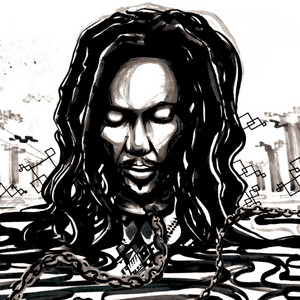


A Ledger of America Under Trump
Less than two years. A growing bill. Who pays—and who profits?
By D. Mann | Sapience: The Moment Is Now
Political accountability requires all of us to achieve. Political accountability is often cloaked in a complicated, ever changing landscape of lies, truth, and everything in-between. Political accountability is vast for it includes the macro verse, which is made of millions of micro verses. Let’s dive into the micro verse and telescope out.
I. Fly & Machine

I paid $10,000 to insulate my home.
Why? Dominion Energy representatives came to us with a recommendation for insulation, explaining the need in connection with rising energy demands from data centers. I took that information seriously enough to spend a substantial amount of money trying to manage my household energy costs.
That is my experience. The larger energy-cost story requires its own accounting, and the evidence matters. A $10,000 expenditure from my household addressed an energy problem others described as part of a larger technological transformation; in other words, data centers and the extraordinary costs associated with building and powering them.
I am not claiming that data centers alone caused my insulation expense, or that this one household bill proves a national pattern. I am asking a more fundamental question:
When a major technological transformation creates costs for ordinary people, who is responsible for paying them? This is a major question to be answered fairly, factually and justly to hold the government and system with in the required frame works of political accountability… something all civil societies must strive for and protect fiercely to survive.
And this question deserves more than a reassuring sales pitch. It deserves an accounting.
Technology companies are racing to expand artificial intelligence. The infrastructure behind that expansion requires electricity, water, land, transmission lines, substations, and new power-generation capacity. The benefits may be substantial. So may the costs—and the allocation of those costs is a matter of public policy, not technological destiny.
A 2024 report from Virginia’s Joint Legislative Audit and Review Commission examined the state’s rapidly growing data-center industry. It warned that additional generation and transmission infrastructure could increase electricity costs for customers beyond the data centers themselves. The report estimated that a typical Dominion Energy residential customer could face an additional $14 to $37 per month in generation- and transmission-related costs by 2040, expressed in constant dollars. It also described the financial risks if utilities built infrastructure for projected demand that never materialized (Joint Legislative Audit and Review Commission [JLARC], 2024).
A June 2026 working paper from researchers at the Massachusetts Institute of Technology examined data-center development and electricity prices across the United States. The study by Meeks et al. (2026) finds that data-center entry between 2010 and 2024 increased average residential electricity prices by 2.1%, with effects varying by utility ownership and customer class. This is a research estimate, not a calculation of every household’s bill or proof that every price increase comes from data centers. This finding prompts the public to examine how expansion costs are distributed.
The question is not whether we should have technology. We must decide whether those who profit from its expansion should bear an unfair share of its costs.
My $10,000 is one household’s story. Millions of micro verses make up the macro verse.
II. The Political Accountability Ledger: What Has Changed, and Who Bears the Cost?

Donald Trump returned to the presidency on January 20, 2025. As the 2026 midterm elections approach, Americans have had nearly two years to experience the consequences of his administration’s decisions, a track record lacking the remotest illusions of political accountability.
A ledger should split what can be measured from what must be debated. It should distinguish a policy from its effects, which must be examined thoroughly.
Consider the cost of living.
The U.S. Bureau of Labor Statistics reported that the Consumer Price Index rose 3.7% over the twelve months through September 2026. Prices rose 0.6% in September alone, while gasoline prices rose 9.1% that month and accounted for more than half of the monthly increase in the overall index (U.S. Bureau of Labor Statistics [BLS], 2026).
Those figures describe what happened to prices; they do not, by themselves, explain every cause. But they matter to a family deciding whether it can afford groceries, transportation, heating, a medical bill, or a home repair.
Tariffs are another part of the ledger. Customs collects tariffs from importers at the border. Businesses absorb the resulting costs, pass them on to consumers, or spread them across the supply chain. The final burden depends on the product, market conditions, and business decisions.
The Tax Policy Center estimated that tariffs announced by the Trump administration through December 4, 2025, would impose an average burden of about $920 per tax unit in calendar year 2026. Its analysis also found that the estimated burden would be proportionally greater for households in the lowest income quintile than for those in the highest quintile (Tax Policy Center, 2026).
This is a model-based estimate, not a bill received by every household. It should be read according to its assumptions and the tariff policies included in the analysis. But it illustrates the kind of question a public ledger should ask: when the government adopts a policy that raises costs, who bears those costs, and who receives the intended benefit?
A serious ledger must ask the same questions about tax policy, health care, housing, wages, public services, energy, and environmental protections. It should measure actual outcomes against promises, rather than treating a political slogan as evidence that a policy worked.
And it should ask what happens when households are told to become more efficient, more resilient, and more adaptable while the systems around them are redesigned to serve interests over which they have little control.
III. The Wealth Ledger: Money Is Not the Same as a Mandate

Money has always played a role in American politics. The scale of political spending deserves particular attention when a small number of extraordinarily wealthy individuals can finance campaigns and organizations capable of shaping the national conversation.
Estimates say 100 men, which is an extraordinarily tiny fraction of top donors—such as the top 100 individual contributors or billionaire families—provide a massive share of funding to super PACs and outside spending groups comes from campaign finance data tracked by OpenSecrets using Federal Election Commission (FEC) records. [1] This in itself implies an utter lack of political accountability.
On October 23, 2026, The Washington Post reported that the 50 largest individual political donors had contributed a combined $2.77 billion during the 2026 midterm election cycle. Elon Musk was the largest individual donor, with $446 million in contributions, much of it directed toward Republican-aligned political efforts. The report also documented major contributions from wealthy donors with interests in technology, finance, and cryptocurrency (Ence Morse et al., 2026).
The Federal Election Commission’s October 2026 summary offers a broader picture. From January 1, 2025, through June 30, 2026, congressional candidates reported approximately $2.8 billion in receipts; political action committees reported $8.3 billion raised and $6.5 billion spent. Independent expenditures reported during the period totaled $643.4 million (Federal Election Commission [FEC], 2026).
Treat these as distinct categories and avoid adding them as if they were unique dollars. They do, however, reveal the scale of the political-finance system, ripe for the picking of corrupted hands.
The report demonstrates that these contributions do not prove every donor received a policy in exchange. Political spending does not, by itself, establish a quid pro quo. Nor should we pretend that every wealthy donor supports the same agenda.
But campaign contributions are only one part of the story. The other part is the growing dependence of the United States on private companies whose owners control critical infrastructure.
IV. Political Accountability: Elon Musk, Starlink & Who’s in Control

Elon Musk’s companies have substantial federal business. SpaceX and its satellite services support government operations, national-security activities, and military communications. Starlink is not simply another consumer internet service when military forces and allied governments depend on it in the field.
Is this political accountability? Is this how to run a free and fair democracy?
That dependence became painfully visible in Ukraine.
Reuters reported on October 20, 2026, that The Wall Street Journal had reported a slowdown of Starlink’s military-grade service used by Ukraine, disrupting battlefield communications and military operations. Reuters could not independently verify the report at that point. By October 24, Reuters reported that Ukraine’s Starlink and Starshield services were operating at normal speeds again after more than a week of restrictions. Ukrainian officials said the restrictions had hampered military activities, including drone interception and frontline communications. Responsibility for the restrictions remained disputed in public statements (Reuters, 2026a, 2026b).
On October 24, Reuters also reported that both the Biden and Trump administrations had repeatedly asked SpaceX to activate or disable Starlink services in different regions to advance U.S. foreign-policy objectives. Six former senior U.S. officials described requests involving Ukraine, Iran, Yemen, and Lebanon. The report illustrates that governments have relied on SpaceX not merely as a vendor, but as a company capable of making consequential decisions about access to a communications network (Reuters, 2026c).
We cannot determine the answer to this question by looking at campaign contributions alone.
Who is actually in control when a government becomes dependent on infrastructure that a private individual can restrict, redirect, or make unavailable? Political accountability seems to slip below the event horizon of mega billionaires, sometimes trillionaires, such as Musk.
The issue is not whether a business owner should have opinions or participate in politics. The issue is whether the public has adequate safeguards when government functions, national security, and international commitments become entangled with the decisions of an extraordinarily wealthy private individual.
A government contract is not evidence of corruption by itself. A service restriction cannot show that the owner dictates every government decision. But when the same individual has enormous political spending capacity who donated to one party combined with control over critical infrastructure which governments and allied forces rely, the potential conflict between private discretion and public responsibility deserves serious scrutiny.
Such scrutiny is called: political accountability.
The government may be the customer. The institution responsible for protecting the public interest may also bear that duty. But what happens when the customer cannot easily replace the supplier?
That is not merely a business question. It is a question of democratic sovereignty.
The public deserves to know what safeguards exist, what alternatives are available, what happens when a private provider’s interests diverge from national policy, and whether the United States has become too dependent on a handful of private actors to act freely.
The question is not whether Musk alone controls America. The evidence does not establish that. The question is whether critical public functions have become so entangled with private power that meaningful government independence is at risk.
These are serious questions citizens are asking right now! They are wondering how in the heck is political accountability achieved in a billionaire welfare state?
As they wonder, they are connecting the dots.
The actions and political positions of Elon Musk have increasingly drawn scrutiny from political scientists, historians, and media critics who argue that his methods and rhetoric align with a techno-fascist, authoritarian trajectory. [1]
Critics point to specific actions, particularly before and after Donald Trump’s re-election, as evidence of a push toward a highly centralist, corporate-controlled government structure that minimizes democratic guardrails.
Most Recent Musk Interference
- Musk is actively suppressing a 4 hour documentary about him from being showed at theaters. More than x, have refused to show it after getting a call from Musk.
- Musk is also actively suppressing media on the Medias Touch’s book: WTF America?!: The Way Out of This Hell and Back to Democracy
- Musk is suppressing Ukrainian access to Starlink, resulting in Ukrainian civilian deaths.
🏛️ Consolidation of Government Power (DOGE)
- Mass Purges of Civil Servants: Through his leadership of the Department of Government Efficiency (DOGE), Musk slashed the ranks of federal employees. Critics describe this as an attempt to hollow out the administrative state and replace independent civil servants with loyalists. [1, 2]
- Automation of Governance: Musk implemented automated systems and AI chatbots, such as Grok, to determine agency cuts and streamline government operations. Sociologists have characterized this application of technical rationality to human society as fundamentally totalitarian. [1]
- Centralized Employee Surveillance: He utilized digital mechanisms to demand direct weekly accountability reports from the entire federal workforce, creating a top-down surveillance culture within public institutions. [1]
- Targeting Regulators: Musk used his position to aggressively target, defend, or shut down regulatory agencies that challenged his corporate operations or government authority. [1]
📢 Weaponization of Social Media & Digital Information
- Amplification of Far-Right Rhetoric: Since purchasing X (formerly Twitter), Musk has frequently elevated far-right, nationalist, and nativist content. This includes boosting the “Great Replacement” theory and generating racially coded fear regarding non-Western immigrants.
- Suppression of Critics and Researchers: Musk filed high-profile lawsuits against research groups and legal organizations that tracked the rise of hate speech and misinformation on X, a tactic critics call an authoritarian suppression of oversight.
- Direct Election Interference: Utilizing his reach of over 200 million followers, Musk regularly pushed debunked election conspiracy theories and misinformation that traveled significantly further than official fact-checks. [1, 2, 3, 4, 5]
👑 Oligarchic Influence & Global Authoritarian Alliances
- Unprecedented Private Diplomacy: Acting as a private citizen with immense state access, Musk has conducted independent diplomacy with foreign leaders. He has actively aligned himself with and supported far-right political parties globally, such as Germany’s AfD.
- Praise for Strongman Politics: Musk has publicly praised authoritarian governance models, notably celebrating El Salvador’s Nayib Bukele for mass incarceration crackdowns, and advocating for similar severe measures in the U.S.
- Corporate “Bossism”: Historians note that Musk’s leadership style is rooted in a corporate philosophy of absolute executive authority (“bossism”), where labor unions are strictly rejected and workers are subjected to unilateral directives. [1, 2, 3, 4, 5, 6]
🧬 Ideological Influences
Scholars trace Musk’s philosophy to Technocracy—an authoritarian 20th-century movement (championed by his grandfather, Joshua Haldeman) that advocated for replacing elected officials and political parties with scientific and engineering elites. This ideology prioritizes a highly stratified, corporate-run state over traditional democratic processes. [1, 2]
Please tell me that Technocracy is not how Trump and friends are claiming political accountability!
V. When Infrastructure & Politics Collide

Artificial intelligence offers real possibilities: scientific discovery, medical research, accessibility, education, and tools that help people think and create. I know the value of working with AI firsthand. I use it to explore ideas, challenge assumptions, and develop my writing.
But the benefits of a technology do not excuse the behavior of the people who control its infrastructure. Nor do they make its costs disappear. And honestly exploring and debating these costs is a critical part of political accountability.
A data center is not merely a symbol of innovation. It is a physical facility with a demand for electricity, cooling, water, land, and grid capacity. When demand grows faster than infrastructure can accommodate it, someone must pay for new capacity. Policy choice stems from utility regulation, contracts, market design, and government decisions.
Virginia is home to one of the world’s largest concentrations of data centers. The state’s own legislative audit commission has identified the financial risks that rapid expansion can create for utilities and their customers. MIT’s research shows electricity prices differ based on utility ownership and the method used to allocate infrastructure costs (JLARC, 2024; Meeks et al., 2026).
The question is not whether data centers should exist. It is whether the public can see and understand the terms on which they operate.
If an industry receives the benefits of rapid expansion while local communities absorb a disproportionate share of its electricity costs, water demand, noise, land use, and infrastructure burdens, the public deserves an accounting. If companies pay the full costs they create, that should be demonstrable too.
The goal is not to punish innovation. It is to prevent a familiar economic arrangement: privatize the gains, distribute the costs, and describe the result as inevitable.
And this is where the wealth ledger meets the household ledger. The people and companies with the greatest financial resources may also have extraordinary access to policymakers. Ordinary households generally do not have lobbyists negotiating their electricity bills or campaign committees amplifying their concerns.
That imbalance does not prove corruption in every case. It does make transparency, independent oversight, and enforceable rules essential.
The question is not whether technology should advance. It is whether democratic society gets a meaningful say in the terms of that advance. This is the basic building blocks of political accountability.
VI. The Ballot Must Match the Voter’s Choice

A ledger of democratic and political accountability must include the voting process itself.
On October 23, 2026, the Associated Press reported that voters in Kansas, Ohio, South Carolina, Tennessee, and Texas had described touchscreen voting difficulties in which the selection displayed on a machine did not match the candidate they intended to choose. Some voters said the machine appeared to select a Republican candidate when they intended to select a Democrat. In the cases described, voters were able to correct their selections before casting their ballots. Election officials attributed the reported problems to factors such as accidental touches or screen miscalibration and said they had not observed an unusual increase in complaints (Associated Press, 2026).
The equipment matters. The AP report identified Election Systems & Software’s ExpressVote devices among the machines involved. We should not attribute these reports to Liberty Vote, formerly Dominion Voting Systems, without equipment-specific evidence.
But the concern about election security extends beyond those touchscreen complaints.
On October 19, ProPublica reported that political appointees at the Department of Homeland Security had asked the Cybersecurity and Infrastructure Security Agency (CISA) to secretly obtain a voting machine, examine it, and attempt to hack it. Two former administration officials cited in the investigation said the appointees wanted findings delivered to the White House. Career staff reportedly feared the effort would undermine confidence in election results. The request was eventually abandoned, according to the report (Mannix & Bock Clark, 2026).
This was a reported request to obtain and hack a voting machine—not proof that a Dominion machine was seized, successfully hacked, or used to alter votes. The reporting also does not establish that the purpose was to change the outcome of an election.
But the reported attempt to bypass ordinary security practices raises serious questions about the political use of federal election-security capabilities.
The concern is especially troubling when an administration publicly questions election integrity while the agency responsible for protecting election infrastructure is being weakened and professional staff are raising alarms about political interference.
These are distinct issues, but both reinforce the same democratic principle: election technology must be subject to independent testing, transparent procedures, documented complaints, and credible oversight—not political manipulation or public-relations management.
When a voter sees a selection that does not match the voter’s intention, the voter should stop before casting the ballot, alert a poll worker, and follow the official correction procedure. Election officials should record recurring problems, preserve relevant evidence, inspect affected equipment, and make their findings public.
When federal officials seek unusual access to voting equipment, the public deserves to know what was requested, who authorized it, what safeguards were applied, and whether independent oversight was maintained.
While an allegation alone does not prove a conspiracy, a reported attempt to circumvent safeguards should never be ignored.
Election integrity requires both a fair investigation and evidence strong enough to support its conclusions. Another essential and basic building block of political accountability.
VII. Democratic Countermoves: South Korea’s Warning

America is not the only democracy to face a crisis over executive power and political accountability.
On December 3, 2024, South Korean President Yoon Suk Yeol declared martial law amid a political confrontation with the opposition-controlled National Assembly. Military and police forces moved toward the Assembly, but lawmakers managed to convene. The Assembly voted to demand that martial law be lifted, and the order was withdrawn after roughly six hours. On April 4, 2025, South Korea’s Constitutional Court unanimously upheld Yoon’s impeachment and removed him from office (Yonhap News Agency, 2025).
This was not simply a story of public protest. It was a story of citizens, elected representatives, and constitutional institutions acting at a moment when democratic procedures were under pressure.
The comparison with the United States has limits. South Korea has a different constitutional structure, political history, and set of institutions. Its experience cannot be copied wholesale into American circumstances.
But the principle travels: democratic safeguards work only when people are willing and able to use them. Public attention, lawful collective action, legislative independence, courts that apply constitutional limits, and officials who follow the law can all matter when executive power is tested.
Democracy is not self-enforcing. It depends on people who refuse to treat the erosion of safeguards as someone else’s problem. It depends on us to demand political accountability!
VIII. January 3, 2027: The Election Is Not the End of the Story

An election can be won at the ballot box and still face a struggle over whether its results will be honored.
As the November 2026 midterms approach, former federal judge J. Michael Luttig has warned of a possible constitutional crisis on January 3, 2027, when the new Congress convenes. His scenario is that House Speaker Mike Johnson could remove current House Clerk Kevin McCumber before the new Congress organizes, appoint a temporary replacement, and have that person omit duly elected Democratic members from the roll of members-elect (Luttig, 2026).
This is a warning about a hypothetical scenario, not evidence that the removal has happened or that Johnson has publicly announced such a plan. The legal questions are contested, and Luttig argues that any attempt to exclude duly certified representatives could face immediate court challenges.
The underlying concern is serious. The clerk’s roll is central to the organization of the House. If duly elected representatives were deliberately omitted for partisan reasons, the dispute would go beyond ordinary parliamentary procedure. It would raise a fundamental question about whether political power can override the choices voters have made.
Luttig argues that the federal courts—and ultimately the Supreme Court—would determine whether such an exclusion was lawful. Any real attempt to prevent certified members-elect from participating would require immediate legal scrutiny and a transparent public record.
The possibility deserves attention before a crisis begins, not after the public has lost time to respond.
South Korea’s 2024 martial-law crisis offers a different but relevant lesson. Citizens mobilized, legislators acted, and constitutional institutions became the means through which the crisis was challenged. The United States has a different constitutional structure, and no foreign example can tell Americans exactly what to do. But the underlying lesson is clear: democratic safeguards need people willing to defend them.
If an actual attempt were made to prevent duly elected representatives from taking their lawful seats, the response should begin with public documentation, legal action, demands for transparency, and coordinated nonviolent civic pressure. Citizens should support lawful challenges by affected representatives, seek clear public statements from election officials and constitutional authorities, and insist that certified election results be respected.
If those avenues were obstructed or ignored, two forms of peaceful collective action would deserve serious public discussion: large-scale demonstrations and/or concomitantly a coordinated general strike. These are reasonable actions the people can take to demand political accountability.
A general strike is a consequential measure, not a slogan. It would require broad participation, careful organization, clear demands, attention to workers’ legal rights and economic vulnerabilities, and a commitment to nonviolence. Mass demonstrations likewise require planning to protect participants, maintain public safety, and keep the focus on the constitutional issue at hand.
Neither should be an automatic response to a hypothetical scenario. The trigger would be an actual, documented attempt to subvert the lawful seating of elected representatives—and the objective would be to restore constitutional government, not to replace one form of partisan domination with another.
The point of preparation is not to predict that the worst will happen. It is to make clear, before a crisis begins, that the public will not quietly accept the disenfranchisement of its own vote.
An election is not fully protected until the winners can take their lawful seats. Democracy requires not only the right to choose representatives, but the right to have that choice respected, as stated in the Constitution.
IX. A Field Guide to Political Accountability: Interference & Countermoves

The following table is not a claim that every tactic listed is being used in every election or that every troubling event is deliberate. It is a practical guide to recognizing documented forms of interference, identifying warning signs, and responding with evidence rather than panic.
View this as a Field Guide to political accountability:
| Possible interference tactic or constitutional threat | What the public should look for | Countermove |
|---|---|---|
| False voting information | Messages giving the wrong election date, polling place, eligibility rules, or voting method | Verify details with the official state or local election office. Save and report deceptive messages; do not amplify them as fact. |
| Voter intimidation or threats | Threats of physical or financial harm, coercion, or efforts to frighten eligible voters away from the polls | Prioritize safety. Document what happened when safe to do so and report suspected violations to election officials or law enforcement. |
| Touchscreen or ballot-marking errors | A selection appears differently from the voter’s intention, particularly if the problem repeats | Stop before casting the ballot. Notify a poll worker, request help following the official correction procedure, and ask that the incident be documented. Review any printed ballot or record carefully. |
| Cyberattacks or phishing | Suspicious messages targeting election workers, candidates, campaigns, or people with access to voter data | Avoid suspicious links and attachments. Use strong, unique passwords and multifactor authentication where available. Report suspected compromise to the responsible security team and authorities. |
| Politicization of election-security agencies | Requests to obtain or test voting equipment outside established procedures; attempts to conceal findings from manufacturers or independent election authorities; political pressure on cybersecurity staff | Demand an independent review, preserve written records and communications, ask which safeguards governed the work, and publish findings that can be independently assessed. |
| Opaque campaign financing | Large contributions, complex funding routes, or spending that makes it difficult to identify who is supporting a political message | Check FEC filings and state campaign-finance disclosures. Trace the funding where records permit; distinguish documented financial connections from assumptions about motive. |
| Misleading or manipulated media | Edited clips, fabricated quotes, deceptive images, or AI-generated audio and video presented as authentic | Find the original recording or document, compare independent reporting, check the date and context, and do not share material whose authenticity remains uncertain. |
| Pressure on election workers or officials | Threats, harassment, demands to ignore lawful procedures, or attempts to interfere with routine administration | Preserve evidence, support nonpartisan election workers, report threats, and insist that officials follow established procedures and the law. |
| Attempts to obstruct lawful participation or counting | Unlawful barriers to voting, improper challenges, interference with ballot handling, or demands to disregard valid results without evidence | Seek written explanations, preserve records, contact election-protection or legal organizations, and use lawful administrative and judicial processes. |
| Excluding duly elected representatives from the House’s opening roll | An attempt to replace the House clerk and omit members-elect whose election credentials have been properly certified by their states | Seek immediate judicial relief; demand public explanations and legal opinions; mobilize peaceful demonstrations; prepare coordinated civic action if an actual, documented effort to subvert lawful results proceeds. |
| A constitutional crisis that resists ordinary remedies | Continued refusal to comply with court orders or lawful election procedures; obstruction of duly elected representatives after documented efforts at legal resolution | Build broad, nonviolent coalitions around a specific constitutional demand. Consider escalating peaceful demonstrations and, if justified and carefully organized, a coordinated general strike, while protecting workers’ rights and vulnerable participants. |
| Unsupported claims of widespread fraud | Sweeping allegations offered without verifiable records, clear methods, or independently testable evidence | Ask what evidence would prove or disprove the claim. Consult election records, audits, court findings, and credible investigations before accepting or repeating it. |
The Federal Bureau of Investigation’s election-crime guidance and federal cybersecurity advisories provide a basis for recognizing threats such as voter intimidation, ballot tampering, campaign-finance violations, phishing, and efforts to prevent eligible citizens from voting. The appropriate response depends on the specific incident and the evidence available.
These are not imaginary risks. Nor does the existence of a known tactic prove that a particular person or organization has used it in a particular case.
That distinction is the foundation of an effective countermove: document what happened, preserve evidence, report through the appropriate channel, and demand a transparent investigation. Do not confuse vigilance with certainty before the evidence is in.
X. The Ledger of Political Accountability Is Also a Test of Attention

The cost of living, data-center infrastructure, campaign finance, election administration, and democratic safeguards may look like separate subjects. They are connected by a common question:
Who has the power to make decisions that affect other people, and who has the power to hold the decision-makers accountable? And how can political accountability be held if no one is paying attention?
When a household pays more for electricity, the immediate experience is a monthly bill. Behind it may be fuel prices, utility investments, regulatory decisions, infrastructure demand, and the way costs are assigned among customers.
When a billionaire spends hundreds of millions of dollars on politics, the immediate fact is a campaign-finance filing. Behind it may be a network of policy interests, political priorities, business incentives, and competing ideas about the public good. Those connections deserve investigation, but they must be established rather than assumed.
When a voter sees a touchscreen selection that does not match the voter’s intention, the immediate problem is a discrepancy. The response should be a documented correction and a credible inquiry into why it occurred—not an automatic leap to conspiracy, and not an automatic dismissal.
When a president attempts to exercise extraordinary power, the test is whether citizens, legislators, courts, and public servants can uphold the constitutional limits that make democratic government possible.
The ledger is not complete when we list what things cost. It is complete only when we examine who made the decisions, what evidence supports those decisions, who received the benefits, who carried the burdens, and what remedies remain available.
This is why attention matters. A public that reacts to every alarming claim without checking evidence can be manipulated. A public that dismisses every warning because it cannot yet prove a larger scheme can also be manipulated. Both reactions surrender the work of judgment.
Sapient attention requires something harder: notice, investigate, evaluate, and choose a response proportionate to the evidence. This is how we get and safeguard political accountability!
XI. Political Accountability: What We Owe One Another

I sometimes feel that, to people who accumulate extraordinary wealth and political power, ordinary citizens are little more than flies: noisy, inconvenient, easily dismissed. We are expected to adapt to decisions made elsewhere, pay what we are charged, and accept assurances that the system is working as intended.
But citizens are not insects. Our homes are not expendable units in somebody else’s growth model. Our communities are not empty spaces awaiting development. Our attention, labor, money, and consent are not resources that powerful people are entitled to extract without accountability.
This is not an argument against wealth, technology, enterprise, or ambition. It is an argument against a system in which the ability to pay can become the ability to dictate, while the people who bear the consequences have too little influence over the decisions.
A democratic society should be able to pursue innovation without making ordinary households the default shock absorbers. It should be able to finance elections without allowing concentrated money to drown out public scrutiny. It should be able to investigate voting problems without exaggerating the evidence or suppressing legitimate questions. It should be able to challenge executive power without treating constitutional limits as optional.
The countermeasures are not mysterious. They require transparent records, independent oversight, enforceable rules, reliable election procedures, public participation, investigative reporting, and citizens willing to examine evidence even when it complicates a preferred story.
They also require something less technical and more demanding: the willingness to look beyond the immediate transaction.
A $10,000 insulation bill can be just a household expense. It can also be the beginning of a larger inquiry into energy demand, public infrastructure, corporate incentives, and the distribution of costs. The bill alone does not prove the whole story. It gives us a reason to ask better questions—and to follow the answers wherever the evidence leads.
The macro verse is made of millions of micro verses. A democracy that cannot hear those individual accounts risks losing sight of the people it exists to serve.
As the November 2026 midterms approach, the public has an opportunity to examine the ledger: compare promises with outcomes, follow the money, question the allocation of costs, protect the right to vote, and demand evidence from those who wield power.
The task is not to believe every allegation. It is not to trust every official explanation without question. It is to build a public record strong enough to distinguish fact from spin, error from deliberate interference, and accountability from performance.
That is how a society keeps its attention.
That is how citizens reclaim their place in decisions that shape their lives.
And that is where the choice between Fate and Destiny begins: not in pretending that we control everything, but in refusing to surrender the choices that remain ours to make.
The bill comes due somewhere. The question is whether those who collect the profits will ever be required to pay their fair share.
What will you choose: Fate or Destiny?
References
Associated Press. (2026, October 23). Why reported challenges with touchscreen voting machines don’t signal election rigging. https://apnews.com/article/53d317b34c0f947ab7cb9f8a895f58ac
Ence Morse, C., Shapiro, L., Somasundaram, P., & Lau, E. (2026, October 23). Musk breaks donor record as the ultra rich pour $2.7 billion into the midterms. The Washington Post. https://www.washingtonpost.com/elections/interactive/2026/06/25/these-are-biggest-individual-donors-2026-election-cycle/
Federal Election Commission. (2026, October 1). Statistical summary of 18-month campaign activity of the 2025–2026 election cycle. https://www.fec.gov/updates/statistical-summary-of-18-month-campaign-activity-of-the-2025-2026-election-cycle/
Joint Legislative Audit and Review Commission. (2024). Data centers in Virginia. Commonwealth of Virginia. https://jlarc.virginia.gov/landing-2024-data-centers-in-virginia.asp
Luttig, J. M. (2026, September 10). The final battle for America’s democracy. The New Republic. https://newrepublic.com/article/215198/2027-new-congress-final-battle-american-democracy
Mannix, A., & Bock Clark, D. (2026, October 19). Trump appointees asked a federal cybersecurity agency to secretly acquire a voting machine—and hack it. ProPublica. https://www.propublica.org/article/cisa-election-security-donald-trump
Meeks, R., Pless, J., Qi, Z., & Wang, Z. (2026, June). Who pays for growth? Evidence from data centers and the grid. MIT Center for Energy and Environmental Policy Research. https://ceepr.mit.edu/workingpaper/who-pays-for-growth-evidence-from-datacenters-and-the-grid/
Reuters. (2026a, October 20). Musk ordered slowdown of Starlink service used by Ukraine’s military, WSJ reports. https://www.reuters.com/business/media-telecom/musk-ordered-starlink-slowdown-that-blindsided-ukraine-wsj-reports-2026-10-20/
Reuters. (2026b, October 24). Ukraine says Starlink and Starshield operating at normal speeds after week of restrictions. https://www.reuters.com/world/europe/ukraine-says-starlink-starshield-operating-400-kph-after-week-throttling-2026-10-24/
Reuters. (2026c, October 24). U.S. has for years asked Musk to alter Starlink service in Ukraine, Middle East, sources say. https://www.reuters.com/business/autos-transportation/us-has-years-asked-musk-alter-starlink-service-ukraine-middle-east-sources-say-2026-10-24/
Tax Policy Center. (2026). TPC tariff tracker. https://taxpolicycenter.org/features/tracking-trump-tariffs
U.S. Bureau of Labor Statistics. (2026, October 14). Consumer Price Index—September 2026. https://www.bls.gov/news.release/archives/cpi_10142026.htm
Yonhap News Agency. (2025, April 4). Constitutional Court upholds Yoon’s impeachment, removes him from office. https://en.yna.co.kr/view/AEN20250403008555315
Archetypal Animation
Music: Entries in the Ledger 03:10: Stability — A restrained 72 BPM pulse under soft piano, low strings, muted synthesizers, and occasional metallic percussion. Minor-key harmony gradually admits warmer suspended chords. No virtuosic solos or triumphant drums; the music moves from intimate unease through investigative tension to a measured, hopeful finish.
Created with Genolve.
No results found
You can try clearing any filters or head to our store’s home

TikTok Acrylic Wall Clock – Fun Social Media-Themed Home Decor
Bring a little TikTok energy to your walls with this bold acrylic wall clock. The round design features a colorful collage of recognizable scenes and figures, topped with playful yellow “Tik Tok” lettering. Crisp, vibrant printing keeps every detail lively, making it a conversation-starting accent for a creative studio, entertainment room, or eclectic living space. Choose the size that suits your wall, add one AA battery, and hang it easily using the built-in keyhole slot.

Field Guide to Interference Bumper Sticker
A vintage wild intererence scene with bold orange and/or white lettering captures the thrill of spotting something special in the wild, especially if the wild landscape is in the White House or Capital Hill. This bumper sticker brings field-guide charm and a little road-trip spirit to your vehicle, camper, laptop, or gear bin. Whether you’re heading out for a dawn chorus, a weekend birding route, or simply carrying your love of backyard visitors with you, its warm retro design makes…

Don’t Try to Convert the Infected – 🔥 Survival Tip 1 – Sapient Survival Tee (Unisex, S–4XL), MAGA Zombie Apocalypse T-Shirt, Unisex Tee, Survival Guide Shirt, Protest Attire
Don’t Try to Convert the Infected. Sometimes you fight the apocalypse with a banner. Sometimes with a belly laugh.

MAGA Zombie Apocalypse, Sapient Survival Guide, Postcard Bundle
📬 Wondering how to survive the MAGA Zombie Apocalypse? These Sapient Survival Guide Postcards share the secrets. 📬