American War: A Novel About How Damage Begets Damage, Then & Now

Perspective from 2026 to American War

In 2026, American War feels less like speculative fiction and more like warning. When I first wrote this essay in 2023, I believed the United States was moving dangerously close to internal fracture. That concern has only deepened. We are living in a period of escalating political extremism, organized disinformation, civic distrust, and widening economic inequality. The social fabric has not snapped, but it is fraying in visible ways. What makes this moment unsettling is that daily life still often feels normal. People go to work, scroll their phones, plan vacations, argue online, and carry on. That is often how societies approach ruptureโ€”not with sirens, but with routines.

Watching Dickinson sharpened this recognition for me. In its portrayal of the years before the Civil War, Emily Dickinson and her brother Austin seem more attuned than many around them to the gathering storm. Much of their white social world behaves as though ordinary life will continue indefinitely. But history shows that political denial does not stop momentum. It often accelerates it. Before the American Civil War fully erupted, the country passed through years of polarization, moral evasions, regional grievance, media agitation, and failures of civic courage. That emotional atmosphere feels disturbingly familiar now. 

Since writing this essay, I have also published my book, Sapience: The Moment Is Now, available on Amazon. The book explores how societies drift toward authoritarianism not only through violence, but through psychological conditioningโ€”through propaganda, manipulated perception, mythmaking, oligarchic capture, and the gradual corrosion of shared reality. Its central argument is that democratic collapse rarely arrives all at once. It advances through normalization. Citizens adapt. Institutions bend. Language becomes weaponized. Fear becomes political currency. When enough people stop distinguishing performance from truth, a plausible dystopian future becomes possible. That is why the world imagined in my book is not fantasy. It is built from pressures already visible in our own time.

American War remains powerful because it understands a hard truth: damage begets damage. Nations that fail to confront trauma, injustice, inequality, and historical fracture do not escape them. They carry them forward until those unresolved forces erupt in new forms. The question in 2026 is no longer whether America is immune. The question is whether enough people will recognize the warning signs early enough to choose a different path.


Introduction to American War | 2023

I was captivated by another Throughline that aired on January 19, 2023. This episode explores possible Extremist Futures as envisioned by Omar El Akkad in his novel American War.

Omar’s novel is about America’s second Civil War. He imagines 50 years into our future. A time when climate change has turned Florida into an underwater theme park and climate disasters devastate the world. His vision is very similar to mine in my novel Sapience: The Moment Is Now (not yet published).

In American War, the world finally understands that it has to stop burning fossil fuels and bands them–but it’s too little too late. The US is the last to band fossil fuels. All states agree to switch to more sustainable energy except Mississippi, Alabama, and Georgia. These three states take up arms, deciding they would rather secede than stop burning fossil fuels.

They lose, again, but what follows is a years-long insurgency. This is where his story is mostly centered.


American War: Ignorance

Something Omar says in the beginning of this Throughline needs to be emphasized. He says, “We read to feel into another.”

This is how we come to know and understand each other. A country or a state (I’m thinking of you Florida) that bans books because they might be subversiveGod Forbid… they might give children ideas… is a system that seeks to keep its citizens in ignorance.

Break down the word: ig nor ance. States and countries that ban books are teaching their people to ignore what they see with their very own eyes.

And, people who are kept in ignorance are a heck of a lot easier to manipulate too!

He also says, “Story is the final act of Resistance!


American War: Disturbingly Plausible

The New York Time’s describes his novel: “Omar El Akkadโ€™s โ€œAmerican Warโ€ is a disturbingly plausible case in point โ€” a tale of a future America torn asunder by its own political and tribal affiliations.

This is what caught my attention too.

Throughline plays some from the audio book of American War that includes sound effects. Had I not caught the beginning, I might have thought I was listening to real, on-the-ground reporting.

Omar’s story feels real, very real. It feels like it is already happening.

He grounds his story telling by his real life experiences as a boy in Lebanon where he was a witness to the devastation of war and what happens to people in refugee camps.

Omar says, “A society subjected by warfare is akin to moving backwards in time.”

Think of what Putin is doing to his people and to the beautiful people of Ukraine. Every image coming out of his sick ego trip is likened to images from WWI.

The Academy Award nominated movie All Quiet on the Western Front vividly paints the insanity of rich, powerful men who send other men to die for their personal power and glory. In this movie (and of course the book), Paul Bรคumer and his classmates are just cannon fodder for a fatherland that has gone mad.

American War: All Quiet on the Western Front | Official Trailer | Netflix

If you are having a hard time remembering the horror and senselessness of death of WWI, then watch All Quiet to remind yourself that quiet means dead. Watch as these young, gifted boys sign up for service and get pumped up by grumpy, old narcissistic men who stuff them full of overly romanticized, patriotic notions of war and how they are defending the fatherland. It’s on Netflix, so you have no excuse.


American War: Euphemistic Fraudulence

Omar describes this souped-up patriotic messaging as euphemistic fraudulence.

Texas University’s McCombs School of Business published an article that was written by Robert Prentice titled: Euphemisms Inflict Collateral Damage on Integrity.

This article begins with the college admission scandal that caught up actress Lori Loughlin and fashion designer Mossimo Giannulli in acts of fraud to get their children into the best schools.

Robert writes, and this is important:

In an earlier blog post we suggested some reasons, grounded in behavioral ethics, that might help explain why reputable people and loving parents became involved in these frauds.  The conformity bias, the self-serving bias, and incrementalism all may have contributed. The evidence disclosed in the indictment offers additional clues.
A euphemism, sayโ€™s Websterโ€™s, is โ€œthe substitution of an agreeable or inoffensive expression for one that may offend or suggest something unpleasant.โ€
Famed Stanford psychologist Albert Bandura writes of โ€œmoral disengagement,โ€ suggesting that people, such as Loughlin and Giannulli, who think of themselves as good people can do something bad so long as they can selectively suspend morality for their activities. One way people do this is by use of euphemisms.  Bandura notes:

“Language shapes the perception of events and the thought patterns on which people base many of their actions. The personal and social acceptability of given activities, therefore, can differ markedly depending on what those activities are called. Euphemistic machinations are used widely to detach and depersonalize doers from harmful activities. Cloaking detrimental activities in euphemisms can be a powerful weapon.”

โ€œWorking the Systemโ€ โ€“ Euphemisms Inflict Collateral Damage on Integrity
Examples of the โ€œsanitizing and convoluted languageโ€ (Gambino) of euphemisms that have helped people make their peace with wrongdoing include the following:
  • Dead civilians = โ€œcollateral damageโ€
  • Mass firings = โ€œright-sizingโ€
  • Lies = โ€œalternative factsโ€
  • Burning down villages = โ€œpacificationโ€
  • Fraud = โ€œcreative accountingโ€
  • Genocide = โ€œthe final solutionโ€
Empirical studies indicate that โ€œeuphemistic labels can psychologically sanitize unethical practices, facilitating our participation in them.โ€ (Moore & Gino).

American War: The World is Either Good or Evil

This is a lie. Every modern human being born today is told this lie.

Omar talks about how this idea is used to twist us into doing all sorts of evil things. It is a notion, an idea, a belief drilled into us since the day we are born until the day we are dead.

It is this very idea that the world can be cleaved into a good side and a bad side that allows us to be manipulated.

I would add it is precisely splitting the world into Good and Bad parts that lets us justify just about any abominable violence we can dream up.

It is also what allows ruthless rulers to turn plain, ordinary, decent human beings into killing machines and monsters.

Ruthless Rulers are already monsters and include men such as Vladimir Putin, Xi Jinping, Ali Khamenei, Kim Jong-um, Denis Sassou Nguesso, Abdullah Aziz Al Saud, Bashar al-Assad, and there are many more (see the list of Current World Dictators).

American War: World Dictators In 2022 By Location

We live with these monsters right here, right now on our planet. And they are pounding our world straight back to the Stone Age just as fast as they can.

American War: This is a comprehensive, up-to-date list of the current world dictators and authoritarian regimes. In 2022 there are 57 dictatorships in the world. We define a dictator as the ruler of a land rated โ€œNot Freeโ€ by the Freedom House in their annual survey of freedom.

What do you think? Are they winning? The Red countries that is… are there more red countries than yellow or green?

That is exactly what they want you to believe. But, perhaps you are beginning to sense out it is precisely this idea of division that is the problem.


American War: Empathetic Liars

One of Omar’s characters is an empathetic lair. He is the character that goes into the refugee camps and radicalizes the kids there.

Omar says there is no such thing as exotic suffering, but empathetic liars make you believe there is. Empathetic liars parse the fine threads of what we do and what is done to us. Empathetic liars play upon the lack of self-agency in a place like a refugee camp (or one of Putin’s prisons) and use it like a gleaming lure to hook their targets–kids (or Russian prisoners) whom they plan to turn into cannon fodder.

Omar says, “People go to bad place when their self-agency is taken away from them.” And the more damaged a person is, the more their circle of Trust closes in, making them extremely vulnerable to empathetic liars

And that is exactly what autocrats, dictators, and pretty much most of the Republican Party in the United States are doing. Whoever they are…all close ranks around their strong man, hype their followers up on Fraudulent Euphemisms, and close the circle of Trust until only one man can be trusted.

And, there sure are a lot of want-a-bee dictators who desire to be the one and only man the entire human race can trust–Putin, Trump, Xi Jinping, Ali Khamenei, Kim Jong-um, Denis Sassou Nguesso, Abdullah Aziz Al Saud, Bashar al-Assad, or pick your poison.

Yes, Omar is very right to envision the coming of America’s Second Civil War! Heck, we might be staring down the path to WWIII.

I think Empathetic Liars is another name for Dark Empaths. Dark Empathy is not a good thing. Dr. Ramani does a very good job in this video explaining why all of us need to be on the look out for Dark Empaths and Empathetic Lairs.

TAmerican War: he Dark Empath VS the Narcissist: The Signs | Med Circle

American War: Reality? What Reality!

Omar talks about when a group of people believe anything they want to believe is real… you’re living in a very dangerous place and time.

Add the element of violent insurrection being a central part of a country’s narrative, and you have a tinderbox waiting to explode.

He admits he’s been amazed how reality has out did his fiction.

He warns, “There is a particular Force that when it emerges within a group of people, it must be stared down directly.”

I would add that when this Force is encountered: You cannot blink. You cannot turn away. And, if you falter, it will destroy you.

I’m writing about such a force too. I was reminded of a prologue I was playing around with to describe my story. I realize it is exactly what Omar is warning us about.

American War: The Last DJ on Earth | I wrote and read the beginning of this video. My husband plays the Last DJ and my friend Brain (who has since passed) plays the Persuader

Will we listen? Can we listen anymore?


 American War: Feature Archetypal Animation

Image from: American War by Omar El Akkad, book review: Should be read as a cautionary tale | The Independent — This impressive debut imagines a second American Civil War set from 2074 to 2095 and is set apart from other dystopian novels because of the fully realised plausibility of the scenario 

Image from: Penguin Random House Audio | โ€œPowerful . . . As haunting a postapocalyptic universe as Cormac McCarthy [created] in The Road, and as devastating a look as the fallout that national events have on an American family as Philip Roth did in The Plot Against America. . . . Omar El Akkadโ€™s debut novel, American War, is an unlikely mash-up of unsparing war reporting and plot elements familiar to readers of the recent young-adult dystopian series The Hunger Games and Divergent.โ€
โ€”Michiko Kakutani, The New York Times

Image from: The American Civil War, a Summary | AAREG

Music: 1865: Songs of Hope and Home from the American Civil War Anonymous 4 | [15] Home, Sweet Home / Polly Put the Kettle On   

 American War: First Archetypal Animation

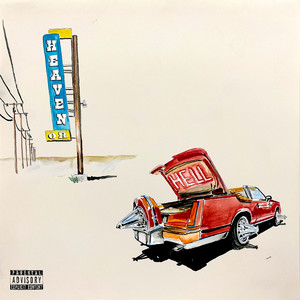
Music: Heaven Or Hell | Don Tolive | [1] Heaven Or Hell    

Memory Wars: How Society Fails to Deal with Sin, Then & Now

Perspective from 2026 to Memory Wars

In 2026, Memory Wars feels less like reflection and more like warning fulfilled. Carl Jung used the word enantiodromia to describe what happens when a force becomes so one-sided and extreme that it eventually flips into its opposite. He observed that when consciousness is dominated by a single tendency, an opposing force builds in the shadows until it breaks through. That idea now feels painfully relevant to the United States. A nation that once presented itself as a beacon of liberty, democratic pluralism, and the rule of lawโ€”a nation that helped defeat World War II and the machinery of Nazismโ€”has drifted toward the very impulses it once claimed to resist. 

The danger did not arrive wearing the old uniforms. It came wrapped in grievance, spectacle, selective memory, and the weaponization of forgetting. The old authoritarian patterns returned in modern form: attacks on institutions that restrain power, the rewriting of history, the manufacturing of enemies, the normalization of cruelty, and the demand that loyalty to leader outweigh loyalty to law. Memory itself became a battlefield. What a people remember determines what they will tolerate. What a people forget determines what can be done to them.

That is why this moment matters. The United States did not become the Fourth Reich overnight. Such transformations never happen all at once. They happen when civic memory erodes, when historical warnings are dismissed as exaggeration, and when citizens mistake comfort, spectacle, or tribal belonging for freedom. When the lessons of fascism are no longer lived, they become vulnerable to reenactment.

Jungโ€™s insight also carries another truth. Enantiodromia is not only collapse into shadow; it can also become the beginning of conscious correction. When a society finally sees what it has become, it can choose differently. That is the real work of memoryโ€”not nostalgia, not mythmaking, but moral reckoning. To remember honestly is to reclaim the capacity to resist. If memory can be turned into a weapon of domination, it can also become the ground from which democratic courage, moral imagination, and renewal begin.


Introduction to Memory Wars | 2023

Following are a few things that caught my attention this week, especially since they are relevant to what I am writing about in my novel about the role of consciousness and modern cultures. The first thing is Memory Wars. It is a six-part podcast exploring how society confronts sin. I only heard one episode, but it got me thinking deeply about how societies fail to deal with sin.

Memory Wars: A podcast exploring how society confronts sin

I heard S1E2: The Two Reconstructions that explores the similarities and differences between the Reconstruction that happened in the U.S. after the Civil War and the one that occurred in Germany after WWII.

America’s Antebellum Period

The biggest difference between the two Reconstructions is that after the U.S. Civil War (April 12, 1861 โ€“ April 9, 1865), there was no outside agent to oversee the period of Reconstruction following the demise of the Antebellum Period. Countless reparations and services were needed to repair the damage inflicted on nearly 10 million slaves alive at this time.

Between 1525 and 1866, in the entire history of the slave trade to the New World, according to the Trans-Atlantic Slave Trade Database, 12.5 million Africans were shipped to the New World. 10.7 million survived the dreaded Middle Passage, disembarking in North America, the Caribbean and South America. And how many of these 10.7 million Africans were shipped directly to North America? Only about 388,000. Thatโ€™s right: a tiny percentage. -- How Many Slaves Landed in the U.S.?
by Henry Louis Gates, Jr. | Originally posted on The Root

Slavery started in Jamestown Colony, the founding county of the British Empire in North America. It is also the founding colony for the soon to be United States of America. Slavery grows into a brutal industry that lasts for more than 200 years allowing white men to make tremendous profits and becomes the basis for how the economy works in the United States.

America’s Reconstruction Era | Brief & Incomplete

More than 200 years of slave-based industry has made Americans deeply unwilling to confront the brutal realities of being a nation built by slaves and founded on slave-based economic models. America’s Reconstruction barely got started before it was shut down. America’s Reconstruction era lasted only from 1865 to 1877.

After this, any positive steps made during this very short time were quickly turned around by Jim Crow laws, which quickly crippled and reversed gains made by recently released slaves.

America still hasn’t reckon with its brutal history, racist culture, and slave-based industry specifically designed to make business owners and shareholders rich while keeping ordinary workers poor.

The US has intentionally engineered extreme inequalities and injustices into its systems of governance and business. They are written into laws and US constitution. They are meant to elevate white people above all other people.

There are many white people alive right now who feel they are engaged in a life and death battle to maintain these laws. These individuals are willing go to great lengths of hypocrisy and false piety to justify their sin. Some are willing to die for their beliefs and attack the Capital and Congressmen and women who do not believe like they do.

We’ve been here before. It doesn’t end well. Sin never does.

First Archetypal Animation | Justifying Sin

Memory Wars: How Society Fails to Deal with Sin: First Archetypal Animation: What they said they were doing…. What they really did… Justifying Sin | Music: Memory Streams | Portico Quartet | Immediately Visible

Memory Wars: Germany’s Reconstruction

In Germany after WWII, the U.S. led Reconstruction efforts.

On April 3, 1948, President Truman signed the Economic Recovery Act of 1948. It became known as the Marshall Plan, named for Secretary of State George Marshall, who in 1947 proposed that the United States provide economic assistance to restore the economic infrastructure of postwar Europe. -- The Marshall Plan (1948)

These efforts included exposing euphemisms Nazis used to mask their antisemitic and racial laws. Nazis did the same thing writing their sin into the German laws and policies. The Nazis were high on their brutal beliefs and worked like steamrollers to implemented their hellish vision in the lead up to WWII. Their fiendish frenzy included:

The 1933 โ€œLaw for the Restoration of the Professional Civil Serviceโ€ forced Jews and political opponents of Nazism out of Germanyโ€™s expansive civil service. 

Jurists wrote and enforced laws removing Jews from public service, set their own racialist view of Jewish identity with the โ€œNuremberg Race Laws,โ€ and eventually enforced laws disenfranchising, despoiling, and ghettoizing German Jews.

A large percentage of the planners of the Holocaust came from the judiciary. Men from the security apparatuses, ministries, and civil servicesโ€”those groups Hannah Arendt described as โ€œdesk murderersโ€ (Schreibtischtรคter)โ€”overwhelmingly came from the legal profession, marking just how much every step of the judicial process from training to the highest courts was active in the Nazi regime. -- The Reconstruction of Justice in Post-Nazi Western Germany; article on the continuities of German law and the jurists who spoke out against an authoritarian justice system. 

August 11, 2021

These efforts were laid bare to make Germans reckon with their sin. Lots of Nazis were put on trial, indicted, and executed or imprisoned.

Denazification did not end there. Ordinary German citizens were made to watch Hollywood movies that showed the atrocities committed by the Nazis and drove home the role complacency by ordinary Germany citizens played in the horrors of the Nazi War Machine.

Germans had to watch these movies to receive food or other relief items. German citizens also had to fill out questionnaires that determined the level of their Nazism and this determine what kind of work they were allowed to do.

Denazification of Germany

This video provides a good recap of the positives and negatives of German Reformation efforts.

And it details the differences between what happened in West Germany (implemented by Western Allies) and East Germany (implemented by Russia under Stalin). It brings viewers right up to our current era where the lure of authoritarian governments is looming large again in the minds of so many “modern” people and neo-Nazis are on the rise around the world.

Memory Wars: Denazification of Germany after World War II – Cold War Documentary

It is hard not to compare Putin’s outrageous claim that he is Denazifying Ukraine with the speech Hitler gave to the German people just before he invaded Czechoslovakia. He told his people he was reclaiming and reuniting the Deutschland, German speaking parts of Czechoslovakia.

Getting no push back from the rest of Europe, Hitler went on to invade Poland, France, Russia…and ultimately he would have invaded the world if we would have let him.

There is a direct line that needs to drawn by lies Hitler, Stalin (yes, this man was evil), and Putin tell about what they are doing or did. What they are doing is shining their warped beam of beliefs and focusing it into death and destruction.

In other words, these men are sin makers... they are creators of Hell on Earth. They are creatures who are far more deadly and dangerous than any dinosaur.

They are are monsters, not men.

Second Archetypal Animation | The Same Beast

Memory Wars: The Same Beast | Music: Hey Putin! Go Fuck Yourself! | WiT | [1] Hey Putin! Go Fuck Yourself!    3:53

Memory Wars: Germany faced its horrible past. Can we do the same?

Shortly after the National Museum of African American History and Culture opened in 2016 on the National Mall, I was speaking to some patrons of a successful nonprofit about the importance of candid racial dialogue in politics and in the places we live, work and worship.
One of the participants had recently toured the museum and had a pointed question. Why, she wondered, were all the exhibits that visitors first encounter dedicated to slavery? Among other things, she was referring to a reconstructed cabin built by former slaves from Maryland and a statue of Thomas Jefferson next to a wall with the names of more than 600 people he owned. โ€œCouldnโ€™t the exhibits begin with more uplift?โ€ the woman asked, arguing that Black achievement was more worthy of the spotlight. She suggested that the museum should instead usher visitors toward more positive stories right from the start, so that if someone were tired or short on time, โ€œslavery could be optional.โ€
Her question was irksome, but it did not surprise me. Iโ€™d heard versions of the โ€œCanโ€™t we skip past slaveryโ€ question countless times before. Each time serves as another reminder that America has never had a comprehensive and widely embraced national examination of slavery and its lasting impact. Yes, there are localized efforts. But despite the centrality of slavery in our history, it is not central to the American narrative in our monuments, history books, anthems and folklore.

Third Archetypal Animation | How America Just Keeps Justifying Sin: Make America Backwards Again

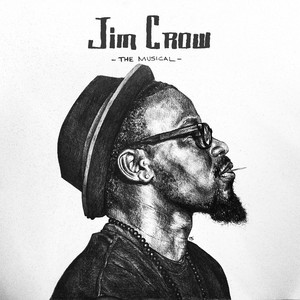
Memory Wars: People Get Use to Anything…After A While People Just Think Oppression is the Normal State of Things” — Make America Backwards Again | Music: Jim Crow the Musical Add-2 | [16] Slave Awareness Skit
There is a simple reason: The United States does not yet have the stomach to look over its shoulder and stare directly at the evil on which this great country stands. That is why slavery is not well taught in our schools. That is why the battle flag of the army that tried to divide and conquer our country is still manufactured, sold and displayed with defiant pride. That is why any mention of slavery is rendered as the shameful act of a smattering of Southern plantation owners and not a sprawling economic and social framework with tentacles that stamped almost every aspect of American life. -- The Opinions Essay: Germany faced its horrible past. Can we do the same? By Michele L. Norris
JUNE 3, 2021

Locked Up: The Prison Labor That Built America’s Business Empires

This episode is presented by Reveal and shows how the American south quickly shut down Reconstruction and reinvented slavery by using the prison system as a new slave labor force. Before the US Civil War, less than 8% of people in prison were black. During the rise of Jim Crowe era and the prison industrial system that rose to replace slave labor, the new of black people locked up skyrocketed to over 75%. Most were incarcerated for petty crimes and sentences to hard labor for months and years. Some would not survive.

Fourth Archetypal Animation | Locked Up — How Jim Crow Created the New Slave Labor

Memory Wars: If you live long enough, you get to see things repeat themselves.” | Locked Up: Prison Labor that Built America’s Business Empires | Music: Jim Crow the Musical | Add-2 | [1] Welcome to Jim Crow  
Companies across the South profited off the forced labor of people in prison after the Civil War โ€“ a racist system known as convict leasing.
After the Civil War, a new form of slavery took hold in the US and lasted more than 60 years. Associated Press reporters Margie Mason and Robin McDowell investigate the chilling history of how Southern states imprisoned mainly Black men, often for minor crimes, and then leased them out to private companies โ€“ for years, even decades, at a time. The team talks with the descendant of a man imprisoned in the Lone Rock stockade in Tennessee nearly 140 years ago, where people as young as 12 worked under inhumane conditions in coal mines and inferno-like ovens used to produce iron. This system of forced prison labor enriched the Tennessee Coal, Iron & Railroad company โ€“ at the cost of prisonersโ€™ lives. 
At the state park that sits on the former site of the Lone Rock stockade, relics from the hellish prison are buried beneath the soil. Archeologist Camille Westmont has found thousands of artifacts, such as utensils and the plates prisoners ate off. She has also created a database listing the names of those sent to Lone Rock. A team of volunteers are helping her, including a woman reckoning with her own ancestorโ€™s involvement in this corrupt system and the wealth her family benefited from.   
The United States Steel Corporation helped build bridges, railroads and towering skyscrapers across America. But the company also relied on forced prison labor. After US Steel took over Tennessee Coal, Iron & Railroad in 1907, the industrial giant used prison labor for at least five more years. During that time, more than 100 men died while working in their massive coal mining operation in Alabama. U.S. Steel has misrepresented this dark chapter of its history. And it has never apologized for its use of forced labor or the lives lost. The reporters push the company to answer questions about its past and engage with communities near the former mines. 

Memory Wars: Behind the Lie of Monopoly 

“We’re born into the world and think the world is simply the way we are born into it.” — One of the guests on Throughlin’s History of the Game Monopoly

Fifth Archetypal Animation | Monopoly…More Than A Game

Memory Wars: Monopoly, So Much More Than A Game… If We’d Only See | Music: Master of the Game (Expanded Edition) | George Duke | [9] Part 1-The Alien Challenges The Stick/Part 2-The Alien Succumbs To The Macho Intergalactic Funkativity Of The Funkblasters

Monopoly is one of the best-selling board games in history! It was actually created to get people to think about real life monopolies and how they impact real peoples daily lives.

Most people just love to play Monopoly because it is fun, especially if you need a distraction from the stress and monotony of earning enough money to buy your daily bread.

How Monopoly has been marketed to us is probably why we often don’t notice the deeper messages embedded in the game.

In this episode of Throughline, the narrators explore the origins and history of Monopoly. It’s not what you think. In fact, it reveals how a critique of capitalism grew from a seed of an idea in a rebellious young woman’s mind who created this legendary game that celebrates wealth at all costs. But behind the legend, we’ve been told a lot of lies; one was the theft of a young woman’s brilliant idea.

There's more to Monopoly than you might think. It's one of the best-selling board games in history โ€” despite huge economic instability, sales actually went up during the pandemic โ€” and it's been an iconic part of American life at other pivotal moments: a cheap pastime during the Great Depression; a reminder of home for soldiers during WWII; and an American export during its rise as a global superpower. It endured even as it reflected some of the ongoing inequities in American society, from segregation and redlining, to capitalism run rampant. That's because Monopoly is also built on powerful American lore โ€“ the idea that anyone, with just a little bit of cash, can rise from rags to riches. Writer Mary Pilon, the author of The Monopolists: Obsession, Fury, and the Scandal Behind the World's Favorite Board Game, describes Monopoly as "the Great American Dream in a board game โ€“ or, nightmare." -- Do Not Pass Go (2022) | Throughline

Memory Wars: Conclusion

We are responsible for noticing Sin. When we see it, we must name it. Sitting and watching from the sidelines is no longer an option.

We are responsible for paying attention to what is going inside and outside of our bodies.

If we misrepresent and falsify our sinful actions or fail to act to stop sin when we see it inflicted on others, we are whitewashing reality. This is sin and only leads us further down the road of turning Earth into Hell.


Memory Wars: Feature Archetypal Animation

Image from: SEPTEMBER 4, 2018 | The Bible Condemns American Slavery
by Jesse Johnson
Image from: Why the West is morally bound to offer reparations for slavery |The Conversation

Music: Still Living In Slavery | Mr Raoul K | [1] Dounougnan Magni – Intro    2:41


First Archetypal Animation

Image from: Uncle Tom’s Cabin as a Religious Text
BY PATRICIA R. HILL, DEPARTMENTS OF HISTORY & AMERICAN STUDIES, WESLEYAN UNIVERSITY
Image from: Why the West is morally bound to offer reparations for slavery
This cartoon, โ€œThe Modern Mercuryโ€ by Jerry Doyle, appeared in The Philadelphia Record, December 7, 1935. 
Image from: World War II: The Holocaust | ALAN TAYLOR |  OCTOBER 16, 2011 | The Atlantic

Music: Memory Streams | Portico Quartet | Immediately Visible


Memory Wars: Second Archetypal Animation

Image from: Canada in WWII | Adolf Hitler
Image from: The image of Stalin in the Soviet art
Image from: Tinker Tailor Soldier Hacker: The Russian Factor In the DNC Email Scandal | Wilson Center

Music: Hey Putin! Go Fuck Yourself! | WiT | [1] Hey Putin! Go Fuck Yourself!   


Memory Wars: Third Archetypal Animation

Image from: Germany faced its horrible past.
Can we do the same?
— Washington Post

Image from: Swiggity the Single

Other images from January 2022 and 2021 blogs.

Music: Jim Crow the Musical Add-2 | [16] Slave Awareness Skit   


Memory Wars: Fourth Archetypal Animation

Image from: Locked Up: The Prison Labor That Built Business Empires
Image from: Locked Up: The Prison Labor That Built Business Empires | Look at the one black man sitting on the ground surrounded by white men with guns who worked for Lone Rock stockade where the relics from the hellish prison are buried beneath the soil today.
Image from: Locked Up: The prison labor that built business empires in the South, including Tennessee by NewsChannel 9
Image from : In the galleries: Gordon Parkโ€™s photos from the Jim Crow-era South — Washington Post
Image from: Jim Crow in Florida — Florida Humanities

Music: Jim Crow the Musical | Add-2 | [1] Welcome to Jim Crow    1:11


Memory Wars: Fifth Archetypal Animation

Play Board Game Monopoly Money Trade Hobby | pcdazero | Gianni Crestani  โ€ข  Age 58  โ€ข  San Bonifacio/Italia  โ€ข  Member since Jan. 28, 2012

Dog Top Hat Pet Canine K9 Dressed Up Puppy | Prettysleepy | Amy  โ€ข  USA  โ€ข  Member since July 24, 2016

Monopoly Monopoly City Los Excavator Pewter Token | dboschm | Deutsch  โ€ข  Member since April 10, 2013

Monopoly Money Power People Rich | GDJ | Gordon Johnson  โ€ข  USA  โ€ข  Member since June 3, 2015  โ€ข  #4

Monopolies Puglia Church Chiesadelpurgatorio | magrimax | massimo magri  โ€ข  Age 64  โ€ข  pescara/italia  โ€ข  Member since July 27, 2018