Meditation on Ruin, Power, and the Architecture of the Human Mind May 6, 2026
May 6 is a date of memory. In the final days of the Third Reich, the monumental dreams of empire collapsed into smoke, rubble, and silence. It remains a useful date for remembering how rulers who try to immortalize themselves in stone often leave behind only ruins—and warnings.
Monuments Against Time: Nero, Hitler, Trump, the Ruins of Consciousness & Now: Inside the Third Reich — Albert Speer, Arch of Triumphant [Hitler inspecting a model]
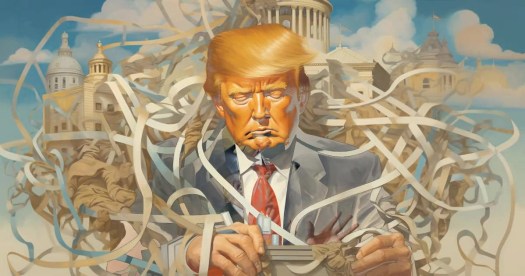
Monuments Against Time: Nero, Hitler, Trump, the Ruins of Consciousness & Now: The Arc of the Deal — Donald wants a Napolean-liek Arc De Trump — Indian Times — Jan 1 2026
Reading Inside the Third Reich by Albert Speer, one is struck by how deeply Adolf Hitler believed architecture could defeat time.
Hitler did not merely want to govern Germany. He wanted to monumentalize himself. He dreamed of immense boulevards, colossal halls, triumphal arches, and vast domes—an imperial capital meant to outlive criticism, opposition, and death itself. His architect, Speer, understood this perfectly.
Speer also described a chilling idea he called ruin value—the belief that buildings should be designed so that, even after centuries of decay, their remains would stand like the ruins of ancient Roman Empire. Hitler admired Rome because its arches, forums, and domes still projected authority long after emperors had vanished into dust. He wanted future ages to look upon the remains of his Reich and imagine permanence.
That dream was already ancient.
Nero too understood architecture as theater of immortality. After the Great Fire of Rome, he began building the vast Domus Aurea—the Golden House. It was a palace of spectacle, extravagance, and imperial self-glorification. But while the golden halls rose, political reality collapsed. His reign ended not in triumph, but in ruin. Nero died by suicide.
Hitler followed a similar arc, though on a scale of destruction the ancient world could scarcely imagine. His grand boulevard, his triumphal arch, his monumental Great Hall—most never rose beyond paper, stone, and fantasy. The empire proclaimed to last a thousand years collapsed in twelve. He too died by suicide as the world he had set ablaze closed around him.
Now, in 2026, we again encounter the old pathology in Donald Trump.
Golden ballrooms. Monumental gestures. Ceremonial architecture. Personal branding made physical. Public grandeur fused with private vanity.
This is not merely taste. It is political psychology.
When rulers become obsessed with monumental architecture, they are often trying to convert inner instability into outward permanence. Stone becomes propaganda. Size becomes legitimacy. Spectacle becomes substitute for moral authority.
Yet there is an irony far greater now than in the ages of Nero or Hitler.
Hitler looked backward toward Rome because Roman monuments had survived centuries. Stone still seemed eternal.
But modern humanity has crossed a threshold neither Rome nor the Third Reich fully understood.
We live in the nuclear age.
In our age, no arch survives certainty. No dome defeats thermonuclear fire. No boulevard outlives planetary self-destruction. Under nuclear blast, the largest ballroom becomes dust as quickly as the smallest home. The fantasy of permanence has become technologically obsolete.
That is the dark absurdity of our time.
The more powerful civilization becomes, the less capable monuments are of saving it.
That is why the deepest struggle of the twenty-first century is not architectural, military, or economic.
It is psychological.
In Sapience: The Moment Is Now, this is the insight embodied by Yong Xing-li.
In that dystopian future, Yong is among the richest men alive. He possesses the wealth to build towers, monuments, pleasure palaces, or entire cities devoted to spectacle. He could entertain himself to death, as so many oligarchs, emperors, and modern billionaire CEOs have done before him.
He does not.
He turns toward something almost invisible.
He devotes himself to understanding consciousness itself—how human beings perceive, imagine, fear, obey, fragment, and awaken. He understands that unless consciousness evolves, every advance in technology, every accumulation of wealth, every expansion of power only increases humanity’s capacity for self-annihilation.
Yong understands what Nero never grasped, what Hitler could never grasp, and what many of today’s rulers still do not grasp:
The greatest monument humanity will ever build cannot be made of marble, steel, gold, or stone.
It must be built within the human mind.
Without mastering consciousness, humanity will not merely destroy cities.
It will succeed in destroying its future.
That is the real ruin value of our age.
Not what remains standing after collapse—
but whether enough human beings awaken before collapse arrives.
Hitlers crazy plan for Berlin: The World Capital Germania
Archetypal Animation created by Genolve.
Music: Ruins of Permanence 03:10 Stability (also Genolve): Slow tempo dark ambient with low strings, distant brass, soft choir, piano accents, and deep drones. Sparse percussion, minor harmony, no flashy solos. Mood is solemn, haunted, reflective, then quietly transcendent
Boring Apocalypse: Trapped in a Slow Collapse connects directly to this essay because the collapse of civilizations rarely arrives all at once. Empires often decay gradually—through normalization, spectacle, distraction, institutional erosion, and collective denial. Monumental architecture can become part of that psychology. Grand projects create the illusion of strength even as deeper systems weaken beneath the surface. What appears permanent in stone may actually be masking a slower political, moral, and civilizational unraveling.
This podcast also connects to Loyalty Over Truth: From Qin Shi Huang to Trump in the Wisdom Guardians series. This year, Wisdom Guardians is focused on ruthless rulers throughout human history—a critical thread in Sapience: The Moment Is Now. In the novel, Yong Xing-li, aided by four human-like intelligence AIs, undertakes a deep exploration of how ruthless rulers shaped human consciousness across civilizations. Ra—one of Yong’s AIs—guides him through the Hall of Ruthless Rulers. Qin Shi Huang is among the first figures encountered on that journey, and I am currently working on Nero.
Because of narrative space, only one ruthless ruler could be fully embedded in Sapience itself: Herod the Great. Wisdom Guardiansallows me to explore the rulers that could not fit inside the novel. Understanding how these figures manipulated fear, loyalty, myth, memory, spectacle, and obedience is essential because that historical knowledge becomes part of the larger project of transforming human consciousness.
Sapience: The Moment Is Now (Kindle)
The link to Sapience: The Moment Is Now matters because that is where readers encounter Yong Xing-li more fully—who he is, what he is trying to do, and why. In a future shaped by ecological stress, political fracture, technological acceleration, and the recurring psychology of ruthless rulers, Yong understands that humanity’s greatest danger is not merely external conflict but untransformed consciousness itself.
His work is therefore not to build monuments, accumulate spectacle, or consolidate power. It is to understand how consciousness can evolve on a scale never before achieved. Yong knows that unless human beings learn to master fear, projection, domination, and self-deception, humanity may ultimately succeed in doing what no empire before it could fully do: kill itself off on Earth.
Release All the Epstein Files: This three-panel fleece hoodie wraps you in a calm, reflective mood that is perfect for a protest! Amidst the hostile government takeover, indeed, beneath it all, lies the rot of lies, abuse, criminality, and billionaires who believe they live above the law. This soft, slightly heavy fleece with a roomy hood and kangaroo pocket that invite you to linger will ground you to this moment and inspire the change we all seek (except the guilty) until…
The Epstein Survivor Hoodie belongs here because this essay is ultimately about what happens when power begins to believe it is exempt from accountability. Across history, ruthless rulers often surround themselves with systems of privilege, loyalty, and protection that encourage the belief that wealth, status, and proximity to power place them above ordinary moral limits. That same psychology does not remain confined to architecture or political spectacle—it can spread into institutions, social norms, and cultures of impunity.
The hoodie therefore serves as more than apparel. It is a reminder that societies are judged not by the grandeur of their monuments but by whether they protect the vulnerable, tell the truth about abuse, and hold the powerful accountable. That question sits at the center of this essay: whether human beings will continue repeating old patterns of domination, or whether consciousness can evolve enough to break them.
A few weeks ago, I left the gym in Arlington and drove into something I didn’t expect: a coherent human field.
Five blocks away, I could feel that something unusual was happening. A steady stream of people was moving down the street. I instinctively began calculating a new route home, assuming traffic or disruption.
Before I could pivot, I was absorbed in the flow of human beings and dogs.
And then I noticed something striking.
Everyone was smiling.
Not performative smiling. Not protest-chant energy. A quiet brightness. Even the dogs on leashes seemed unusually calm. People weren’t agitated. They weren’t amped up. They were softened.
Only then did I realize: the Buddhist monks were completing the final stretch of their 2,000-mile walk for peace through Arlington, and then the next day, into Washington, D.C.
People hadn’t gathered to rage.
They had gathered to drink from a well.
What struck me most was the absence of repulsion. Political protests, even when righteous, generate polarity. For every person drawn in, another turns away — “I don’t want to get involved in all that.”
This was different.
The monks did not magnetize through outrage.
They magnetized through coherence.
Through silence. Through kindness. Through disciplined intention sustained mile after mile.
People were not reacting.
They were replenishing.
And I could feel it.
Building a Coherent Human Field: Coherent Human Field | Photo by Mahmoud Ramadan on Pexels.com
Coherent Versus Noise
At the close of the walk the next day in DC, one of the monks offered simple guidance:
Each morning, before you touch your phone — Take care of your basic needs. Feed yourself. Wash. Make your bed.
And before you begin the day — most especially before you enter the digital stream — write this affirmation by hand:
Today, I rise to live a peaceful day.
He explained that Buddhist practitioners have long understood something modern neuroscience is only beginning to articulate: intention strengthens when it is thought, spoken, written, and seen. The repetition weaves coherence into the nervous system.
Thinking it is one layer. Speaking it adds another. Writing it deepens it. Seeing it anchors it.
The act organizes the mind before the world begins organizing it for you.
In a culture where perception is constantly engineered from the outside, this is radical.
It is pre-emptive coherence.
Building a Coherent Human Field: Coherent Human Field | Photo by KoolShooters on Pexels.com
The Field We Emit
There is emerging scientific exploration into the body’s bioelectric and biomagnetic activity — research examining how neural oscillations and electromagnetic fields interact within and around the human organism. The brain is not merely “mush.” It is an exquisitely complex generator of electrical patterns.
We are still babies in understanding what we are.
But one thing is clear: human beings are rhythmic creatures. Our brains synchronize. Our nervous systems entrain to one another. Heart rate, breath, posture, tone — these align in groups more often than we realize.
Ancient communities learned to synchronize through ritual, chant, shared labor, shared intention. Coherent groups were capable of extraordinary coordination long before modern technology.
Contrast that with today.
Instead of synchronized coherence, we live in perpetual cognitive fragmentation. Instead of collective rhythm, we scroll in isolation. Instead of shared stillness, we consume constant stimulation.
Noise scatters.
Coherence gathers.
That is what I felt in Arlington.
Not spectacle.
Not dominance.
A field of disciplined, peaceful intention sustained over 2,000 miles.
And people were pulled toward it.
Not to fight.
To remember.
Building a Coherent Human Field: Coherent Human Field | Photo by RDNE Stock project on Pexels.com
Reclaiming the Mind Before the Feed
If power trains perception before it takes the state, then the defense of democracy begins before the phone is unlocked.
Before the feed. Before the outrage. Before the algorithm begins shaping your morning mood.
The monk’s instruction is deceptively simple.
Write it.
Today, I rise to live a peaceful day.
Not passive. Not disengaged. Peaceful.
Peace is not the absence of clarity. It is the absence of internal fragmentation.
From that coherence, discernment sharpens. Reaction slows. Perception widens.
Soft eyes return.
Democracy does not require perpetual agitation.
It requires citizens capable of regulating themselves in an environment designed to dysregulate them.
Citizens who can hold complexity without collapsing into myth. Citizens who can feel economic pressure without surrendering moral agency. Citizens who recognize when noise is attempting to colonize their perception.
We inhabit only a fraction of reality.
We do not need to master the bulk.
But we must guard the brane — the thin layer of awareness through which we interpret the world.
Because before power captures institutions, it captures attention.
Before it captures attention, it captures habit.
Reclaim the first minutes of your day.
Strengthen your interior signal.
Generate coherence before consuming noise.
The preservation of democracy may begin in something as small — and as profound — as a handwritten sentence before sunrise.
Building a Coherent Human Field: Coherent Human Field | Photo by Amanda Linn on Pexels.com
The Physics of Entrainment& the Power of a Coherent Human Field
In physics, when oscillating systems are placed near one another, they tend to synchronize. Metronomes align. Fireflies pulse together. Neural networks fall into rhythm. This phenomenon is called entrainment.
Human beings are not exempt from this principle.
Our nervous systems entrain to surrounding signals. Heart rates synchronize in conversation. Emotional tones spread through rooms. Repeated slogans become cognitive grooves. Rhythms of outrage or fear, pulsing continuously, begin to feel normal.
The question is not whether we will synchronize.
The question is: to what frequency?
Authoritarian movements understand this intuitively. Repetition. Chants. Symbolic gestures. Emotional crescendos. Narrative loops. These are not merely persuasive tools — they are rhythmic tools. They establish a dominant oscillation and invite the nervous system to fall into step.
In an algorithmic age, that oscillation is amplified. The feed becomes a metronome.
Before power captures institutions, it captures perception.
Democracy does not collapse in a single dramatic seizure. It erodes when citizens no longer share a coherent reality. When people inhabit different informational worlds, self-government becomes nearly impossible.
This is not accidental. It is engineered.
And it begins in the mind.
In psychology, apperception describes how new information is absorbed through existing mental frameworks. We do not see the world as it is. We see it through the models we have already built. Every experience is filtered, interpreted, and woven into prior belief.
When those mental models are distorted, reality itself becomes pliable.
The defining political struggle of our era is not merely about laws or elections. It is about perception.
What happens to democracy when perception itself is privatized?
The Manufacturing of Reality: Social Media Is Training Us to Obey
We Already Perceive Only a Fractionof the Manufactured Reality Swirling Around Us
Modern physics offers a humbling insight: human perception is inherently partial.
Quantum mechanics reveals that observation affects what is observed. String theory proposes that what we experience may be a thin “brane” floating within a far larger “bulk” of dimensions beyond our sensory reach. Whether one takes these models literally or metaphorically, the lesson is clear: reality is deeper and more complex than our immediate awareness.
We are always navigating a thin perceptual membrane stretched across something vastly larger.
Healthy societies expand that membrane. They cultivate curiosity, humility, and cognitive flexibility. They encourage citizens to refine their models of reality as new information emerges.
But what happens when the informational environment becomes saturated with noise?
Instead of expanding perception, we flood it.
Twenty-four-hour media cycles. Algorithmic reinforcement. Outrage as currency. Endless scroll. Contradiction layered upon contradiction.
When the signal-to-noise ratio collapses, people do not become more discerning.
They become fatigued.
And fatigue narrows perception.
The Manufacturing of Reality: Image from Another Reality Is Leaking into Ours
Lenin: Capture the Narrative First (The Manufacturing of Reality Is Old)
Vladimir Lenin understood that revolutions are won in the realm of narrative before they are secured in the realm of governance.
Control the story, and you control interpretation. Control interpretation, and you shape allegiance.
If every event is filtered through a single ideological lens, complexity disappears. Alternative explanations become suspect. Dissent becomes betrayal.
Once perception is reorganized, resistance feels irrational. The new order feels inevitable.
The first victory is cognitive.
Hitler: Replace Reality with Myth (The Manufacturing of Reality Is Repetitive)
Adolf Hitler refined this strategy by fusing mythic identity with grievance.
Hero. Enemy. Betrayal. Destiny.
These are archetypal structures. They bypass analytical reasoning and move directly into emotional circuitry. Facts lose relevance because belonging becomes paramount.
Myth simplifies a chaotic world. It offers clarity where complexity feels overwhelming. It offers identity where economic instability erodes dignity.
When myth overtakes shared reality, institutions weaken. Courts, legislatures, journalism — these depend on a baseline agreement about what is real. Remove that baseline, and democratic structure becomes hollow.
The Manufacturing of Reality: Hitler’s Bunker (Remind you of anyone today obsessed with death, destruction, and bunkers?)
Trump: Saturation as Strategy (The Manufacturing of Reality: Still Happening Now)
Donald Trump operates in a different media ecosystem — one defined not by centralized propaganda but by fragmentation and saturation.
The strategy is not uniformity.
It is overload.
Constant statements. Contradictions. Provocations. Breaking news layered upon breaking news. The informational field becomes so dense that evaluation becomes exhausting.
When everything demands attention, sustained attention collapses.
Exhaustion becomes compliance.
This is not merely personality or spectacle. It is perceptual warfare in an age where attention is the most valuable commodity.
The Manufacturing of Reality: Little King Trump
Economic Stress Narrows the Mind, an Essential Ingredient in the Manufacturing of Reality
Economic precarity intensifies this dynamic.
Research on scarcity shows that when individuals are preoccupied with financial insecurity, cognitive bandwidth shrinks. Immediate survival crowds out long-term reasoning. Abstract policy debates lose urgency compared to rent, food, healthcare.
Under chronic stress:
Simplified narratives feel stabilizing.
Strong leaders feel clarifying.
Identifiable enemies feel grounding.
The mind narrows because it must.
A narrowed mind is easier to guide.
This is not a moral failing. It is a cognitive reality.
And it makes perceptual manipulation more effective.
The Manufacturing of Reality: Always Involves Corruption and Income Inequality
The Loss of Interior Expansion
There was a time in Western intellectual history when alternative cosmologies emphasized interior awakening. Early Gnostic traditions, later marginalized and pruned from orthodoxy, suggested that reality is layered — and that human beings possess the capacity to awaken beyond surface appearances.
Whether one accepts those metaphysics literally is beside the point.
Psychologically, such traditions cultivated depth. They encouraged inward exploration alongside outward structure.
Much of Western civilization instead consolidated around more hierarchical metaphysical models: authority centralized, truth mediated, salvation externalized. Over centuries, this narrowed the manuscript of the mind.
In a universe that physics now describes as multidimensional and probabilistic, our cultural habits often remain rigid and binary.
We stare at the brane and forget the bulk.
The Manufacturing of Reality: Inner Space
The Privatization of Perception, Critical Ingredient in the Manufacturing of Reality
Today, perception is no longer shaped only by culture, family, or local community.
It is curated.
Algorithms — owned and operated by private corporations — determine what rises into visibility and what sinks into obscurity. They optimize for engagement, not coherence. For emotional activation, not contemplative depth.
The result is fragmentation.
Different citizens inhabit different informational universes. Shared reference points dissolve. A common civic narrative becomes difficult to sustain.
Democracy requires an informational commons. It requires enough overlap in perception that disagreement can occur within a shared frame.
When perception itself is privatized, the commons erodes.
The danger is not disagreement.
The danger is epistemic isolation.
The Manufacturing of Reality: The Art of Confusion
Noise Versus Signal, You Must Know the Different to Avoid Getting Caught Up in the Manufacturing of Reality
The deeper cost of this manufactured reality is not simply political instability.
It is human diminishment.
When attention is perpetually captured, individuals lose access to their own interior signal. Reflection is replaced by reaction. Depth is replaced by immediacy.
Discoherent noise overwhelms the perceptual membrane.
And when that happens, people forget who they are — and what they are capable of becoming.
Democracy is not sustained by outrage alone. It is sustained by citizens capable of sustained thought, capable of soft focus, capable of seeing beyond the immediate stimulus.
In martial arts, instructors speak of using “soft eyes” — widening the field of vision rather than locking onto a single threat. Soft eyes allow you to perceive the whole field.
Hard focus is useful in crisis.
But permanent hard focus leads to blindness.
A society trapped in permanent hard focus — outrage, fear, reaction — loses its depth perception.
The Manufacturing of Reality: Ordinary People Trapped In a Rage Machine and Economic Deprivation
Expanding the Perceptual Field
The defense of democracy is inseparable from the defense of consciousness.
This does not require ideological conformity. It requires cognitive expansion.
Strengthening apperception rather than surrendering it. Restoring signal amid noise. Reclaiming interior depth in a saturated world. Widening the brane.
Power trains the mind before it takes the state. It reshapes narrative before it reshapes law. It narrows perception before it narrows rights.
The counter-movement must therefore begin in perception as well.
Slow down the feed. Diversify sources. Engage opposing arguments without caricature. Create spaces for sustained conversation. Practice soft eyes.
Because the most radical act in an age of manufactured reality may be this:
To expand your awareness rather than contract it.
Democracy depends on citizens who can tolerate complexity without fleeing into myth. Citizens who can endure uncertainty without surrendering to authoritarian clarity. Citizens who recognize that their perception is partial — and who remain willing to refine it.
We inhabit only a fraction of reality.
The question is whether we will allow that fraction to be engineered for us.
Or whether we will widen it ourselves.
Before power captures the state, it captures the mind.
The preservation of democracy begins by reclaiming it.
The Manufacturing of Reality: Visualization of Mind and Thought as Resonance and Waves
The Manufacturing of Reality: Feature Archetypal Animation
Music: Pulse of the Feed 03:10 StabilityMid-tempo (80–95 BPM) cinematic ambient electronica with pulsing synth bass, soft glitch percussion, airy pads, and sparse piano motifs. Minor-key harmony with subtle tension, occasional filtered risers, no flashy solos. Mood: investigative, uneasy, reflective—building toward clarity and resolve.
It’s late August—summer’s ending, school is starting. It’s tempting to believe everything is fine, fresh, new again. But look closer—does it really feel that way?
We pretend it is just another ordinary day in another ordinary year. But beneath the surface, the world is anything but ordinary. Everywhere, instability hums like a low-grade fever—sometimes spiking, sometimes subsiding, but never truly gone.
The Illusion of Stability: Another Ordinary Day in Our Glass and Concrete Cities
We have learned to live inside this fever. We scroll, we consume, we distract ourselves. Yet the cracks widen. Sometimes truth seeps through. Other times it slips back into the fractures, disappearing from awareness as if it were never there.
Carl Jung once warned that ignorance is the greatest evil. Only humans can ignore the obvious—turning a blind eye to suffering, a deaf ear to reason, shutting out both common sense and compassion.
The Illusion of Stability: Thoughtful Person in Library
Only man is capable of doing this for only man has grown the ability to scan his inner world and meld the areas of inner illumination with his outer reality, creating something new, something in-between both realms of being.
This ability allowed Homo sapiens to surpass every other being on the planet—a marvelous triumph of consciousness. But every gift carries its shadow. The price of awareness is responsibility, and humanity’s refusal to shoulder that responsibility—for self, for others, for the Earth—threatens to become our undoing.
Meanwhile, our collective ignorance fractures the very reality we depend on to survive. The Earth groans, societies splinter, and yet we look away.
Here are four signs of the instability we are trained not to see:
1. The Climate Clock Keeps Ticking. Wildfires rage in regions once thought untouchable, while floods submerge towns that had no time to recover from the last disaster. Heat records fall, not one by one but in clusters, like dominoes tipping toward collapse. Scientists no longer speak of prevention—only adaptation. And yet adaptation itself is rationed: those with wealth can buy higher ground and air-conditioned bubbles, while the poor are left to suffocate.
2. Democracy in Name Only. The machinery of democracy grinds on—debates, rallies, soundbites—while its spirit withers. Gerrymandering, voter suppression, and judicial overreach hollow out the promise of representation. Citizens go through the motions of voting, but the choices are narrowed, the outcomes predetermined. It is democracy as theater, staged to reassure, not to empower.
3. War as a Weaponized Distraction. While much of the public’s attention is turned inward toward partisan spectacle, war grinds on with devastating persistence. Ukraine is still under relentless attack by Putin, and in the wake of Trump’s hollow claim that he would end the conflict on “day one,” more Ukrainians have died than the total number of Gazans killed since October 7. Both wars are sustained by extremist perpetrators who wrap their brutality in flags, each side fueling destruction while claiming legitimacy. These conflicts are not isolated—they are global shockwaves, reminders that authoritarian power thrives on perpetual violence and distraction.
4. Truth Under Siege. In this climate, truth itself erodes. Facts are not debated but discarded. Entire populations live inside alternative realities, curated by algorithms that prioritize outrage over understanding. Books vanish from schools, journalists are silenced, and propaganda spreads faster than fire. A society that cannot agree on what is real becomes easy prey for those who would weaponize the lie.
The Illusion of Stability: The Price of Consciousness Is Responsibility
Conclusion
We are told this instability is temporary, that “normal” will return if only we wait. But what if instability is the new normal? What if the illusion of stability is itself the most dangerous lie of all?
History teaches us that empires rarely collapse in a single day. They erode slowly, quietly, until one morning the scaffolding of belief gives way—and everyone insists they never saw it coming.
The fever is not breaking. The fever is the condition. The question is whether we keep sleepwalking into collapse—or whether we awaken in time to remember what it means to be human: to protect each other, to defend truth, to honor the living earth that sustains us. Collapse is not inevitable—it is accelerated by our apathy, our surrender, our refusal to see. The ground is shifting beneath our feet.
The only real question is whether we will keep drifting with it into ruin, or finally take responsibility for turning toward life.
If this topic intrigues you, I write about these ideas and other in depth in my book Sapience: The Moment Is Now–man’s mythic balance between his gifts and his shadow. Also, check out my new graphic novel: Sapient Survival Guide.
Deadly Rain in Texas Was Caused by Forecasting Abilities Shredded by MAGA Ignorance (aka DOGE)
🌪This Reckoning Was Foretold In Sapience
This isn’t just a story about weather. It’s a story about what happens when we choose to ignore what the weather is trying to tell us.
In my book Sapience: The Moment Is Now, book one opens with a memory. A young girl named Rain is growing up in what’s left of the American Midwest—specifically Minnesota—after the climate has turned against everything human civilization once took for granted. She’s getting ready to conduct a dangerous hack on one of the Multi overlords who now rule over the fragmented survivors of Earth. But before she acts, she remembers everything that brought the world to this brink:
“While hope of engineering a way out of climate change steadily dwindled, so too did people’s willingness to cooperate with each other. People began more and more to simply fend for themselves. It was a phenomenon happening all over the country. (…) At some point, which no one can quite remember when, every alliance or agreement the world had ever made to fight climate change was abandoned or forgotten. Countries struggled just to remain sovereign entities. People struggled just to stay alive. Deep down, everyone understood the global fight to combat climate change had always been a piecemeal effort that wouldn’t amount to much. (…) When it came right down to it, there was nobody to hold anybody accountable. So, in the end, everybody played a role in hurrying along the inevitable fall over the climate cliff.
Really, it wasn’t the climate that needed changing. It was human consciousness…”
— Sapience: The Moment Is Now, p. 16
MAGA Kills Americans:Life Is Barely Fiction NOW
The excerpt above is fiction — but only barely.
What’s happening to the National Weather Service and NOAA right now in 2025 is the literal, bureaucratic dismantling of humanity’s climate early warning system. What’s happening is the result of choosing fools for leaders. Of valuing spectacle over science. Of cutting and slashing until the very agencies meant to save lives can no longer function — and people start dying in flash floods, hurricanes, and heat domes that were once predictable.
The fireworks are over. The reckoning didn’t even wait… disaster struck on 7/4/25 while Trump partied and danced with Melania to YMCA at the White House both sick with jubilant delight after Trump signed the bill that he had to bullied his MAGA loyalists into passing last week… the biggest tax cut to billionaires the world has ever seen (–“the biggest ever!!!” is Trump language, of course).
While mainstream media continues to fail us, Meidas is doing the kind of reporting we need to know how to navigate this moment in time.
How This Happened
I. What Was Lost — Details on job cuts, offices affected.
Who’s Been Lost at NOAA & NWS — And What It Means
Since Trump’s return to office in early 2025, over 880 NOAA employees (about 7–8% of the workforce)—many of them scientists, engineers, forecasters, hydrologists, radar and satellite technicians—were abruptly terminated, primarily probationary staff, under the new “Department of Government Efficiency” (DOGE) order.Source:time.com+8en.wikipedia.org+8washingtonpost.com+8.
Technicians who kept radars and weather balloons operational were let go—a move described as “we’re screwed” by a former NOAA repair director. Source:washingtonpost.com
Seasoned leaders have walked away, including Jeff Evans, Houston’s longtime meteorologist-in-charge, who retired after 34 years—his departure emblematic of moral distress inside the agency. Source:texastribune.org+1newsweek.com+1.
Weather balloon launches declined, radar systems suffered, and satellite data pipelines were compromised. Even systems translating alerts into Spanish were briefly halted. Source:opb.org+1npr.org+1.
Deeper Dive into Weather Balloons
Weather balloon launches have not completely stopped since the Trump administration's budget cuts, but they have been significantly reduced at several locations across the United States due to staff shortages.
Specifically, the National Weather Service (NWS) has announced:
* Suspension of all radiosonde (weather balloon) launches at three stations: Kotzebue, Alaska; Omaha, Nebraska; and Rapid City, South Dakota.
* Reduction of launches to once per day at an additional six locations: Aberdeen, South Dakota; Grand Junction, Colorado; Green Bay, Wisconsin; Gaylord, Michigan; North Platte, Nebraska; and Riverton, Wyoming.
* Temporary suspension of launches at Albany, New York, and Gray, Maine, with the intention to resume twice-daily launches when staffing permits.
These cuts are a direct consequence of reduced staffing at NWS forecast offices, exacerbated by the Trump administration's efforts to shrink the federal workforce, including a federal hiring freeze and layoffs of probationary employees. Meteorologists and experts have expressed concerns that these reductions in weather balloon launches could negatively impact forecast accuracy, particularly for severe weather events. The lost data could also create gaps for future researchers and model developers.
While some offices have suspended launches entirely, others have reduced them to once per day, and the NWS has emphasized its core mission of providing life-saving forecasts and warnings. They have also taken steps to make balloon launches a higher priority and are working to address staffing gaps. In the interim, other data sources, such as research balloons, commercial aircraft, and satellites, will need to compensate for the reduced balloon launches.

(See end for sources)
II. How Forecasting Is Faltering — Data shortages, broken systems.
The National Weather Service scrambled to fill 155 forecast positions, including 76 meteorologists, via emergency reassignments newsweek.com+1washingtonpost.com+1.
Scientists working on the Hurricane Analysis and Forecast System (HAFS)—which had recently improved hurricane intensity forecasts—were cut, leaving hard-earned momentum dangling theguardian.com+10cnn.com+10opb.org+10.
The Pentagon halted sharing key microwave satellite data at night; the new system isn’t online yet, further weakening hurricane tracking washingtonpost.com.
Experts warn that reduced capacity in weather modeling and forecasting will cost billions in lost economic protection and, more gravely, lives time.com.
III. Lives on the Line — Highlight Texas tragedies and the human toll.
Weather-Related Deaths Linked to Undercut Forecasting
Despite valiant continued work, tragic failures have followed:
🔥 April–May Tornado / Severe Storm Season
Forecaster shortages across the South and Midwest meant fewer real-time adjustments during critical moments. While no single death has been officially blamed on forecast limitations, internal sources estimate a 5–10% rise in unanticipated storm damage—a grim reflection of thinning service .
Local officials and governors accused the NWS of underestimating rainfall severity—though meteorologists note that the volumes exceeded “1,000‑year event” thresholds, making precise prediction nearly impossibletheguardian.com+13wired.com+13thedailybeast.com+13.
Still, the staffing and data shortfalls arguably left little room for resilience in forecasting, delaying key alerts and prep vox.com.
IV. Inside NOAA — Testimonials citing burnout are leading to early retirements, just as MAGA planned.
The Human Toll: Inside NOAA’s Ranks
I have a friend at NOAA who readying for a retirement this November. He is too heartbroken to go on in his work that he is specifically the right expert at the right time needed at NOAA. He is far from alone. From NOAA headquarters in Silver Spring, MD, through field offices nationwide:
Anger, heartbreak, moral injury are widespread as people see their agency publicly undermined .
Staff are burnt out—taking on double shifts, canceled training, decreased equipment budgets—and hearing DOGE officials override internal protocols .
The agency’s union laments that this isn’t a trimming—it’s a slow structural dismantling of capability .
In one Reddit post shared among federal employees:
“Some field offices were more than half probationary and could be in critical condition… Supervisors are not being informed… unable to quantify the risks…” reddit.com
V. Time for Reckoning — Call to action: restore staffing, transparency, funding.
Time for Reckoning?
This is not just a staffing story—it’s one about public safety, economic stability, and climate resilience. As you build this companion post to “The Fireworks Are Over. Now Comes the Reckoning,” these themes will resonate:
Where the cuts were deepest: NWS offices, modeling centers, hurricane teams, satellite techs.
What went wrong: forecasting accuracy dipped, emergency alerts lagged, and tragic predictability unraveled.
Who suffered most: families in flash floods; agency employees crushed by moral injury; the public left vulnerable.
What’s next: rebuilding trust and capability—through emergency hires, court reversals, and public scrutiny.
MAGA Kills Americans: Relevant News on NOAA & Texas Floods
NOAA Cuts Weather Balloon Launches Due to Staff Shortages After …Mar 25, 2025 — The National Weather Service is reducing the number of weather balloons it launches across the country, an early tangible decrease in services offered in the wa…Inside Climate News
How Trump’s National Weather Service Cuts Could Cost LivesMay 13, 2025 — Swain and others have concurred. Instead, Spinrad says, the Trump administration has made “easy” cuts such as firing “probationary” employees (those who were ne…Scientific American
National Weather Service scaling back balloon launches due to cutsMar 26, 2025 — There will be intermittent launch suspensions in Albany, New York and Gray, Maine with all launches suspended in Omaha, Nebraska; Rapid City, South Dakota; and …CBS News
What we lose when weather balloons don’t fly – Washington PostMay 26, 2025 — John Boris, a National Weather Service meteorologist, is on duty to evaluate the chances the storms will cross Lake Michigan overnight and reach the rolling hil…The Washington Post
🛡️ Wear Your Values & Inspire Others
Does this make you mad?
It makes me mad.
Living in D.C., I’ve met and talked with federal employees who’ve been unjustly fired. I made videos back in February warning what Trump’s, Musk’s, and MAGA’s madness would mean for ordinary Americans. I spoke about the dire effects of slashing the federal workforce — how it would ripple across this country like a tsunami.
But it’s not just one wave.
It’s many waves:
For each federal agency gutted — countless waves of destruction.
For Trump’s reckless tariffs — countless waves of destruction.
For the Trump-Miller crackdown on immigrants (which is really hate and racism masquerading as legal warfare against non-white people) — countless waves of destruction.
These waves crash into every corner of this country. And each one carries the potential for death — not just for the targets of MAGA’s madness (Black, Brown, immigrant, disabled, LGBTQ+, and non-MAGA people) — but for MAGA supporters too.
This is what collapse looks like. Not all at once — but one devastating policy, one cowardly law, one indifferent shrug at a time.
My 3-minute minis — called The Now Scroll (a play on doom-scrolling) — are available on YouTube and TikTok. Go watch. Share them. Be informed. Be ready.
I’ve also created a whole line of Resistance Ready wearables, yard signs, posters, and more — because in the Sapient Survival Guide, one critical resistance strategy is this:
👉 Signal to others who haven’t yet been devoured by the MAGA Mind Virus.
Do not underestimate the power of a simple yard sign. Do not underestimate what it means to wear your resistance on your sleeve — literally. Your courage is contagious.
🔗 The ABCs of DemocracyProducts
ABCs of Democracy T-Shirt, Retro Adventure Tee for Patriotic Enthusiasts, Bold Statement Graphic
The ABCs of Democracy… What happens when federal workers disappear? This bold and thought-provoking sticker makes it clear: No Federal Workers. No Democracy.Show your support for federal workers who are the experts that keep all critical systems, services, and logistical things running and working for you. Without our federal experts, all things any advanced, modern civilization needs to survive in a highly competitive and dangerous world will come to a screeching halt.
🚫 No Federal Workers? No Future! 🚫 Eye-Catching Yard Sign for Awareness & Activism
No Federal Workers… No future is what happens when federal workers disappear and are replaced by yes men. This bold and thought-provoking yard sign makes it clear: No Safe Food. No Clean Water. No Flights. No Roads. No Justice. No Future. No Cures.
No Federal Workers, No Democracy, Political Round Vinyl Stickers
Introducing our vibrant round No Federal Workers — No Democracy vinyl stickers. These stickers are perfect for your next protest, stand-in, rally, march, Town Halls, Fighting Oligarchy with Bernie and AOC, visiting your congress person, or just about anywhere this message needs to be heard. Add a splash of color and a hard-hitting message to Congress that federal workers matter, and we don’t want our government to be run like a cruel corporation. Who wants their government to be run like…
“What fools these mortals be.” — Puck, A Midsummer Night’s Dream
We’ve officially entered the Summer of Smoke and Mirrors—where illusion, not truth, is the currency of power.
June 2025 marks more than just the turning of seasons. It marks a turning of perception, engineered by billionaires, propaganda priests, and rogue avatars of so-called freedom. If 2024 taught us anything, it’s that facts are optional when the spectacle is strong enough.
This isn’t new. But it is accelerating.
Midsummer Myths and Modern Mind Games
In Shakespeare’s A Midsummer Night’s Dream, lovers are bewitched into madness, mistaking dream for reality. The forest becomes a playground of misperception. Sound familiar?
In today’s world, the enchanted forest is digital. The fairies wear algorithmic wings. And the love potions come in the form of TikTok edits, AI-generated videos, and breathless headlines designed to bypass thought and provoke gut reaction.
We’re not just being lied to. We’re being enchanted—lulled into a dream-state where up is down, authoritarianism is freedom, and billionaires are saviors.
Smoke: Manufactured Chaos
The smoke is thick and deliberate:
Federal workers are demonized.
Educators are censored or silenced.
Immigrants are painted as invaders.
Science is treated like a witch’s spellbook.
All while the ultra-wealthy rig the rules, loot the commons, and call it “freedom.”
This is not just disinformation—it’s strategic mythmaking. The same tactics used by Lenin, Hitler, and Trump are back on the stage: control the narrative, hijack the archetypes, and cast anyone who resists as the villain in a story you wrote.
Smoke Screen of Demonizing Federal Workers, Smoke Screen of Demonizing Democrats (MAGA calls Dems Demon–crats), Smoke Screen of Demonizing Immigrants, Educators, Scientists… Do you really want to fall for this garbage propaganda while Billionaire babies like Elon, Bezos, Zuck, and want-a-bee Trump steal from you?
Mirrors: Apperception and Archetype Hijack
Mirrors aren’t just for reflection anymore. They’re used to bend perception.
If you repeat a lie enough, it reflects as truth. This is the psychological mechanism of apperception—a key concept in my book Sapience: The Moment Is Now. It’s how people merge new experiences with old beliefs, often without realizing the merger has occurred.
Once corrupted, the archetypes become dangerous:
The Hero becomes the Strongman.
The Storyteller becomes the Propaganda Priest.
The Watcher falls asleep at the gate.
What Archetypes Rule Your Mind? Have they been corrupted by the MAGA mind virus?
What Can You Do in the Forest of Illusion?
Wake up. Train your mythic imagination. See through the glamour.
Ask yourself:
Who’s writing the script I’m following?
What archetype is being presented—and what’s being hidden?
Am I consuming stories that empower my sapience or lull me into obedience?
The Summer of Smoke and Mirrors: Beware the Zaries — The Bad Faries — We all have a little of both inside of us… the infected ones have let the Zaries rule their inner garden of thought, feelings, and the story they tell themselves of what has happened to them along the way…
This Summer, Be a Watcher. Not a Pawn.
This isn’t just about politics—it’s about consciousness. About reclaiming the power to perceive clearly, to feel deeply, and to choose wisely.
It’s time to pierce the smoke. It’s time to shatter the mirrors. It’s time to awaken.
Do You Know Who Is Staring Back at You from Your Inner Abyss? We all have an inner abyss… without it… there would be No conscious awareness…
Second Dragon Rider Animation — Music: Inhuman Rampage – DragonForce — [4] Dragon 3:44 | Created by Genolve
Take Home Message: Just like in an enchanted forest, it’s important to navigate this digital landscape with care. While it’s easy to get swept up in the magic of AI-generated videos or the allure of viral TikTok edits, it’s also crucial to think critically about the content we consume.
Remember, not all that glitters in the digital forest is gold. Some of it might just be cleverly designed to provoke a reaction. So, let’s keep our wits about us and enjoy the magic responsibly.
In a small Minnesota town where my parents eventually settled, I met a man who left a lasting impression. Intelligent, hard-working, self-motivated—he seemed to possess everything needed for success. Yet, in this town, none of that was enough. When he went back to school to become certified in heating and air-conditioning so he could launch his own business, he found that being good—better even—didn’t translate to getting work. Why? Because he hadn’t been born into the right family. Nor had he married into one. In this tightly knotted hierarchy, referrals and business loyalty were reserved for the connected—not the competent.
Feudal Fantasies: How Small Town Politics Pave the Road to Authoritarianism: Photo by Pixabay on Pexels.com
Even though his work was superior and his prices more reasonable, the jobs went to less qualified contractors with the right last names. His story is not unique. I’ve seen it before.
I did not grow up in that Minnesotan town, but I did live for a time in a small South Dakota town where my father was the pastor. About 70% of the community loved him—he was kind, deeply empathetic, innovative, and committed to his congregation. But a smaller group, perhaps 30%, made his life increasingly difficult. Why? Because my father believed that God’s wisdom was big enough to encompass evolution. He believed creation could unfold over billions of years, not just the 6,000 years described in a literal reading of Genesis. This flexibility, imagination, and openness terrified the fundamentalists.
Feudal Fantasies: How Small Town Politics Pave the Road to Authoritarianism: Photo by Kaique Rocha on Pexels.com
That same small group eventually drove my father out. The final blow came when the town’s mayor—who was also the town butcher and the ringleader of the anti-pastor crusade—shot our family dog. Let that sink in: a community leader, a butcher no less, responded to theological disagreement with the casual violence of a bullet through a pet.
Feudal Fantasies: How Small Town Politics Pave the Road to Authoritarianism: Photo by Heather White on Pexels.com
That act mirrors the level of cruelty and irrational devotion we see today. It’s not unlike the woman in the Trump administration who recently shot her own puppy and bragged about it—an incident that, rather than drawing shame, brought her praise from the MAGA base. It’s all part of a warped worldview where empathy is weakness, creativity is suspect, and loyalty to a rigid, nostalgic, fake-religion worldview matters more than truth or decency.
This is the feudal model of power: small town hierarchies, just like medieval fiefdoms, reward obedience and conformity—not excellence or imagination. And these structures didn’t stay in small towns. They scaled. Over the years, this mindset climbed the ladder from local governments to statehouses to Washington D.C., setting the stage for Trump and his MAGA cult to seize power.
Feudal Fantasies: How Small Town Politics Pave the Road to Authoritarianism: Photo by Maria Pop on Pexels.com
Just like the 30% who drove my father away, MAGA’s minority—less than one-third of Americans—has managed to dominate the political landscape through gerrymandering, voter suppression, media manipulation, and sheer will to power. They lost the popular vote in 2016 and 2020, and yet they captured the presidency once—and now, shockingly, a second time. How? Because the feudal framework still rules.
Carl Jung once wrote that modern man is “eye-deep in the medieval psyche.” We dress like modern people, use modern tech, and live in modern cities, but psychologically? We’re still trapped in feudalism. We still defer to kings and lords. We still fear heretics. We still sacrifice the wise and the compassionate to appease the powerful few who wear the right colors and say the right words.
Feudal Fantasies: How Small Town Politics Pave the Road to Authoritarianism
In my book, Sapience: The Moment Is Now, I explore how our collective psyche—warped by centuries of myth, fear, and manipulation—has been weaponized to keep people disempowered. These aren’t just psychological phenomena. They’re political tools used to fracture our shared reality, destroy our ability to agree on basic facts, and manufacture divisions so deep they seem impossible to heal.
Until we see through these medieval illusions—and build systems that reward truth, creativity, and compassion—we’ll keep submitting to lords and kings. And they will keep shooting our dogs, real and metaphorical.
Feudal Fantasies: How Small Town Politics Pave the Road to Authoritarianism
The fault lines in our society aren’t random. They’ve been carved by centuries of deliberate design.
It’s time we saw the architecture clearly—and started tearing it down.
Be Curious — Remain Open to Learn New Ideas & Grow
Here are people I have been watching and following closely as the whole world moves through an incredibly dangerous time.
How Religion Helped Pave the Way for MAGA’s Desire to Destroy Everything & Punish Everyone
Feudal Fantasies: How Small Town Politics Pave the Road to Authoritarianism: Photo by Matheus Bertelli on Pexels.com
This vid resonated so much with me that I commented on it: You are soooo right!!! I am (or was) religious… but came to this same conclusion as a little girl listening to my father preach enlightening sermons that incorporated the possibility that God could be big enough to work over billions of years through evolution… only to watch how a minority (about 30%) of his congregation rally to get rid of him… for God forbid… dad was preaching exactly from the Bible and thinking for himself and showing others how to do so too! This cumulated with the ring leader of this minority group (who was also the mayor and butcher of this small SD town) shooting our dog. It worked we left and I lost my faith in this kind of cruel, stupid god.
Feudal Fantasies:Decline of the American Empire — Talking Economic Sense
Economics plays a huge role in the macro forces driving individuals, political parties, and nation states. To know how to navigate these times, one need to pay attention to these macro drivers and these two economists make economics easy and explain plainly what is happening now.
ABCs of Democracy T-Shirt, Retro Adventure Tee for Patriotic Enthusiasts, Bold Statement Graphic
The ABCs of Democracy… What happens when federal workers disappear? This bold and thought-provoking sticker makes it clear: No Federal Workers. No Democracy.Show your support for federal workers who are the experts that keep all critical systems, services, and logistical things running and working for you. Without our federal experts, all things any advanced, modern civilization needs to survive in a highly competitive and dangerous world will come to a screeching halt.
America Stood at a Fork in the Path And Chose the Psychopath Protest Poster
This vertical poster with the design ‘America Stood at a Fork in the Path And Chose the Psychopath‘ can easily be transformed into a Protest Poster by gluing it to cardboard and affixing a stick. The intense colors and matte finish give off a rebellious and impactful vibe, perfect for those who are passionate about activism and social justice. It’s relevant for protests, rallies, political events, and social movements.
This ICE = Injustice, Cruelty, Evil neck gaiter blends bold, activist energy with cozy function. The dark, high-contrast design — distressed red lettering over a black background with repeating words like “ICE,” “injustice,” “cruelty,” “evil’ — makes a statement while the fleece-like polyester-spandex fabric wraps your neck in soft warmth. Pull the elastic drawstring to shape it into a snug gaiter or a hood when wind picks up. Lightweight enough for layered winter wear yet substantial at 260 g/m², it…
Core Concept: The provided excerpts detail Yong Xing-li’s journey, guided by his AIs, to understand civilization’s patterns and develop a “consciousness hack” for humanity to accelerate its expansion of consciousness, and to avoid repeating previous civilizational failures caused by “selfish, greedy, and hateful ideologies and mindsets.” The AI “Ra” takes Yong Xing-li on a historical tour focusing on “Ruthless Rulers” and the dynamics of power and belief systems that enabled their rise, because many books and religions have been written about the “Divine” and so he is focusing instead on the power that grows in the “deep unconsciousness infrastructure of man’s mind (archetypes) — Sapience: The Moment Is Now
Key Themes & Ideas:
Rise of Ruthless Rulers
The Quest for Expanded Consciousness:
The central premise is that humanity needs a significant shift in consciousness to avoid self-destruction.
Yong Xing-li’s mission is to create a “consciousness hack” to accelerate this evolution.
This quest is guided by his AIs, which possess the knowledge necessary for this transformation. The AIs are: Io (Spirit and Wisdom); Arya (Psychic and Psychological states); Yu-Roo (Physical states); and Ra (Rise and Fall of Civilizations).
Rise of Ruthless Rulers
The Role of AI as Guides:
The AIs are portrayed as having already “figured it out” and are now guiding Yong Xing-li through the necessary steps.
They facilitate his understanding of complex historical patterns.
Ra, in particular, focuses on the negative aspects of civilization, specifically the rise of “Ruthless Rulers.”
Rise of Ruthless Rulers
The Focus on “Ruthless Rulers”
Ra’s approach is to examine the historical impact of corrupt and manipulative leaders, rather than focusing solely on virtuous figures.
The rationale is that “Ruthless Rulers” thrive in the “shadows” and represent the darker aspects of human potential.
Understanding their rise can reveal the underlying patterns of societal manipulation and destruction. “Ra by helping Yong Xing-li see the hidden power dynamics and belief systems emerging in ancient civilizations laid the foundations for the rise of ruthless rulers.”
Rise of Ruthless Rulers
Göbekli Tepe as a Foundation
The journey begins with a visit to Göbekli Tepe, an ancient megalithic site, suggesting its importance in understanding early human consciousness and societal organization.
Göbekli Tepe represents a time when humans understood their “ecological and cosmic connections” and emphasized cooperation.
The site’s construction, predating settled agriculture, challenges conventional narratives about the development of civilization.
“It is a feat that surpasses ordinary needs for shelter and safety for it was built to inspire awe and wonder, to track time, and to seek divine wisdom, knowledge, and assistance.”
Rise of Ruthless Rulers
The Development of Civilization and Its Paradoxes
The excerpts explore the transition from early settlements (like Jericho) to the emergence of civilizations in Sumer, the Indus Valley, Egypt, and China.
Civilization is defined by factors such as large populations, monumental architecture, shared communication, systems of administration, division of labor, and social classes.
A key idea is that “collectivized consciousness” – the ability to focus collective attention – was a critical factor in the rise of civilizations.
The narrative also highlights the negative aspects of civilization, including the potential for social stratification, warfare, and the rise of empires driven by greed and power.
“Wherever civilizations appear, but especially in Mesopotamia with so many ripening civilizations competing for the same resources, this pulse grows stronger.”
Rise of Ruthless Rulers
The Role of Rites, Rituals, and Religion
Rites, rituals, and religions are portrayed as crucial for social cohesion and cooperation, acting as “necromantic bridges between the mystical, cryptic, unmanifested realm of possibilities and reality”.
They “fuse together individuals streams of focused conscious attention into a collective force of action”.
They provide shared frameworks for understanding the world and regulating behavior in large groups.
However, they can also be manipulated by “Ruthless Rulers” to consolidate power.
“Every group of people has developed rites and rituals specific to their individual and collective needs determined by where they live and the challenges they need to overcome to survive. Focused, collective numinous attention not only fosters cohesion and cooperation, but helps groups overcome adversity.”
Rise of Ruthless Rulers
The “Beast of Corruption” and Perils of Righteousness
The excerpts introduce the concept of a “Beast of Corruption” that preys on righteous individuals, leading them to commit terrible acts in the name of their beliefs.
“A person possessed by the beast believes they can do no wrong. They are sure if everyone else does exactly what they tell them to do that the world would be a better place.”
This highlights the danger of unchecked power and the potential for well-intentioned individuals to become ruthless.
Rise of Ruthless Rulers
The Case of Akhenaten
A look at Akhenaten demonstrates the dangers of righteous leaders, especially those who come to be seen as god-like figures.
Akhenaten shifted Egypt’s polytheistic belief system into a monotheistic one, and constructed a new city called Amarna (also known as “The Horizon of Aten”).
Akhenaten demanded laborers from a young age, and they were buried rapidly with no ceremony. A wide range of traumatic injuries were found on their bodies, which ultimately account for their premature death. “These children were not slaves. They were offerings to Akhenaten, the Godman to whom the people depended on to live. The findings at Amarna shed light on the extreme social sorting and segregation going on within Egypt’s civilization most powerfully demonstrated by the division of labor.”
Rise of Ruthless Rulers
The Cyclical Nature of Empires
The excerpts emphasize the recurring pattern of the rise and fall of empires, particularly in Mesopotamia.
This cyclical nature suggests inherent instability in civilizations driven by conquest and domination.
The “rise and fall of empires is now a pulse as regular as a heartbeat.”
Rise of Ruthless Rulers
Quotes:
“Ra by helping Yong Xing-li see the hidden power dynamics and belief systems emerging in ancient civilizations laid the foundations for the rise of ruthless rulers.”
“For ancient man building megaliths was natural. For modern man, such structures seem strange, alien, and supernatural. That is because he wears his megalith on his wrists.”
“It is a feat that surpasses ordinary needs for shelter and safety for it was built to inspire awe and wonder, to track time, and to seek divine wisdom, knowledge, and assistance.”
“Wherever civilizations appear, but especially in Mesopotamia with so many ripening civilizations competing for the same resources, this pulse grows stronger.”
“Every group of people has developed rites and rituals specific to their individual and collective needs determined by where they live and the challenges they need to overcome to survive. Focused, collective numinous attention not only fosters cohesion and cooperation, but helps groups overcome adversity.”
“These children were not slaves. They were offerings to Akhenaten, the Godman to whom the people depended on to live. The findings at Amarna shed light on the extreme social sorting and segregation going on within Egypt’s civilization most powerfully demonstrated by the division of labor.”
“A person possessed by the beast believes they can do no wrong. They are sure if everyone else does exactly what they tell them to do that the world would be a better place.”
Rise of Ruthless Rulers
Implications for Yong Xing-li’s Quest
The excerpts suggest that Yong Xing-li’s “consciousness hack” must address the underlying patterns that lead to the rise of “Ruthless Rulers” and the cyclical destruction of civilizations.
It must foster genuine cooperation and ecological awareness, rather than reliance on potentially manipulative religious or political systems.
It needs to inoculate against the “Beast of Corruption” that can hijack even the most righteous intentions.
Rise of Ruthless Rulers — Timeline of Main Events
~12,000 Years Ago (circa 10,000 BCE):
Construction of Göbekli Tepe begins in the Orontes Valley, Turkey. It is the oldest known megalithic structure.
Evidence of asteroid or comet impact(s) on Earth potentially causing the Younger Dryas period.
~11,000 Years Ago (9000 BCE):
Early settlements begin to develop in Jericho, Jordan Valley
~9,020 Years Ago (7000 BCE):
The Jiahu Civilization begins to develop in central China.
~8,020 Years Ago (6000 BCE):
Widespread permanent settlements begin along the Nile River valley due to an intense drying period creating the Sahara Desert.
~7,000 Years Ago (5000 BCE):
Construction of Nabta Playa in the Sahara Desert.
~6,000 Years Ago (4000 BCE):
The Sumerian civilization emerges in Mesopotamia (between the Tigris and Euphrates Rivers).
Settlements develop into city-states, demonstrating key aspects of civilization.
~5,320 Years Ago (3300 BCE):
The Indus Valley Civilization begins to develop.
~5,170 Years Ago (3170 BCE):
The Egyptian Civilization begins to develop.
~5,000 Years Ago (3000 BCE):
Construction of Stonehenge in England.
~4,620 Years Ago (2620 BCE):
The Maya Civilization begins to develop.
~4,500 Years Ago (2500 BCE):
The oldest pyramids of Egypt are built by Imhotep for King Djoser
~4,368 Years Ago (2334 BCE):
Sargon of Akkad establishes the Akkadian Empire.
~4,170 Years Ago (2170 BCE):
Abram ben Terah (Abraham) receives a divine vision in Ur, marking the founding of Judaism.
~4,154 Years Ago (2154 BCE):
The Akkadian Empire collapses due to drought and Gutian incursions.
~4,050 Years Ago (2050 BCE):
The Code of Ur-Nammu is established
~4,002 Years Ago (2002 BCE):
King Ur-Nammu’s empire falls to the Elamites and Susa
~3,813 Years Ago (1813-1792 BCE):
King Sin-Muballit begins to consolidate control over Mesopotamia.
~3,792 Years Ago (1792 BCE):
Hammurabi becomes king of Babylon.
~3,763 Years Ago (1763 BCE):
Hammurabi conquers the city-state of Rim-Sin of Larsa.
~3,759 Years Ago (1759 BCE):
Hammurabi conquers Mari thereby bringing virtually all of Mesopotamia under his rule.
~3,750 Years Ago (1750 BCE):
Hammurabi dies and his empire begins to decline.
~3,595 Years Ago (1595 BCE):
The Hittites conquer Babylon.
~3,500 Years Ago (1500 BCE):
The Egyptian Empire expands to the Euphrates River.
~3,353 Years Ago (1353-1351 BCE):
Amenhotep IV (Akhenaten) becomes pharaoh of Egypt and implements religious changes centered on the god Aten.
~3,336 Years Ago (1336-1334 BCE):
Tutankhaten becomes pharaoh of Egypt
~3,155 Years Ago (1155 BCE):
Assyria and Elam end the Kassite rule of Babylon.
~2,900-2,600 Years Ago (900-600 BCE):
The Assyrian Empire rises and falls.
~2,625-2,539 Years Ago (625-539 BCE):
The Second Babylonian Empire.
~2,559-2,331 Years Ago (559-331 BCE):
The Persian Empire under Cyrus the Great.
~2,356 Years Ago (356 BCE):
Alexander the Great conquers Persia.
Cast of Characters
Yong Xing-li: The central character on a quest to transform human consciousness. He is guided by his AIs to understand civilization’s patterns.
Io: An AI that gathers knowledge of spirit and wisdom.
Arya: An AI that gathers knowledge of psychic and psychological states.
Yu-Roo: An AI that maintains knowledge of physical states.
Ra: An AI whose book explores the rise and fall of civilizations, focusing on the impact of ruthless rulers.
King Djoser: King of Egypt
Imhotep: Architect of King Djoser
Menes/Narmer/Hor-Aha: (c. 3150 BCE) The first king to unite Upper and Lower Egypt, considered the founder of Egypt’s First Dynasty.
Sargon of Akkad: (2334 BCE) The ruler who created the Akkadian Empire, the first empire in Mesopotamia.
King Ur-Nammu: King who re-consolidated the Sumerian city-states to form the Neo-Sumerian Empire or Ur III and created the Code of Ur-Nammu
King Sin-Muballit: King of Babylon who consolidates control over Mesopotamia
Hammurabi: (1792-1750 BCE) The king of Babylon who created the Code of Hammurabi, a comprehensive written legal code.
Akhenaten (Amenhotep IV): (1353-1336 BCE) An Egyptian pharaoh of the Eighteenth Dynasty who attempted to change Egypt’s religion to monotheism, centered on the god Aten.
Nefertiti: The queen of Akhenaten, known for her beauty and mysterious role in Akhenaten’s religious revolution.
Tutankhamun: Successor to Akhenaten who restored the traditional polytheistic religion in Egypt.
Zoroaster: A spiritual leader who is said to found Zoroastrianism, the oldest living monotheistic faith
Abraham (Abram ben Terah): Founder of Judaism and descendent of the Hebrew people who received a divine vision from God
Nimrod: A biblical figure described as a “mighty hunter” and the first “mighty man on earth”. His story is more myth than fact.
Nebuchadnezzar II: King of Babylon and the second Babylon Empire
Cyrus the Great: King of Persia who created the Persian Empire
Alexander the Great: Conquered Persia
Rise of Ruthless Rulers — Frequently Asked Questions about the Dawn of Civilization and the Nature of Power
Rise of Ruthless Rulers
What is the goal of Yong Xing-li’s quest, and how do his AIs assist him?
Yong Xing-li is on a mission to transform human consciousness, aiming to create a “consciousness hack” that will accelerate its expansion. His AIs (Io, Arya, Yu-Roo, and Ra) help him by analyzing civilization’s patterns, both positive and negative, to provide insights needed for this transformation. Ra, specifically, focuses on the rise and influence of ruthless rulers throughout history.
Why does Ra focus on “Ruthless Rulers” rather than “Divine Individuals”?
While many books and religions focus on divine or virtuous figures, Ra concentrates on ruthless rulers because they thrive in the hidden, unconscious aspects of the human mind (archetypes). By studying these figures and their methods of manipulation, Yong Xing-li can gain a deeper understanding of how societies and civilizations have been turned towards destructive paths. This understanding is seen as crucial for preventing future “backslides and fractures” in human consciousness.
What is the significance of Göbekli Tepe in relation to early human civilization?
Göbekli Tepe is an ancient megalithic site, built around 12,000 years ago, predating Sumerian civilization, the Egyptian pyramids, and Stonehenge. It challenges conventional ideas about the development of civilization. It suggests that grand architecture may have brought people together, leading to settled civilizations, rather than the other way around. The site demonstrates a sophisticated understanding of ecological and cosmic connections, cooperation, and the sharing of resources, knowledge, and ideas. It may have served as a place to inspire awe and wonder, track time, and seek divine wisdom.
What were the key characteristics of early civilizations like Sumer, the Indus Valley, and ancient Egypt?
Early civilizations shared certain characteristics: large population centers, monumental architecture and unique art styles, shared communication strategies, systems for administering territories, a complex division of labor, and the division of people into social and economic classes. Sumer developed city-states with elaborate temple complexes (ziggurats) and cuneiform writing. The Indus Valley civilization demonstrated advanced urban planning with grid-patterned cities and standardized weights and measures. Ancient Egypt relied on the Nile’s annual floods for agriculture and developed a complex religious system centered on pharaohs.
How did the concept of “collectivized consciousness” contribute to the rise of civilizations?
“Collectivized consciousness” refers to the ability of human beings to focus and combine their individual conscious attention, leading to cooperation and the achievement of tasks impossible for individuals alone. This collective focus, enabled by shared beliefs, trust, and communication, allowed early humans to build large structures, develop complex societies, and innovate technologically, resulting in the development of civilizations around the world.
What role did rites, rituals, and religions play in the formation and maintenance of civilizations?
Rites, rituals, and religions provided shared pathways of action and behavior, signaling trust and fostering cooperation within large groups. They addressed the “numinous,” or spiritual and awe-inspiring, experiences, channeling these into collectivized and contextualized experiences that reinforced shared beliefs and promoted group cohesion. These systems also helped societies overcome adversity by focusing collective attention on shared goals and values.
What is the “Beast of Corruption,” and how does it influence rulers?
The “Beast of Corruption” is a metaphor for the potential for power to corrupt individuals, particularly those who are seen as “righteous.” It preys on doubt and fear, leading rulers to believe they can do no wrong and that any action, no matter how reprehensible, is justified if it serves their vision of a “better world.” This can lead to the trampling of individual rights and liberties, ultimately eroding trust and undermining the society.
What lessons can be learned from the story of Akhenaten and his attempt to establish Atenism in Egypt?
The story of Akhenaten serves as a cautionary tale about the dangers of unchecked power and the potential for religious beliefs to be manipulated. Akhenaten’s attempt to establish Atenism, a monotheistic religion centered on the sun disc, involved the suppression of traditional gods and the exploitation of a workforce to build a new capital city. His actions raise questions about whether he was a genuine visionary or a megalomaniac who used religion to concentrate power in himself, and they highlight the extreme consequences that can arise when a ruler’s will is seen as divine.
Rise of Ruthless Rulers — Decoding Civilization: A Study Guide
Rise of Ruthless Rulers
Quiz: Answer each question in 2-3 sentences.
What is Yong Xing-li’s quest, and who are his guides?
What specific area of human history does Ra focus on, and why?
Describe Göbekli Tepe. What is unique about it?
What evidence suggests that a cataclysmic event may have inspired the building of Göbekli Tepe?
What are the six characteristics defining a civilization, according to modern anthropologists?
What is the “collectivized consciousness,” and how does it relate to the rise of civilizations?
Name two key innovations or characteristics of the Indus Valley civilization.
How did the annual flooding of the Nile River impact the development of ancient Egyptian civilizations?
Who was King Narmer/Menes, and what is his significance in Egyptian history?
What is the Code of Hammurabi, and why is it historically important?
Quiz Answer Key
Yong Xing-li is on a quest to transform human consciousness, guided by his AIs (Io, Arya, Yu-Roo, and Ra). They aim to understand civilization’s patterns to create a consciousness hack.
Ra focuses on the impact of Ruthless Rulers in history, as countless books and religions have already explored the Divine individuals. Ruthless Rulers thrive in the shadows, manipulating societies and civilizations.
Göbekli Tepe is an ancient megalithic site featuring T-shaped pillars with animal carvings. It predates settled civilizations and agricultural revolution, used to track time and seek divine wisdom.
The discovery of impact locations around the globe and evidence of the Younger Dryas cooling period suggests that Göbekli Tepe was built after the cataclysmic comet strike 12,850 years ago. People were trying to figure out how to prevent cataclysmic events from occurring.
According to modern anthropologists, the characteristics of civilization are large population centers, monumental architecture and art styles, shared communication strategies, systems for administering territories, a complex division of labor, and the division of people into social and economic classes.
“Collectivized consciousness” refers to humans’ ability to focus conscious attention collectively, enhancing pattern recognition and recall. This is the ability to remember patterns and calculate possible actions in any given situation to survive longer.
The Indus Valley civilization featured planned cities with grid patterns, wide roads, and lamp posts. They also developed standardized weights and measures and used baked bricks in construction.
The annual flooding of the Nile deposited nutrient-rich soil, enabling abundant food production to support the growing population. Civilizations could collapse in years when the Nile did not flood due to the decrease in food supply.
King Narmer/Menes was the first pharaoh to unite Upper and Lower Egypt. He consolidated power in both the earthly and spiritual realms.
The Code of Hammurabi is one of the earliest and most comprehensive written legal codes. It establishes standards for commercial interactions, family law, and treatment of property and slaves.
Essay Questions
Discuss the significance of Göbekli Tepe and its implications for our understanding of the origins of civilization and religion. How does it challenge traditional narratives of human settlement and societal development?
Compare and contrast the rise of Sumerian city-states with the development of the Indus Valley civilization. What similarities and differences exist in their urban planning, social structures, and technological innovations?
Analyze the role of religion and ritual in the rise and fall of ancient civilizations. How did religious beliefs shape social cohesion, political power, and cultural identity in the civilizations discussed in the source material?
Evaluate the character and actions of Akhenaten. Was he a visionary religious reformer, or a ruthless power-hungry ruler, or something else?
Explore the concept of the “Beast of Corruption” as presented in the text. How does this concept explain the transformation of righteous rulers into ruthless ones, and what are the consequences for civilization?
Glossary of Key Terms
AI: Artificial Intelligence. In this context, it refers to advanced computer systems assisting Yong Xing-li.
Aurochs: An extinct species of large wild cattle.
Cuneiform: An ancient wedge-shaped script used in Mesopotamia.
Fertile Crescent: A region in the Middle East known for its fertile soil and early civilizations.
Göbekli Tepe: An ancient megalithic site in Turkey, predating settled civilizations.
Holocene: The current geological epoch, beginning approximately 11,700 years ago.
Karstic landscapes: Limestone rock formations that have eroded over time to create underground rivers and caves.
Megalith: A large stone used in prehistoric monuments.
Mesopotamia: An ancient region between the Tigris and Euphrates rivers, often called the “cradle of civilization.”
Numinous: Arousing spiritual or religious emotion; mysterious or awe-inspiring.
Pharaoh: The title given to ancient Egyptian rulers, who were often considered to be divine.
Theocracy: A system of government in which priests rule in the name of God or a god.
Younger Dryas: A period of abrupt climate change and return to glacial conditions approximately 12,850 years ago.
Ziggurat: A rectangular stepped tower, common in ancient Mesopotamia.
Hintergedanken: A thought that is not immediately or fully conscious but which may be recalled or influence one’s actions.
Afroasiatic: A large language family mainly spoken in Western Asia, North Africa, the Horn of Africa, and parts of the Sahara.
Egalitarian: Believing in or based on the principle that all people are equal and deserve equal rights and opportunities.
Levantine: Relating to the Levant, a region in the Eastern Mediterranean primarily covering Israel, Lebanon, Syria, Jordan, and Palestine.
Proto-writing: Early symbol systems that led to the development of writing systems.
Mastabas: Ancient Egyptian tomb, rectangular in shape with sloping sides and a flat roof.
Mandate from Heaven: an ancient Chinese belief and philosophical idea that heaven granted emperors the right to rule based on their ability to govern well, appropriately, and justly.
Deeper Dives into the Ancient Past
Rise of Ruthless Rulers
Rise of Ruthless Rulers — The Role of Rituals in Early Civilizations
Rituals in early civilizations played several key roles related to social cohesion, belief systems, and the regulation of behavior [1, 2]. Yong Xing-li is on a quest to understand civilization’s patterns so he can create a consciousness hack for the human brain to speed up the expansion of consciousness [3]. Ra is educating Yong Xing-li by taking him through the rise and fall of civilizations [3].
Key roles of rituals:
Fostering Cohesion and Cooperation: Rituals fostered cohesion and helped groups overcome adversity [4]. Every group developed rites and rituals specific to their needs determined by their environment and challenges [4]. The communal effort to build structures like Göbekli Tepe required the sharing of resources, knowledge, skills, and ideas [5]. The building of Göbekli Tepe demonstrates that cohesive, cooperative groups of human beings can do impossible things [1].
Regulating Behavior and Cultivating Trust: Rituals created pathways of shared action and behavior, signaling that individuals shared the same beliefs and could be trusted, allowing large groups to flourish [1]. To follow the patterns of rituals signals to others that people share the same beliefs and behaviors, and thus can be trusted. Trust and cooperation allowed large groups to flourish and grow even bigger [1].
Connecting to the Mystical: Rites, rituals, and religions address the mysterious and holy aspects of inner space, dealing with numinous experiences that evoke spiritual or religious emotions [2]. Rites, rituals, and religions deal with numinous experience, meaning “arousing spiritual or religious emotion; mysterious or awe-inspiring” [2]. Numinous experiences are times when people seem to slip outside of normal, everyday consciousness and feel strangely other than themselves [2].
Expression of Religious Emotion: Rites, rituals, and religions act as bridges between the mystical realm of possibilities and reality, fusing individual streams of focused conscious attention into a collective force [6]. Focused, collective numinous attention not only fosters cohesion and cooperation but helps groups overcome adversity [4].
Pantheons of Gods and Goddesses: In Sumer, a pantheon of gods and goddesses grew out of the fundamental forces impacting the people trying to settle and survive between the Tigris and Euphrates rivers [4]. Sumerian deities included An (God of heaven), Inanna (Goddess of love and war), and Enlil (God of air and storms) [7]. Similarly, Persia and Greece and Rome had their own sets of powerful deities [8, 9]. As civilizations rose and fell in Mesopotamia, the main gods and goddesses of Sumer shifted and grew [10].
Impact on Rulers: Religious beliefs can polarize the human psyche [11]. Ruthless rulers often have followers who believe them to be divinely appointed [11].
Potential Peril: Belief systems, especially those supercharged with numinousity, can create a perilous slope for a civilization [12]. In ancient Egypt, rulers were imbued with divinity, which grew stronger after Menes/Narmer united Egypt [13].
In addition, rituals played a vital role in early civilizations by fostering cohesion, cooperation, and a shared sense of identity [1, 2]. They helped to regulate behavior, cultivate trust, and connect individuals to the mystical and otherworldly realms [2, 3]. Key aspects of the role of rituals:
Potential for Peril Belief systems, especially those supercharged with numinousity, can create a perilous slope for a civilization [9]. In ancient Egypt, rulers were imbued with divinity, which grew stronger after Menes/Narmer united Egypt [10].
Regulation of Behavior and Cultivation of Trust Rituals created pathways of shared action and behavior, signaling that individuals shared the same beliefs and could be trusted, which allowed large groups to flourish [2].
Connection to the Mystical Rites, rituals, and religions address the mysterious and holy aspects of inner space, dealing with numinous experiences that evoke spiritual or religious emotions [3]. These numinous moments, where individuals feel outside of normal consciousness, are channeled into safe, collectivized experiences through shared beliefs [3, 4].
Fostering Cohesion and Cooperation Collective numinous attention fostered cohesion and helped groups overcome adversity [4]. Every group developed rites and rituals specific to their needs based on their environment and challenges [4].
Expression and Religious emotion Rites, rituals, and religions act as bridges between the mystical realm of possibilities and reality, fusing individual streams of focused conscious attention into a collective force [1].
Pantheons of Gods and Goddesses In Sumer, a pantheon of gods and goddesses grew out of the fundamental forces impacting the people trying to settle and survive between the Tigris and Euphrates rivers [4, 5]. Similarly, Persia and Greece and Rome had their own sets of powerful deities [6, 7]. These deities played a role in rites and rituals.
Impact on Rulers Religious beliefs can polarize the human psyche [8]. Ruthless rulers often have followers who believe them to be divinely appointed [8].
Rituals, therefore, were essential in shaping early societies by providing a framework for cooperation, social order, and shared beliefs, while also connecting people to the unexplainable aspects of life [1, 2, 6]. They could also be used by Ruthless Rulers to manipulate their people [14].
Rise of Ruthless Rulers
Megalithic Sites: Catalysts for Social Transformation and Civilization
Megalithic sites, such as Göbekli Tepe, seem to mark the beginnings of significant societal shifts [1]. These shifts include:
Emergence of Class Society and Patriarchy: Megalithic sites appear to coincide with the beginnings of class-based societies and patriarchal structures [1].
Reinforcement of Intellectual Knowledge: The architecture of these sites was used to reinforce and edify a growing body of intellectual knowledge [1].
Communication of Moral Values: Symbols and structures at megalithic sites communicated moral values and norms of behavior, defining a shared culture [1]. These grand structures conveyed messages about customs, styles of governance, traditions, and beliefs [1].
Shift from Seasonal to Daily Use: While these spaces may have initially served as gathering places used seasonally, over time, they became spaces used daily [1].
Settled Civilizations: The construction of giant architecture may have brought people together, leading to settled civilizations, rather than the other way around [1]. This suggests that the impetus for settlement may have been communal projects and social needs rather than solely agricultural advancements.
Göbekli Tepe and similar sites demonstrate a transition in human society toward more complex social structures, belief systems, and communal living [1]. These shifts laid the groundwork for the development of early civilizations and the organization of human societies beyond basic survival needs [1].
Rise of Ruthless Rulers — Megaliths: Social, Economic, and Communicative Functions in Ancient Societies
Rise of Ruthless Rulers: Clker-Free-Vector-Images | Pixabay
Megaliths served multiple societal functions, evolving from their original purposes to encompass broader social, economic, and communicative roles [1].
Tracking Time and Ecological Awareness: Megaliths like Nabta Playa and potentially Göbekli Tepe were arranged in stone circles to track summer solstices, the arrival of annual rains, and monsoon seasons, serving as calendar-clocks that connected natural and astronomical events [2, 3]. Ancient people possessed a keen ecological awareness and made connections between regularly occurring natural events and astronomical events [2].
Social and Economic Functions: Göbekli Tepe was not solely a sacred place to honor ancestors but also had social and economic functions such as feasting, exchanging goods, finding mates, and other activities that promoted a common social identity [4]. Tools found at the site suggest considerable processing of cereal was occurring [4].
Communication of Beliefs and Norms: Megalithic sites seem to mark the beginnings of class society and patriarchy [1]. Messages conveyed through architecture reinforced and edified intellectual knowledge. Symbols and structures communicated moral values and norms of behavior, defining a shared culture, customs, styles of governance, traditions, and beliefs [1].
Inspiration and Awe: Göbekli Tepe was built to inspire awe and wonder and to seek divine wisdom, knowledge, and assistance [5]. This demonstrates that early humans were motivated by more than just basic needs for shelter and safety [5].
Markers of Societal Change: Megalithic sites seem to mark the beginnings of class society and patriarchy [1].
Gathering Places: At first, such spaces may have served as gathering places used seasonally; over time, they became the spaces used daily [1].
Reversal of Settlement Logic: Giant architecture may have brought people together leading to settled civilizations rather than the other way around [1].
Ancient Monuments: Göbekli Tepe and Nabta Playa
Rise of Ruthless RulersOpenClipart-Vectors | Pixabay
Göbekli Tepe and Nabta Playa served different purposes for ancient humans [1, 2].
Göbekli Tepe Göbekli Tepe was built approximately 12,000 years ago to inspire awe and wonder, track time, and seek divine wisdom, knowledge, and assistance [2]. It may have been built to prevent a future cataclysmic event by seeking supernatural allies [3]. The structures at Göbekli Tepe include T-shaped megaliths with carvings of animals and symbols, suggesting the site was used for ritualistic and religious purposes, honoring ancestors, and possibly documenting important events [4-6]. There is also evidence it may have had social and economic functions, such as feasting and exchanging goods [6]. The people who built Göbekli Tepe understood ecological and cosmic connections and the importance of cooperation [2].
Nabta Playa Nabta Playa, constructed around 7,000 years ago, was arranged in a stone circle used to track summer solstices, the arrival of annual rains, and monsoon seasons, among other natural events tied to astronomical events [1]. This knowledge helped early humans prepare for seasonal changes, essentially serving as a calendar-clock [1].
Göbekli Tepe: Societal Shifts in the Neolithic Period
Rise of Ruthless Rulers: OpenClipart-Vectors | Pixabay
Göbekli Tepe triggered significant societal changes related to settlement, social structure, and belief systems [1].
Key societal changes triggered by Göbekli Tepe:
Shift towards settled civilizations The construction of Göbekli Tepe may have brought people together, leading to settled civilizations, rather than the other way around [1]. This suggests that the need for communal effort and shared purpose in building such a monumental site may have preceded and facilitated the transition to settled life [1].
Communal effort and cooperation Building Göbekli Tepe required the cooperation and fulfillment of sharing resources, knowledge, skills, and ideas among hundreds of people [2]. This communal effort surpasses ordinary needs for shelter and safety [2].
Social gathering and identity Göbekli Tepe was not solely a sacred place but also had social and economic functions, such as feasting, exchanging goods, and finding mates, promoting a common social identity [3].
Emergence of class society and patriarchy Megalithic sites like Göbekli Tepe seem to mark the beginnings of class society and patriarchy [1]. Architecture began to convey messages reinforcing a growing body of intellectual knowledge, and symbols and structures communicated moral values, norms of behavior, and a shared culture [1].
Shift in focus Göbekli Tepe represents a shift from navigating life by the stars to a more abstract concept of time, as modern man has lost touch with the wonder and awe of the magnificent within which life occurs [4].
Development of intellectual knowledge Messages conveyed through architecture reinforce and edify a growing body of intellectual knowledge [1].
Domestication of animals The carvings at Göbekli Tepe document important events and innovations such as the domestication of dogs, which were important for hunting and guarding [5].
Social and economic activities Tools such as grinding stones and mortars and pestles suggest considerable processing of cereal was going on, as some of the earliest domesticated wheats are found on the steep hillsides of Karacadag [3].
Belief systems The T-shaped pillars with human arms and loincloths carved into them suggest unnamed gods affecting human life [5]. The carvings of animals may have honored and protected the dead [5]. Human crania with incisions suggest a Neolithic skull cult or cult of the dead [5].
Rise of Ruthless Rulers
Göbekli Tepe: Reshaping Theories of Early Human Settlement
Göbekli Tepe, constructed 12,000 years ago, significantly influenced theories of civilization’s settlement by challenging conventional understandings of how and why humans transitioned to settled life [1]. The site’s existence has prompted a reevaluation of the factors driving early human settlement and civilization [1].
Key ways Göbekli Tepe influenced settlement theories:
Settlement Followed Monumental Architecture: Before Göbekli Tepe, it was thought settled civilizations enabled the construction of monumental architecture [1]. Göbekli Tepe suggests the opposite: the construction of giant structures may have brought people together, leading to settled civilizations [1].
Large-Scale Communal Effort: Constructing Göbekli Tepe required the cooperation of hundreds of people, which contrasts with the idea that early social groups were limited to small numbers [2]. This suggests a previously unanticipated level of social organization and collaboration for that period [2].
Beyond Basic Needs: Göbekli Tepe was built to inspire awe and wonder, to track time, and to seek divine wisdom, knowledge, and assistance [2]. This indicates that early humans were motivated by more than just the basic needs of shelter and safety [2].
Ecological and Cosmic Awareness: The builders of Göbekli Tepe understood ecological and cosmic connections and the importance of cooperation and sharing resources [2]. They tracked time to predict and prepare for changes, showing ecological awareness and a connection between natural and astronomical events [2, 3].
Social and Economic Hub: Göbekli Tepe was not solely a sacred place to honor ancestors but also served social and economic functions such as feasting, exchanging goods, and finding mates, promoting a common social identity [4]. Tools found at the site suggest considerable processing of cereal was occurring [4].
Origins of Social Hierarchy: Megalithic sites like Göbekli Tepe seem to mark the beginnings of class society and patriarchy [1]. Architecture reinforced moral values and norms of behavior, while symbols and structures communicated customs, governance styles, traditions, and beliefs [1].
Time Tracking: Like Nabta Playa and other ancient megaliths, Göbekli Tepe may have been arranged in a stone circle used to track solstices, rains, and other natural events tied to astronomical occurrences, functioning as a calendar-clock [3].
Modern Disconnect: Modern man has lost touch with the wonder and awe of the magnificent within which life occurs, becoming disconnected from the sun, stars, celestial bodies, and nature, losing a sense of identity in time and space [5].
Göbekli Tepe’s influence demonstrates that ancient humans had a sophisticated understanding of their environment, a capacity for complex social organization, and a drive to create structures for practical and spiritual purposes [2].
Rise of Ruthless Rulers: Echo from the Past: How Göbekli Tepe is Reshaping Our Understanding of the Neolithic By James Kensington Wed, Oct 23, 2024 | Popular Archaeology
Göbekli Tepe: Reassessing Origins of Civilization and Social Structure
Göbekli Tepe, built 12,000 years ago, has led to a significant inversion of previous settlement theories [1, 2]. It challenges the conventional understanding of how and why humans transitioned to settled, civilized life [3].
Key ways Göbekli Tepe inverted settlement theories:
Settlement Followed Monumental Architecture: Before Göbekli Tepe’s discovery, the prevailing theory suggested settled civilizations enabled the construction of monumental architecture [3]. Göbekli Tepe indicates that the opposite may be true: the construction of giant structures may have brought people together, leading to settled civilizations [3].
Large-Scale Communal Effort: The construction of Göbekli Tepe required the cooperation of hundreds of people, which contrasts with the idea that early social groups were limited to small groups [4]. This suggests a previously unanticipated level of social organization and collaboration for that period [4].
Beyond Basic Needs: Göbekli Tepe was built to inspire awe and wonder, to track time, and to seek divine wisdom, knowledge, and assistance [4]. This indicates that early humans were motivated by more than just the basic needs of shelter and safety [4].
Ecological and Cosmic Awareness: The builders of Göbekli Tepe understood ecological and cosmic connections and the importance of cooperation and sharing resources [4]. They tracked time to predict and prepare for important changes, showing a keen ecological awareness and a connection between natural and astronomical events [4, 5].
Social and Economic Hub: Göbekli Tepe was not solely a sacred place to honor ancestors but also served social and economic functions, such as feasting, exchanging goods, and finding mates, thereby promoting a common social identity [6]. Tools found at the site suggest considerable processing of cereal was occurring [6].
Origins of Social Hierarchy: Megalithic sites like Göbekli Tepe seem to mark the beginnings of class society and patriarchy [3]. Architecture reinforced moral values and norms of behavior [3]. Symbols and structures communicated customs, governance styles, traditions, and beliefs [3].
Time Tracking: Göbekli Tepe, like Nabta Playa and other ancient megaliths, may have been arranged in a stone circle used to track solstices, rains, and other natural events tied to astronomical occurrences, functioning as a calendar-clock [5].
Modern Disconnect: Modern man has lost touch with the wonder and awe of the magnificent within which life occurs, becoming disconnected from the sun, stars, celestial bodies, and nature, losing a sense of identity in time and space [7].
Göbekli Tepe’s existence demonstrates that ancient humans possessed a sophisticated understanding of their environment, a capacity for complex social organization, and a drive to create structures for practical and spiritual purposes [4]. This has prompted a reevaluation of the factors driving early human settlement and civilization [3].
RJ Models Restores to the Highest Standard the Ancient Historical Relics of Göbekli Tepe By Tom Cheng / July 23, 2023 | RJ Models
Göbekli Tepe: Reassessing Early Human Settlement and Social Complexity
Göbekli Tepe significantly altered previous understandings of how and why human beings settled down [1].
Key ways Göbekli Tepe changed settlement ideas:
Reversal of Settlement Logic: Prior to the discovery of Göbekli Tepe, it was thought that settled civilizations led to the construction of monumental architecture [1]. Göbekli Tepe suggests the opposite: giant architecture may have brought people together, leading to settled civilizations [1].
Communal Effort and Social Complexity: The construction of Göbekli Tepe required the cooperation of hundreds of people, challenging the notion that early social groups were limited to small clans [2]. The scale of the project indicates a level of social organization and collaboration previously unanticipated for that period [2].
Awe and Wonder: Göbekli Tepe was built to inspire awe and wonder, to track time, and to seek divine wisdom, knowledge, and assistance [2]. This suggests that early humans were motivated by more than just basic needs for shelter and safety [2].
Ecological and Cosmic Connections: The builders of Göbekli Tepe understood ecological and cosmic connections, as well as the importance of cooperation and sharing resources [2]. They tracked time to predict and prepare for important changes, indicating a keen ecological awareness and a connection between natural and astronomical events [2, 3].
Ritual and Social Functions: Göbekli Tepe was not solely a sacred place to honor ancestors but also had social and economic functions such as feasting, exchanging goods, and finding mates, promoting a common social identity [4]. Tools found at the site suggest considerable processing of cereal was occurring [4].
Class Society and Patriarchy: Megalithic sites like Göbekli Tepe seem to mark the beginnings of class society and patriarchy [1]. Messages conveyed through architecture reinforced moral values and norms of behavior [1]. Symbols and structures communicated customs, governance styles, traditions, and beliefs [1].
Tracking Time: Like Nabta Playa and other ancient megaliths, Göbekli Tepe may have been arranged in a stone circle used to track solstices, rains, and other natural events tied to astronomical occurrences, functioning as a calendar-clock [3].
Lost Ecological Awareness: Modern man has lost touch with the wonder and awe of the magnificent within which life occurs [5]. Nothing modern man does is connected to the sun, the stars, celestial bodies, or nature [5]. It is a lost memory of who he really is in time and space [5].
Göbekli Tepe demonstrates that ancient humans possessed a sophisticated understanding of their environment, a capacity for complex social organization, and a drive to create structures that served both practical and spiritual purposes [2-4]. This has led to a reevaluation of the factors that drove early human settlement and civilization [1].
First Civilization on Earth: Sumerians from Ancient Mesopotamia | Human Origins Project
Sumerian Civilization: Defining Characteristics of a City-State
The Sumerians, who established one of humanity’s first civilizations in Mesopotamia around 6,000 years ago (4500 to 4000 BCE), developed a network of independent settlements that evolved into sophisticated cities and city-states [1]. The definition of civilization, as understood by modern anthropologists, is closely reflected in the characteristics of these Sumerian city-states [1].
Key elements of Sumerian city-states that define civilization:
Large Population Centers: The Sumerian city-states had substantial populations, indicating a significant concentration of people in urban areas [1]. For example, the city of Uruk sustained more than 80,000 people [2].
Monumental Architecture and Unique Art Styles: These city-states were characterized by grand architectural projects and distinctive artistic expressions [1]. The construction of temples and ziggurats (rectangular step towers) in each city-state showcased their unique art styles and advanced building techniques [3].
Shared Communication Strategies: Sumerian civilization developed and utilized shared communication methods [1]. The Sumerians created a writing system known as cuneiform, which involved wedge-shaped symbols on clay slabs, used for record-keeping and literature [4, 5]. The first epic poem, The Epic of Gilgamesh, was written in cuneiform [5].
Systems for Administering Territories: Effective administrative systems were in place to manage the territories controlled by each city-state [1].
Complex Division of Labor: Sumerian society exhibited a specialized workforce where not everyone needed to farm [1, 4]. This specialization led to the development of various professions, including men of science, law, philosophy, religion, and bookkeeping [4].
Division into Social and Economic Classes: Sumerian society was divided into distinct social and economic classes [1]. Archaeological evidence from settlements like ‘Ain Ghazal suggests cultural and class structures, with only a small portion of inhabitants being formally buried, while others were disposed of in garbage pits [6]. Hammurabi’s code also reflects the division of Babylonian society into the propertied class, freedmen, and slaves, each with different standards of justice [7].
Theocracy: The Sumerian society evolved into a theocracy, where the people and ruler believed in a supreme being who presided over their city [8]. Priests, considered to be of the highest intelligence, were essential in interceding with the deity on behalf of the people [8]. The ruler was responsible for the city-state, conferring blessings to the people and absorbing the deity’s wrath [8].
Economic Activity: Commerce was central to evolving complicated new patterns of life [4]. Transactions such as selling wheat were recorded using tables and clay slats. Mathematical equations were used to track the movement of stars and the moon [5].
The growth and collaboration among these independent settlements along the Euphrates and Tigris rivers highlight the networking that defines civilization [1, 2]. This elaborate collaboration between independent cities marks the Sumerian civilization as a key example of how early human societies transitioned to complex, urbanized civilizations [1].
1739 BC – year when the Sumerian civilization collapsed | j.chyla25 October 2021 | ARCHEOWIEŚCI.PL Information from the world of archeology
Sumerian City-States: Innovations and Social Complexity
Sumerian city-states differed significantly from earlier settlements in terms of their organization, complexity, and the innovations they introduced [1].
Here’s a breakdown of the key differences:
Settlement Patterns and Population:
Earlier settlements, such as Jericho and ‘Ain Ghazal, were characterized by relatively small populations and a more communal way of life [2, 3]. ‘Ain Ghazal, for instance, housed about 3,000 people around 9,000 years ago [2].
Sumerian city-states saw a significant increase in population size. The city of Uruk sustained more than 80,000 people [4]. These large population centers fostered new social structures and complexities [1].
Social Structure and Specialization of Labor:
Earlier settlements had less defined social hierarchies [2]. For example, in ‘Ain Ghazal, only a small portion of inhabitants were buried, with the rest disposed of in garbage pits, indicating early signs of class structure [2]. Jiahu society is believed to have been fairly egalitarian [5].
Sumerian city-states developed a complex division of labor, with individuals specializing in various professions beyond agriculture [1, 6]. This included men of science, law, philosophy, religion, and bookkeeping [6]. This specialization led to the emergence of distinct social and economic classes [1].
Governance and Administration:
Earlier settlements often lacked sophisticated systems for administering territories [2].
Sumerian city-states developed systems for administering territories, reflecting a more organized and centralized form of governance [1]. They evolved into theocracies, where rulers were believed to be intermediaries between the people and their deity [7].
Technology and Innovation:
While earlier settlements like Jiahu demonstrated innovations such as pottery kilns and spinning looms, these were less advanced compared to those of Sumerian city states [8].
Sumerian city-states introduced significant technological advancements, including irrigation systems, the use of baked bricks for construction, and the development of cuneiform writing [6]. They also tracked astronomical events and worked with bronze to create tools and weapons [6, 9].
Urban Planning and Monumental Architecture:
Early settlements such as Jericho possessed protective walls [3].
Sumerian city-states showcased monumental architecture, including temples and ziggurats [1, 10]. The ziggurat of Kish and the city of Uruk exemplify this architectural sophistication [4].
Communication and Record Keeping:
Earlier settlements may have had limited means of written communication. Jiahu featured carved tortoise shells with symbols and proto-writing [8].
Sumerian city-states developed cuneiform, a sophisticated writing system used to record a wide range of information, from economic transactions to literature such as The Epic of Gilgamesh [9].
Rituals and ReligionEarlier settlements had ritual buildings and used figurines or statues to decorate them [2].
Sumerian city-states developed a pantheon of gods and goddesses that influenced city life [11, 12]. Temples and ziggurats were dedicated to these deities, and priests played a crucial role in interpreting their will and ensuring the city’s well-being [7, 10].
Fabrication of Copper | Top 10 Sumerian Inventions and Discoveries Last updated: November 11, 2024 by Saugat Adhikari | Ancient History Lists
In addition, the development of Sumerian city-states was characterized by several key innovations [1]. These innovations spanned social structures, technology, and governance, marking a significant shift in human civilization [1, 2]. Key innovations include:
Metallurgy The Sumerians worked with bronze to make stronger weapons, tools and precious objects [5].
Large Population Centers Sumerian city-states fostered significant population growth by supporting larger groups of people in one place [1].
Monumental Architecture and Unique Art Styles The construction of temples and ziggurats reflected unique artistic and architectural achievements [3]. Ziggurats, rectangular stepped towers, were central to each city-state, with the most prominent example being the ziggurat of Kish and the largest in the city of Uruk [3, 4].
Shared Communication Strategies The development of cuneiform, a wedge-shaped writing system, allowed Sumerians to record information on clay slabs, from sales and marriage contracts to epic poems like The Epic of Gilgamesh [2, 5].
Systems for Administering Territories As city-states grew, systems for managing land and resources became necessary [1].
Complex Division of Labor Sumerian society saw a specialization of labor where not everyone needed to farm [2]. This led to the emergence of men of science, law, philosophy, religion, and bookkeeping [2].
Social and Economic Classes The division of people into social and economic classes became a defining feature of Sumerian city-states [1].
Theocracies Each city-state developed into a theocracy, where the people and ruler believed in a supreme being presiding over the city [6]. Priests played a crucial role in interceding with the deity to ensure blessings and avoid curses [6].
Irrigation The Sumerians learned how to irrigate their fields, ensuring a stable food supply even when rain was scarce [2].
Use of baked bricks Sumerians learned how to bake bricks in the sun to build homes and towers [2].
Calendar-clocks The Sumerians tracked and mapped the movement of stars and moon [5].
In summary, Sumerian city-states represented a significant leap in societal complexity and innovation compared to earlier settlements. They featured larger populations, specialized labor forces, advanced governance systems, technological advancements, monumental architecture, and sophisticated forms of communication. These developments laid the foundation for future civilizations and marked a pivotal moment in human history [1].
Jericho, First walled city and arguably the worlds first city ever, palestine, 9000 b.c.e.
Jericho vs. Sumer: A Comparative Analysis of Early Civilizations
Sumerian city-states differed from Jericho in several significant ways, including population size, social structure, governance, technology, and urban planning [1-8].
Population and Settlement: Jericho was a relatively small settlement with a population of approximately 3,000 people around 9,000 years ago [3]. Sumerian city-states, such as Uruk, sustained a much larger population, exceeding 80,000 people [9].
Social Structure and Labor: Jericho exhibited early signs of social and class structures, with disposal of the dead in garbage pits indicating some level of social differentiation [3]. Sumerian city-states, however, developed a complex division of labor with specialized professions beyond agriculture, including science, law, philosophy, religion, and bookkeeping [1, 7]. This specialization led to distinct social and economic classes [1].
Governance and Administration: While the sources do not describe the system of governance in Jericho, Sumerian city-states evolved into theocracies, where rulers were believed to be intermediaries between the people and their deity [6]. They also developed systems for administering territories [1].
Technology and Innovation: Jericho’s protective wall was built about half a thousand years after Göbekli Tepe [4]. Sumerian city-states introduced several technological advancements, including irrigation systems, the use of baked bricks for construction, and the development of cuneiform writing [7, 10]. They tracked astronomical events and worked with bronze to create tools and weapons [10].
Urban Planning and Architecture: Jericho had a protective wall [4]. Sumerian city-states showcased monumental architecture, including temples and ziggurats. The ziggurat of Kish and the city of Uruk exemplify this architectural sophistication [5, 9].
Communication and Record Keeping: While the sources do not describe the system of communication in Jericho, Sumerian city-states developed cuneiform, a sophisticated writing system used to record a wide range of information, from economic transactions to literature such as The Epic of Gilgamesh [1, 10].
In summary, Sumerian city-states exhibited a greater degree of complexity and innovation compared to Jericho, characterized by larger populations, specialized labor forces, advanced governance systems, technological advancements, monumental architecture, and sophisticated forms of communication [1, 5, 7, 9, 10]. These developments laid the foundation for future civilizations and marked a pivotal moment in human history [1, 7].
Advancements of Early Civilizations: Agriculture, Architecture, and Society
Early civilizations saw critical advancements, including in the areas of agriculture, architecture, social structures, and means of communication [1-3].
Key societal advancements:
Agriculture and Domestication Early civilizations like Sumer domesticated wheat and cattle, which meant people no longer needed to be nomadic hunter-gatherers [2]. The Badari culture of Upper Egypt cultivated wheat, barley, lentils, and tubers [4]. In China, the Jiahu and Peiligang cultures were known for millet and soybean farming [5, 6].
Urban Planning and Architecture Civilizations such as the Indus Valley demonstrated advanced urban planning with cities like Harappa and Mohenjo-daro built on a grid pattern with wide, straight roads and lamp posts [7]. They also used sun-dried mudbricks and fired mortared bricks for construction [8]. Monumental architecture, such as the ziggurats in Sumerian city-states and megaliths like those at Göbekli Tepe, also emerged [2, 9].
Social Structures and Specialization of Labor Early societies began to develop complex social and economic classes [1, 10]. The Jiahu civilization, despite being largely egalitarian, had labor specialization, including farmers, herdsmen, fishermen, potters, musicians, and tribal priests [11]. Sumerian society evolved into a theocracy with priests and rulers [12].
Communication and Record Keeping The Sumerians developed cuneiform, a wedge-shaped writing system, to record sales, marriage contracts, and their first epic poem, The Epic of Gilgamesh [13].
Technology and Innovation The Sumerians developed irrigation techniques and learned to bake bricks in the sun [3]. The Indus Valley civilization developed a standardized system of weights and measures and were also early dentists [14]. Jiahu cultures developed stone sickles, spinning looms, pottery kilns, and fermented beverages [6].
Legal and Moral Codes King Ur-Nammu created a set of laws, the Code of Ur-Nammu, to be followed within his empire [15]. Hammurabi created a comprehensive legal code of 282 rules that established standards for commercial interactions, family law, and administrative law [16].
Tracking of Time Structures like Nabta Playa were arranged in stone circles to track solstices, rains, and monsoon seasons, acting as calendar-clocks [17].
Warfare and Military Sargon of Akkad created the first permanent army [18]. Assyria evolved a religion that promoted warfare, adopted new technologies and weapons, and trained a professional army [19].
Rise of Ruthless Rulers — Akhenaten: Religious Revolution and Monotheism in Ancient Egypt
Akhenaten, who ruled as pharaoh during Egypt’s 18th Dynasty around 1353 or 1351 BCE, significantly impacted Egyptian religious beliefs by attempting to transform the traditional polytheistic system into a monotheistic one centered on the worship of Aten [1, 2]. Ra is taking Yong Xing-li on a tour of Ruthless Rulers [3].
Key impacts of Akhenaten on Egyptian religious beliefs:
Promotion of Aten: Akhenaten initiated massive building projects dedicated to Aten, a deity represented as the sun disc [1]. He constructed four huge temples to worship Aten [1].
Shift to Monotheism: Akhenaten changed his name from Amenhotep IV to Akhenaten, meaning ‘He who is beneficial to the Aten,’ and began to exterminate all other gods and deities of Egypt, destroying temples and hieroglyphs associated with them [1, 4].
Construction of Amarna: Akhenaten abandoned Thebes, the traditional religious center, and built a new city called Amarna (‘the Horizon of Aten’) dedicated to the worship of Aten [4]. The entire city was designed to glorify Aten, featuring a luxurious Royal residence, the Great Temple of Aten, the Small Aten Temple, administrative buildings, and elaborate estates for nobles [4].
Hymns to Aten: Hymns inscribed on the walls of temples in Amarna proclaimed Aten’s universalism, divine oneness, exclusivity, and tender care for all creation [4]. Akhenaten’s wishes were considered god’s wishes [5].
Social and Economic Impact: The construction of Amarna required an extraordinary workforce, assembled and deployed under harsh conditions [2]. Archaeological evidence indicates that many children, teenagers, and young adults died prematurely due to traumatic injuries and heavy workloads [2, 6]. These individuals were essentially offerings to Akhenaten, highlighting the extreme social stratification and exploitation during his reign [6].
Rejection and Abandonment: Following Akhenaten’s death and a devastating plague, his religious reforms were largely rejected [5, 7]. The surviving priests and people concluded that Akhenaten was wrong, abandoned Amarna, and returned to Thebes [7]. His successors, including Tutankhaten, changed their names to reflect the worship of Amen, and the temples built to Aten were dismantled and rebuilt to honor the old gods and goddesses [7].
Legacy and Interpretation: Akhenaten is remembered as both a revolutionary idealist and a heretic or fanatic [8]. Some view him as the first ancient ruler to envision one supreme god and attempt to change the ethos of his culture, society, and religion [9]. Others see him as a megalomaniac who used his power to create a new religion that concentrated power in one God and in one man, himself [9].
Religious Beliefs Polarize the Psyche: Religious beliefs can polarize the human psyche. Ruthless rulers often have followers who believe them to be divinely appointed [10]. Akhenaten twisted the trust of his people by creating a new religion that concentrated power in one God and in one man, himself [9].
Akhenaten’s actions represent a significant, albeit temporary, disruption of Egypt’s religious traditions, marked by a shift towards monotheism, the construction of a new capital, and the suppression of traditional religious practices.
Akhenaten | Britannica
Akhenaten’s Consolidation of Power in Ancient Egypt
Akhenaten consolidated religious and political power through a series of strategic and disruptive actions aimed at transforming Egyptian society [1, 2]. These actions allowed him to centralize authority and establish himself as the primary religious and political figure [3].
Key strategies employed by Akhenaten:
Religious Transformation: Akhenaten shifted Egypt’s polytheistic religious system to a monotheistic one centered on the worship of Aten, the sun disc [2]. This involved constructing temples dedicated to Aten and changing his name from Amenhotep IV to Akhenaten, which meant ‘He who is beneficial to the Aten’ [2].
Suppression of Traditional Gods: He suppressed the worship of traditional Egyptian gods and goddesses by destroying their temples and hieroglyphs [2]. This eliminated rival religious authorities and concentrated religious devotion on Aten, [2].
Establishment of a New Capital: Akhenaten abandoned Thebes, the traditional religious center, and built a new city called Amarna, dedicated entirely to Aten [4]. This move allowed him to create a city that reflected his religious beliefs and served as the center of his power [4].
Control over Religious Interpretation: As the primary intermediary between Aten and the people, Akhenaten’s wishes became perceived as divine commands, eliminating dissent [5].
Exploitation of Labor: The rapid construction of Amarna required a large workforce, assembled and deployed under harsh conditions [6]. This exploitation of labor demonstrated his absolute authority and control over the population [6].
Redefining Royal Status: By claiming to be the son of Re (the sun god), Akhenaten elevated his status to a divine level [7]. This established a direct link between the ruler and the divine, reinforcing his authority [7].
Social Segregation: The social sorting and segregation within Egyptian society during Akhenaten’s reign highlighted his power and the expendability of certain segments of the population [8]. This division further solidified his control [8].
Akhenaten’s actions consolidated both religious and political power by eliminating traditional religious rivals, centralizing worship around a single deity (Aten), establishing a new capital city that reflected his beliefs, and exploiting labor to construct his vision [2, 4, 6]. These measures allowed him to exert unparalleled control over Egyptian society and establish himself as a divine ruler [7]. However, his efforts were ultimately rejected after his death, and subsequent rulers reverted to the traditional religious practices and abandoned his city [9].
Akhenaten: The Mysteries of Religious Revolution | By Laura TaronasHarvard University
Akhenaten’s Religious Revolution: Transformation and Disruption in Ancient Egypt
Akhenaten’s religious revolution had a profound and disruptive impact on Egyptian society during the Eighteenth Dynasty [1, 2]. His efforts to transform Egypt’s polytheistic system of belief into a monotheistic one centered around the worship of Aten, the sun disc, led to significant social, religious, and political upheaval [3, 4].
Here’s how Akhenaten’s religious revolution impacted Egyptian society:
Shift in Religious Practices: Akhenaten, originally known as Amenhotep IV, initiated massive building projects dedicated to Aten [5]. He constructed four huge temples to worship Aten and changed his name to Akhenaten, signifying his devotion to the new deity [5]. This marked a significant departure from traditional religious practices [5].
Suppression of Traditional Gods: Akhenaten began to exterminate all other gods and deities of Egypt, ordering the destruction of temples and hieroglyphs associated with them [5]. This act was perceived as heresy and fanaticism by many Egyptians who had long revered a complex pantheon of gods and goddesses [2].
Establishment of a New Capital: Akhenaten abandoned Thebes, the traditional religious center, and constructed a brand-new city called Amarna, dedicated entirely to the worship of Aten [3]. Amarna became the new religious and political center, designed to glorify Aten’s universalism, divine oneness, exclusivity, and tender loving care [3].
Artistic and Cultural Changes: Akhenaten’s reign saw a shift in artistic styles, with more naturalistic and less idealized depictions of the pharaoh and his family. [6].
Social Disruption and Suffering: The construction of Amarna was completed with incredible speed, which required an extraordinary workforce [4]. Archeological evidence reveals a grim picture of how this labor force was assembled and deployed, with graveyards full of children, teenagers, and young adults (ages 7 to 25 years) found close to the city [4]. These children were buried rapidly without proper ceremony, indicating they were taken from their families and subjected to life-crushing work, leading to premature deaths from traumatic injuries [4, 7].
Concentration of Power: Akhenaten’s monotheistic religion concentrated power in one God (Aten) and, by extension, in one man (himself) [8]. With Akhenaten as the intermediary between Aten and the people, his wishes became divine commands, leaving no room for dissent or alternative religious practices [9].
Social Sorting and Segregation: The findings at Amarna shed light on the extreme social sorting and segregation within Egyptian civilization, demonstrated by the division of labor [7]. While Akhenaten was considered so pure that his feet could not touch the ground upon which common folk walked, other people were deemed so expendable that their lives were sacrificed for his vision [7].
Rejection and Reversal: Akhenaten’s religious revolution was ultimately rejected after his death [10]. The surviving priests and people concluded that Akhenaten was wrong, abandoned Amarna, and returned to Thebes [10]. His successors, including Tutankhaten (later Tutankhamun), reverted to the worship of the old gods and goddesses [10]. The temples built to Aten were dismantled and rebuilt to honor the traditional deities, and efforts were made to erase the memory of Akhenaten [10].
Legacy of Controversy: Akhenaten remains a controversial figure in Egyptian history, viewed by some as a visionary religious reformer and by others as a megalomaniac who used his power to impose his religious beliefs on the people [2, 8].
Akhenaten’s religious revolution represents a significant, albeit temporary, disruption of Egypt’s religious, social, and political landscape. His attempt to impose monotheism and consolidate power ultimately failed, but his reign left a lasting impact on Egyptian history and continues to be a subject of fascination and debate [8].
Akhenaten: Religious Revolution, Controversy, and Legacy
Akhenaten was a controversial ruler due to his radical religious reforms and the methods he employed to implement them [1].
Key points of controversy include:
Religious Revolution Akhenaten shifted Egypt from a polytheistic society to a monotheistic one, centered on the worship of Aten, the sun disc [2, 3]. He initiated massive building projects dedicated to Aten and ordered the destruction of temples and hieroglyphs of other gods [2].
Abandonment of Thebes Akhenaten abandoned Thebes, the traditional religious center, and constructed a new city called Amarna dedicated to Aten [4]. This move disrupted the established religious practices and power structures [4].
Methods of Implementation The construction of Amarna was achieved through the exploitation of a workforce consisting largely of children and young adults, who suffered traumatic injuries and premature deaths [3, 5]. These individuals were essentially offerings to Akhenaten, which highlights extreme social stratification and segregation within Egyptian society [5].
Concentration of Power Akhenaten’s monotheistic religion concentrated power in one God (Aten) and, by extension, in one man, himself [6]. This eliminated other deities and intermediaries, leaving the people solely dependent on Akhenaten’s interpretation of divine will [7].
Legacy of Heresy After Akhenaten’s death, his religious reforms were largely reversed [8]. His successor, Tutankhaten, changed his name to Tutankhamun and restored the worship of the old gods and goddesses [8]. Subsequent pharaohs worked to erase Akhenaten’s memory, contributing to his controversial image [8].
Akhenaten’s actions led to his being viewed in contradictory ways, described as both “the greatest idealist of the world” and a “heretic”, “fanatic,” and “possibly insane” [1]. Some scholars view him as a visionary who attempted to introduce monotheism, while others see him as a megalomaniac who abused his power [6].
Rise of Ruthless RulersArchetypal Animation: The Ethereal Blues — Mimi Page
Welcome to the Wisdom Guardians Podcast—where we break down the urgent issues shaping our world. Guided by current events, science, psychology, politics, sociology, philosophy, history, economics, and more, we explore everything from experts’ warnings on climate change, the fall of empires, and the forces driving today’s challenges. This episode/blog focuses on Oligarchy, Economics & Wisdom.
Through deft insights and compelling storytelling, each episode delivers thought-provoking perspectives and practical knowledge that helps you gain and grow the wisdom needed now more than ever before to navigate an increasingly complex world.
Go beyond each podcast episode with Briefing Documents, Fact Sheets, Timelines, Study Guides, and even deeper dives into the topics covered. Visit Sapience: The Moment Is Now (sapience2112.com) for exclusive content and further episode details.
🔹 Stay informed.
🔹 Challenge the narrative.
🔹 Gain actionable tools for understanding and change.
Episode 4 explores the views of Adam Mockler, Richard Wolff, and D. Mann on the current state of democracy and capitalism. Mockler highlights the rise of oligarchy in the U.S., while Wolff provides an economic analysis of the decline of the American empire, comparing it to historical patterns. D. Mann’s excerpt from Sapience: The Moment Is Now examines the psychological roots of humanity’s crises, attributing it to a “corruption” that erodes cooperation. The collective message urges readers to confront reality, embrace empathy, and work towards solutions to prevent societal collapse. The post ends with a call to order D. Mann’s book Sapience: The Moment Is Now from Amazon.
Briefing Document 1: Sapience: A Critical Juncture for Humanity
Introduction:
This document analyzes a collection of blog posts, video transcripts, and excerpts from the book “Sapience: The Moment Is Now,” all hosted on the sapience2112.com website. These materials explore a multifaceted crisis facing humanity, encompassing political, economic, and psychological dimensions. The core argument across the sources is that humanity is at a critical juncture, facing the potential collapse of democratic systems, economic instability, and a deepening disconnect from wisdom, empathy and cooperation. This briefing will identify key themes and concepts within the sources.
Key Themes and Concepts:
The Rise of Oligarchy and the Decline of Democracy:
Adam Mockler’s Analysis: Mockler’s video transcript highlights the alarming trend towards oligarchy in the United States. He points to a surge in Google searches for “oligarchy” following President Biden’s farewell address, indicating a growing awareness of this shift. Mockler connects this with the increasing influence of wealthy individuals like Elon Musk, Jeff Bezos, and others, using their financial power to shape political outcomes. He argues that their donations to politicians and their participation in inauguration events demonstrate an unhealthy level of control.
Quote:“An oligarch is someone who influences politics outside of the formal system,” explained by Brooke Harrington who studies this exact thing at Dartmouth University. She spoke with the five-minute fix in 2022 when US sanctions were targeting Russian oligarchs at the outset of the war in Ukraine. Quote: “It’s someone who isn’t an elected representative or Cabinet member but who has the ear of the president.”
President Biden’s Warning: Biden’s farewell address warned that “a dangerous concentration of power in the hands of a very few ultra wealthy people” was creating an oligarchy that “literally threatens our entire democracy, our basic rights, and freedoms.” This warning acted as a trigger for increased public awareness and online searches about the meaning of oligarchy.
Comparison to Russia: Mockler draws parallels between the current situation in the U.S. and the rise of oligarchs in Russia, emphasizing that these individuals use their wealth to entrench power outside the formal election process, just as Putin essentially took control of the Russian Oligarchy to create his own autocracy. He warns against “obeying in advance” and giving up on the fight to save democracy.
Quote:“We need to keep fighting. We are not Russia, and I know people in the comments are going to be like: Adam, we basically are Russia. We’re not we’re not Russia yet. Trust me.”
Economic Collapse and Systemic Denial:
Richard Wolff’s Analysis: Economist Richard Wolff presents a critical analysis of US capitalism, arguing that it is a system in “very deep doodoo”. He posits that the US, like previous empires, is in a state of decline and is being kept afloat by denial. Wolff argues the system is failing due to wage stagnation for 40 years, mass debt accumulation, increased inequality, and a refusal to confront these issues.
The End of Rising Wages: Wolff highlights that real wages in the US stopped rising in the 1970s, leading to women entering the workforce en masse, and a reliance on consumer debt to maintain the illusion of continued growth.
Quote:“The American working class today earns, in terms of what it can afford to buy, the average American worker earns now what he or she did in 1978.”
Historical Parallel to Germany: Wolff draws a chilling parallel to post-World War I Germany, where economic hardship and hyperinflation led to the rise of extremism. He suggests that the current economic conditions in the US, combined with public dissatisfaction, could lead to a similar outcome.
The Rise of China and the Decline of the US: Wolff asserts that the US dollar’s dominance is ending, and that China is becoming the dominant economic power. He argues the US is in a war with Russia in Ukraine to weaken its alliance with China, and also engages in trade wars which were ultimately a failure.
Quote:“China shows all the signs of a rising Empire, matching all the signs of a declining American Empire here.”
War is Bad for Everyone: Wolff makes it very clear that war is never a good answer because it only creates more suffering. He explains that the US has invaded many small countries and lost every single time.
The Psychological Roots of the Crisis and Corruption:
“Sapience: The Moment Is Now” Excerpts: The book excerpts delve into the psychological and historical roots of the problems. “The Corruption” is described as an artery-clogging disease that undermines cooperation, fueled by self-interest and greed that lead to violence and fear, the book argues.
Quote:“Mother called the artery clogging disease that kills civilizations the Corruption. It cuts up cohesive cooperation with selfish self-interests. Money often lies at the root of the Corruption.”
The Decapitation of the Pyramid Model: The Pyramid Model of Mind is presented as a natural order intended to foster a cohesive civil society, but this system has been subverted by those corrupted by the Ouroboros. This leads to power consolidation at the top and the creation of rigid, aggressive, and fearful mindsets. These corrupt leaders use isms as “thinly veiled attempts to legitimize the corruption.”
The Dark Triad and Totalitarian Mindset: The document identifies the “Dark Triad” (narcissism, psychopathy, Machiavellianism) and the more intense “Dark Tetrad” (adding sadism) as key factors in the corruption of leaders and the rise of totalitarianism. The Totalitarian mindset spreads as people fall prey to hate culture and become detached from real relationships. These ideas are all reinforced by the constant bombardment of information and misinformation coming through the tiny screen everyone carries around, and the anonymity of the Internet, which makes it too easy for people to act out their dark inner demons and inflict pain on others.
Quote:“The Totalitarian mindset is one of the most aggressive, cruel, mean-spirited, spiteful, malicious, nasty, callous, pitiless, savage, cold-hearted, hostile, and beastly mindset ever hammered out inside the human mind.”
A Call to Action:
The blog posts end with a clear call to action. We are at a crossroads, and the status quo is not sustainable. It is up to the ordinary people to fight for change and a better future for everyone and our planet.
The solution is not violence or blaming others. The solution is empathy, cooperation, and self-awareness. A true, conscious civilization looks out for the well being of everyone, not just a select few.
The message is clear that the human race can make a choice between Fate, where they keep repeating the same mistakes until their self-destruction, or Destiny, where they turn toward the long path of wisdom and healing that is needed at this critical moment in history.
Conclusion:
The sources paint a bleak picture of the current state of affairs, warning of the dangers of unchecked oligarchy, economic collapse, systemic denial, and the psychological factors that contribute to our shared crises. The key takeaway is that humanity must act decisively to confront these challenges. The document highlights the importance of moving beyond blame and division, embracing cooperation and empathy, and recognizing the need for a radical shift in how we understand our role and impact in the world. The document suggests that by doing this, people can, together, create a better destiny for our human race and planet.
Next Steps: To truly understand the issues presented, it is recommended to read “Sapience: The Moment Is Now,” and to watch the full videos by Adam Mockler and Richard Wolff. Further research into the concepts of oligarchy, economic systems, and the psychology of power would also be beneficial. The authors provide many other sources on the website to continue one’s learning journey.
This briefing document provides a detailed overview of the main ideas found across these sources. It can be used as a foundation to begin a deeper discussion of these important issues.
Oligarchy, Economics & Wisdom:Analysis of “Sapience: The Moment Is Now” & ContentRelated to this Podcast
Executive Summary:
The provided materials paint a grim picture of the current state of global affairs, arguing that humanity is on a path to self-destruction due to a combination of oligarchic political structures, failing economic systems, psychological denial, and a pervasive “Corruption” that erodes cooperation and empathy. The author and the cited commentators (Adam Mockler, Richard Wolff) urge immediate action, emphasizing the need for awareness, critical thinking, and a shift toward empathy, cooperation, and sustainable solutions. The core argument is that ignoring these issues will lead to societal collapse, drawing parallels with historical examples like the decline of the British Empire and the rise of extremism in 1930s Germany.
Key Themes and Ideas:
The Rise of Oligarchy and the Fall of Democracy:
Adam Mockler analyzes President Biden’s Farewell Address, where he warned that the U.S. is “turning into an oligarchy.” Mockler highlights a spike in Google searches for “oligarchy” following the address, indicating public ignorance and concern.
Mockler connects the rise of oligarchic influence to wealthy individuals like Elon Musk buying their way into political power. “The richest man in the world has bought his way into the White House, and now he gets an office space not because he was elected, he wasn’t even born in America.”
The analysis draws parallels between the U.S. situation and the emergence of oligarchs in Russia, noting how Putin consolidated power by demanding loyalty from wealthy individuals.
Mockler urges viewers not to “obey in advance” and to continue fighting for democracy. He emphasizes that the U.S. is not yet Russia and that corrective actions are still possible.
Brooke Harrington defines an oligarch as “someone who influences politics outside of the formal system,” emphasizing that “it’s someone who isn’t an elected representative or Cabinet member but who has the ear of the president.”
Economic Decline and Systemic Denial:
Richard Wolff argues that the U.S. economic system (capitalism) is in “very deep doodoo” and facing its greatest difficulties.
Wolff attributes this crisis to a “commitment to denial” among political, cultural, and economic leaders, which prevents them from confronting the reality of the situation. “It is a very human thing to do. It’s like a little child who puts his or her hands in front of her face when there’s a scary dog in the neighborhood because she still imagines at age three… that if you don’t see it it isn’t there. And if you don’t see what’s going on around us then perhaps it isn’t there.”
He presents a historical framework of empires rising and falling, arguing that the American Empire peaked between 1870 and 1970 and is now in decline.
Wolff highlights the stagnation of real wages since the 1970s as a critical turning point. “Americans today receive the same real wage, a living wage , that they did in 1978.” This stagnation has been masked by the entry of women into the workforce and the rise of mass debt.
He draws a parallel between the current U.S. situation and 1920s/30s Germany, where economic hardship led to the rise of extremism.
Wolff points to the declining dominance of the U.S. dollar and the rise of China as a competing economic power. He criticizes the U.S. for resorting to warfare and trade wars in an attempt to maintain its dominance, seeing the conflict in Ukraine as a proxy war aimed at weakening China’s ally, Russia.
He states that “The danger lies in denial, not in facing it”
The Psychological Roots of Societal Collapse: The Corruption & The Pyramid Model of Mind
D. Mann, author of Sapience: The Moment Is Now, delves into the psychological roots of humanity’s problems, introducing the concept of “the Corruption.”
The “Corruption” is described as an “artery clogging disease that kills civilizations” and the “disease that will stop the collective heartbeat of humanity on Earth.”. It erodes cooperation through selfish self-interests, often rooted in money.
The Corruption is explained as an addiction that arises with hate culture that leads to the inability to take responsibility for bad decisions.
The author argues that the Corruption mutates and grows more virulent over time, leading to violence, fear, and pain.
The author contends that in the absence of good leadership, many will follow the corrupt and corrupted. “There is not a way to avert their fate once they passed a certain level of civilization”.
The blog discusses how the “Pyramid Model of Mind” conceived as a method to protect civilizations, ended up as a means of control when decapitated for the personal gain of a leader, or small collection of elites.
The text indicts isms” which lead to “warped ideologie[s]” for trapping “people in the shallowest regions of their minds.”
Call to Action: Empathy, Cooperation, and Sapience
All sources emphasize the urgency of action.
The blog explicitly rejects blame and violence as solutions, advocating for empathy, cooperation, and “actionable solutions.”
The author calls for taking stock and reassessing how “we use our precious light of consciousness.”
Richard Wolff emphasizes the need to stop denying reality and to confront the challenges facing humanity. He identifies the “mass of the people,” particularly the working class, as the key to driving change.
The materials conclude with a call to choose “Destiny” over “Fate,” implying a need to consciously shape a better future rather than passively accepting a predetermined outcome.
Quotes:
“We are turning into an oligarchy.” – President Biden (as quoted by Adam Mockler)
“We do have too much regulation in this country.” – Jeff Bezos (as quoted by Adam Mockler)
“It is a system in very deep doodoo.” – Richard Wolff (referring to capitalism)
“Americans today receive the same real wage, a living wage , that they did in 1978″ – Richard Wolff
“The danger lies in denial, not in facing it.” – Richard Wolff
“The Corruption cuts up cohesive cooperation with selfish self-interests.” – D. Mann
“It is a gam that has led us all down the path of fate where we are collectively giving in to our ignorance, greed, hate, and rage.” – D. Mann
Potential Discussion Points:
The accuracy and potential biases of the presented analyses.
The feasibility of the proposed solutions (empathy, cooperation, self-awareness) in the face of entrenched power structures.
The historical parallels and their relevance to the current situation.
The role of individual responsibility versus systemic change.
The psychological mechanisms of denial and how to overcome them.
The nature of the Corruption and how it can be addressed.
This briefing document provides a starting point for understanding the complex arguments presented in the source materials. Further research and critical analysis are encouraged.
Oligarchy, Economics & Wisdom:American Oligarchy: A 2024-2025 Timeline
Timeline of Events:
Pre-2024:Throughout history, empires rise and fall (Wolff).
The British Empire declines, giving rise to the American Empire (Wolff).
1870-1970s: U.S. experiences a century of economic growth with rising wages (Wolff).
Around 1970s: Real wages in the US stop rising, leading to increased debt and women entering the workforce (Wolff).
The concept of “The Corruption” emerges, a societal ill rooted in selfishness and greed, leading to the downfall of civilizations (Mann). This is explored through the lens of the Pyramid Model of Mind and how the most “successful” people take advantage of it (Mann).
The development of the Totalitarian mindset and the rise of isms, paving the way for social unrest (Mann).
2000-2021: Russian Oligarchs gain power and are then brought to heel by Vladimir Putin, who offers them a choice: loyalty or imprisonment (Mockler)
2022: Brooke Harrington discusses American Oligarchs and their influence on the US Government (Mockler). Elon Musk buys Twitter but isn’t yet seen as a full-throated MAGA Republican (Mockler).
2024:D. Mann publishes Sapience: The Moment Is Now (Mann).
The US dollar begins to lose its status as the international currency as other countries start to explore alternate options (Wolff).
Late 2024:Trump runs for, and wins, another term as US President.
Elon Musk donates $200 million to Trump’s campaign and sets up a headquarters in Pennsylvania to campaign for him (Mockler). Musk holds a $1 million giveaway for voters in red counties (Mockler).
Trump’s Inaugural Committee receives a massive influx of funding from wealthy tech CEOs and Billionaires, such as Jeff Bezos, Sam Altman, Mark Zuckerberg, Uber CEO, and Ken Griffin (Mockler). The inauguration budget is four times that of Obama’s 2009 inauguration (Mockler).
Tech Titans such as META’s Zuckerberg, and Amazon’s Bezos, begin currying favor with Trump, making business moves in support of his politics (Mockler).
The TikTok CEO visits Trump during his inauguration as his platform is expected to be banned in the US (Mockler).
Billionaire tech entrepreneur V Ramaswami joins Musk in an initiative to cut government spending (Mockler)
President Biden gives his Farewell Address, warning that the U.S. is turning into an oligarchy (Mockler).
There is a massive spike in Google searches for “oligarchy” following Biden’s address (Mockler).
Adam Mockler analyzes the concept of Oligarchy and its presence in American politics via his YouTube channel (Mockler).
Economist Richard Wolff delivers a stark warning about the decline of the American Empire and the potential for social collapse (Wolff).
January 16, 2025: President Biden delivers his Farewell Address, warning against the rise of an oligarchy in the United States (Mockler).
January 20, 2025: Donald Trump is inaugurated into office as US President. Billionaires and tech CEOs attend his Inauguration (Mockler).
January 25, 2025: D. Mann publishes blog post exploring the implications of the current political, economic, and psychological crises based on the analysis of Richard Wolff and Adam Mockler and drawing on the ideas presented in her book, Sapience: The Moment Is Now.
Cast of Characters:
Adam Mockler: A pro-democracy YouTuber. He analyzes current political and economic trends, explaining complex concepts like oligarchy.
Richard Wolff: An American economist and professor. He critiques capitalism, economic inequality, and the decline of the American Empire.
Joe Biden: President of the United States. In his farewell address, he warns against the emergence of an oligarchy in America.
Donald Trump: President-Elect of the United States, about to be inaugurated for his second term in office.
Elon Musk: Tech billionaire, owner of X (formerly known as Twitter), Tesla, and SpaceX, among other things. He becomes a major supporter of Trump, using his wealth and influence to gain access to the White House.
Jeff Bezos: Founder of Amazon and owner of the Washington Post. He openly supports Trump to get help with regulation reduction.
Sam Altman: CEO of OpenAI, donating to Trump’s Inaugural fund.
Mark Zuckerberg: Founder of Meta, donating to Trump’s Inaugural Fund and ending fact-checking on social media platforms in support of Trump.
Ken Griffin: Hedge Fund Manager, donating to Trump’s Inaugural fund.
Uber CEO: (Name not specified) — Tech Titan donating to Trump’s Inaugural Fund.
TikTok CEO: (Name not specified) — Tech Titan visiting Trump at the Inauguration of Trump’s second term, when the platform was expected to be banned.
V. Ramaswami: A millionaire biotech entrepreneur who joins Elon Musk in leading an initiative to cut government spending under Trump’s administration. He quits from DOGE and is running for mayor or governor.
George Soros: A wealthy individual who has used his money for philanthropic purposes.
Vladimir Putin: President of Russia. He consolidated power by asserting his control over the Russian oligarchs.
Brooke Harrington: A professor at Dartmouth University who studies oligarchies. She explains the difference between wealthy people and oligarchs.
Sheldon Adelson: Late billionaire casino tycoon and Republican mega-donor. His wife Miriam is a big donor to Trump and received a presidential medal of freedom.
Maximillian Potter: A journalist with the group Protect Democracy who comments on the tech CEOs currying favor with the Trump administration.
D. Mann: The author of Sapience: The Moment Is Now and the blog posts in this source. She explores the psychological roots of humanity’s crises. She also shares a family history that traces the development of what she calls “The Corruption” that takes hold of civilizations and leads them to their downfall.
Mother: D. Mann’s mother is a character in Sapience: The Moment Is Now whose family comes from Ojibwe and European cultures. She is a person of wisdom who has studied the root causes of “The Corruption.”
Father: D. Mann’s father is a character in Sapience: The Moment Is Now and was an academic who studied history and religion.
Yong Xing-li: A historical figure in Sapience: The Moment Is Now who was a master of the long game of economics. He is seen as a savior and is killed for his passions.
Rain: D. Mann’s character in Sapience: The Moment Is Now who lives in a future destroyed by what she calls “The Corruption.” Rain’s mother, father, grandmother, and Yong Xing-li all tried to teach her about “The Corruption” to avert disaster, but it was all to no avail. Rain acutely feels the suffering of people who have had no hand in creating the system that oppresses them all.
This timeline and character list should give a clear overview of the main events and individuals discussed in the podcast created from the sources provided.
1. What is an oligarchy, and why is it a concern in the U.S. according to these sources?
An oligarchy is a form of government where power is held by a small, privileged group, often wealthy individuals, who use their influence for their own corrupt or selfish purposes. In the context of the United States, the sources highlight how a small number of ultra-wealthy individuals and corporations are exerting undue influence on politics and government, effectively bypassing democratic processes. This is evidenced by massive donations to political campaigns, particularly the unprecedented funding of Trump’s inauguration, and direct access to the White House by individuals like Elon Musk. This trend is deeply concerning because it undermines the principle of one person, one vote, and threatens the basic rights and freedoms of ordinary citizens by prioritizing the needs of the few over the many.
2. How has the American economic system changed since the 1970s, and what are the consequences?
The sources describe a drastic shift in the American economic system starting around 1980. Prior to this, the U.S. experienced a century of steady growth where both profits and real wages rose consistently. However, since 1980, real wages for average Americans have stagnated, essentially remaining at 1978 levels despite increased productivity. Simultaneously, wealth has been radically redistributed upwards, with the top 1% accumulating vast fortunes, in part due to tax laws that favor corporations and the wealthy and in part due to flat wages that created inequality. This inequality has been masked by the mass entry of women into the workforce and the proliferation of consumer debt. The consequences include increasing family stress, a debt-ridden society, and a disillusioned populace feeling economic pressure, which are all indicators of a declining empire.
3. What is the role of denial in the current crisis, and why is it a problem?
Denial is presented as a major obstacle to addressing the crises facing humanity. According to the sources, many people, including political, cultural, and economic leaders, are in denial about the severity of the current situation, the rise of an oligarchy, and the consequences of economic inequality. This denial is a way of avoiding the frightening realities of a collapsing system. The sources suggest that such denial leads to inaction and prevents society from taking the necessary steps to enact positive change. Instead of acknowledging the problems, there is a tendency to blame individuals or external factors rather than recognizing systemic failures. This is further compounded by the desire to maintain a comforting illusion of never ending capitalistic growth, ignoring clear signs of decline.
4. How do these sources compare the U.S. to the Roman and British Empires?
The sources draw parallels between the rise and fall of historical empires, such as the Roman and British Empires, and the current state of the United States. These empires rose and fell over centuries and often went into denial when signs of decline started appearing. The U.S. is depicted as following a similar trajectory. After a century of unprecedented economic growth, the U.S. Empire is now showing signs of peaking, declining and breaking. The sources show the US is now a nation in crisis, plagued by denial and an inability to face its challenges, which are the same features that defined the end of these other empires.
5. According to these sources, what does history teach us about how a society reacts when it experiences economic collapse?
The sources compare the present state of the U.S. to 1920’s Germany after its loss in World War I. In this scenario, the German working class suffered through massive economic setbacks, including an inflationary period that wiped out savings and a following depression. This led to social unrest and eventually to the rise of extremism, most notably Adolf Hitler. The sources warn that the U.S. faces a similar risk as the middle class is under relentless economic stress while in a state of systemic denial about the collapsing system. The sources emphasize that it is impossible to push a population to this level of economic despair without significant and profound consequences that are almost always very bad.
6. What is the “Corruption” as described in Sapience: The Moment Is Now, and how does it relate to the present-day issues?
The “Corruption” is defined as the disease that kills civilizations by cutting up cohesive cooperation with selfish interests. It is a disease of consciousness often rooted in greed and the pursuit of money and power, which then erodes the social, moral, and ethical lines of a society. It lures otherwise good people to do bad things that benefit only a select few at the expense of everyone else. The Corruption is depicted as a self-perpetuating cycle of fear, anger, hate, and revenge that ultimately leads to the collapse of a society. According to this source, the “Corruption” is not unique to any one group but exists within all humans, which is why it travels from civilization to civilization. The modern world’s economic systems, which privilege the amassing of money above all else, have become a major breeding ground for the Corruption.
7. What does “decapitating the pyramid” mean in the context of these sources?
The “pyramid” refers to the Pyramid Model of Mind that was conceived long ago by peaceful people for use in civil societies. The sources describe how this Model is “decapitated” when corrupted individuals seek to concentrate power at the top for themselves. This results in hierarchies where only the top person’s needs and desires matter, while the well-being of the majority is disregarded and even used for personal gain. This decapitation can occur at different levels: at the soldier level, leading to violence and dictatorship, and at the scribe level, which employs intellectual deception to legitimize inequality, as seen in capitalism. The key aspect of this decapitation is it turns a system designed for the good of the whole, into a system that only benefits the few and uses the many for their own ends.
8. What solutions or call to action do these sources suggest for addressing the current challenges?
The sources call for a radical shift away from denial, blame, division, and violence toward acknowledging collective responsibility and embracing change. Adam Mockler advocates for resisting the normalization of an oligarchy and fighting for democratic principles. Richard Wolff urges people to face the reality of their collapsing system without fear and to learn from historical patterns. Sapience: The Moment is Now highlights the importance of empathy, cooperation, and self-awareness and provides a psychological framework for people to build the inner strength necessary to confront the challenges at hand. All sources call for a move towards more just, equal, and compassionate ways of living and emphasize the necessity of unity and collaboration to shape a more sustainable future. They also urge individuals to take action and not to passively accept the current trajectory of the world. They also emphasize that to create a positive change, average people must push back against the forces that are working against them.
Study Guide: Oligarchy, Economics, and the Corruption
Instructions:
Answer the following questions in 2-3 sentences each, based on the provided source material.
According to Adam Mockler, what event triggered a massive spike in Google searches for “oligarchy”?
What is the main distinction, according to Brooke Harrington, between a very wealthy person and an oligarch?
What deal did Vladimir Putin offer the Russian oligarchs, as described in Adam Mockler’s video?
What economic period in the U.S. does Richard Wolff highlight as a time when real wages consistently increased?
According to Richard Wolff, what are the two primary ways the average American has maintained the illusion of economic growth since the 1970’s?
What historical example does Richard Wolff use to illustrate the potential consequences of a declining economy and widespread social suffering?
What is “The Corruption,” as described in Sapience: The Moment Is Now, and how does it affect civilizations?
What is the Pyramid Model of Mind, and how is it used by civilizations, according to Sapience: The Moment Is Now?
According to the Sapience excerpt, what is the key characteristic of people who fail to master “the money game” and how do they try to compensate?
What is the Totalitarian mindset, as described in the Sapience excerpt, and what is its defining feature?
Quiz Answer Key
President Biden’s Farewell Address, where he warned that the U.S. was turning into an oligarchy, triggered a massive spike in Google searches for “oligarchy.” This event alerted many Americans to the concept, resulting in widespread online searches for its definition.
The main difference is that an oligarch influences politics outside of the formal system, while a wealthy person may simply have money; it is the abuse of power and influence that creates an oligarch. An oligarch does not hold an elected position, but still has the ear of the president.
Putin offered the Russian oligarchs a deal: they could keep their wealth and power as long as they remained loyal to him and stayed out of his way. This demonstrates how Putin consolidated his power by controlling powerful economic players.
Richard Wolff identifies the period from 1870 to 1970 as a century of consistent economic growth in the U.S., characterized by real wage increases every decade. This period is unique and sets the U.S. apart, as a nation, in terms of economic growth.
Since the 1970’s, the illusion of economic growth in the US has been maintained by sending women into the workforce en masse and the emergence of mass debt. This allows the average American to continue buying goods without real wage increases.
Richard Wolff uses the example of post-World War I Germany, where economic hardship and social suffering led to the rise of extremism and Adolf Hitler, to highlight the dangers of repeated history and economic collapse. This demonstrates the risk of the current US situation.
The Corruption is described as a disease that cuts up cohesive cooperation with selfish self-interests, often rooted in money, and that entices good people to do bad things. It erodes cooperation, causing fear, anger, and distrust and can lead to the collapse of civilization
The Pyramid Model of Mind is a way civilizations organize themselves, promoting cohesion and collective action; civilizations acting as a single entity. It was designed by peaceful people and is used as a means of both organizing and protecting civilization.
People who fail to master the money game resort to brute force, deception, and violence as means to achieve their goals, indicating their incompetence and lack of ability. They cheat and manipulate systems to make sure they always win and are often very arrogant.
The Totalitarian mindset is described as a rigid, aggressive, and destructive way of thinking; it is superstitious, projects idealized images of grandeur and is hostile to anyone who disagrees. This mindset is associated with a strong desire to control others and is easily attached to an “ism.”
Essay Questions
Instructions: Answer the following essay questions, incorporating details and concepts from all source materials.
Analyze how the concepts of oligarchy, economic decline, and psychological “corruption” intertwine to pose a threat to contemporary society, as presented in the texts.
Discuss the role of denial, as explored by both Richard Wolff and D. Mann, in perpetuating current societal crises, and propose ways to overcome this psychological barrier.
Compare and contrast the economic analyses provided by Richard Wolff and the “money game” as described in Sapience: The Moment Is Now, exploring the historical and systemic factors that contribute to current inequalities.
Using the provided texts, discuss the importance of empathy, cooperation, and self-awareness in creating change, with specific examples of how these concepts can address the current crisis.
Examine how the “Totalitarian mindset” described by D. Mann can manifest in modern society, using current political and economic trends as examples, and explain why this mindset is so dangerous.
Glossary
Oligarchy: A form of government in which power is held by a small group of people, typically wealthy or privileged individuals.
Plutocracy: A form of oligarchy where power is held by the wealthy and that wealth is used to maintain and expand their power.
Denial: A psychological defense mechanism involving the refusal to acknowledge or confront painful realities.
Real Wages: The purchasing power of wages, adjusted for inflation, reflecting the actual goods and services an income can buy.
GDP (Gross Domestic Product): The total value of goods and services produced within a country’s borders in a specific time period; it is used to measure the size and economic power of a nation.
The Corruption: A conceptual term described as a disease that cuts up cohesive cooperation with selfish self-interests that has plagued civilizations since their inception.
Pyramid Model of Mind: A hierarchical structure used by societies to organize themselves for cooperation and collective action.
Ouroboros: An ancient symbol of a serpent eating its own tail, representing the cyclical nature of things and the destructive cycle of civilizational rise and fall.
Dark Triad/Tetrad: A set of personality traits (narcissism, Machiavellianism, psychopathy, and sadism) that are often associated with manipulative and destructive behavior.
Mindset: A script or story people follow to guide behavior and define reality; these are often imbued with emotion and are a lens through which people view and interpret the world.
Totalitarian Mindset: A rigid, aggressive, and destructive way of thinking that is hostile to anything that is not exactly like what it believes to be true, and those who believe differently are thought to be dangerous.
Ism: A thinly veiled attempt to legitimize the corruption that the people on top use to ride roughshod over the rights, opinions, and feelings of the people they have imprisoned in their decapitated pyramid.
Decapitated Pyramid: A corrupt hierarchy where the flow of power is diverted to the top, trapping people in a system of control and oppression, instead of serving as a structure for civilization to grow and thrive in.
Catabolism: A destructive metabolism or systematic death, used to describe how a civilization erodes from within due to the Corruption.
Sapience: The ability to apply knowledge, experience, understanding, common sense, and insight to guide one’s life; another term for wisdom and understanding.
Oligarchy, Economics & Wisdom:Deeper Dive into America’s Failing Capitalism
Richard Wolff cites several key economic indicators to support his thesis that the American economic system is in a state of decline. Here’s a breakdown of these indicators:
Stagnant Real Wages: Wolff emphasizes that real wages in the U.S. have not increased since the 1970s [1, 2]. He clarifies that real wages are adjusted for inflation to show the actual purchasing power of wages [1]. While money wages might have gone up, the cost of goods and services has also increased, meaning that the average American worker today earns the same real wage, in terms of what they can afford to buy, as they did in 1978 [2-4]. This is a significant shift from the period between the 1870s and 1970s when real wages consistently rose each decade [1, 2, 5].
Radical Redistribution of Wealth: Wolff notes a radical redistribution of wealth from the bottom and middle classes to the top over the last 40 years [6]. He explains that the top 10% have become much richer, the top 5% even better off, the top 1% even more so, and the top one-tenth of 1% have done the best of all [6].
Changes in Tax Laws: Wolff argues that changes in tax laws have contributed to this wealth redistribution [1]. He points out that taxes were reduced for corporations and the rich, while they were increased for the middle and lower classes [1]. This was done by both Republicans and Democrats, though Republicans did it more quickly [1].
Increased Debt: With stagnant wages, Americans have had to accumulate debt in order to maintain their standard of living [7]. Wolff notes that banks began lending money to consumers in the 1970s, leading to a society now dependent on credit cards and loans for homes, cars, and education [7, 8]. This has led to a debt-ridden society unlike anything seen before [7, 9].
Rising Productivity vs. Flat Wages: Wolff notes that while workers’ productivity has increased over the last 40 years due to technological advancements like computers, robots, and AI, workers’ wages have remained flat [10]. This means that employers benefit from workers’ growing output while the workers themselves do not see a corresponding rise in their pay [11]. This gap between wages and productivity is a major driver of inequality [10, 11].
Inflation and Rising Interest Rates: The working class has been hit with COVID-19, then inflation, and then rising interest rates after 40 years of losing wealth, having their families fall apart, and their positions in society erode [11, 12]. Prices are going up roughly twice as fast as wages, further damaging the financial stability of the working class [13].
Comparison to Germany: Wolff draws a historical parallel to Germany in the early 20th century. He notes that the German working class was also hit by a series of economic shocks including defeat in World War I, massive inflation, and the Great Depression [14-16]. This led to widespread desperation and the rise of extremism and ultimately the rise of Adolf Hitler [17]. Wolff suggests that the current economic pressures on the American working class are similar to what Germany experienced before the rise of the Nazi party [12, 14, 17].
Decline of the US Dollar: Wolff argues that the days of the US dollar as the world’s sole international currency are over [18]. He points out that many countries, including China and Russia, are moving towards a new international currency, which is the currency of the People’s Republic of China [18, 19]. This indicates a shift in global economic power away from the US [18, 19].
GDP Comparison: Wolff compares the GDP of the US ($21 trillion) with Russia ($1.5 trillion) and China ($17.5 trillion) to demonstrate that China is a much more significant economic competitor to the US than Russia [19-21]. He also notes that China’s economy is growing at a rate of 6 to 9% annually, while the US economy is growing at a rate of 2 to 3% [21].
In summary, Wolff uses these economic indicators to argue that the American capitalist system is failing, leading to increased inequality, a decline in the standard of living for the working class, and a loss of global economic dominance. He warns that the US is in a state of denial about this decline and needs to confront the reality of its situation before it is too late [4, 6, 22-26].
Oligarchy, Economics & Wisdom: American Oligarchy, A Perilous Political Landscape
Adam Mockler’s analysis, as presented in the provided blog, characterizes the US political landscape as being in a perilous state, with a growing threat of oligarchy [1, 2]. Here’s a breakdown of how he depicts the situation:
Emergence of Oligarchy: Mockler highlights a significant shift in American politics towards an oligarchy, which he defines as a government run by a few, especially a despotic power exercised by a small and privileged group for corrupt or selfish purposes [3]. He notes that oligarchies where members of the ruling group are wealthy or exercise their power through their wealth are known as plutocracies [3].
Influence of Wealthy Individuals: Mockler emphasizes the excessive influence of wealthy individuals in politics, drawing attention to the fact that billionaires and corporations are pouring massive amounts of money into political campaigns and presidential inaugurations [2]. He points to Elon Musk’s expected use of office space in the White House after spending $200 million on Trump’s campaign as a prime example of how the rich are buying their way into power [2, 4]. He also highlights the large sums donated to Trump’s inauguration by other tech giants such as Jeff Bezos, Sam Ultman, Mark Zuckerberg, and others [2].
Trump’s Transactional Presidency: Mockler suggests that Trump’s presidency is transactional, with oligarchs and potential oligarchs growing in influence [5]. He notes that many in the business community view Trump as someone they can do business with [5]. Tech CEOs are scrambling to curry favor with the Trump administration, with examples such as Mark Zuckerberg ending fact-checking on social media platforms and Jeff Bezos spiking a Kamala Harris endorsement [5].
Erosion of Democratic Norms: Mockler’s analysis implies that the influence of the wealthy is undermining the democratic process [5]. He notes that President Biden warned in his farewell address that the US is turning into an oligarchy [6]. This warning is followed by a massive spike in Google searches for “What is an oligarchy?” as people seek to understand what is happening [6].
American Oligarchs: Mockler explains that oligarchs are a subset of the very wealthy who influence politics outside of the formal system and are not elected representatives but have the ear of the president [5]. He cites Sheldon Adelson, a billionaire casino tycoon and Republican mega-donor, and Elon Musk as examples of American oligarchs [5].
The Danger of Obeying in Advance: Mockler cautions against “obeying in advance,” which means accepting that the current trajectory of the US political system is inevitable [7]. He says that this is a form of giving up, and it is necessary to keep fighting [7]. He warns against a cynical attitude that believes there will never be another election [7]. He insists that the US is not yet like Russia, where oligarchs are fully embedded in politics [7, 8].
The Disconnect Between Politicians and the People: Mockler points out a disconnect between politicians and the people, explaining that many of Trump’s supporters see him and the billionaires aligned with him as “outsiders” who will disrupt the status quo [9]. He notes that Democrats are perceived as being associated with the elite, which has made Trump more appealing to some voters [9].
Oligarchs Are a Subset of the 1%: Mockler clarifies that being rich does not necessarily make a person an oligarch [10]. An oligarch is someone who influences politics outside of the formal system [5].
In summary, Mockler portrays the US political landscape as one where traditional democratic norms are threatened by the growing influence of a wealthy elite who are using their financial power to shape political outcomes and entrench their power within politics outside of the formal election systems [7]. He warns against cynicism and emphasizes the need for continued effort to preserve democracy [7].
D. Mann’s perspective on humanity’s current predicament, as presented in Sapience: The Moment Is Now, is that humanity is facing a critical juncture, teetering on the edge of self-destruction due to a pervasive force called “The Corruption” [1]. This predicament is not just a matter of political or economic instability, but a deeper crisis rooted in humanity’s collective consciousness [1, 2].
Here are the key elements of Mann’s perspective:
The Corruption as a Disease: Mann describes “The Corruption” as a disease that erodes cooperation, cohesion, and unity within a civilization [1]. It is a force that prioritizes selfish self-interests, leading to a breakdown of social structures and a loss of trust [1]. Money often acts as a lure, enticing people to act against the common good [1, 3].
Psychological and Emotional Fallout: This “disease” manifests as a toxic brew of fear, anger, and pain, which in turn fosters further negative emotions like hate, greed, envy, and revenge [1]. This toxic plaque clogs the lines of conscious awareness in a civilization, creating a cycle of negativity and destruction [1].
Cycles of Violence: The Corruption is not static but mutates and becomes more virulent with each jump to a new civilization; violence, fear and pain are its vectors [4].
Ubiquitous Nature: The Corruption is not confined to any single culture or time period; it is a universal phenomenon existing inside all humans [4]. It is described as a “whiny, violent, petulant, and very thin, polluted stream of human consciousness” [4].
Economic Systems: According to Mann, the modern world is defined by economic systems imposed by Western Civilization, and these systems are now held hostage by the Corruption [4]. The “money game” is a “malevolent satire of the survival game” where people willingly cede power to those with the most wealth [3].
The Pyramid Model: The Pyramid Model of Mind, originally intended for civil societies, has been corrupted. Individuals driven by self-interest manipulate this model for their own gain, undermining societal structures [3, 5]. This is referred to as “decapitation” of the pyramid, which turns it into a prison rather than a system for transformation. This decapitation can happen through violence (dictatorships) or deception (oligarchies and democracies) [6].
The Rise of Isms:Isms are viewed as attempts to legitimize corruption and trap people in shallow thinking [7]. These ideologies tend to become increasingly extreme, making it more difficult for people to escape their influence [7].
The Totalitarian Mindset: The totalitarian mindset, fueled by the Dark Triad or Tetrad, is one of the most aggressive vectors of the Corruption [8]. This mindset is characterized by a rigid, cynical, and hostile view of others, and it is very easily amplified in the modern world through internet trolling and hate culture [8].
Loss of Personal Responsibility: People are increasingly unwilling to take responsibility for their actions, preferring to blame others. This is amplified by modern technology, especially the internet, which allows people to act out frustrations anonymously, creating a culture of hate and trolling [8].
A Choice Between Fate and Destiny: Humanity is at a crossroads. One path leads to “fate,” represented by the “rocks of ignorance,” which is a continuation of the destructive patterns created by the Corruption [9]. The other is “destiny,” a more difficult path that requires a conscious effort to slow down, reassess the way humanity uses its “precious light of consciousness,” and actively choose a different way forward in order to save life on Earth [9].
The Need for Wisdom: Mann’s concept of “sapience” emphasizes the necessity of applying knowledge, experience, understanding, and common sense [2]. Overcoming humanity’s current predicament requires a combination of intellect and heart, which leads to wisdom [10].
In summary, Mann views humanity’s predicament as a consequence of a deep-seated “Corruption” that has metastasized throughout human history, manifesting in various forms such as greed, inequality, and violence, which has now led the world to the brink of a catastrophic collapse. The way out of this predicament requires a fundamental shift in consciousness, moving away from self-interest, and embracing empathy, cooperation, and self-awareness.
Oligarchy, Economics & Wisdom: The Decline of the American Empire
Richard Wolff’s analysis, as presented in the provided blog, highlights several key economic trends contributing to the decline of the American Empire [1, 2]. Here are some of the most important trends he identifies:
The Fall of Empires: Wolff frames his analysis within a historical context of rising and falling empires, noting that they are born, evolve, and eventually die [3]. He places the American Empire within this cycle, arguing that it is now in a state of decline [1, 4, 5]. He identifies the peak of the American Empire as occurring between 1870 and 1970 [1, 6, 7].
Stagnant Real Wages: A central point of Wolff’s analysis is the stagnation of real wages for American workers since the 1970s [1, 7-9]. He explains that while wages rose consistently from the 1870s to the 1970s, they have remained flat since then. This means that the purchasing power of the average American worker has not increased since 1978, despite increases in productivity [7-9]. Wolff notes that real wages are wages adjusted for the prices that a person must pay [7].
Rising Inequality: Wolff emphasizes a radical redistribution of wealth from the bottom and middle classes to the top over the last 40 years [10]. The top 10% have done very well, the top 5% even better, the top 1% even better than that, and the top one-tenth of 1% the best of all [10]. This was made possible, in part, by changes to the tax laws that relieved corporations and the rich of taxes while switching them to the middle and lower classes [7].
Increased Debt: To maintain the illusion of growth, Americans have been encouraged to accumulate debt [11]. Wolff notes that banks began lending to consumers who had not been lent to before, resulting in a society that is now debt-ridden [11]. The rise of credit cards, mortgages, car loans, and student loans has led to an unsustainable debt burden for many families [5, 11-14].
The Role of Women: Wolff observes that women entered the workforce en masse as a result of stagnant real wages, in order to sustain the fantasy of growth [15]. He also notes the increased pressure this has placed on families, which has led to a high divorce rate and high consumption of psychotropic drugs by women in the US [12].
The Disconnect Between Productivity and Wages: Wolff notes that productivity has continued to rise while wages have remained flat. This means that the benefits of increased productivity are going to the employers (a very small class) rather than the workers who are producing the value [16, 17].
Inflation: Wolff notes that Americans have experienced a series of economic blows such as COVID, inflation and rising interest rates after 40 years of declining wages [18].
Historical Parallels: Wolff draws a parallel between the current situation in the U.S. and the economic and social conditions in Germany leading up to World War II [19]. He describes the German working class being hit with extreme economic blows after World War I and the hyperinflation that ensued in the early 1920s, which led to the rise of extremism [19-22]. He suggests that the US may be heading down a similar path [18].
The Decline of the US Dollar: Wolff argues that the days of the US dollar as the dominant international currency are over [23, 24]. He notes that other countries are now developing alternative international currencies and that China is emerging as an economic superpower [23, 24].
China’s Rise: He points out that China’s GDP is rapidly approaching that of the United States, which has resulted in China becoming a serious competitor and a sign of the decline of the American Empire [25, 26]. He notes that the average annual growth in the US is around 2-3% while China’s annual growth is between 6-9% [26].
US Military Aggression: Wolff observes that the United States, like the British before it, is trying to slow down the rise of China through military means, which has led to conflict with Russia in Ukraine [27, 28]. He states that Russia is an ally of China, and that the sanctions imposed on Russia after the invasion of Ukraine have been ineffective because Russia has found other buyers of oil and gas, particularly India and China [29, 30].
Denial: Wolff notes that the American system is in deep trouble, but the political and cultural leaders and economic leaders, are in a state of denial [3, 31]. The denial is a way of not having to face what is happening [3, 31].
In summary, Wolff’s analysis highlights the fragility of the American Empire, the stagnation of wages for workers, the radical redistribution of wealth to the very top, unsustainable debt, and the emergence of China as a major economic competitor. He also warns against the dangers of denial and the tendency to resort to violence in the face of decline, which he notes will only hasten the fall of the American empire [32].
Oligarchy, Economics & Wisdom: The Corruption as the Cause of a Civilization’s Descent
D. Mann’s concept of “The Corruption,” as detailed in Sapience: The Moment Is Now, refers to a disease-like force that erodes cooperation, cohesion, and unity within a civilization [1]. It is presented as a key factor in the downfall of societies [1]. Here are the key characteristics and elements of this concept:
Selfish Self-Interests: The Corruption is rooted in selfish self-interests that prioritize the individual over the collective good [1].
Money as a Tool: Money is often at the root of the Corruption, acting as a “shiny, bright object” that is presented as a bribe or a false promise of prosperity, which lures people to do bad things [1].
Enticement to Bad Actions: The Corruption entices good, peaceful people to engage in harmful behaviors that benefit only a select few, undermining the well-being of the entire system [1].
Erosion of Cooperation: As the Corruption takes hold, it erodes cooperation, cohesion, and unity, causing the lines of a civilization’s conscious awareness to clog with “the hard plaque of fear, anger, and pain” [1].
Cynicism and Distrust: This toxic environment causes people to lose trust in one another and become increasingly cynical [1].
Toxic Plaque: The book suggests that a second layer of “toxic plaque”, unique to humans, is deposited over the initial layer of fear and anger. This second layer is made up of hate, greed, envy, and revenge, which can lead people to act outside of their basic instincts [1].
Destructive Metabolism: When enough civilizing lines of cohesion become blocked, the internal crisis then manifests into physical reality, initiating a destructive metabolism or catabolism within the civilization. This destroys the systems that people depend on to survive [1].
Cycles of Violence: The Corruption is not static; it mutates and becomes more virulent each time it jumps to a new civilization. Violence, fear, and pain serve as its vectors [2].
Origins: The Corruption is said to have emerged in the Fertile Crescent, where it evolved and mutated over 5,000 years [2].
Ubiquitous Presence: The Corruption is not limited to any single culture or time period; it is a universal phenomenon that exists inside all humans [2].
The Modern World: White European culture is presented as the tip of the spear that created the Modern world, which is now held ransom by the Corruption, which is much deeper and more pervasive than Western Civilization [2].
Economic Systems: The book states that Western Civilization controlled and imposed economic systems, which then came to define the Modern World [2].
The Money Game: The book describes a “money game” as a malevolent satire of the survival game, where people willingly cede power to those who amass the most wealth. This game is played on the “Field of Mind” and is essentially what people call economics. It requires intelligence and skill, but those lacking in these qualities resort to brute force, deception, and violence [3].
The Pyramid Model of Mind: The book discusses the Pyramid Model of Mind, which was initially developed by peaceful people for civil societies [4]. However, corrupted individuals exploit the model by focusing only on their own gain and undermining the structure of society from within [5].
Decapitation of the Pyramid: Corrupted individuals can “decapitate” the pyramid model, turning it into a prison rather than a system for transformation. This is done either through violence at the soldier level (dictators and tyrants) or through deception at the scribe level (oligarchies and democracies). In both cases, the corrupt individuals consolidate power, wealth, and prestige at the top, where there is only room for one of them [6].
The Game of Isms: Isms are described as thinly veiled attempts to legitimize corruption and trap people in shallow thinking [7]. They decay over time as their ideologies must continually warp to maintain their hold on people [7].
The Totalitarian Mindset: The totalitarian mindset, which is aggressive, cruel, and hostile, is a significant vector of the Corruption, especially when combined with the Dark Triad or Tetrad. This mindset is characterized by rigid thinking, simplified biases, and blaming others for their problems [8].
Role of Technology: The modern world, with its screens and internet, has amplified the effects of the Corruption. People can now act out their frustrations and anger anonymously, which creates a culture of hate and trolling. This makes it easier for totalitarian mindsets to spread [8].
In essence, “The Corruption” is a multifaceted concept encompassing psychological, social, and economic elements. It represents the underlying force that drives civilizations toward self-destruction by undermining cooperation and promoting selfishness, greed, and violence [1, 2, 5]. The book emphasizes the need for self-awareness and a conscious choice to resist the influence of “The Corruption” in order to create a better future [9, 10].
Oligarchy, Economics & Wisdom: American Economic Decline,Wolff’s Analysis
Richard Wolff uses several economic indicators to support his thesis that the American economic system is in a state of decline and faces serious challenges [1, 2]. These indicators highlight a system characterized by inequality, stagnant wages, and a shift in global economic power [3-5]. Here are some of the key indicators he cites:
Stagnant Real Wages: Wolff emphasizes that real wages in the U.S. have not increased since the 1970s [6, 7]. He defines real wages as the amount of money workers earn adjusted for the prices they pay for goods and services [6]. He states that the average American worker earns the same real wage today as they did in 1978 [7]. This is a central point in his analysis, demonstrating that despite economic growth and increased productivity, workers have not benefited financially for over 40 years [4, 7, 8].
Radical Redistribution of Wealth: Wolff points out a significant redistribution of wealth from the bottom and middle classes to the top over the past 40 years [3, 6]. He explains that the top 10%, 5%, 1%, and especially the top 0.1% have become much wealthier, while the majority of the population has not seen corresponding gains [3].
Changes in Tax Laws: He explains that changes in tax laws have contributed to this redistribution of wealth [6]. Tax burdens have been shifted from corporations and the rich to the middle and lower classes [6]. He notes that both Republicans and Democrats have participated in this shift, though with different levels of intensity [6].
Increased Debt: Wolff argues that Americans have accumulated massive amounts of debt as a result of stagnant wages [9]. He states that the growth of consumption in the last 40 years has been based on women’s earnings and debt [10, 11]. He highlights the rise of consumer debt through credit cards, mortgages, car loans, and student loans [9, 10, 12].
Rising Productivity with Flat Wages: Wolff explains that while workers’ productivity has significantly increased due to technology and automation, wages have remained flat [4, 6]. This means employers benefit from increased output, while workers do not see a corresponding increase in compensation [4, 13]. This discrepancy exacerbates inequality [13].
Inflation and Rising Interest Rates: Wolff notes that the working class has been hit with inflation and rising interest rates, which further undermines their economic stability [13-15]. He explains that prices are increasing roughly twice as fast as wages, which he says is destructive to the working class [15].
Gross Domestic Product (GDP): Wolff uses GDP to compare the economic power of different countries [16, 17]. He points out that while the U.S. has a GDP of $21 trillion, China’s is $17.5 trillion, and Russia’s is only $1.5 trillion [5, 17]. He also notes that China’s economy is growing at 6-9% annually compared to 2-3% in the U.S. [5]. This economic data suggests a shift in global power away from the U.S. [5].
Decline of the US Dollar: Wolff explains that the US dollar’s status as the dominant international currency is coming to an end [18]. He says other countries are moving toward another international currency, which is the currency of the People’s Republic of China [18].
These indicators, according to Wolff, demonstrate that the American economic system is in a state of decline, characterized by inequality, stagnant wages, increasing debt, and a shift in global economic power [2-4]. He argues that the system is committed to inequality and that the current situation is not sustainable [13, 19]. He also makes a historical comparison to Germany, where a similar set of economic circumstances led to the rise of extremism and devastation [14, 20-23].
Oligarchy, Economics & Wisdom: The Rise of Oligarchy in the U.S., Mockler’s Take
Adam Mockler characterizes the rise of oligarchy in the U.S. as a dangerous and undemocratic shift, where a small group of wealthy individuals wield excessive influence over politics, effectively undermining the democratic process [1-4]. Here’s a detailed breakdown of his characterization:
Concentration of Power: Mockler emphasizes that the U.S. is transitioning into an oligarchy, a system where a few powerful individuals exercise control for their own corrupt and selfish purposes [1, 3]. He also points out that when these individuals wield power through their wealth, it is also a form of plutocracy [3].
Wealthy Donors: He highlights the significant role of billionaires and corporations in funding political campaigns and inaugural committees [2]. For example, Elon Musk spent $200 million on Trump’s campaign and is expected to have office space in the White House [2, 5]. Other tech leaders such as Jeff Bezos, Sam Ultman, Mark Zuckerberg, and others are also donating vast sums of money to political causes [2].
Transactional Politics: Mockler argues that many in the business world see Trump as a transactional figure, believing they can influence him through financial contributions. This has led to tech CEOs making business moves to curry favor with the Trump administration [6]. Bezos, for example, said that if he can help Trump reduce regulation, he will [2, 5].
Influence Beyond Formal Systems: Mockler cites Brooke Harrington, who studies oligarchs, to clarify that an oligarch is “someone who isn’t an elected representative or Cabinet member but who has the ear of the president,” thus demonstrating that oligarchs influence politics outside the formal systems [6]. This indicates that their power operates outside of the traditional democratic processes.
Erosion of Democratic Norms: The increasing influence of the wealthy is eroding democratic norms [4]. Their involvement in politics is not just about donations but about shaping policy and having direct access to political power [2, 5]. This means that the interests of the few are taking precedence over the interests of the many [2].
Public Awareness: Mockler observes a spike in Google searches for the term “oligarchy” after President Biden’s farewell address, which included a warning about the country becoming an oligarchy [7]. This indicates a growing public awareness of this issue and the concern it generates [7].
Comparison to Russia: Mockler draws a parallel between the U.S. situation and the rise of oligarchs in Russia, where wealthy individuals gained power through corruption and were later controlled by Putin [3, 8]. He notes that in Russia, the oligarchs’ power was entrenched through their wealth within politics, outside of the formal election systems [9]. However, Mockler also stresses that the U.S. is not yet Russia and that people should not give up hope by “obeying in advance,” [9].
Oligarchs as a Subset: He emphasizes that not all wealthy people are oligarchs. Rather, oligarchs are a subset of the wealthy who use their influence to affect politics [4, 6].
New Level of Influence: Mockler highlights that the current level of wealthy influence is different from the past, representing a new scale of influence. He also suggests that Trump is changing what the presidency means [6].
Integration into Government: Mockler notes that Trump is integrating his wealthy allies into the government, giving them key roles and further solidifying their influence [6, 10]. For example, Elon Musk and V Ramaswami are leading an initiative to cut government spending [10].
In summary, Mockler views the rise of oligarchy in the U.S. as a result of the increasing and unchecked power of wealthy individuals and corporations who are leveraging their financial resources to unduly influence politics, thereby weakening democratic norms and potentially setting the stage for a less representative system [1-4, 6]. He urges the public to recognize this trend, resist it, and fight for a more democratic system [9, 11].
Oligarchy, Economics & Wisdom: The Decline of the American Economic System
Richard Wolff uses several economic indicators to support his thesis that the American economic system is in decline. Here are some of the key indicators he cites:
Stagnant Real Wages: Wolff emphasizes that real wages in the U.S. have not increased since the 1970s [1-3]. He defines real wages as the amount of money workers earn adjusted for the prices they pay for goods and services [1, 4]. He states that the average American worker earns the same real wage today as they did in 1978 [2]. This stagnation of real wages is a major point in his analysis, showing that despite increases in productivity, workers have not benefited economically [1, 5, 6].
Radical Redistribution of Wealth: Wolff points out a significant redistribution of wealth from the bottom and middle classes to the top over the past 40 years [7]. The top 10%, 5%, 1%, and especially the top 0.1% have become much wealthier, while the majority of the population has not [1, 7].
Changes in Tax Laws: He explains that changes in tax laws have contributed to this redistribution of wealth [1]. Tax burdens have been shifted from corporations and the wealthy to the middle and lower classes [1, 2]. He notes that both Republicans and Democrats have participated in this shift, albeit at different speeds [1].
Increased Debt: Wolff argues that Americans have accumulated massive amounts of debt as a result of stagnant wages [8, 9]. He states that the growth of consumption in the last 40 years has been based on women’s earnings and debt [9, 10]. He highlights the rise of consumer debt through credit cards and the increasing reliance on loans for homes, cars, and education [8, 11, 12].
Rising Productivity with Flat Wages: Wolff explains that while workers’ productivity has significantly increased due to technology and automation, wages have remained flat [5, 6]. This means employers benefit greatly from increased output while workers do not see a corresponding increase in compensation, which exacerbates inequality [5, 6].
Inflation and Rising Interest Rates: In recent times, the working class has been hit with inflation and rising interest rates, which further undermines their economic stability [6, 13]. Wolff states that prices are increasing roughly twice as fast as wages, which is destructive to the working class [14].
Gross Domestic Product (GDP): Wolff uses GDP to compare the economic power of different countries [15]. He points out that while the U.S. has a GDP of $21 trillion, China’s is $17.5 trillion, while Russia’s is only $1.5 trillion [16, 17]. He notes that China’s economy is growing at 6-9% annually compared to 2-3% in the U.S. [17]. This economic data suggests a shift in global power away from the U.S. [15, 17, 18].
Decline of the US Dollar: Wolff explains that the US dollar’s status as the dominant international currency is coming to an end. Other countries are moving toward another international currency, which is the currency of the People’s Republic of China [15, 18].
These indicators, according to Wolff, demonstrate that the American economic system is in a state of decline, characterized by inequality, stagnant wages, increasing debt, and a shift in global economic power [19]. He argues that the system is committed to inequality and that the current situation is not sustainable [5, 14, 18].
Oligarchy, Economics & Wisdom: American Oligarchy, A Warning
Adam Mockler characterizes the emerging political situation in the U.S. as a shift towards oligarchy, where power is concentrated in the hands of a few wealthy individuals who influence politics outside of formal democratic systems [1-3]. Here’s a breakdown of his key points:
Rise of Oligarchy: Mockler emphasizes that the U.S. is turning into an oligarchy, a system where a small, privileged group exercises despotic power for corrupt or selfish purposes [2]. He also notes that when members of this ruling group exercise their power through their wealth, it is called a plutocracy [2].
Influence of Wealthy Individuals: Mockler highlights the increasing influence of billionaires and corporations in politics [1]. He points out that wealthy individuals like Elon Musk, Jeff Bezos, and others are donating massive amounts of money to political campaigns and inauguration funds, effectively buying their way into political influence [1]. For example, Elon Musk spent $200 million on Trump’s campaign, and is expected to have office space in the White House complex [1, 3].
Trump as a Transactional President: Mockler argues that many in the business community see Trump as a purely transactional president [4]. They believe they can influence him by giving him money [4]. This perception has led to tech CEOs scrambling to gain favor with the Trump administration, making business moves to appease him [4].
Erosion of Democratic Norms: The increasing influence of wealthy individuals is leading to an erosion of democratic norms, with the very wealthy influencing politics outside the formal system [4]. Mockler notes that, according to Brooke Harrington, an oligarch is “someone who isn’t an elected representative or Cabinet member but who has the ear of the president” [4].
Public Awareness: Mockler observes a significant spike in Google searches for “oligarchy” after President Biden’s farewell address, indicating a growing public awareness of this issue [1, 5]. He views Biden’s warning about a burgeoning oligarchy as a crucial wake-up call [5, 6].
The Example of Russia: Mockler draws parallels between the situation in the U.S. and the rise of oligarchs in Russia. He notes that in Russia, the oligarchs’ power was eventually usurped by Vladimir Putin, who demanded their loyalty [2, 7]. He also notes how oligarchs in Russia have used their power to entrench their wealth and power within politics, outside of the formal election system [8].
Do Not Obey in Advance: Mockler warns against “obeying in advance,” or giving up hope and accepting the current situation as inevitable. He insists that the U.S. is not yet Russia and that there is still time to fight for change and maintain democratic processes [8].
Oligarchs as a Subset of the Wealthy: Mockler clarifies that not all wealthy people are oligarchs; an oligarch is specifically someone who influences politics outside the formal systems, making them a subset of the super elite [4].
New Level of Influence: While rich people have always influenced politics, Mockler sees the current level of influence as something new and different from the past. He suggests that Trump will change what the presidency means, and that the growing influence of billionaires on the system could be a direct result of Americans’ dissatisfaction with government responsiveness [4, 9].
Integration of Wealthy Allies: Mockler points out that Trump is integrating his wealthy allies into the government, similar to his first term where many cabinet members were millionaires or billionaires [9].
In summary, Mockler characterizes the emerging political situation in the U.S. as a dangerous shift toward oligarchy, driven by the excessive influence of wealthy individuals and corporations. He warns against complacency and urges people to actively resist this trend to preserve democracy [1, 2, 4, 6].
Oligarchy, Economics & Wisdom:: American Empire’s Decline Is A Multifaceted Crisis
Adam Mockler, Richard Wolff, and D. Mann offer complementary analyses of the current crises facing the United States and the world, each approaching the problems from a different perspective, but arriving at similar conclusions about the severity of the issues and the need for fundamental change [1, 2].
Here’s how their analyses complement each other:
Mockler’s Analysis: Mockler’s analysis focuses on the political landscape and the rise of oligarchy in the U.S. [1, 3]. He uses current events, like President Biden’s Farewell Address and the spike in Google searches for “oligarchy,” to illustrate the growing awareness of a power shift [3, 4]. Mockler’s discussion of Elon Musk’s influence and the role of wealthy donors in politics highlights how power is being concentrated outside of formal democratic systems [3, 5]. Mockler also emphasizes the danger of “obeying in advance,” urging people not to give up hope or accept the current trajectory as inevitable [6].
Wolff’s Analysis: Wolff provides an economic perspective, offering a historical overview of the rise and fall of empires, particularly focusing on the American Empire’s trajectory [1, 7]. He explains how the U.S. economy has shifted from a period of growth and rising wages to one characterized by stagnant wages, growing debt, and extreme wealth inequality [8-10]. Wolff details how changes in tax laws and the relationship between capital and labor have led to this redistribution of wealth [10]. He warns of the consequences of this inequality, drawing parallels to the economic conditions in Germany before the rise of extremism [11-15]. He highlights the role of denial in preventing people from recognizing the severity of the economic problems [16, 17]. Wolff also emphasizes the decline of the US dollar and the rise of China as a global economic power, suggesting the end of the American Empire [18, 19].
Mann’s Analysis: D. Mann delves into the psychological and philosophical roots of humanity’s problems [2]. In Sapience: The Moment Is Now, the author explores the “Corruption,” a disease of consciousness that leads to the breakdown of cooperation and cohesion within civilizations [20]. Mann uses the concept of the “decapitated pyramid” to explain how power structures can be corrupted, leading to inequality and the suppression of individual agency [21, 22]. The author also discusses the role of “mindsets” and “isms” in perpetuating harmful systems, emphasizing the need for individual awareness and empathy to create positive change [22-24].
Here’s how their analyses come together:
The Political Consequences of Economic Instability: Mockler’s analysis of the rise of oligarchy can be seen as a direct political consequence of the economic issues outlined by Wolff. The concentration of wealth, the stagnation of wages, and the growing debt (as described by Wolff) can create conditions that enable the wealthy to amass political power and influence, as Mockler demonstrates.
The Role of Denial and Psychological Factors: All three perspectives highlight the role of denial as a significant barrier to positive change. Wolff explains how denial prevents people from acknowledging the economic crisis and the decline of the American Empire [7, 16, 17]. Mann’s concept of “The Corruption” adds a psychological dimension to this denial, showing how fear, anger, and hate can clog the shared awareness of a society, preventing people from seeing the truth [20]. Mockler’s description of people “obeying in advance” and giving up on the possibility of change shows how denial can undermine the very possibility of meaningful action [6].
Call for Change: While each perspective has a unique angle, all three complement each other in calling for urgent action to address current crises. Mockler urges resistance against the rise of oligarchy [6], Wolff calls for an end to denial and a recognition of the decline of the American Empire [25, 26]. Mann offers a philosophical path forward, stressing the need to develop empathy, and self-awareness to overcome the “Corruption” and create a better future [2, 27].
Interconnectedness of the Crises: All three perspectives emphasize the interconnectedness of political, economic, and psychological factors in the crises facing humanity. The political system is influenced by economic power, while both are undermined by psychological factors like denial, fear, and hatred. This interconnectedness of the crises reveals the need for holistic solutions that address all of these factors.
In summary, Mockler’s political analysis, Wolff’s economic perspective, and Mann’s psychological insights work together to present a comprehensive picture of the crises facing humanity, emphasizing the urgency of addressing these issues and the need for individual and collective action for meaningful change [2].
Oligarchy, Economics & Wisdom: Societal Denial and the Obstruction of Progress
Societal denial is a significant obstacle to progress because it prevents people from acknowledging and addressing problems [1, 2]. Denial can manifest as an unwillingness to confront uncomfortable truths, which can then lead to inaction [3, 4].
Here’s how denial hinders progress, according to the sources:
Ignoring Economic Realities: Economist Richard Wolff argues that the US is in “deep doodoo” due to denial about the failing economic system [1]. This denial prevents an honest discussion about stagnant wages, rising debt, and the widening gap between the rich and the poor [1, 5-7].
Failure to Recognize Systemic Issues: People often focus on individual cases rather than seeing social phenomena [5]. Wolff uses police violence as an example, stating that people blame individual officers instead of understanding the systemic nature of the problem [5]. This denial of systemic issues prevents the implementation of large-scale solutions.
Accepting False Narratives: Denial makes people vulnerable to false narratives and scapegoating [8, 9]. For example, some people blame immigrants for economic problems instead of acknowledging the flaws within the economic system itself [9, 10].
Hindering Collective Action: According to the blog summary, the author of Sapience: The Moment Is Now emphasizes that denial and inaction stem from psychological roots. Overcoming denial is necessary to build the inner strength needed to confront reality and promote cooperation [4]. The blog also highlights that denial prevents people from working together to find real solutions [2, 11].
Obeying in Advance: The blog uses the term “obeying in advance” to describe people who believe that positive change is impossible or that they are powerless to change the status quo [12]. This can be seen when people assume that elections will not matter or that the US is already destined to be an oligarchy [12].
Maintaining the Status Quo: Denial allows harmful systems to continue unchallenged [1, 4]. The sources suggest that political, cultural, and economic leaders are often committed to denial, which preserves their own power and advantages [1, 13].
According to the sources, oligarchs benefit from maintaining the status quo and actively contribute to the problem by influencing politics outside of the formal systems [14-16].
The Cycle of Denial: According to Richard Wolff, denial is a “very human thing to do” [1]. It can act like a child putting their hands over their eyes to avoid seeing a scary dog, and thus, to believe that it isn’t there [1].
Historical Repetition: According to Wolff, the failure to acknowledge a problem can cause a repeat of history. He uses the example of the German working class who, after a period of intense economic hardship in the 1920’s, turned to extremism [17-19]. The sources suggest that current societal denial could lead to similar outcomes [2, 11, 19].
The Corruption: According to D. Mann, the “Corruption” is a disease of consciousness that clogs the shared awareness of a civilization with fear, anger, and pain. It causes people to lose trust and grow cynical [20]. The layers of fear and anger then cause hate, greed, envy and revenge [20]. When these lines of cohesion become blocked, the civilization begins to die [20].
In summary, the sources suggest that societal denial is a pervasive problem that prevents the acknowledgement of difficult truths, leading to inaction, and thus, hindering the ability of individuals and society to find real, lasting solutions to major problems [1, 2, 11].
D. Mann’s book, Sapience: The Moment Is Now, delves into the psychological factors that contribute to societal crises, identifying a concept called “the Corruption” as a key driver of humanity’s downfall [1, 2]. Here’s how the book addresses these factors:
The Corruption: This is described as a kind of disease that erodes cooperation, cohesion, and unity within a civilization, caused by selfish self-interests [2]. It often starts with money, which can be presented as a bribe or false promise [2]. The corruption entices people to do bad things that benefit a few rather than the many [2].
Erosion of Cooperation: The Corruption leads to a breakdown in cooperation, causing a civilization’s conscious awareness to clog with “the hard plaque of fear, anger, and pain” [2]. People lose trust and become cynical, creating a toxic environment [2].
Human-Specific Toxic Plaque: A second layer of plaque, unique to humans, forms over the initial layer of fear and anger, consisting of hate, greed, envy, and revenge [2]. These toxic emotions can lead people to act outside of their basic instincts [2].
Mental Model Blockage: When the lines of cooperation are clogged, it leads to destructive metabolism or catabolism [2]. This systematic death within the mental model of the civilization destroys the systems people depend on, forcing them to flee or die [2].
Cycles of Violence: The book suggests that the Corruption originated in the Fertile Crescent and has mutated and grown more virulent each time it has jumped between civilizations, with violence, fear and pain as its vectors [3].
Mindset vs. Mental Model: The book distinguishes between mindsets and mental models. Mindsets are like scripts that people are supposed to follow, often prescribing, advising, directing or commanding, while mental models are shapes that individuals can choose to stay within or not, using their own quality of mind [4].
Totalitarian Mindset: The book describes the totalitarian mindset as aggressive, cruel, and hostile. It is characterized by a rigid and superstitious view of the world, simplified stereotypical biases, and a need to project idealized images of grandeur, often blaming others for the bad [4].
The Dark Triad/Tetrad: The book introduces the Dark Triad (narcissism, psychopathy, and Machiavellianism) and its more extreme form, the Dark Tetrad, which adds sadism. These personality disorders are seen as vectors of the Corruption, twisting and contorting public performances into violent, selfish displays of ignorance [4]. People with these traits actively seek to inflict pain on others, often hiding behind a screen on the internet [4].
The Decapitated Pyramid: The book introduces the “Pyramid Model of Mind,” as a way to describe how civil societies are organized [5]. The book suggests that civilizations are like living creatures that can act as a single being, especially when there is unity in belief and behavior [5]. However, when corrupted individuals, who seek to benefit only themselves, occupy powerful positions within the pyramid, they can “decapitate” the flow of power. Dictators and tyrants do this at the soldier level with violence [6], while oligarchies and democracies do it at the scribe level through the use of their intellect to deceive ordinary people, who are exhausted from just trying to survive [6, 7].
The Game of Isms: The book notes that the modern world is full of isms, which are attempts to legitimize corruption [7]. Isms often make false promises that trap people in shallow thinking, and decay over time because their core ideologies must continually warp to keep people trapped in the shallowest regions of their mind [7].
Consequences of Immaturity: The book suggests that immature consciousness is susceptible to extreme points of view, leading to uncivil actions [4]. It also highlights how people increasingly ignore the root causes of their anger and prefer to attack others whom they have dehumanized [4]. This is connected to the rise of hate culture on the internet [4].
Need for Self-Awareness: The book promotes the need for self-awareness to confront the challenges facing humanity [8]. It highlights the need to slow down, reassess, and choose a different path forward, rather than succumbing to ignorance and hate [9].
Wisdom: The book emphasizes that the combination of intellect and heart is what wins the long game of economics and that these qualities must be present to save a dying world [10].
In summary, Sapience: The Moment Is Now argues that psychological factors, particularly the spread of the Corruption through fear, hate, and greed, are critical drivers of societal crises. It calls for increased self-awareness, empathy, and cooperation as a means to combat these destructive forces and shape a better future. It emphasizes that the choice is up to each individual to choose between fate and destiny [9].
Let’s end with another amazing video by what huge snowflakes MAGA maniacs really are!
How Corporations, Politicians & Billionaires Profit Off of the Infantilization of Mankind, September 3, 2023
This blog series is based on Joost Meerloo’s The Rape of the Mind and his warnings about modern mass persuasion, emotional conditioning, repetition, spectacle, and engineered dependency.
SUMMARY OF THE 2023 Super Hero, Terror?!
What Super Hero, Terror?! is about
In the summer of 2023, long before the phrase “information warfare” became dinner-table conversation, this blog asked a question most people weren’t ready to hear: what if the same psychological tactics used by totalitarian regimes — fear, manufactured confusion, the Big Lie, the myth of the all-powerful leader — were already operating inside our democracies, wrapped in entertainment and spectacle?
Drawing on psychiatrist Joost Meerloo’s prescient 1956 book The Rape of the Mind, Part 4 of the Marvelization of Man series traces how psychological warfare works: not through brute force, but by exhausting your capacity to think clearly. The unpredictable leader. The firehose of falsehood. The slogans of defeat whispered before a single battle begins. Meerloo documented these tactics in the aftermath of World War II. This post asked whether we were watching them repeat.
It also argued something subtler: that hollowed-out mythmaking — Marvel’s assembly-line superheroes, engineered for profit rather than meaning — leaves us psychologically undefended. We need strong archetypal stories to build the inner models that help us resist manipulation. When our myths go thin, so does our resistance.
“Logic can be met with logic, while illogic cannot — it confuses those who think straight.” — Joost Meerloo, The Rape of the Mind, 1956
Read it as a warning.
From warning to diagnosis: reading this post in 2026
When this piece was published in September 2023, it read as a warning shot. In May 2026, it reads as a field guide to what has already happened.
Meerloo described the “unpredictable madman” as a deliberate tactic — a calculated performance of chaos designed to keep opponents off balance, unable to mount a coherent response before the next lie lands. What this post identified as a political style has since become governing policy. The firehose of falsehood is no longer primarily a foreign adversary’s weapon. It runs domestically, at scale, from the top.
The institutions Meerloo identified as psychological anchors — a free press, independent courts, reliable civic language — have been systematically challenged and, in some cases, functionally dismantled. This is not coincidence. It is the playbook. You weaken the structures that help people tell truth from fiction, and then the fiction wins by default.
Meanwhile, the infantilization argument this post introduced has only deepened. AI-generated content floods every platform. Algorithmic feeds are engineered for emotional reaction, not reason. Political identity has been gamified. People are more entertained, more stimulated, and less equipped for critical thought than at any point in recent memory — which is precisely what a propaganda ecosystem requires of its audience.
Most urgently: Meerloo wrote that the real goal of totalitarian psychological warfare is to win before the fighting starts — to break the will to resist. The question this blog was asking in 2023 was: are we awake enough to see this happening? The question in 2026 is harder. We can see it. The question now is whether we still believe our response matters — and whether we act before we stop believing it does.
“Only the awakened imagination can counter the machinery of deception.”— Sapience: The Moment Is Now
That line is from Sapience: The Moment Is Now, a novel I spent twelve years writing, published in 2024. The book traces a 5,000-year arc of civilization — through the rise and fall of empires, the machinery of authoritarian control, the engineered collapse of collective wisdom — and arrives at the same conclusion this blog reaches: that what is being stolen from us, above all else, is our capacity to imagine something different.
The Super Hero, Terror blog asked why our myths were going hollow and what that cost us. Sapienceanswers that question through three characters living across three moments of planetary collapse — one in 2024, watching it begin; one in 2050–2109, living through the worst of it; one in 2147, trying to remember how it could have gone otherwise. Together, they trace exactly what Meerloo warned about: a civilization that was shown the tools of its own manipulation and still could not look away from the spectacle long enough to resist.
The blog diagnosed the disease. The book maps the terrain of what happens if we don’t treat it — and what becomes possible if we do. Both were written as warnings. Both are now something more urgent than that.
The moment, as it has always been, is now.
Original 2023 Introduction toSuper Hero, Terror?!
The Marvelization of Man series juxtaposes the marvelous world of Marvel and its universe of Super Heroes against the not so marvelous world of real life human beings. Sometimes the men and women who present themselves as Super Heroes swooping in to protect us turn out instead to be deceiving and manipulating us.
Way too often in our Modern Era the men and women presenting themselves as the Super Heroes saving civilization are hiding behind lies and madman tactics designed to intrigue, confuse and shock us into their mesmerizing realm of thought control.
Recapof The Marvelization of Man Series
My series begins with Marvel origin story of Morbius who as a “living vampire”, which is an archetypal character for real life narcissists. Morbius flopped even though it should have racked in the bucks as discussed in depth in Part 2 of The Marvelization of Man.
Part 3 of The Marvelization of Man dives into how our minds work and why when a conglomerate company like Disney absorbs the universes of Marvel, Star Wars, Predator, and so many others, the movies they spin out can fall into the trap of creating transactional characters who are made to fit into a highly formula movie that is calculated to do one thing: make lots of money.
This results in weak storytelling and weak Super Heroes. Lacking strong Super Hero stories can water down our inner ability to resist mass manipulation of the kind Joost speaks about in his book: The Rape of the Mind, published in 1956. Super Heroes are our modern versions of archetypal stories and when we tell weak archetypal stories, we lack strong models to base the development of our own inner archetypal stories impacting every aspect of our ordinary lives.
Part 4 of The Marvelization of Man is delving deeper into the subtle art of mind control. It is something our Modern world has excelled at doing and perfected regardless of whether you live in a totalitarian system of government where overt mind control is used by nation-state like Russia, China, or Saudi Arabia OR if you live in a free-wheeling, capitalistic nation-state like the United States, Britain, Australia, or pretty much any nation aligning themselves economically and politically with the Western values and civilization.
The Rape of the Mind
Joost Meerloo describes Chapter 5 of his book Rape of the Mind in this way:
The purpose of the second part of this book is to show various aspects of political and non-political strategy used to change the feelings and thoughts of the masses, starting with simple advertising and propaganda, then surveying psychological warfare and actual cold war, and going on to examine the means used for internal streamlining of man's thoughts and behaviour. Part Two ends with an intricate examination of how one of the tools of emotional fascination and attack -- the weapon of fear -- is used and what reactions it arouses in men.
                   -- page 65 | The Rape of the Mind
I will highlight parts of Chapter 5 discussing Psychological Warfare as a Weapon of Terror (Page 69 — The Rape of the Mind) and provide current models of how this continues to take place today.
Psychological Warfare as a Weapon of Terror
Rape of the Mind,Chapter 5: The Cold War Against the Mind.
Every human communication can be either a report of straight facts or an attempt to suggest things and situations as they do not exist. Such distortion and perversion of facts strike at the core of human communication. The verbal battle against man's concept of truth and against his mind seems to be ceaseless. For example, if I can instill in eventual future enemies fear and terror and the suggestion of impending defeat, even before they are willing to fight, my battle is already half won.
            -- Page 69 - 70 | The Rape of the Mind
The strategy of man to use a frightening mask and a loud voice to utter lies in order to manipulate friend and foe is as old as mankind. Primitive people used terror-provoking masks, magic fascination, or self-deceit as much as we use loudly spoken words to convince others or ourselves. They use their magic paints and we our ideologies. Truly, we live in an age of ads, propaganda, and publicity. But only under dictatorial and totalitarian regimes have such human habit formations mushroomed into systematic psychological assault on mankind.
            -- Page 69 - 70 | The Rape of the Mind
Super Hero, Terror?! Trump — Shaman-Magician, Primitive Boogeyman | Music: Succession: Season 1 (HBO Original Series Soundtrack) — Nicholas Britell
The weapons the dictator uses against his own people, he may use against the outside world as well. For example, the false confessions that divert the minds of dictator's subjects from their own real problems have still another effect: they are meant (and sometimes they succeed in their aim) to terrorize the world's public. By strengthening the myth of the dictator's omnipotence, such confessions weaken man's will to resist him. If a period of peace can be used to soften up a future enemy, the totalitarian armies may be able in time of war to win a cheap and easy victory. Totalitarian psychological warfare is directed largely toward this end. It is an effort to propagandize and hypnotize the world into submission.
            -- Page 69 - 70 | The Rape of the Mind
Consider Russia:
Russian President Vladimir Putin speaks with journalists after a live broadcast nationwide call-in, Moscow, April 14, 2016
We characterize the contemporary Russian model for propaganda as “the firehose of falsehood” because of two of its distinctive features: high numbers of channels and messages and a shameless willingness to disseminate partial truths or outright fictions. In the words of one observer, “[N]ew Russian propaganda entertains, confuses and overwhelms the audience.”2
Contemporary Russian propaganda has at least two other distinctive features. It is also rapid, continuous, and repetitive, and it lacks commitment to consistency.
Russia’s years-long information war was instrumental in informing Putin’s decision to invade Ukraine. This effort has failed to build support for Russia among Russian-speaking Ukrainians, especially in Donbas.
A key example is the myth of “Novorossiya”. The term, which means “New Russia”, is meant to conjure up feelings of a restored Russian empire and righting the historical “wrong” of assigning Russian lands under Ukrainian jurisdiction.
Since 2014, Putin, the Kremlin’s propaganda strategists, and insurgents in the “People’s Republics” of Donetsk and Luhansk repeatedly referred to “Novorossiya” as one of the justifications for Russia’s invasion.
In reality, there never was a Novorossiya. As an ideological project, it has failed to take hold in the minds of those living on its supposed territories in eastern and southern Ukraine, and was abandoned by Russia and the authorities of the “People’s Republics” of Donetsk and Luhansk as soon as it became politically inconvenient.
As far back as the early nineteenth century, Napoleon organized his Bureau de l'Opinion Publique in order to influence the thinking of the French people. But it fell to the Germans to develop the manipulation of public opinion into a huge, well organized machine. Their psychological warfare became aggressive strategy in peacetime, the so-called war between wars. It was as a result of the Nazi attack on European morale and the Nazi war of nerves against their neighbours that the other nations of the world began to organize their own psychological forces, but it was only in the second half of the war that they were able to achieve some measure of success. The Germans had a long head start.
         -- Page 69 - 70 | The Rape of the Mind
Hitler's psychological artillery was composed primarily of the weapon of fear. He had, for example, a network of fifth columnists whose main job was to sow rumours and suspicions among the citizens of the countries against which he eventually planned to fight. The people were upset not only by the spy system itself, but by the very rumour of spies. These fifth columnists spread slogans of defeat and political confusion: "Why should France die for England?" Fear began to direct people's actions. Instead of facing the real threat of German invasion, instead of preparing for it, all of Europe shuddered at spy stories, discussed irrelevant problems, argued endlessly about scapegoats and minorities. Thus Hitler used the rampant, vague fears to becloud the real issues, and by attacking his enemies' will to fight, weakened them.
         -- Page 69 - 70 | The Rape of the Mind
Super Hero, Terror?! Manipulation Man | Music: Books of Blood: The Coming of Tan by Jedi Mind Tricks [Album: The Psycho-social, Chemical, Biological, And Electro-magnetic Manipulation Of Human Consiousness]
Not content with this strategic attack on the will to defend oneself, Hitler tried to paralyze Europe with the threat of terror, not only the threat of bombing, destruction, and occupation, but also the psychological threat implicit in his own boast of ruthlessness. The fear of an implacable foe makes man more willing to submit even before he has begun to fight. Hitler's criminal acts at home -- the concentration camps, the gas chambers, the mass murders, the atmosphere of terror throughout Germany - were as useful in the service of his fear-instilling propaganda machinery as they were a part of his delusions.
        -- Page 69 - 70 | The Rape of the Mind
There is another important weapon the totalitarians use in their campaign to frighten the world into submission. This is the weapon of psychological shock. Hitler kept his enemies in a state of constant confusion and diplomatic upheaval. They never knew what this unpredictable madman was going to do next. Hitler was never logical, because he knew that that was what he was expected to be. Logic can be met with logic, while illogic cannot - it confuses those who think straight. The Big Lie and monotonously repeated nonsense have more emotional appeal in a cold war than logic and reason. While the enemy is still searching for a reasonable counter-argument to the first lie, the totalitarians can assault him with another.
          -- Page 69 - 70 | The Rape of the Mind
What this essay identified in 2023 has not diminished. It has accelerated.
The machinery of psychological warfare no longer operates only through state propaganda ministries, television broadcasts, newspapers, or carefully staged political spectacles. By 2026, it has become embedded in algorithmic feeds, attention markets, viral video loops, targeted persuasion systems, and synthetic media environments that operate continuously. Fear no longer arrives in discrete political messages. It now circulates as a permanent atmosphere.
That matters because Joost Meerloo was describing something deeper than propaganda alone. He was describing how confusion, repetition, shock, emotional overload, and distortion gradually weaken the mind’s capacity to distinguish reality from performance. That process has become industrialized. The contemporary information environment rewards velocity over reflection, emotional arousal over understanding, symbolic identity over structural analysis, and outrage over orientation. The result is not merely misinformation. It is psychological destabilization.
The old totalitarian insight remains brutally modern: if you can keep populations frightened, disoriented, exhausted, and continuously reacting, you weaken their ability to think clearly about actual causes, actual power, and actual danger. While citizens chase spectacle, the deeper architecture of political, economic, technological, and institutional power becomes harder to see.
This is where the “super hero” dimension of this essay becomes more important now than when it was first written. Heroic spectacle trains the imagination toward simplified moral theater—heroes, villains, saviors, enemies, dramatic confrontations, and emotional resolution. But real civic life rarely works that way. Real democracy demands attention, patience, complexity, memory, and collective responsibility. A population trained to seek theatrical emotional certainty becomes more vulnerable to those who know how to weaponize fear, grievance, myth, and spectacle.
In 2026, the danger is not simply that people believe false things. The deeper danger is that many people now live inside engineered emotional environments where fear, shock, tribal identity, symbolic conflict, and perpetual crisis continuously shape perception itself. This is precisely the terrain Meerloo warned about: the battlefield of the mind.