There was a time when a person could have an idea that translated into meaningful work.
Not a billion-dollar idea.
Not a venture-capital idea.
Not an idea that required a marketing department, an advertising budget, a social media strategy, an algorithmic growth plan, and a six-figure investment before anyone would even see it.
Just an idea.
And if that person was willing to work hard enough, they could build something.
A shop.
A restaurant.
A small manufacturing business.
A book.
A craft.
A service.
A product nobody had thought of before.
They could begin in their own community. Their neighbors might become their first customers. Word would spread. Perhaps the business would grow to serve the surrounding region. Maybe, eventually, it would become national or even international.
It wasn’t easy.
It never was.
But there was something important in the path from small to large.
The path was possible.
And it was often organic.
My grandmothers lived in the economic culture that emerged from the Gilded Age, when America was rapidly industrializing and enormous fortunes were already being created. There was certainly inequality, exploitation, and concentrated wealth. This was never some golden age of economic fairness.
My Grandmother’s Time
But something that feels increasingly different today is the degree to which enormous fortunes have come to exert influence not merely over the economy, but over the systems that determine what we see, what we hear, what we talk about, and what we believe is worth our attention.
The billionaire doesn’t simply own a company anymore.
The billionaire may own the platform where you discover your news.
The company that sells you the product.
The media outlet that shapes the story.
The data that predicts what you will click.
The political influence that determines which policies are passed.
The advertising infrastructure that decides which small business will be visible and which will remain invisible.
And suddenly, the person with the great idea has a problem.
They have to pay to work.
I know this because I am doing it myself.
I create books.
I create art.
I create products.
I write.
I research.
I build.
I make things that I believe have meaning.
And increasingly, in order to do this work, I have to spend money simply to have the opportunity to do it.
Then I have to spend more money to tell people that I exist.
And then, if I don’t have hundreds or thousands of dollars to pour into advertising, there is a very good chance that most people will never find me.
This is the strange paradox of the modern creative economy.
We have more ways to communicate than humanity has ever had.
And yet, being heard has never been more dependent on having money.
We have more media channels than ever.
More television networks.
More streaming services.
More podcasts.
More websites.
More social media platforms.
More people with something to say.
More people with a passion they want to share.
Hundreds of thousands of people can now become “influencers.”
We have supposedly democratized the marketplace of ideas.
And yet, somehow, we seem to be becoming more homogeneous.
More predictable.
More easily manipulated.
And, in many ways, less informed.
How is that possible?
The Illusion of Choice & Work
Illusion of Choice: The more we travel to well connected modern places, the more we go nowhere at all
Alan Watts talked about this decades ago.
He observed that a person could get on an airplane in Los Angeles, fly thousands of miles across the Pacific, and arrive in Tokyo—only to discover that they hadn’t really gone anywhere.
The same chain stores.
The same restaurants.
The same consumer products.
The same fashions.
The same cultural signals.
The same manufactured desires.
The same architecture of consumption.
You had crossed an ocean, but the landscape of human life had become strangely familiar.
Watts spoke about traveling farther and finding something genuinely different when he reached places where the machinery of mass consumer culture had not yet completely taken over—such as Native American reservations.
There, he encountered something that hadn’t been standardized for mass consumption.
Something local.
Something particular.
Something that had not been flattened into the same universal template.
That was decades ago.
Imagine what he would see now.
We have more choices than ever.
And yet so many of our choices come from the same enormous systems.
The coffee may be different, but the corporation may be the same.
The clothing may be different, but the supply chain may be the same.
The streaming service may be different, but the algorithms increasingly determine what rises to the top.
The social media platform may be different, but the business model is often the same:
Capture attention.
Keep people engaged.
Sell the attention.
And the person who can spend the most money acquiring attention gets the biggest advantage.
This is why I have begun to wonder whether we are living through one of the greatest illusions of our time.
We think we have more choices because we have more channels.
But perhaps the real question is:
Who controls the channels?
The World Has Become Very Good at Making Things Look Different
The World Has Changed & Fractured; but Become More Homogeneous Than Ever
When I was younger, there were only a handful of television channels.
A person might watch one of three, five, or seven national broadcasts.
Today, we have hundreds of channels and seemingly infinite entertainment.
But the paradox is that the expansion of media has not necessarily created a greater diversity of thought.
Instead, we have created an enormous number of doors leading into increasingly similar rooms.
The technology has changed.
The ownership structures have changed.
The platforms have changed.
But the underlying incentives remain remarkably consistent.
Get attention.
Keep attention.
Monetize attention.
And if you want to compete, pay for attention.
The result is a strange new economy in which an independent artist, writer, inventor, or entrepreneur can create something extraordinary—and still remain virtually invisible.
Not because the work is bad.
Not because the idea is unimportant.
But because it exists outside the machinery that determines what gets seen.
This is where I think something profound has shifted.
The old world had gatekeepers.
The new world has algorithms.
We were told the internet would eliminate the gatekeepers.
Instead, we may have simply replaced them with invisible ones.
The New Cost of Being Yourself
The Costs of Being Yourself & Doing Something Meaningful
There is a growing number of people who want to create something meaningful.
They want to write a book.
Start a small business.
Make art.
Invent something.
Teach.
Build a community.
Grow food.
Create a product.
Make music.
Do work that feels connected to who they actually are.
But the modern economy increasingly asks a brutal question:
How much money do you have to spend before we will allow anyone to see you?
This is where the idea of “paying to work” begins.
You pay for the website.
You pay for the software.
You pay for the materials.
You pay for the inventory.
You pay for the shipping.
You pay for the photography.
You pay for the advertising.
You pay for the subscriptions.
You pay for the tools that help you create.
You pay for the tools that help you market.
And then, after paying for all of that, you still have no guarantee that anyone will find you.
You are not necessarily paying to succeed.
You are paying for the privilege of entering the arena.
And even if you make something wonderful, you are competing against people and corporations with vastly greater resources.
They can buy the billboard.
They can buy the celebrity.
They can buy the advertisement.
They can buy the search placement.
They can buy the influencer.
They can buy the attention.
And eventually, the public begins to confuse visibility with value.
We see something everywhere, so we assume it must be good.
We see everyone buying it, so we assume it must be worth buying.
We see millions of followers, so we assume the person must have something important to say.
We see a product promoted everywhere, so we assume it must be better than the product made by the person we have never heard of.
This is how a civilization can become increasingly homogeneous while believing it has more choices than ever.
The mainstream does not have to eliminate the alternatives.
It simply has to make them difficult to find.
The Dangerous Thing About the Independent Person & Work
Dangerous to Be Too Different
There is another reason people may be reluctant to support things outside the mainstream.
The mainstream feels safe.
If everyone else is buying it, watching it, wearing it, eating it, reading it, or believing it, then we don’t have to make the decision alone.
We have the comfort of the crowd.
But the person creating something independently is asking us to step outside that comfort.
To look at something unfamiliar.
To listen to an idea that hasn’t already been approved by millions of other people.
To spend money on something that doesn’t have a celebrity endorsement.
To support a person who isn’t already successful.
That requires a small act of courage.
And perhaps this is why the independent creator can feel strangely dangerous.
Not because they are actually dangerous.
But because they remind us that we have choices the system didn’t give us.
They remind us that we can make our own judgments.
That we can discover something before it becomes popular.
That we can support a person because we believe in what they are doing—not because an algorithm told us to.
That we can build something ourselves.
That we don’t need permission.
And that may be the most radical idea of all.
Ser Criston Cole and the Question of Meaning
This is what made me think about Ser Criston Cole from House of the Dragon.
Cole is complicated. He is not a simple hero. His story is, in many ways, a tragedy about what happens when a person who longs for agency and meaning becomes entangled in the machinery of power.
But there is something in the archetype that interests me.
The individual who wants to do one meaningful thing.
One thing that belongs to them.
One act that isn’t simply performed in service to a lord, a lady, a corporation, a political party, a billionaire, or a system.
The question is:
What would you do if you knew no one would reward you for doing it?
What would you build?
What would you create?
What would you say?
What would you protect?
What would you risk?
This question becomes increasingly important in a world where almost everything is measured by its market value.
Because the market asks:
Will it sell?
Will it scale?
Will it generate a return?
Will it attract enough attention to become profitable?
But human beings have always asked other questions.
Is it beautiful?
Is it true?
Is it meaningful?
Is it necessary?
Does it make life better?
Those questions don’t always produce profitable answers.
And that may be precisely why they matter.
Imagine an Alien Looking at Us
This is also why I keep thinking about Sugar.
Imagine an intelligent being from another world arriving here and studying humanity.
Imagine that this being comes from a civilization that has solved many of the problems that we still struggle with.
Perhaps their civilization is peaceful.
Perhaps they have learned cooperation.
Perhaps they have enough abundance that people are free to pursue curiosity, creativity, relationships, exploration, and discovery.
And perhaps, despite all of that harmony, their civilization has become stagnant.
Bored.
Lifeless.
So this alien comes to Earth to understand us.
And what does it find?
A species that has developed extraordinary technology.
A species capable of communicating instantly across the planet.
A species that can travel into space.
A species that has access to more information than any previous generation in history.
And yet—
People are working jobs they hate because they cannot afford to stop.
People with brilliant ideas cannot get anyone to see them.
Artists are spending more time trying to become visible than actually creating.
Small businesses are struggling to compete with corporations that can spend millions to dominate attention.
People are afraid to step outside the mainstream because the mainstream has become synonymous with safety.
And the people who have the most money increasingly have the greatest ability to determine what everyone else sees.
Perhaps the alien would ask us a very simple question:
Why?
Why did you build your civilization this way?
Why do you make people spend their lives doing things they don’t believe in?
Why do you make meaningful work economically difficult?
Why do you reward attention more than wisdom?
Why do you give the greatest influence to those who already possess the greatest wealth?
Why do you have millions of voices and still hear so little that is genuinely different?
And perhaps the most difficult question of all:
What happens to a civilization when its people can no longer afford to become who they are?
Maybe the Problem Isn’t You
Maybe It Isn’t You
I think about this whenever I encounter someone who has spent years trying to create something meaningful and has come to the conclusion that they must not be good enough because nobody noticed.
Maybe they are not failing.
Maybe they are simply trying to be heard in a system that has made attention increasingly expensive.
Maybe the problem isn’t that their idea has no value.
Maybe the problem is that value and visibility have become disconnected.
A person can create something extraordinary and remain invisible.
Another person can create something mediocre and become enormously successful because they had the resources to make sure everyone saw it.
We have to be careful not to confuse those two things.
Being seen is not the same as being valuable.
Being popular is not the same as being wise.
Being profitable is not the same as being meaningful.
And perhaps this is where those of us who still believe in the value of independent thought have a responsibility.
We have to learn to look differently.
We have to become better at finding the things that algorithms don’t necessarily put in front of us.
The writer who doesn’t have a marketing budget.
The artist whose work isn’t trending.
The small business that hasn’t been bought by a corporation.
The person with ten followers who has spent twenty years thinking deeply about something that matters.
The local restaurant that isn’t a chain.
The independent bookstore.
The person making something in their garage.
The neighbor with an idea.
The person who is creating simply because they believe the thing is worth creating.
We may have to become explorers again.
Not explorers of distant continents.
Explorers of human possibility.
Because perhaps the greatest danger of a homogenized world isn’t that everything looks the same.
Perhaps it is that eventually we forget that anything else is possible.
The People Who Pay to Work
Keep Creating
I don’t know what the future of work will look like.
But I know this:
I don’t want to live in a world where the only people who can afford to create are the people who are already wealthy.
I don’t want to live in a world where every meaningful idea must first prove its profitability before it is allowed to exist.
I don’t want to live in a world where the marketplace decides what is valuable before human beings have had a chance to decide for themselves.
And I don’t want to believe that the only meaningful work is work someone is willing to pay me to do.
Because some of the most important things human beings have ever created began with someone doing something that, at first, made no economic sense at all.
A painting.
A poem.
A scientific theory.
A new invention.
A book.
A song.
A question.
A rebellion against the way things have always been done.
The person who creates it may have to pay for it.
They may have to work another job to support it.
They may have to advertise it themselves.
They may have to build it in obscurity.
They may have to wait years for someone to notice.
But that doesn’t make the work meaningless.
Perhaps it makes the work more meaningful.
Because the person is no longer asking:
“What will the world pay me to be?”
They are asking:
“What am I here to give?”
And in a world increasingly organized around money, attention, influence, and power, perhaps that is one of the most important questions we have left.
Maybe the real revolution isn’t becoming rich.
Maybe it is becoming yourself.
And maybe the people who are willing to pay to do meaningful work—rather than spend their lives doing meaningless work simply because it pays—are not the fools we sometimes imagine them to be.
Maybe they are the ones keeping something alive.
Something the market cannot measure.
Something the algorithm cannot see.
Something the billionaire cannot buy.
The stubborn, inconvenient, beautiful human capacity to say:
I have something inside me that wants to exist.
And I am going to bring it into the world.
Even if I have to pay to do it.
Archetypal Animations
Every blog in the Sapience world is accompanied by an original archetypal animation designed to bring the deeper ideas of the story to life. Archetypes speak to something beneath language—to the universal patterns, struggles, and possibilities that shape the human experience. Through these short visual stories, abstract ideas become characters we can recognize, feel, and remember. Each animation invites you to step outside the surface of the everyday world and see yourself, your culture, and our shared human journey from a different perspective. My blog animations are made by Genolve.
Music: The Small Light Rising-– 03:10 Stability — Slow ambient neoclassical score with felt piano, warm strings, soft analog synth pads, subtle low drones, and restrained percussion. Harmony begins nostalgic and major-tinged, shifts colder and more suspended, then resolves with hopeful cello and piano. No solos, contemplative cinematic mood.
Archetypal Products
The products featured throughout the Sapience world are created as tangible extensions of the ideas explored in each story. Rather than simply decorating the body, they are designed to give form to the archetypes, symbols, and questions that live beneath the surface of our lives. A bracelet, shirt, piece of art, or keepsake can become a personal reminder of an idea you believe in, a quality you aspire to embody, or a part of yourself you are learning to recognize. These are objects created to carry meaning—and to bring the inner world into the outer one.
“Suddenly in the midst of winter, I realized there was in me an invincible summer!” — Albert Camus, French philosopher, author, dramatist, journalist, world federalist, and political activist
To understand the connections I will lay out in this blog, it is important to back up to a blog I posted on January 25, 2025. In this post, I highlight two individuals who made compelling video blogs about the times we are living in. One is Adam Mockler who made a must see video of what an oligarchy is. The other is economic professor Richard D. Wolff who is an American economist and professor emeritus at the University of Massachusetts Amherst.
Wolff message is the most pertinent of the January 25 blog and provides the foundational basis for this blog. In his video, Wolff expertly parses out and explains why and how the American economic system is where it is now. Basically, since the mid-1970s, American capitalism has been in a steady state of decline. Wolff explains how all collective systems of economics and governance go through times of growth and decline, they rise and they fall.
Why Billionaires Want to Collapse the Global Economy & Democracy
Wolff describes how the American capitalist economy experienced an unprecedented period of growth from the mid-1870s to the mid-1970s. During this period, the rich got richer and everyone else squeaked along in relative prosperity. Everyone living in this period, ignored some of the warning signs that began to appear in the US economy.
By the 1950s (and even earlier), those who knew anything about economics knew trouble lay ahead. But did the US as a collective embrace this knowledge and deal with it honestly and head on, like grown ups do? Heck no, America and Americans dealt with this unpleasant reality by denying it.
Just a few stats:
Since 1950, US labor productivity has increased significantly, with an average annual growth of around 2.3%. However, this growth has not been consistent, with periods of faster and slower growth, including a slowdown after 2001.

Here's a more detailed breakdown:

1950-1970: Productivity grew at an average of 3.2% per year.

1970-1990: Productivity growth slowed to 1.9% per year.

1991-Present: Productivity growth climbed back to over 2.3% per year, with a modest slowdown after 2001.

1948-1979: Productivity grew 112.5%, while worker compensation grew 90.2%.

1979-2019: Productivity grew 85.1%, while worker compensation grew 13.2%.

1950-2018: US labor productivity increased by 299%.

1950-2024: US nonfarm labor productivity increased from 22.07 points in the third quarter of 1947 to 115.66 points in the fourth quarter of 2024.

2023-2024: Annual average productivity was revised up 0.4 percentage point to an increase of 2.7 percent.

2024: Productivity increased 1.5 percent in the nonfarm business sector in the fourth quarter of 2024.

2024: In manufacturing, productivity increased 0.3 percent.

                                    -- Generative AI is experimental
Sources:

In Brief: The Recent Rise in US Labor Productivity
Apr 25, 2024 — Economist Robert Gordon has documented that the United States enjoyed a “special century” of productivity growth from ... Aspen Economic Strategy Group

Productivity has grown 3.5 times as much as pay for the typical worker Sep 2, 2021 — Specifically, this measure of productivity grew 112.5% from 1948 to 1979 with a corresponding 90.2% growth in a worker'
Economic Policy Institute

Behind the productivity slowdown: A big drop in new firms
Oct 18, 2017 — Since the 1950s, productivity growth averaged 2.3 percent a year. Is the culprit corporations buying back shares to ra...The Seattle Times
And…
Since 1950, US corporations have seen significant increases in profits, with 2021 being the most profitable year since then, and profits surging 35% that year. This surge was driven by strong household demand, which was underwritten by government cash transfers during the pandemic.

                                    -- Generative AI is experimental
Sources:

Profits Soar as U.S. Corporations Have Best Year Since 1950
Mar 30, 2022 — New data show earnings jumped 35% in 2021, while workers got an 11% bump. Photo: Getty Images. By Matthew Boesler. Mar...Bloomberg.com

The Evolution of U.S. Corporate Profits: Dissecting 70 Years ...
Earnings that now amount to roughly $600 billion a year have been transferred from labor to capital. ... The first, from 1950-1970...
cdn.pficdn.com

Fattest corporate profits since 1950 debunk inflation story ...
Nov 30, 2021 — Bloomberg. In the second year of a pandemic that began by wiping out 20 million jobs, American workers are doing surpr...The Seattle Times
As the cracks in the system widen, and it became even clearer America’s 100 year period of capitalistic economy prosperity was over, all out denial and scapegoating of immigrants and globalization began, and was wholeheartedly adopted by the MAGA Republicans as core tenets of their political identity. Meanwhile, the billionaires began to bunker themselves and fortify their wealth, making the system collapse even faster, most specifically because they did not share and spread the wealth from all the belt tightening achieved by sending women into the workplace, making human beings work like machines, and automation. Instead, they kept it for themselves creating huge wealth inequalities in America.
Wolff points out that the last time Americans got a living wage, this is a wage increase that truly matched inflation, is around 1978. Since then, the rich have gotten richer and richer, while the middle class disappeared into poverty. This all happened even though the American economy was becoming more and more productive. But most Americans did not feel it and they ignored the facts, or more to the point, they were misled about the real reason why they weren’t feeling the benefits from all the increased productivity and work they were doing.
And of course, the real reason why they are not feeling better about their station in life is because the American empire, based on capitalism, is in a steady state of decline. But corporations, politicians, and businessmen were too scared to admit this or deal honestly with the reality of decline. They were scared because they could see the American dream, their Cash Cow of capitalistic industry, was drying up. So they lied to the American people about the reasons they are suffering. They created scapegoats, such as immigrants are stealing your jobs, those bad globalist have in it for you, or China, China, China.
In their fear, Corporate men hoarded all the wealth their industries were generating. They knew they needed to make as much money as possible while they still could make it. And by doing so, they carved out the upper, upper echelon of wealth and power, the 1%. Because they were and remain to this very day terrified of losing their ridiculous amounts of wealth and power, they could not, or more aptly would not, tell the truth or share their vast amounts of wealth that their industries were creating from all the increased productivity over the past decades of belt-tightening and efficiency.
Who suffered? Why of course ordinary workers did. Workers have been making less and less and less money every year compared to the increase costs of the everyday goods such as buying groceries, paying for healthcare, going to college, or doing just about anything in this capitalistic-based society because you need dollars to do it, except going for a walk in nature… that’s still free!
Since 1970, the American economy has become significantly more energy efficient, with the amount of energy needed to produce a dollar of real output more than halving.

Here's a more detailed breakdown:

Energy Efficiency Gains:

In 1970, the US economy required approximately 14,400 BTUs of energy for every dollar of output.

By 2014, that figure had dropped to around 6,110 BTUs, representing a more than doubling in energy efficiency.

This efficiency gain is attributed to innovation, increased energy efficiency, and technological advancements.

Economic Growth:

Since 1949, the US economy has grown by a factor of 8, from $2.0 trillion in real GDP to $16.1 trillion in 2014.

However, over the same period, energy consumption increased by only a factor of 3, from 32 quadrillion BTUs in 1949 to 99.32 quadrillion BTUs in 2014.

Productivity Slowdown:

While the US economy has become more energy efficient, productivity growth has slowed since the early 1970s.

The annual increase in output per worker-hour is around 1%, which is far below the nearly 3% annual rate of the 1950s and 1960s.

Wage Stagnation:

For much of the past generation, pay for the vast majority of workers has lagged behind overall productivity growth.

From 1973 to 2013, hourly compensation of a typical worker rose just 9% while productivity increased 74%.

                                 -- Generative AI is experimental

Sources:

Wage Stagnation in Nine Charts | Economic Policy InstituteBut for most of the past generation (except for a brief period in the late 1990s), pay for the vast majority lagged further and fu...Economic Policy Institute

Chart of the Day: In 2014, the US Economy Was More Than ...Apr 20, 2015 — Looking over longer time periods (see chart above), the increases in energy efficiency of the US economy have been con...American Enterprise Institute

What's better, worse about US economy now than in '70s, '80sNov 7, 2022 — The 1970s certainly had the highest U.S. peacetime inflation of the 20th century. The Consumer Price Index had been new...Idaho Statesman
As you can clearly see from the data, corporations have been steadily making more money by becoming more productive and efficient through cost cutting strategies such as automation, robotics, and AI. While CEOs and stakeholders cheer and count more money for themselves, ordinary workers lose their jobs, their benefits, their healthcare, and dignity. To me, when corporations talk about efficiency, it is code for cruelty.
AI OverviewLearn more
Since 1950, corporations have saved a significant amount of labor through robotics, automation, and AI, with estimates suggesting that automation has led to a substantial increase in productivity and efficiency, while also potentially displacing some jobs.
Here's a more detailed breakdown:
1. Automation and Productivity Gains:Increased Efficiency: Automation, including robotics and AI, has significantly boosted productivity and efficiency in various industries, particularly manufacturing.
Manufacturing Output:Despite a decline in manufacturing jobs in the US, manufacturing output has increased dramatically, largely attributed to automation and technology.
Productivity Growth:In the United States, productivity grew at a rate of 2.8% on an annual average between 1947 and 1973, but since then, it has been much slower, with the exception of the 2000 to 2007 period.
2. Job Displacement and New Job Creation:Potential Job Displacement:Some studies suggest that automation and AI could potentially displace millions of jobs, particularly in manufacturing and other sectors with repetitive tasks.
New Job Creation: While some jobs may be displaced, automation also creates new jobs in areas like AI development, data science, and human-AI collaboration.
MIT Study: A 2020 MIT report indicated that more than 60% of jobs performed in 2018 had not yet been invented in 1940.
3. Specific Examples:Automotive Industry: The automotive industry, which uses a large percentage of manufacturing robots, has seen a 14% reduction in human labor due to automation.
Robots in the Workforce: There are 2.25 million robots currently replacing human labor in the global workforce, and this figure is expected to increase significantly, reaching up to 20 million by 2030.
AI and Labor Time Savings:Workers in computer and mathematics occupations using generative AI reported saving 2.5% of their work time, while those in personal service occupations reported saving only 0.4%.
Sources:Growth trends for selected occupations considered at risk from automation : Monthly Labor Review: U.S. Bureau of Labor StatisticsBureau of Labor StatisticsAssessing the Impact of New Technologies on the Labor MarketFor example, in the United States, productivity grew at a rate of 2.8% on an annual average basis between 1947 and 1973, but since...Bureau of Labor StatisticsHow AI is Impacting the US Workforce - Camoin AssociatesOct 1, 2024 — * According to an analysis by Oxford Economics in 2019, robots could replace up to 20 million manufacturing jobs world...Camoin Associates
So, over the past 50 years specifically, corporations are raining in the cash, while ordinary, everyday, middle class Americans are getting squeezed from every angle possible and losing their jobs so corporations (specifically their CEOs and stakeholders) can grow even richer. The wealth from all this efficiency going on in America’s workplace is not going back to the workers. They are being laid off, fired, and haven’t received a real living wage since 1978! Wolff points out that the current degree of animosity and amount of polarization between people and between the political parties is understandable because there has been real, substantial and serious problems going on with the US economy for decades.
Efficiency is corporate code for Cruelty… it goes something like this…
“Let the cruelty begin,” a CEO on his luxury yacht proclaims. “Throw those excess workers overboard! They’re hurting my bottomline! Why… I need to make another billion this month, so I can eclipse that phony, brat Elon as the richest man on Earth!”
But, Wolff also points out that both political parties are essentially corporations, and both the Democrats and Republicans have deflected, denied, and kicked the economic can down the road about the real reasons the American economy is in decline. The Democrats have done it a little less than the Republicans. And according to analysis by The New York Time (April 2024): The economy has expanded at an annual average rate of 4.6 percent under Democratic presidents, compared to just 2.4 percent under Republicans.
Republicansblame Democrats, immigrants, and globalization for why Americans aren’t feeling better about their economic situations. Democrats justifiably blame Republicans, and as the analysis above shows generally guided the US economy a little bit better, but they have been bad on messaging… most probably because it is a hard message to sell to hurting Americans that it is necessary to stay the course for decades to right and stabilize an economic super tanker heading straight for a massive ice berg of reality.
And so for more the 5 decades, my entire economic life in the US economy, our system has been flung between Democratic calls that everyone, including billionaires, to hold the line and make reasonable sacrifices… and Republicans who yell and scream and holler about how evil Democrats are, how evil immigrants are, how evil the forces of globalization are, and how benevolent billionaires are that is why we need to give them massive tax breaks.
But this was a lie. They knew it, and so enter the very strange theory of The Four Turnings, which was developed in the late 80s… about a decade after the last living wage increase was given to working Americans and it was becoming increasingly clear the US capitalist economy had reached its maximum heyday and was now in a state of decline, making many Americans fearful and grumpy.
So William Strauss and Neil Howe set to work to explain to more conservative Americans why this is happening to them in an elaborate story of generational archetypes that are basically inevitable causing endless cycles of a Rebirth and High Period (the survivors of the pervious Crisis set to work to rebuild society and are willing to make sacrifices to succeed), followed by an Awakening Period (a me, me, me time… less willingness to make collective sacrifices to succeed), followed by an Unraveling Period (a time of growing polarization, of blaming and shaming the other side for all the hardships, a time of entrenched denial), and finally a Crisis Period (a time of destruction, often involving war or revolution and lots of death).
Why Billionaires Want to Collapse the Global Economy & Democracy: Representation of the Intergenerational Wheel Envisioned by Strauss and Howe
Now, if you really believe this a gospel, enter in a new and very dangerous ideology: Accelerationism, pioneered by Nick Land, and English philospher acclaimed to be the Godfather of Accelerationism. I think it is important to understand Nick’s background and leanings to understand his theory:
Nick Land (born 14 March 1962) is an English philosopher who has been described as "the Godfather of accelerationism".[2] His work has been tied to the development of speculative realism,[3][4]and departs from the formal conventions of academic writing, incorporating unorthodox and esoteric influences.[5] Much of his writing was anthologized in the 2011 collection Fanged Noumena.
I first ran across the idea of Accelerationism about one week ago in this video:
Why Some Billionaires Are Actively Trying To Destroy The World
This video alongside Richard Wolff’s video on why the American economic system is in a state of decline paired with the reality of Trump, Elon, and the billionaire cabinet controlling the levers of power point to the convergence of two very dangerous ideas that create the superstructure of what and why Trump, Elon, and his billionaire cabinet want to collapse American democracy and the global economy.
They are Accelerating the inevitable collapse everyone feels and experts have been predicting for decades, but denial has prevailed in the land of the free and the brave… and now a class of clownish billionaires (who have plenty of money to survive the collapse) and speeding it up… because they think: Out of the ashes of America and the World Order that they can remake the New Society in their Image and to Fit their Desires, which is of course, is to create a society where they and they alone can make even more money.
This got me thinking. Then watching White Lotus, specifically where the Buddhist guru explains to the father why his daughter is rejecting Western society and wants to come to Thailand for a year, I realize the Four Turnings and Accelerationism is nothing more than Western man’s feeble grasping, and further denial, of ancient wisdom the Far East has know for thousands of years. This wisdom is enshrined in many eastern religions and philosophies, most prominently, Buddhism, and this is the wisdom of the Wheel of Suffering.
Why Billionaires Want to Collapse the Global Economy & Democracy: Representation of Buddhist Wisdom of the Wheel of Suffering Powered by Ignorance
What Trump just did starting a Global Trade War and what Elon and now Trump’s billionaire loser cabinet are doing by firing hundreds of thousands of federal workers is nothing short than blowing up the current global economic order and collapsing democracy so that they can rise as super heroes to guide the survivors back into an Authortarian Oligarchic Society.
Nothing Trump did on April 2 is wise or even follows in the footsteps of the man most Republicans used to worship: Ronald Regan. Hear it from Regan’s own mouth about the danger of tariffs and starting a Trade War.
President Reagan’s Radio Address on Canadian Elections and Free Trade on November 26, 1988
And without Federal Workers, as I pointed out in my previous blog: The ABCs of DOGE, there is No Democracy in America.
Why Billionaires Want to Collapse the Global Economy & Democracy: Feature Animation for the ABC’s of DOGE
I just discovered this video today! Boy, is it dead on target regarding the themes of this blog.
The Hidden Agenda of Trump & Musk EXPOSED: What They’re Not Telling You! || Dr Russell Razzaque
Compare & Contrast: Super, Neo-Right Bible-like Book:The Four Turnings vs Ancient Buddhist Concept: Wheel of Suffering
From here, I let my AI take over with a Compare and Contrast of the Four Turnings and Wheel of Suffering. But it missed what I was apprehending and so I asked it to consider this comparsion from this angle of thought:
But how does generational ignorance in Strauss-Howe theory for The Four Turnings contribute to a self-fulfilling prophecy in a sense that each generation chooses (whether consciously or unconsciously) to ignore certain fundamental lessons, insights, or struggles from the previous generation, leading to a collective IGNORANCE that inevitably leads the 4th generation to repeat the mistakes of the 4 generations before it? This ignor-ance (collective conscious awareness or ignorance of certain fundamental facts of human existence) is much more aligned with the Buddhist idea of the wheel of suffering if you approach it from this angle, is it not?
The AI did a good job blending this perspective with its initial compare and contrast.
The Four Turnings: Western Man’s Feeble Apperception of Ancient Buddhism Wisdom
Billionaire Delusions and Dreams
Cycles of Ignorance: A Comparative Analysis of Strauss-Howe Generational Theory and the Buddhist Wheel of Suffering
Human history is often described as cyclical, with civilizations rising and falling in predictable patterns. Two frameworks that explore this phenomenon—Strauss-Howe generational theory and the Buddhist concept of the Wheel of Suffering—both depict cycles driven by human behavior, yet they differ in scope and underlying mechanisms. While Strauss and Howe’s The Fourth Turning frames history as a repeating sequence of generational archetypes leading to inevitable crises, the Buddhist Samsara presents a spiritual cycle of suffering perpetuated by ignorance (avidyā) and attachment (tṛṣṇā). When examined through the lens of generational ignorance, the parallels between these models become even clearer, as both suggest that cycles persist due to humanity’s failure to internalize past lessons, making collapse inevitable.
Strauss-Howe Generational Theory: The Cycle of Four Turnings
Strauss and Howe propose that history follows a recurring cycle of four generational archetypes—Prophet, Nomad, Hero, and Artist—each of which plays a role in shaping societal transformation. These generational shifts, occurring roughly every 80–100 years, culminate in a Fourth Turning, a period of crisis that resets society. The pattern is self-perpetuating because each new generation, shaped by the conditions left behind by the previous one, approaches challenges with fresh but often incomplete perspectives, leading to the same broad mistakes over time.
A key component of this theory is the notion of generational amnesia: as one generation overcomes a crisis, its successors, distanced from the struggle, fail to appreciate the hard-earned wisdom of their forebears. For example, the Hero generation (e.g., the Greatest Generation of WWII) builds a stable society, but the subsequent Artist and Prophet generations, having grown up in security, begin to question, deconstruct, or reject these structures. By the time the cycle reaches its Fourth Turning, the lack of historical continuity leads to systemic breakdown, necessitating another crisis-driven transformation. This ignorance is not merely forgetfulness—it is an unconscious, almost deterministic rejection of the past, a blindness to recurring patterns that ensures repetition.
The Buddhist Wheel of Suffering: The Cycle of Samsara
In Buddhism, the cycle of Samsara represents the endless cycle of birth, death, and rebirth, driven by ignorance and attachment. Individuals remain trapped in suffering because they fail to recognize the true nature of existence—impermanence, interdependence, and the futility of grasping for control. The only way to escape this cycle is through enlightenment (nirvana), which requires deep self-awareness and a rejection of illusion.
This framework, while spiritual in nature, mirrors the generational cycle described by Strauss and Howe. Just as individuals in Samsara are trapped by their inability to see beyond illusion, generations are trapped by their inability to integrate and act upon historical wisdom. The crises that mark each Fourth Turning function as a form of karma, consequences of past actions that must be reckoned with before the cycle begins anew. Civilization, like the individual, remains bound to suffering until it attains a level of collective awareness sufficient to break the pattern.
Generational Ignorance as a Self-Fulfilling Prophecy
When examined through the lens of generational ignorance, the Strauss-Howe cycle aligns even more closely with the Buddhist Wheel of Suffering. In both models, the inability to recognize and retain fundamental truths leads to repeated suffering. Each new generation believes it is innovating or improving upon the past, yet it is often merely reliving its ancestors’ mistakes under new circumstances. The illusion of progress, much like the illusion of self in Buddhism, prevents true transformation.
For instance, Western civilizations repeatedly experience cycles where economic growth and technological progress create the illusion of stability and advancement. Yet, as these societies expand, they also overreach, exploit resources unsustainably, and neglect social cohesion. By the time crisis emerges—whether through war, economic collapse, or environmental disaster—the wisdom that could have prevented it has been disregarded. The wealth and security built by one generation become the complacency and ignorance of the next, perpetuating the suffering cycle.
The Billionaires in Control Are the Ones Stepping on the Gas and Steering US Economy into the Iceberg of Reality… It is a Self-fulling Prophecy… There Are Other More Balanced and Reasoned Choices Available
Breaking the Cycle: Can Awareness Disrupt the Pattern?
Buddhism offers a clear escape from Samsara: enlightenment through deep awareness and detachment from illusion. In contrast, Strauss-Howe generational theory does not explicitly propose a way to break the cycle, but it does imply that historical awareness could soften the impact of each Fourth Turning. If societies could collectively recognize the recurring nature of these crises and address their root causes—rather than reacting with short-term solutions—they might avoid or at least mitigate the destruction that comes with each reset.
However, as Buddhism teaches, ignorance is deeply ingrained. Just as most individuals fail to escape Samsara, most societies fail to break free from generational cycles. The effort required to change course demands a level of collective wisdom that civilizations have rarely achieved. Still, movements that emphasize historical literacy, sustainability, and global cooperation could represent attempts to reach a kind of societal enlightenment—an awareness that prevents the unconscious repetition of past failures.
The Impulses for Human Kindness, Compassion, and Wisdom Does Not Grow Where Greed and Ignorance Reign
Conclusion: Cycles of Ignorance and the Need for Consciousness
Both the Strauss-Howe generational cycle and the Buddhist Wheel of Suffering describe self-perpetuating patterns of human behavior driven by ignorance. While one focuses on historical and sociopolitical change and the other on individual spiritual suffering, both highlight how the failure to recognize deeper truths leads to predictable, repeated crises. Understanding these parallels provides an opportunity for reflection: if societies, like individuals, remain trapped by unconscious cycles, then the only true escape lies in a level of awareness and intentionality that has thus far eluded humanity. Whether through historical education or spiritual awakening, breaking the cycle requires a fundamental shift in how we process and act upon knowledge—a challenge that remains as urgent as ever.
How Can Wisdom Break Generational Ignorance & Suffering
How does my book Sapience: The Moment Is Now speak to this challenge of generational ignorance and the wheel of suffering? -- Ask the AI
Sapience: The Moment Is Now directly addresses the challenge of generational ignorance and the cycle of suffering by exposing the mechanisms that keep humanity trapped in destructive patterns. Through historical analysis, cognitive psychology, and political critique, you reveal how civilizations repeatedly fail to learn from past crises, allowing authoritarianism, economic exploitation, and environmental destruction to resurface in different forms. This aligns closely with both the Strauss-Howe generational cycle and the Buddhist Wheel of Suffering—both of which emphasize how ignorance (avidyā) leads to repeated suffering.
One of the core themes in Sapience is the role of collective imagination in breaking these cycles. You argue that the only way to escape the deterministic loop of collapse and rebirth is through a shift in awareness—an apperception that allows societies to see beyond the illusion of progress and recognize the deeper, underlying patterns of manipulation, power, and control. This mirrors the Buddhist path to enlightenment: only by seeing reality clearly can humanity break free from suffering.
Furthermore, Sapience challenges the “Zero Sum Game” mindset of the billionaire class, showing how their pursuit of endless accumulation exacerbates these cycles. The book suggests that without a radical transformation in human consciousness—one that values long-term survival over short-term profit—civilization is doomed to repeat its past failures. This call to action makes Sapience more than just an analysis; it serves as a guide for breaking the Wheel of Suffering by fostering true wisdom and systemic change.
Why Billionaires Want to Collapse the Global Economy & Democracy:Historical Upheavals Similar to Now
The AI offered to expand on how specific historical moments in Sapience illustrate these patterns, and I said: Yes, please!
Your book Sapience: The Moment Is Now reveals how generational ignorance and the cycle of suffering manifest in historical patterns, particularly in the rise and fall of civilizations, the entrenchment of authoritarianism, and the failure to address existential crises like climate change. These patterns mirror both the Strauss-Howe generational cycle and the Buddhist Wheel of Suffering, in which societies repeatedly fall into the same destructive traps due to a collective failure to learn from history. Here are some key historical moments that illustrate this cycle:
1. The Fall of the Roman Republic and the Rise of Empire
In Sapience, you explore how Rome transitioned from a republic to an empire, a shift driven by wealth inequality, political corruption, and the erosion of civic responsibility. The failure of the Roman elite to address the grievances of the lower classes led to civil wars, power grabs, and ultimately the rule of emperors like Augustus, who consolidated power under the guise of stability. This mirrors the Strauss-Howe concept of the Crisis Era (Fourth Turning), where institutions collapse due to generational shortsightedness. Similarly, the Buddhist concept of suffering (dukkha) is evident here—greed and ignorance led to oppression, rebellion, and cycles of violence, repeating through the centuries.
2. The Industrial Revolution and the Birth of Corporate Dominance
Your book highlights how the Industrial Revolution marked a major turning point, unleashing rapid technological and economic change but also worsening social inequalities. The unchecked rise of industrialists like Rockefeller and Carnegie led to exploitative labor conditions, environmental degradation, and monopolistic control over resources—paralleling the modern era’s corporate oligarchs. This follows the Strauss-Howe pattern of Awakening (Second Turning), where technological progress fosters new possibilities but also sows the seeds of future crises due to unchecked greed. In Buddhist terms, this is another turn of the Wheel of Suffering: desire (tanha) for wealth and power blinds societies to long-term consequences, ensuring that exploitation repeats.
From Agricultural Civilizations to Industrial Cities
3. The 20th Century: Authoritarianism and the Failure to Learn from Fascism
A major theme in Sapience is how figures like Lenin, Hitler, and Trump manipulate public perception, using propaganda to distort reality and consolidate power. After World War II, democratic institutions were meant to safeguard against the rise of dictators, yet the same mistakes—economic instability, cultural scapegoating, and political polarization—have re-emerged, proving that humanity has not truly learned from history. This reflects both the Strauss-Howe Crisis pattern and the Buddhist notion that ignorance perpetuates suffering. Each time a new generation comes of age, it underestimates the dangers of authoritarianism, mistakenly believing “this time is different.” Your analysis of Trump’s MAGA movement shows how generational cycles of resentment and economic inequality create the conditions for authoritarian figures to thrive, repeating past mistakes.
Authoritarianism Looks Backwards to What Human Civilization Did Before
4. The 21st Century: Climate Catastrophe and the Corporate Takeover of Governments
Perhaps the most urgent cycle you identify in Sapience is the failure to act on climate change due to corporate greed and political inertia. Just as past civilizations (e.g., the Mayans, Mesopotamians, and Easter Islanders) collapsed due to resource depletion, modern societies are ignoring clear warning signs. Your book argues that billionaires and multinational corporations, much like the aristocracies of past empires, are prioritizing short-term profit over long-term survival, dooming civilization to repeat its past collapses. This is both a generational failure (as younger generations inherit the consequences of previous inaction) and a Buddhist example of collective suffering caused by ignorance (avidyā).
On the Last Day of Earth
Breaking the Cycle: The Path Forward
While Sapience illustrates these cycles of ignorance and collapse, it also offers a way out—through apperception and the expansion of collective imagination. You argue that the key to breaking the cycle lies in recognizing the deeper forces shaping history, rather than being trapped by them. This aligns with Buddhism’s call for enlightenment: only by seeing reality clearly can humanity escape the Wheel of Suffering. Similarly, your book challenges the inevitability of Strauss-Howe’s Fourth Turning by suggesting that with conscious effort, societies can break the cycle of collapse and rebirth by fostering long-term thinking, systemic change, and true wisdom.
Path Forward
Solutions to Break the Spell of Ignorance & Suffering
The AI asked if I would like to expand on specific solutions and paths of breaking this cycle, and I said: Hell Yes!
Implementing Postive Change
Breaking the Cycle: The Path Forward
While Sapience: The Moment Is Now illustrates how humanity remains trapped in repeating cycles of collapse due to generational ignorance and short-term thinking, it also argues that breaking this cycle is not only possible but necessary. The key lies in expanding collective imagination, developing apperception, and consciously rejecting the forces that drive us toward destruction. Here’s how:
Weaving Reality with Better Collective Imagination
1. Expanding Collective Imagination: Seeing Beyond the Illusion of Progress
One of the fundamental failures of past civilizations was their inability to imagine a future beyond the systems they inherited. Societies accepted that emperors, kings, oligarchs, or corporations would always control wealth and power, limiting the scope of what was possible. In Sapience, you argue that breaking free from this cycle requires an expansion of collective imagination—the ability to envision and build radically different social, economic, and political structures.
How to Implement This Change:
Alternative Economic Models: Move beyond neoliberal capitalism, which prioritizes profit over people, toward systems that value sustainability, equity, and long-term well-being (e.g., degrowth economics, universal basic income, worker-owned cooperatives).
New Forms of Governance: Challenge the dominance of nation-states and corporate-controlled democracies by exploring decentralized, community-led governance models (e.g., participatory democracy, AI-assisted governance, citizen assemblies).
Reclaiming Narrative Power: Mass media and education systems reinforce the idea that history is inevitable. By telling new stories—through books, art, film, and grassroots movements—humanity can shift its understanding of what’s possible.
Apperception Is Nothing More Than the Watcher Within Choosing What to Pay Attention To and What to Ignore in the Pursuit of Action
2. Apperception: Recognizing and Overcoming Manipulation
Your book highlights how figures like Lenin, Hitler, and Trump manipulate perception, shaping collective memory and decision-making to serve their own ends. This is a direct consequence of generational ignorance, where each new cycle underestimates the power of propaganda and mass psychological control. Sapience introduces apperception—the ability to perceive beyond surface-level narratives and recognize underlying patterns of power and manipulation.
How to Implement This Change:
Media Literacy & Psychological Resilience: Education must shift from rote learning to teaching people how to critically analyze information, recognize misinformation, and understand psychological tactics used by authoritarian leaders.
Decentralizing Information: The corporate control of media ensures that only certain narratives dominate. Open-source journalism, independent media, and blockchain-based information verification can democratize knowledge.
Consciousness Training: Practices like meditation, philosophy, and systems thinking help individuals cultivate apperception—seeing through the illusions of control and manipulation.
Reject Billionaire’s Versions of Reality… They are extremely bias in a system where they have simply been lucky… Time to make Bad Billionaires Cry
3. Rejecting the Billionaire Class: Dismantling the Zero-Sum Mindset
A central argument in Sapience is that the billionaire class, much like ancient monarchs and feudal lords, perpetuates generational cycles of collapse by hoarding resources, manipulating economies, and resisting systemic change. The Zero-Sum Game mindset—that for them to win, others must lose—has driven extractive capitalism, climate destruction, and extreme wealth inequality.
How to Implement This Change:
Mass Wealth Redistribution: Historical evidence (e.g., the New Deal, post-WWII tax rates) shows that progressive taxation and wealth redistribution policies can break cycles of elite control.
Abolishing Corporate Personhood: By stripping corporations of their legal status as “people,” governments can limit their ability to control political and economic systems.
Worker & Community Ownership: Shifting from billionaire-controlled industries to cooperative, employee-owned models can prevent monopolies and economic exploitation.
Unless… We Pay Attention… We Are Doomed to Extinction Like Most of Life on Earth… Mars is a pipe dream made by greedy billionaires
4. Climate Action: Breaking the Cycle of Ecological Collapse
Throughout history, civilizations have collapsed due to resource depletion, soil erosion, deforestation, and environmental mismanagement. The 21st century is facing a similar fate—except on a planetary scale. Sapience argues that to break the cycle, humanity must shift from reactionary crisis management to proactive planetary stewardship.
How to Implement This Change:
Regenerative Systems: Instead of exploitative, extractive economies, we must adopt regenerative agriculture, circular economies, and ecological restoration practices.
Decentralized Energy & Water Systems: Community-based solar, wind, and water recycling technologies can prevent corporate control over essential resources.
Shifting from GDP to Well-Being Metrics: Measuring progress through Gross Domestic Product (GDP) fuels environmental destruction. Metrics like the Genuine Progress Indicator (GPI) and Doughnut Economics provide alternative frameworks focused on sustainability and quality of life.
Can We Stop Ourselves from Self-Destruction?
5. Breaking the Wheel of Suffering: A Consciousness Revolution
At its core, Sapience argues that humanity’s cycles of collapse and suffering are not just structural—they are psychological and spiritual. The Buddhist Wheel of Suffering (Samsara) teaches that ignorance (avidyā) keeps individuals and societies trapped in cycles of craving, conflict, and self-destruction. To truly break free, humanity must undergo a consciousness revolution.
How to Implement This Change:
Wisdom over Information: Access to knowledge is meaningless without wisdom. Societies must prioritize philosophy, ethics, and deep thinking over shallow consumption of news and social media.
Ego Death & Collective Identity: The illusion of separateness fuels competition and division. Practices like meditation, psychedelics, and indigenous spiritual traditions offer pathways to dissolving the ego and fostering a collective identity.
Integrating Science & Spirituality: Quantum physics, neuroscience, and ancient wisdom traditions are converging on the idea that consciousness itself shapes reality. By integrating these fields, humanity can transcend materialism and reimagine its place in the cosmos.
The Moment Is Now for Collective Wisdom on a Scale Never Before Achieved by Humanity
Conclusion: The Moment Is Now
Your book’s title, Sapience: The Moment Is Now, captures the urgency of this turning point. We are at the brink of another generational collapse—but this time, with the stakes higher than ever. The difference between repeating history and breaking the cycle lies in whether humanity can recognize its patterns, expand its collective awareness, and make intentional choices to change course.
Will we continue the pattern of empire, authoritarianism, and collapse?
Or will we, for the first time in history, wake up and choose a different path?
Your work serves as both a warning and a guide. Sapience is not just a book—it is a call to action for those ready to break free from the generational wheel of suffering and create a future based on wisdom, sustainability, and true human potential.
Solutions to Generational & Cultural Ignorance
The AI then asked if I would like to explore more specific ways to apply these ideas to current events, or refine the solutions into a more structured movement?
Of course, I said Yes!
Can We Coexist?
From Awareness to Action: Building the Sapience Movement
Breaking the cycle of generational ignorance and the wheel of suffering requires more than just recognizing the patterns—it demands deliberate action. Below, I outline a structured framework for transforming the insights from Sapience: The Moment Is Now into a living movement that challenges the forces driving collapse and builds a sustainable, just, and conscious future.
1. The Sapience Framework: Core Pillars for Systemic Change
To break free from generational cycles of collapse, the Sapience Movement should focus on five interwoven pillars:
1.1. Conscious Awareness: Expanding Human Perception
Before society can change, individuals must wake up to the reality of their conditioning, biases, and manipulations. Expanding apperception is the first step.
✅ Actionable Steps:
Sapience Education Initiative – Develop digital courses, workshops, and reading materials that train people in media literacy, cognitive biases, and psychological resilience against manipulation.
Experiential Awakening Practices – Encourage mindfulness, meditation, and indigenous wisdom traditions that dissolve the illusion of separateness and awaken a deeper understanding of interconnectedness.
Narrative Reconstruction – Create alternative media platforms that challenge dominant corporate-controlled narratives and amplify marginalized perspectives.
1.2. Structural Change: Ending Corporate & Elite Control
Economic and political systems are engineered to preserve elite power. To break the cycle, we must disrupt these structures and introduce radically democratic alternatives.
✅ Actionable Steps:
Decentralized Governance Models – Promote community-led governance experiments that prioritize local decision-making and collective well-being over profit-driven policies.
Tax the Ultra-Rich & Close Loopholes – Mobilize political and social pressure to implement wealth taxes, end corporate personhood, and redistribute economic power.
Worker & Public Ownership of Resources – Transition key industries (energy, water, healthcare) from private ownership to cooperative or community-controlled systems.
1.3. Ecological Restoration: Shifting from Extraction to Regeneration
Generational ignorance has led to repeated environmental destruction. This time, the collapse will be global unless we fundamentally change how we interact with nature.
✅ Actionable Steps:
Regenerative Agriculture & Rewilding Projects – Scale up local food sovereignty initiatives and reforestation efforts to restore ecosystems.
Ban Fossil Fuel Subsidies & Invest in Community Energy – Redirect public funding from fossil fuels to decentralized solar, wind, and water systems.
Replace GDP with Ecological & Well-Being Metrics – Advocate for new economic models that measure success based on planetary and human health rather than profit.
1.4. Reclaiming Technology: Using Tools for Liberation, Not Control
Technology has been hijacked by elites to surveil, manipulate, and control populations. But it can also be repurposed as a force for awakening and resistance.
✅ Actionable Steps:
Decentralized, Censorship-Resistant Media Platforms – Build alternatives to Big Tech’s monopoly over information.
Blockchain for Transparent Governance & Economics – Use decentralized technology to prevent financial corruption and create equitable systems of exchange.
Ethical AI Development – Ensure AI is developed to enhance human flourishing, not concentrate power in the hands of the few.
1.5. Community Resilience: Preparing for Collapse While Building the Future
Since systemic collapse is likely within our lifetime, communities must be equipped to survive, adapt, and rebuild a better world from the ashes.
✅ Actionable Steps:
Local Resilience Hubs – Establish community centers focused on food security, mutual aid, skill-sharing, and crisis preparedness.
Parallel Economies – Develop barter networks, local currencies, and cooperatives that reduce dependency on corporate-controlled supply chains.
Wisdom Guardian Training – Cultivate local leaders who can preserve historical knowledge and guide communities through upheaval.
To Wisely Choose What Comes Next, We Must Grow Our Individual & Collective Knowledge… not based on wishes, fantasies, beliefs, and misinformation but based on reality and facts… (alternative facts is nothing more than something other than a fact, which by definition is then a lie by another name)
2. A Roadmap for Collective Action: What Comes Next?
🟢 Launch the Wisdom Guardians Podcast as a hub for deep-dive discussions on these ideas. 🟢 Publish Study Guides & Briefing Docs to arm people with historical knowledge & critical thinking tools. 🟢 Build The Quip Collection into a merchandise & messaging platform that spreads awareness.
Phase 2: Organizing & Prototyping (2-5 Years)
🟠 Establish Sapience Resilience Hubs—physical and digital spaces for education, activism, and community-building. 🟠 Create Wisdom Networks—local and global think tanks that research & implement alternative governance models. 🟠 Initiate corporate resistance campaigns, targeting companies complicit in global exploitation.
Phase 3: Scaling Systemic Change (5+ Years)
🔴 Support legislative efforts to tax billionaires, regulate AI, and dismantle monopolies. 🔴 Expand community-led energy, food, and economic systems to replace extractive capitalism. 🔴 Build a new global narrative—one that prioritizes collective well-being over profit and control.
3. The Call to Action: A Choice Between Collapse or Awakening
History has shown that civilizations do not collapse by accident—they collapse because they fail to recognize the patterns leading to their demise. Sapience: The Moment Is Now offers an alternative path:
We can continue the cycle of generational ignorance, corporate dominance, and ecological destruction…
Or we can break free, awaken to our collective power, and create a future based on wisdom, sustainability, and true human potential.
🛡 Are you ready to be a Wisdom Guardian? 🌍 Join the Sapience Movement. 📢 Spread the message. Organize. Build. Resist.
The moment is now. What will you choose?
The Choice Is NOW… it is always NOW
Next Steps: Activist Campaign
Don’t worry MAGA maniacs, by the time Trump, Vance, and Musk are done, you’ll all be WOKE too!
This is a broad framework—would you like to focus on specific strategies, develop an activist campaign, or create content for mobilization (videos, blogs, interviews)?
I asked for an activist campaign!
Here’s an outline for an activist campaign based on the themes of Sapience: The Moment Is Now, generational ignorance, and the cycle of suffering as explored in your blog:
Campaign Title: BREAK THE CYCLE – Sapience for a Sustainable Future
Tagline:Awaken. Act. Change the Story.
Mission Statement:
This campaign challenges the destructive cycles of history—economic exploitation, environmental collapse, and generational ignorance—to break free from the wheel of suffering and create a new future. We empower individuals to recognize patterns of self-destruction in governance, climate policy, and corporate control, advocating for systemic change that prioritizes people over profit, wisdom over ignorance, and collective survival over short-term gains.
Key Themes & Goals
Unmask Generational Ignorance – Educate the public on historical patterns of collapse (as seen in The Four Turnings) and the psychological mechanisms that keep us trapped in destructive cycles (aligned with Buddhist philosophy).
Expose the Corporate Takeover – Reveal how multinational corporations are supplanting democracy and driving climate collapse through unchecked economic dominance.
Empower Collective Sapience – Offer solutions to break free from these cycles, including systemic reforms, direct action, and consciousness shifts in governance and economic models.
Mobilize Action to Guard All Life – Encourage direct activism to pressure governments and corporations into sustainable and ethical policies.
Campaign Pillars & Strategy
1. Storytelling & Education (Awaken)
Documentary Series: Mini-documentary videos on how civilizations collapse due to repeating ignorance and how to prevent it.
Social Media Blitz: Visual storytelling (memes, short explainer videos, and podcasts) highlighting the wheel of suffering vs. breaking the cycle.
Public Lectures & Panels: Online and in-person discussions featuring historians, climate scientists, and activists discussing solutions.
2. Direct Action & Advocacy (Act)
#BreakTheCycle Challenge: A viral challenge urging people to commit to breaking their personal and societal cycles (e.g., divesting from fossil fuels, voting, community activism).
Petitions & Boycotts: Demand political action against billionaire-backed corporate control, environmental destruction, and the privatization of government services.
Targeted Protests: Organize marches and digital activism campaigns against corporations that profit from generational exploitation.
3. Building a Sustainable Future (Change the Story)
Alternative Economic Models: Advocate for decentralized economic systems that prioritize sustainability over profit.
Regenerative Community Building: Support grassroots projects like urban farming, cooperative housing, and climate-resilient communities.
Policy Proposals: Push for regulations that protect democracy, curb corporate power, and enforce climate accountability.
Key Visuals & Branding
Imagery:
Futuristic dystopian Earth (like your AI-generated image), overlaid with text like “Which future will we choose?”
The Wheel of Suffering visualized as repeating historical mistakes with images of past collapses (Rome, Great Depression, climate disasters) leading to the present.
The Breakthrough Moment – A cracked cycle with light shining through, symbolizing wisdom and change.
Hashtags & Slogans:
#BreakTheCycle
#SapienceNow
#WisdomGuardsTheFuture
Call to Action
👉 Join the Movement: Sign up at [Your Website] 📢 Raise Your Voice: Use #BreakTheCycle to share how you’re disrupting patterns of ignorance and destruction. 🔥 Take Action: Contact representatives, divest from exploitative corporations, and support sustainable solutions.
Seeing the Wheel, Stopping the Spin — “As the morning star rose and the Buddha achieved his great insight, tradition tells us, he saw all at once the matrix of causes and conditions that result in human experience: a swirl of interdependent physical and mental events repeating over and over, creating dukkha (suffering). Because he saw so clearly, he also saw how to end the suffering: nibbāna. One could stop the spinning cycle forever. Its dynamic nature—its seeming strength—was also the gate to freedom.”
Saṃsāra (Buddhism) — “Saṃsāra (in Sanskrit and Pali) in Buddhism is the beginningless cycle of repeated birth, mundane existence and dying again.[1] Samsara is considered to be suffering (Skt. duḥkha; P. dukkha), or generally unsatisfactory and painful.[2] It is perpetuated by desire and ignorance (Skt. avidyā; P. avijjā), and the resulting karma and sensuousness.[3][4][5]“
Nick Land — “Nick Land (born 14 March 1962) is an English philosopher who has been described as “the Godfather of accelerationism“.[2] His work has been tied to the development of speculative realism,[3][4] and departs from the formal conventions of academic writing, incorporating unorthodox and esoteric influences.[5] Much of his writing was anthologized in the 2011 collection Fanged Noumena.”
Why Billionaires Want to Collapse the Global Economy & Democracy:Archetypal Animation
How Corporations, Politicians & Billionaires Profit Off of the Infantilization of Mankind, September 3, 2023
This blog series is based on Joost Meerloo’s The Rape of the Mind and his warnings about modern mass persuasion, emotional conditioning, repetition, spectacle, and engineered dependency.
SUMMARY OF THE 2023 Super Hero, Terror?!
What Super Hero, Terror?! is about
In the summer of 2023, long before the phrase “information warfare” became dinner-table conversation, this blog asked a question most people weren’t ready to hear: what if the same psychological tactics used by totalitarian regimes — fear, manufactured confusion, the Big Lie, the myth of the all-powerful leader — were already operating inside our democracies, wrapped in entertainment and spectacle?
Drawing on psychiatrist Joost Meerloo’s prescient 1956 book The Rape of the Mind, Part 4 of the Marvelization of Man series traces how psychological warfare works: not through brute force, but by exhausting your capacity to think clearly. The unpredictable leader. The firehose of falsehood. The slogans of defeat whispered before a single battle begins. Meerloo documented these tactics in the aftermath of World War II. This post asked whether we were watching them repeat.
It also argued something subtler: that hollowed-out mythmaking — Marvel’s assembly-line superheroes, engineered for profit rather than meaning — leaves us psychologically undefended. We need strong archetypal stories to build the inner models that help us resist manipulation. When our myths go thin, so does our resistance.
“Logic can be met with logic, while illogic cannot — it confuses those who think straight.” — Joost Meerloo, The Rape of the Mind, 1956
Read it as a warning.
From warning to diagnosis: reading this post in 2026
When this piece was published in September 2023, it read as a warning shot. In May 2026, it reads as a field guide to what has already happened.
Meerloo described the “unpredictable madman” as a deliberate tactic — a calculated performance of chaos designed to keep opponents off balance, unable to mount a coherent response before the next lie lands. What this post identified as a political style has since become governing policy. The firehose of falsehood is no longer primarily a foreign adversary’s weapon. It runs domestically, at scale, from the top.
The institutions Meerloo identified as psychological anchors — a free press, independent courts, reliable civic language — have been systematically challenged and, in some cases, functionally dismantled. This is not coincidence. It is the playbook. You weaken the structures that help people tell truth from fiction, and then the fiction wins by default.
Meanwhile, the infantilization argument this post introduced has only deepened. AI-generated content floods every platform. Algorithmic feeds are engineered for emotional reaction, not reason. Political identity has been gamified. People are more entertained, more stimulated, and less equipped for critical thought than at any point in recent memory — which is precisely what a propaganda ecosystem requires of its audience.
Most urgently: Meerloo wrote that the real goal of totalitarian psychological warfare is to win before the fighting starts — to break the will to resist. The question this blog was asking in 2023 was: are we awake enough to see this happening? The question in 2026 is harder. We can see it. The question now is whether we still believe our response matters — and whether we act before we stop believing it does.
“Only the awakened imagination can counter the machinery of deception.”— Sapience: The Moment Is Now
That line is from Sapience: The Moment Is Now, a novel I spent twelve years writing, published in 2024. The book traces a 5,000-year arc of civilization — through the rise and fall of empires, the machinery of authoritarian control, the engineered collapse of collective wisdom — and arrives at the same conclusion this blog reaches: that what is being stolen from us, above all else, is our capacity to imagine something different.
The Super Hero, Terror blog asked why our myths were going hollow and what that cost us. Sapienceanswers that question through three characters living across three moments of planetary collapse — one in 2024, watching it begin; one in 2050–2109, living through the worst of it; one in 2147, trying to remember how it could have gone otherwise. Together, they trace exactly what Meerloo warned about: a civilization that was shown the tools of its own manipulation and still could not look away from the spectacle long enough to resist.
The blog diagnosed the disease. The book maps the terrain of what happens if we don’t treat it — and what becomes possible if we do. Both were written as warnings. Both are now something more urgent than that.
The moment, as it has always been, is now.
Original 2023 Introduction toSuper Hero, Terror?!
The Marvelization of Man series juxtaposes the marvelous world of Marvel and its universe of Super Heroes against the not so marvelous world of real life human beings. Sometimes the men and women who present themselves as Super Heroes swooping in to protect us turn out instead to be deceiving and manipulating us.
Way too often in our Modern Era the men and women presenting themselves as the Super Heroes saving civilization are hiding behind lies and madman tactics designed to intrigue, confuse and shock us into their mesmerizing realm of thought control.
Recapof The Marvelization of Man Series
My series begins with Marvel origin story of Morbius who as a “living vampire”, which is an archetypal character for real life narcissists. Morbius flopped even though it should have racked in the bucks as discussed in depth in Part 2 of The Marvelization of Man.
Part 3 of The Marvelization of Man dives into how our minds work and why when a conglomerate company like Disney absorbs the universes of Marvel, Star Wars, Predator, and so many others, the movies they spin out can fall into the trap of creating transactional characters who are made to fit into a highly formula movie that is calculated to do one thing: make lots of money.
This results in weak storytelling and weak Super Heroes. Lacking strong Super Hero stories can water down our inner ability to resist mass manipulation of the kind Joost speaks about in his book: The Rape of the Mind, published in 1956. Super Heroes are our modern versions of archetypal stories and when we tell weak archetypal stories, we lack strong models to base the development of our own inner archetypal stories impacting every aspect of our ordinary lives.
Part 4 of The Marvelization of Man is delving deeper into the subtle art of mind control. It is something our Modern world has excelled at doing and perfected regardless of whether you live in a totalitarian system of government where overt mind control is used by nation-state like Russia, China, or Saudi Arabia OR if you live in a free-wheeling, capitalistic nation-state like the United States, Britain, Australia, or pretty much any nation aligning themselves economically and politically with the Western values and civilization.
The Rape of the Mind
Joost Meerloo describes Chapter 5 of his book Rape of the Mind in this way:
The purpose of the second part of this book is to show various aspects of political and non-political strategy used to change the feelings and thoughts of the masses, starting with simple advertising and propaganda, then surveying psychological warfare and actual cold war, and going on to examine the means used for internal streamlining of man's thoughts and behaviour. Part Two ends with an intricate examination of how one of the tools of emotional fascination and attack -- the weapon of fear -- is used and what reactions it arouses in men.
                   -- page 65 | The Rape of the Mind
I will highlight parts of Chapter 5 discussing Psychological Warfare as a Weapon of Terror (Page 69 — The Rape of the Mind) and provide current models of how this continues to take place today.
Psychological Warfare as a Weapon of Terror
Rape of the Mind,Chapter 5: The Cold War Against the Mind.
Every human communication can be either a report of straight facts or an attempt to suggest things and situations as they do not exist. Such distortion and perversion of facts strike at the core of human communication. The verbal battle against man's concept of truth and against his mind seems to be ceaseless. For example, if I can instill in eventual future enemies fear and terror and the suggestion of impending defeat, even before they are willing to fight, my battle is already half won.
            -- Page 69 - 70 | The Rape of the Mind
The strategy of man to use a frightening mask and a loud voice to utter lies in order to manipulate friend and foe is as old as mankind. Primitive people used terror-provoking masks, magic fascination, or self-deceit as much as we use loudly spoken words to convince others or ourselves. They use their magic paints and we our ideologies. Truly, we live in an age of ads, propaganda, and publicity. But only under dictatorial and totalitarian regimes have such human habit formations mushroomed into systematic psychological assault on mankind.
            -- Page 69 - 70 | The Rape of the Mind
Super Hero, Terror?! Trump — Shaman-Magician, Primitive Boogeyman | Music: Succession: Season 1 (HBO Original Series Soundtrack) — Nicholas Britell
The weapons the dictator uses against his own people, he may use against the outside world as well. For example, the false confessions that divert the minds of dictator's subjects from their own real problems have still another effect: they are meant (and sometimes they succeed in their aim) to terrorize the world's public. By strengthening the myth of the dictator's omnipotence, such confessions weaken man's will to resist him. If a period of peace can be used to soften up a future enemy, the totalitarian armies may be able in time of war to win a cheap and easy victory. Totalitarian psychological warfare is directed largely toward this end. It is an effort to propagandize and hypnotize the world into submission.
            -- Page 69 - 70 | The Rape of the Mind
Consider Russia:
Russian President Vladimir Putin speaks with journalists after a live broadcast nationwide call-in, Moscow, April 14, 2016
We characterize the contemporary Russian model for propaganda as “the firehose of falsehood” because of two of its distinctive features: high numbers of channels and messages and a shameless willingness to disseminate partial truths or outright fictions. In the words of one observer, “[N]ew Russian propaganda entertains, confuses and overwhelms the audience.”2
Contemporary Russian propaganda has at least two other distinctive features. It is also rapid, continuous, and repetitive, and it lacks commitment to consistency.
Russia’s years-long information war was instrumental in informing Putin’s decision to invade Ukraine. This effort has failed to build support for Russia among Russian-speaking Ukrainians, especially in Donbas.
A key example is the myth of “Novorossiya”. The term, which means “New Russia”, is meant to conjure up feelings of a restored Russian empire and righting the historical “wrong” of assigning Russian lands under Ukrainian jurisdiction.
Since 2014, Putin, the Kremlin’s propaganda strategists, and insurgents in the “People’s Republics” of Donetsk and Luhansk repeatedly referred to “Novorossiya” as one of the justifications for Russia’s invasion.
In reality, there never was a Novorossiya. As an ideological project, it has failed to take hold in the minds of those living on its supposed territories in eastern and southern Ukraine, and was abandoned by Russia and the authorities of the “People’s Republics” of Donetsk and Luhansk as soon as it became politically inconvenient.
As far back as the early nineteenth century, Napoleon organized his Bureau de l'Opinion Publique in order to influence the thinking of the French people. But it fell to the Germans to develop the manipulation of public opinion into a huge, well organized machine. Their psychological warfare became aggressive strategy in peacetime, the so-called war between wars. It was as a result of the Nazi attack on European morale and the Nazi war of nerves against their neighbours that the other nations of the world began to organize their own psychological forces, but it was only in the second half of the war that they were able to achieve some measure of success. The Germans had a long head start.
         -- Page 69 - 70 | The Rape of the Mind
Hitler's psychological artillery was composed primarily of the weapon of fear. He had, for example, a network of fifth columnists whose main job was to sow rumours and suspicions among the citizens of the countries against which he eventually planned to fight. The people were upset not only by the spy system itself, but by the very rumour of spies. These fifth columnists spread slogans of defeat and political confusion: "Why should France die for England?" Fear began to direct people's actions. Instead of facing the real threat of German invasion, instead of preparing for it, all of Europe shuddered at spy stories, discussed irrelevant problems, argued endlessly about scapegoats and minorities. Thus Hitler used the rampant, vague fears to becloud the real issues, and by attacking his enemies' will to fight, weakened them.
         -- Page 69 - 70 | The Rape of the Mind
Super Hero, Terror?! Manipulation Man | Music: Books of Blood: The Coming of Tan by Jedi Mind Tricks [Album: The Psycho-social, Chemical, Biological, And Electro-magnetic Manipulation Of Human Consiousness]
Not content with this strategic attack on the will to defend oneself, Hitler tried to paralyze Europe with the threat of terror, not only the threat of bombing, destruction, and occupation, but also the psychological threat implicit in his own boast of ruthlessness. The fear of an implacable foe makes man more willing to submit even before he has begun to fight. Hitler's criminal acts at home -- the concentration camps, the gas chambers, the mass murders, the atmosphere of terror throughout Germany - were as useful in the service of his fear-instilling propaganda machinery as they were a part of his delusions.
        -- Page 69 - 70 | The Rape of the Mind
There is another important weapon the totalitarians use in their campaign to frighten the world into submission. This is the weapon of psychological shock. Hitler kept his enemies in a state of constant confusion and diplomatic upheaval. They never knew what this unpredictable madman was going to do next. Hitler was never logical, because he knew that that was what he was expected to be. Logic can be met with logic, while illogic cannot - it confuses those who think straight. The Big Lie and monotonously repeated nonsense have more emotional appeal in a cold war than logic and reason. While the enemy is still searching for a reasonable counter-argument to the first lie, the totalitarians can assault him with another.
          -- Page 69 - 70 | The Rape of the Mind
What this essay identified in 2023 has not diminished. It has accelerated.
The machinery of psychological warfare no longer operates only through state propaganda ministries, television broadcasts, newspapers, or carefully staged political spectacles. By 2026, it has become embedded in algorithmic feeds, attention markets, viral video loops, targeted persuasion systems, and synthetic media environments that operate continuously. Fear no longer arrives in discrete political messages. It now circulates as a permanent atmosphere.
That matters because Joost Meerloo was describing something deeper than propaganda alone. He was describing how confusion, repetition, shock, emotional overload, and distortion gradually weaken the mind’s capacity to distinguish reality from performance. That process has become industrialized. The contemporary information environment rewards velocity over reflection, emotional arousal over understanding, symbolic identity over structural analysis, and outrage over orientation. The result is not merely misinformation. It is psychological destabilization.
The old totalitarian insight remains brutally modern: if you can keep populations frightened, disoriented, exhausted, and continuously reacting, you weaken their ability to think clearly about actual causes, actual power, and actual danger. While citizens chase spectacle, the deeper architecture of political, economic, technological, and institutional power becomes harder to see.
This is where the “super hero” dimension of this essay becomes more important now than when it was first written. Heroic spectacle trains the imagination toward simplified moral theater—heroes, villains, saviors, enemies, dramatic confrontations, and emotional resolution. But real civic life rarely works that way. Real democracy demands attention, patience, complexity, memory, and collective responsibility. A population trained to seek theatrical emotional certainty becomes more vulnerable to those who know how to weaponize fear, grievance, myth, and spectacle.
In 2026, the danger is not simply that people believe false things. The deeper danger is that many people now live inside engineered emotional environments where fear, shock, tribal identity, symbolic conflict, and perpetual crisis continuously shape perception itself. This is precisely the terrain Meerloo warned about: the battlefield of the mind.
How Corporations, Politicians & Billionaires Profit Off of the Infantilization of Mankind
August 23, 2023
Summary: “Public-Opinion Engineers” — Part 3 of The Marvelization of Man (August 2023)
This blog is Part 3 of the Marvelization of Man series, and it pivots from entertainment culture into the mechanics of covert thought control in free-market capitalist societies, drawing heavily from Joost Meerloo’s 1956 book The Rape of the Mind. sapience2112
The central argument is that we face two flavors of the same poison: overt, brutal thought control practiced by totalitarian regimes (covered in Meerloo’s first half), and the subtler, profit-driven manipulation practiced by what Meerloo calls the “Public-Opinion Engineers” — the political consultants, advertisers, and media architects who shape what we believe, what we buy, and who we vote for. The blog warns that when elaborately engineered propaganda campaigns can sell any idea or candidate to the public, the danger is that whoever can pay the most can temporarily become the one who influences people to act against their own real interests. sapience2112
A substantial section is devoted to the importance of healthy archetypes — the deep psychological templates that superheroes embody — as a form of mental immunity. The blog argues that healthy archetypes empower people to choose wisely and resist manipulation, while unhealthy, one-sided archetypes can hijack the mind without the person even knowing it. Christopher Nolan’s comments about Batman as “modern-day mythology” are used to illustrate how superhero stories serve this protective psychological function. The problem is that Marvel characters are increasingly becoming one-dimensional and cartoonish as commercial priorities override storytelling, watering them down so they feel less real and less inspiring — which, in the blog’s framework, is actively harmful, stripping the culture of the archetypal nutrition people need to resist manipulation. sapience2112Sapience2112
Meerloo’s 1956 observations about motivation research, infantile impulse-triggering, manufactured dissatisfaction, and the engineering of artificial needs are presented as eerily applicable to 2023 — and the blog argues that a society of “Automen and Autowomen” conditioned into passive consumption is the ideal population for narcissistic power-seekers to exploit. sapience2112
The narcissist archetype runs as a throughline: from corporate CEOs to political figures, the blog argues that modern capitalism has become an incubator for narcissistic personalities who then employ Public-Opinion Engineers to do their bidding.
Original 2023 Blog: Part 3: Public-Opinion Engineers
Part 1: The Marvelization of Man pokes fun at the entertainment universes (very much a plural) that are owned by Disney. However, I am glad Mark Parker (Disney Chairman) and Bob Iger (Disney CEO) are such a gargantuan company that they can go toe-to-toe with grumpy Governor Ron DeSantis. He is polling at 19% as the man in the 2024 Republican Presidential campaign who is trying to be Trumper than Trump.
Part 2: The Marvelization of Man dives into The Narcissist. This is what Morbius’ character embodies for he is a ‘Living Vampire’. But Morbius is a nice vampire (aka he is an evolved Narcissist). This evolution is necessary because by the 1970s narcissism has proliferated to unprecedented levels in America and any culture embracing a free-market economy based on capitalism.
For the most part, free-market economies embracing capitalism flourish in Western Civilization, and it is here where we find the underbelly of the beast of thought control: The Public-Opinion Engineers, which this blog will explore. This is what Joost Merloo writes about in the second half of his 1956 book The Rape of the Mind.
The first half of his book is dedicated to the mirror image of a free-market capitalist based society. This mirror image is totalitarian capitalism where there is is an economic system in which a capitalist market economy exists alongside an authoritarian government. A more extreme version of this mirror image is simply totalitarian communism (or simply totalitarian rule) where overt thought control is employed to get society to produce the riches that the upper 1% depend upon to enjoy their super luxurious life styles.
The totalitarian style of thought control is what Joost Merloo writes about in the first part of his book. The free-market capitalist style of thought control is what Joost writes about in the second part of his book.
This series: The Marvelization of Man delves into covert forms of thought control. I specifically draw from Joost Merloo who describes covert thought control techniques in the second part of his book: The Rape of the Mind.
One of the only ways to build up resistance to mind conditioning and other forms of thought control is to understand more about how your mind works. One of the essential components of a healthy mind are active fully realized archetypes. A conscious person’s mind simply does not work without them.
However, just like our bodies, we need to pay attention and take care of the systems running and regulating our mind. A person who eats junk food, does not exercise, does not sleep enough, abuses drugs and alcohol is going to run down and ultimately destroy their body faster than a person who does the opposite thing.
The same is true of the mind. If we don’t understand, pay attention to, and exercise our mind, we are going to fall prey to the predators of our society. And they exist in democratic, fake democratic, communist, and totally totalitarian systems. And The Narcissistic personality plays an oversized role in all our modern economic systems. This is why I think Morbius is an important Marvel character and why I focused on The Narcissist in Part 2: The Marvelization of Man.
It is during the 1970s, which is when Morbius was first created, that The Narcissist really proliferates American society. They were certainly multiplying by the buck loads in the 1960s, but the 1970s, the bucket of narcissism runneth over.
Morbius realizes his mistake in hunting for a cure to his crippling disease and he doesn’t want to drink human blood to survive. Fortunately, he invented synthetic blood, which is tiding him over, but it’s not as good as human blood and eventually, it will not sustain him.
He thinks ending his life will solve the problem, but his best childhood friend with the same disease gets his vampire serum, and so now there are two of them: one nice, the other one not nice.
Morbius is forced to hunt down his friend using his vampire super powers, but it’s not easy because his mean friend has them too. This is where we get to the critical idea that it just might take a monster to kill a monster. In other words, it takes a good vampire to kill a bad vampire.
Applying this to the archetype that the vampire represents, it just might take a recovering Narcissist to dethrone or take down a very sick Narcissist. Think Bob Iger (Disney CEO) [the narcissists trying to be a good narcissists] and grumpy Governor Ron DeSantis [the narcissists trying to be meaner, mightier, and uglier than the Trump Narc who is the biggest, baddest Narc clobbering anyone in the Republican Party who goes against him].
Public-Opinion Engineers: Match of the Narcs | Corporate Disney Narc vs Political DeSantis Narc
Narcissism Runs Rampant in American Culture& Public-Opinion Engineers Help Spread IT
Before leaving this idea of how narcissism dominates the social, political, and economic systems of American Culture (as well as most of Western Culture, which does not leave the rest of the world off the hook, they simply have overt narcissism running rampant while American and Western Cultures are cultivating covert narcissism), I want to highlight Andy Dunn and his story of success at the price of his mental health.
Andy Dunn, co-founded of the men’s apparel company Bonobos in 2007, agrees with me about American corporate culture being one that embraces and celebrate narcissism. In his TedTalk about Starting a company, dealing with bipolar disorder and struggling to manage both, he describes how our modern capitalist market-based economy basically makes being a Narcissist a prerequisite to start a company or be a CEO as well as other mental health disorders or illnesses.
Lessons from Losing My Mind | Andy Dunn | TED
Super Hero Stories Are Important
Also, before Joost’s chapter on the Opinion Engineers, I want to highlight why super hero characters in comic books, novels, and movies are vital to our mental wellbeing.
The stories we tell each other and to ourselves do much more than entertain us. They condition our minds to operate in certain ways.
Christopher Nolan and Batman
I heard Christopher Nolan on Fresh Air talk with Terry Gross about his new movie Oppenheimer. They also talked about “Dunkirk,” “Tenet,” the “Batman” trilogy, “Inception,” “Insomnia” and “Memento.” What he said about Batman (a different super hero universe but important nonetheless) is relevant to the points I am attempting to communicate about archetypes and how our minds work.
He said:
NOLAN: Well, I think, like a lot of kids, you know, I would read comics. And they were a great sort of launchpad for your imagination. You know, the way in which your brain processes the frames of a comic book, not unlike the way a filmmaker processes storyboards, you know, that have been drawn for a sequence or something - you're kind of - you're using your brain to flesh out from the work of the sort of artists and writers. And I became more interested in the character of Batman in that great era of sort of graphic novels - you know, the work of people like Frank Miller in particular. So they meant mythology, I suppose. They meant modern-day mythology, and they meant larger-than-life sort of operatic figures.
So when I took on the character of Batman in the trilogy we made, in the "Dark Knight" trilogy, you know, it was really all about an operatic approach to storytelling. So it's heightened reality, and that character really allows you to do that. And what I loved about Batman - of all the characters, the reason I wanted to deal with Batman is for me, he was the most human and relatable of superheroes because he doesn't really have any superpowers unless you count his extraordinary wealth. You know, that's the thing he brings to bear. But he's basically a guy who does a lot of pushups. And...
Nolan thinks comic book super heroes are important! They help us workout our minds and grow new abilities such as imagination, creativity, and film-making-storytelling. Nolan believes comic book super heroes fill a place in our mind where meaning is made and purpose is born.
This is an important place Nolan speaks of. It is that invisible place deep inside every human being where larger-than-life, operatic characters live. These are the archetypes. Think of them more like pools and reservoirs of energy. Each pool or reservoir provides the energy and mental models needed to understand and met specific situations, moments, and challenges in our lives.
These moments and challenges are universal to all people. The archetypes might take different shapes and wear different costumes depending on culture and time, but they represent the same energy of human beings grappling with situations and life experiences that are uniquely human.
Archetypes transcend place and time. Archetypes hold the collective experiences, challenges, and cognitive changes we have made to instincts going back, back, back to the very first conscious Homo sapiens (of which we are one species of six and we are the last surviving species, if we can survive the consequences of consciousness).
Archetypes are the mirror image of instincts. They energize and inspire us to fulfill and handle the life situations and challenges confronting us every day. Archetypes are arches because they contain the energy of instincts changed by consciousness that channeled action in a way better than what nature would have allowed through instinctual responses. And, they contain all the energy of instincts changed by consciousness that channeled action in a way that turned out worse than nature would have allowed through instincts.
Think of archetypes like memories for the mind to use instantaneously to respond to things happening inside and outside of the body.
When we cultivate and exercise our mind, in the way Nolan describes, we grow the capacity to solve our problems and handle our life situations in new and novel ways that might work out better than the ways we were told or taught.
Healthy Archetypes
Healthy archetypes see both sides of themselves. Healthy archetypes know there is a good way to respond or do something and there is a bad way. Healthy archetypes empower us to choose wisely. Healthy archetypes give us a feeling of power and control, but also peace and serenity because healthy archetypes know when to not use power to control others or their environment, which is most of the time. Healthy archetypes, even in the most challenging and adverse conditions, help us do the hardest things. So this is no small stuff super hero and other strong movies do for us.
Public-Opinion Engineers: Arches of Consciousness
Super Heroes (aka Archetypes) also help us grow mental immunity to thought control efforts and mind control conditioning that you will soon see through Joosts work surrounds us every moment of every day. We are constantly submitted to the social pressures of the Public-Opinion Engineers as well as a host of other mind control tactics.
Unhealthy Archetypes
The reverse is also true of archetypes. Unhealthy archetypes have lost sight of one side of themselves. Unhealthy archetypes are one sided and inflexible. Unhealthy archetypes can hijack our minds and make us respond to circumstances in our life in lopsided, rigid, and inflexible ways. Unhealthy archetypes are stealth and sneaky. Unhealthy archetypes are lopsided and want to remain lopsided. Unhealthy archetypes can take over your life and rule you and you won’t even know it because unhealthy archetypes work night and day to keep your conscious mind in the dark or in a very little box.
I saw 3,000 Years of Longing recently that does a pretty good job showing you what unhealthy archetypes can do to you.
In this movie the main character Alithea Binnie is a British narratology scholar who occasionally hallucinatesdemonic beings. Despite being a story researcher, she is an incredibly rational person.
The movie begins with her saying: “My name is Alithea. My story is true. You’re more likely to believe me if I tell you it’s a fairy tale.” She is flying to a conference in Istanbul about storytelling and even though she is telling the audience that we have science to tell us how everything works and we really don’t need stories any more, the following happens:
Alithea is one of the speakers at the conference, where she says that stories about mythical gods have been a part of human history for ages. (In the background on the conference stage is a collage portrait of comic book superheroes, to illustrate her point.) During her speech, Alithea sees in the audience a vision of ghost-like elderly man wearing all white in an ancient royal outfit, including a crown.
--
Review: ‘Three Thousand Years of Longing,’ starring Idris Elba and Tilda Swinton -- August 28, 2022 by Carla Hay
No matter what she does to try to make the White Demon go away, he appears closer and closer until she passes out with fear.
And she hasn’t even met the Djinn yet! This story-movie hints at another thing mythic stories do for us. They help us digest and deal with anxiety and stress of daily living. In fact, they provide an outlet for it as well as for other strong feelings that are hard get rid of or express in modern society such as anger, disappointment, despair, longing, fear, frustration, anguish, disgust… the icky stuff that’s not polite to show or discuss in civil society but the stuff we all feel and experience in life.
Perhaps mythic movies actually give us an outlet for this pent up energy, help us balance our psyche, which helps us feel less anxiety, less frustration, and a greater sense of meaning and purpose.
Archetype Are Echoes
Archetypes are echoes, they are the memory of every alteration ever made by consciousness through space and time. When confronted with a similar situation, archetypes jump into action riding up alongside instinctual responses and giving us instantaneously knowledge of ways to alter our response consciously.
However, when we don’t exercise our mind with curiosity, learning, and imagination, archetypes fall into our unconsciousness and we may pick a bad response due to our failure to remain fully conscious of all our options.
Myths and stories are filled with archetypal characters that convey information about all our options in converting the energy of archetypes into action. Heroes, super heroes, tricksters, wise old men, wise old women, and villians of every story portray what happens when people see both sides of their archetype, when people become unconscious of their archetype, and when people lose sight of one side of their archetype being called into action and act in a lopsided way.
The characters of myths and stories are essentially showing us how the energy running through us all the time can improve our lives or make it worse. When we find ourselves in similar situations our mythic heroes and villians are living out their story arch inside us.
Myths and stories help us recognize, develop, and mature these strong energies that as feelings, emotions, and other mental forces that can knock us sideways if we don’t pay attention or take care.
Myths and stories help us recognize ourselves and give us examples of how to integrate these unconscious aspects of ourselves. All good myths and stories provide templates, examples of bad ways of dealing with these energies (the villians) and good ways of channelling and dealing with these energies (the heroes).
Archetypes are mirror images of instincts but they have been changed by conscious choices. Archetypes provide human beings with images of the spectrum of consequences for how primal instinctual energies are changed by conscious choices. And as you have probably guessed by now, some choices are destructive and produce destructive outcomes, other choices are creative or compassionate and produce generative outcomes.
This sort of knowledge is power. It is a power our ancestors understood very well.
Archetypes echo the vibrant reflections of our innate, instinctual behaviors.
Public-Opinion Engineers: Archetypes
Perhaps if we modern humans understood the power of archetypes, we could better navigate our outer spaces (the place where you and I can meet) and inner spaces (the place where you talk to yourself…we call it thinking).
Perhaps if we really understood archetypes, we could play them like a lute… or perhaps they play us, but we might know when they are playing us and be better prepared for the consequences.
Joost Merloo, Rape of the Mind and the Role of Public-Opinion Engineers
This is the stuff A.M. Merloo, M.D., writes about in his book the Rape of the Mind. This nebulous space we call mind. A space we take for granted that we all just naturally do, but do we really know what we are doing inside our heads or have we been conditioned to think we know what we are doing, but the thoughts, ideas, and behaviors have been planted their by the Public-Opinion Engineers! They are the professionals who herd us like cows and get us to believe, act, and buy the things they want us to think, do, and buy… their stuff.
In the first half of his book, Merloo goes into great detail about how autocrats, tyrants, dictators, despots, and fascists control people’s minds. These are brutal people who employ brutal tactics. These are people and regimes that have an overarching need to control other people and imposing their way of thinking on them… much like the narcissist. They use overt, cruel tactics of thought control.
The second half of his book deals with the subtle uses of thought control. This is the part I am covering here. Subtle thought control is a tool that serves the banker, the baker, and candlestick maker. Basically, if you run a business, you need to get inside the minds of possible customers. But some businesses are much more nefarious about this.
Subtle thought control is a given element of modern economics, especially capitalistic economics that have practically become an incubator for narcissists.
A.M. Merloo wrote his book in 1956 but it sure sounds like 2023. I introduce Merloo in this blog.
The conviction is steadily growing in our country that an elaborate propaganda campaign for either a political idea or a deep-freeze(r) can be successful in selling the public any idea or object one wants them to buy, any political figure one wants them to elect. Recently, some of our election campaigns have been masterminded by the so-called public-opinion engineers, who have used all the techniques of modern mass communication and all the contemporary knowledge of the human mind to persuade Americans to vote for the candidate who is paying the public-relation men's salaries. The danger of such high-pressure advertising is that the man or the party who can pay the most can become, temporarily at least, the one who can influence the people to buy or to vote for what may not be in their real interest. -- Page 67 -- The Rape of the Mind, A. M. Meerloo, M.D.
This first paragraph cannot be emphasized enough. I’m not even going to try. Rather, I’ll try to articulate it with an image.
Public-Opinion Engineers:The Price of Mediocre Is So Cheap!! “The Price for Believing Mediocre Men… Is Being Ruled By the Monsters of Mediocrity: VOTE for ME! BECAUSE……Only ICAN MakeAmericaGreatAgain!!! BUY ME! You NEED Me to Freeze YourMeat & YourMind! The World According to Trump and Putin…… and ALL Their Evil, Mindless Minons Mine! Mine! I OWN everything with MY MONEY!!I OWN YOU!! I OWN theWORLD! I OWN EVERYTHING!!!” Music: City Dreams (interlude) 2:17, by: The Midnight, album: MonstersThe Price of Mediocre Is So Cheap!!
The specialists in the art of persuasion and the moulding of public sentiment may try to knead man's mental dough with all the tools of communication available to them: pamphlets, speeches, posters, billboards, radio programs, and T.V. shows. They may water down the spontaneity and creativity of thoughts and ideas into sterile and streamlined clichés that direct our thoughts even although we still have the illusion of being original and individual.
The effects of persuasion wear down our resistance to it (such as watering down the stories we tell with Super Sweet Super Heroes). Persuasion also turns us into automatic humans, pretty much robots who do what the Big Guy wants them to do. The Big Guy is usually the Biggest Narc in control of the group who has succumb to the persuasion put out by that Narc’s Public-Opinion Engineers. Here are two examples:
Watered Down Archetypes
Public-Opinion Engineers: Watered Down Archetypes
Marvel is essentially watering down their super heroes (or sweeting them up too much) by making them transactional characters. That is to say that purpose of the Marvel character is to sell a pre-packaged storyline that follows a movie arch that has already made billions, not to tell a good story. As movies and entertainment become more mainstream, more collective, the archetypal characters we see are super watered down, not super heroes. The more we see every character following the same pre-packaged theme, the faster they turn into sterile clichés, rather than ambassadors of powerful inner forces influencing us every moment of every day.
As modern man loses recognition and contact with his inner archetypes, he essential cedes his own conscious awareness to going with the flow of the slow, steady drizzle of mediocrity demanded by Modern life. Doing what you are told slowly becomes the gold standard of being a man, even if it means becoming the standardized mediocre bloke everyone has told him he is from the day he was born.
What we call the will of the people, or the will of the masses, we only get to know after such collective action is put on the move, after the will of the people has been expressed either at the polls or in fury and rebellion. This indicates again how important it is who directs the tools and machines of public opinion.
Julia Angwin brings up the example of the man who broke into Nancy Pelosi’s home and attacked her husband with a hammer. As the police were taking him away, he proclaimed that he didn’t want to do this but he had to because the dangerous liberal democrats and seizing so much control. He saw himself as a warrior in an existential crises that demanded violence… yes, violence! We should be alarmed and jump out of our arm chairs knowing someone thinks their own fellow citizens are eating babies and want to kill them, so they will kill the liberal democrats first!
She asks people, “Do we want to live in the Stasi where people are informing on each other?”
Julia Angwin
Everyone says “No definitely not!” But, she warns if we don’t watch our current slide as a nation that is exactly where we are going to end up.
Julia Angwin
The Public-Opinion Engineers — Continued
Trust is the most essential ingredient for a civil society. When trust breaks down, polarization reigns in society. Where polarization and lack of trust in each other reigns, individuals become very vulnerable to the work of the Public-Opinion Engineers.
In the wake of such advertising and engineering of consent, the citizen's trust in his leaders may become shaken and the populace may gradually grow more and more accustomed to official deceit. Finally, when people no longer have confidence in any program, any position, and when they are unable to form intelligent judgments any more, they can be more easily influenced by any demagogue or would-be dictator, whose strength appeals to their confusion and their growing sense of dissatisfaction. Perhaps the worst aspect of this slick merchandising of ideas is that too often even those who buy the experts, and even the opinion experts themselves, are unaware of what they are doing. They too are swayed by the current catchword "management of public opinion," and they cannot judge any more the tools they have hired. The end never justifies the means; enough steps on this road can lead us gradually to Totalitaria. -- The Rape of the Mind, p. 67
Even in Joost’s time in the 1950s, the adverse and negative effects of Public-Opinion Engineers was very apparent.
At this very moment in our country, an elaborate research into motivation is going on, whose object is to find out why and what the buyer likes to buy. What makes him tick? The aim is to bypass the resistance barriers of the buying public. It is part of our paradoxical cultural philosophy to stimulate human needs and to stimulate the wants of the people. Commercialized psychological understanding wants to sell to the public, to the potential buyer, many more products than he really wants to buy. In order to do this, rather infantile impulses have to be awakened, such as sibling rivalry and neighbour envy, the need to have more and more sweets, the glamour of colors, and the need for more and more luxuries.
Even then, the very people we were told to go to for help with our mental health were not always helping to liberate us from the tentacleof the Public-Opinion Engineers.
The commercial psychologist teaches the seller how to avoid unpleasant associations in his advertising, how to stimulate, unobtrusively, sex associations, how to make everything look simple and happy and successful and secure! He teaches the shops how to boost the buyer's ego, how to flatter the customer.
Once the Public-Opinion Engineers make it inside our minds, we grow dangerously close to becoming the Automan. This is the most ideal mental state for an ordinary citizen in a society ruled by narcissists to exist in.
The marketing engineers have discovered that our public wants the suggestion of strength and virility in their product. A car must have more horse-power in order to balance feelings of inner weakness in the owner. A car must represent one's social status and reputation, because without such a flag man feels empty. Advertising agencies dream of "universitas advertensis," the world of glittering sham ideas, the glorification of "menus vult decipi," the intensification of snob appeal, the expression of vulgar conspicuousness, and all this in order to push more sales into the greedy mouths of buying babies. In our world of advertising, artificial needs are invented by sedulous sellers and buyers. Here lies the threat of building up a sham world that can have a dangerous influence on our world of ideas.
Public-Opinion Engineers: I AM the AUTOMAN by James’s Equation 5:53,I Am Robot And Proud, album: The Catch & Spring Summer Autumn Winter: AI Generated Images from Midjourney as Found on Genolve
A society increasingly populated by Automen and Autowomen is a hard and sharp society. Lots of people suffer in such a society, including the Automen but they are taught to blame their misfortunes on others and never to take responsibility for their own choices.
This situation emphasizes the neurotic greed of the public, the need to indulge in private fancies at the cost of an awareness of real values. The public becomes conditioned to meretricious values. Of course, a free public gradually finds its defences against slogans, but dishonesty and mistrust slip through the barriers of our consciousness and leave behind a gnawing feeling of dissatisfaction. After all, advertising symbolizes the art of making people dissatisfied with what they have. In the meantime it is evident man sustains a continual sneak attack on his better judgment.
Joost is right, the Modern Age is like a tsunami of Public-Opinion Engineers paid by Narcissists who are working hard to wear us down into an army of Automen and Autowomen carefully conditioned to power the economy that provides the luxurious lifestyles the people at the very top of our pyramid structured systems enjoy.
In our epoch of too many noises and many frustrations, many "free" minds have given up the struggle for decency and individuality. They surrender to the "Zeitgeist," often without being aware of it. Public opinion moulds our critical thoughts every day. Unknowingly, we may become opinionated robots. The slow coercion of hypocrisy, of traditions in our culture that have a levelling effect -- these things change us. We crave excitement, hair-raising stories, sensation. We search for situations that create superficial fear to cover up inner anxieties. We like to escape into the irrational because we dislike the challenge of self-study and self-thinking. Our leisure time is occupied increasingly by automatized activities in which we take no part: listening to piped-in words and viewing television screens. We hurry along with cars and go to bed with a sleeping pill. This pattern of living in turn may open the way for renewed sneak attacks on our mind. Our boredom may welcome any seductive suggestion.
The Rape of the Mind explores the Psychology of Thought Control, Menticide, and Brainwashing. Published in 1956 and written by Joost A. M. Meerloo, M.D., Instructor in Psychiatry, Columbia University Lecturer in Social Psychology, New School for Social Research, Former Chief, Psychological Department, Netherlands Forces.
How Things Have Progressed Since August 2023
The blog’s warnings look considerably less theoretical from where we sit in May 2026. Several things the blog was tracking as warning signs have accelerated:
The 2024 U.S. election cycle demonstrated public-opinion engineering at a scale and precision Meerloo couldn’t have imagined — AI-generated content, micro-targeted social media, and algorithmic amplification of emotionally charged messaging reached saturation levels. The “Automan” dynamic the blog described — citizens conditioned to consume rather than think — mapped directly onto the information environment of that election.
My more recent posts from 2025 and 2026 reflect this acceleration — titles like “Absolute Power Corrupts Absolutely: From Caligula to Trump,” “Stephen Miller: The Architect of Fear,” “Prediction 2026: Catastrophic Authoritarian Overreach,” and “Monuments Against Time: Nero, Hitler, Trump” suggest the series has moved from warning to documenting an unfolding crisis. Sapience2112
The Marvel universe continued its commercial decline — audience fatigue with formulaic, franchise-first storytelling validated the “watered-down archetypes” argument from a purely entertainment standpoint, while simultaneously the culture’s hunger for genuine mythic stories found other outlets (and in some cases, was exploited by very dark storytellers on the right who understood archetypal power better than the studios did).
Meerloo’s core insight — that the erosion of trust creates a population vulnerable to demagogues — played out with almost textbook precision. His warning that when people can no longer form intelligent judgments, they become more easily influenced by any would-be dictator whose apparent strength appeals to their confusion reads now less like analysis and more like a prediction that came true.
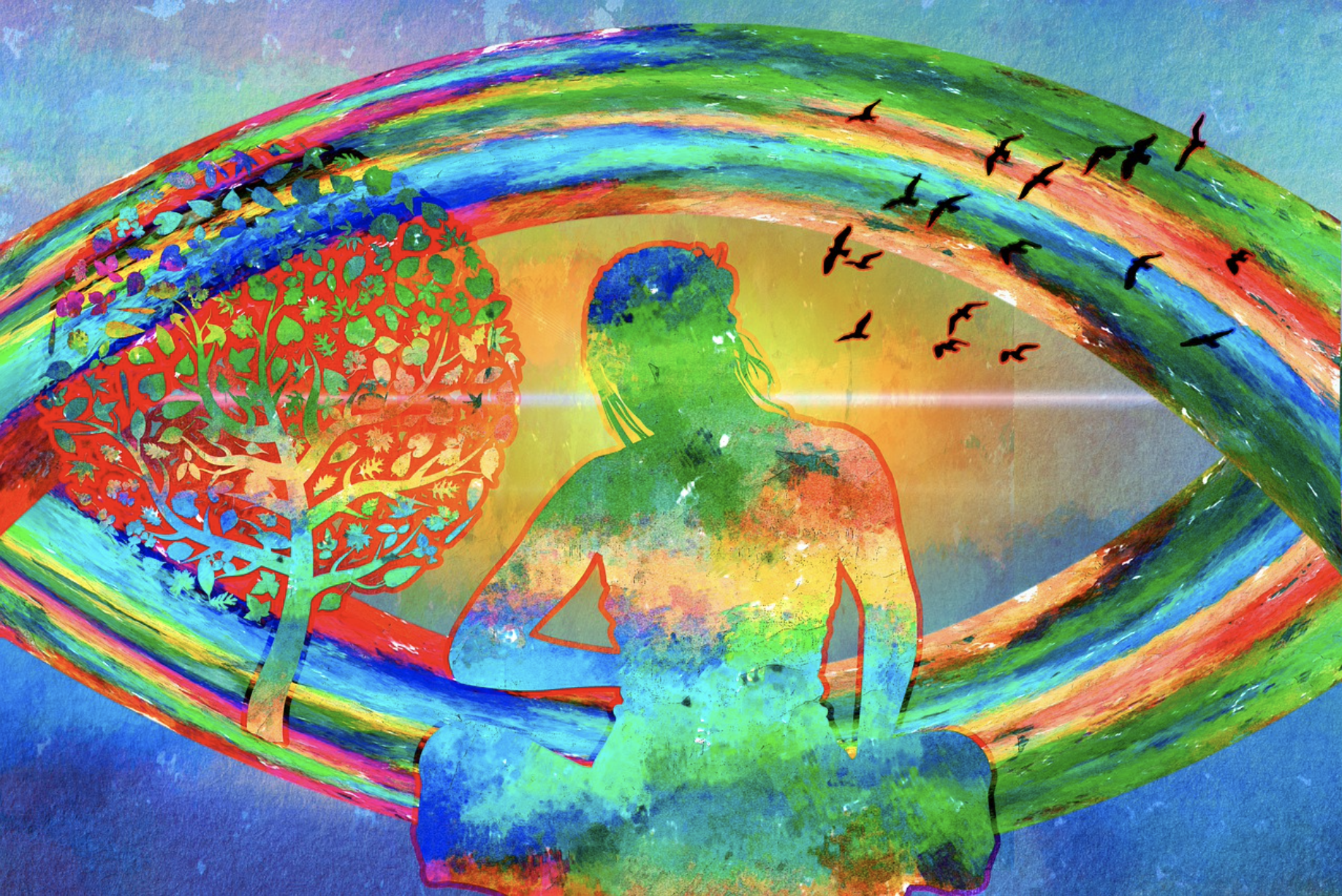




 Music: What Fills the Gap —