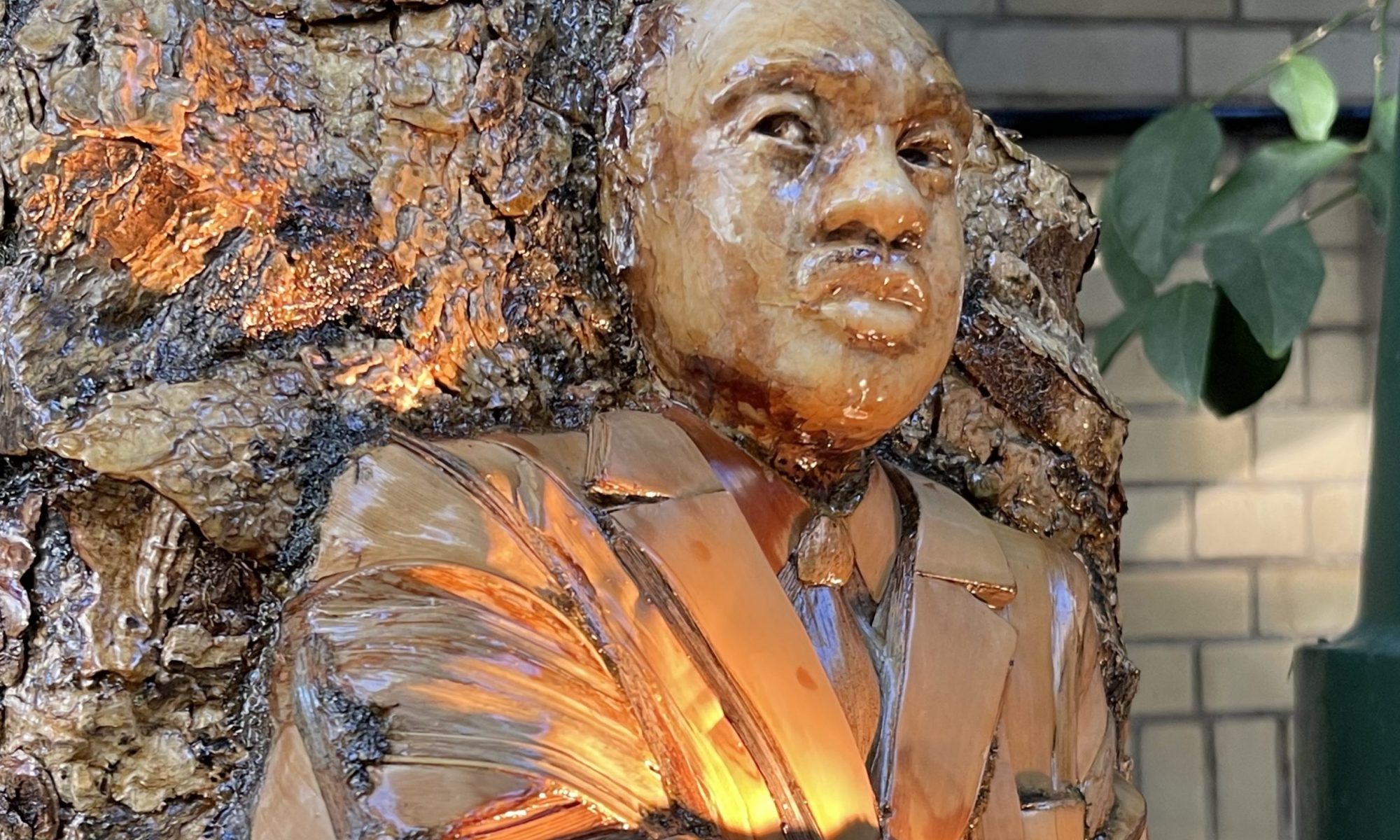
Donald Trump has recently embraced a rather extraordinary place in history, one he himself compares to Attila the Hun.
According to journalists Maggie Haberman and Jonathan Swan, Trump proudly showed them a document comparing his power with some of history’s most feared rulers: Attila the Hun, Genghis Khan, Alexander the Great, Napoleon, the Caesars, William the Conqueror, Tamerlane, Hitler, Stalin, and Mao. The document argued that those rulers may have possessed terrifying power in their own time, but their reach was ultimately local compared with Trump’s global reach. Trump reportedly presented the comparison with pride.
There is something almost comical about placing Attila the Hun on such a list.
Not because Attila was a good man. He wasn’t. He was a ruthless conqueror who plundered cities, killed enemies, demanded tribute, and built his reputation through fear.
But because if Trump wants to stand beside Attila as a Great Man of History, it is worth asking a very simple question:
What, exactly, did Attila the Hun have to work with?
He did not inherit the presidency of the world’s most powerful nation. He did not command a permanent military establishment equipped with nuclear weapons. He did not inherit a global economic system, a vast bureaucracy, modern communications, or a network of international alliances.
Attila started with the Huns.
And somehow, he turned them into an empire that terrified Rome.
That is where the comparison gets interesting.
What did Attila have to work with?
Attila: The Original Empire Mob Boss
If we strip away the romantic mythology surrounding the Huns, Attila’s empire begins to look surprisingly familiar.
It was, in many respects, a vast system of power, loyalty, protection, tribute, rewards, and intimidation.
Attila ruled over a collection of peoples who did not necessarily share a common culture or identity. His power depended upon keeping warriors, tribal leaders, and conquered peoples sufficiently loyal to him that they would continue supplying soldiers and wealth.
And Attila understood the fundamental rule of the mob boss:
Loyalty has to pay.
The Huns needed wealth to reward their allies. Rome had wealth. Attila therefore created a relationship in which Rome repeatedly paid for peace.
The Eastern Roman Empire eventually agreed to enormous payments, including an annual tribute of 2,100 pounds of gold. When Rome resisted, Attila could turn diplomacy into military coercion.
That is not merely brute force.
It is organized power.
Attila could negotiate. He could intimidate. He could form alliances. He could recruit other peoples into his armies. He could reward loyalty and punish defection.
He was, in other words, an empire-level mob boss.
And unlike the stereotypical barbarian warlord, Attila the Hun had studied the people he intended to defeat. He and his brother were taught military skills as well as Latin and Gothic, and Attila was exposed to Roman political and diplomatic practices from an early age.
He understood Rome.
More importantly, he understood what made Rome vulnerable.
Attila and his War Leaders
And Here Is Where Trump Falls Short
This is where the comparison becomes much more interesting than simply calling Trump another ruthless ruler.
Trump possesses vastly more raw institutional power than Attila ever dreamed of possessing.
But that is precisely the point.
Attila had to create his power. Trump inherited his.
Attila united fractious tribes.
Trump inherited a nation of more than 300 million people.
Attila the Hun built a military coalition from warriors belonging to different peoples.
Trump inherited the most powerful military establishment on Earth.
Attila extracted tribute from the Roman Empire because Rome feared what his armies could do.
Trump does not have to ride across Europe to make his demands felt. He occupies the presidency of the United States, with its enormous economic, military, diplomatic, and technological reach already built for him.
Attila’s authority was personal because there was little institutional machinery beneath him.
Trump’s authority is personality too—but it operates through one of the most powerful institutions ever created.
That is a very different accomplishment.
And there is another difference.
Attila actually went to war.
He personally commanded the Hunnic military machine and led campaigns across Europe. His armies invaded the Balkans, threatened Constantinople, invaded Gaul, and entered Italy. His reputation was not merely rhetorical. It arrived on horseback.
Trump can order military force, and that distinction matters enormously. But the comparison to Attila should not pretend that commanding the machinery of a modern state is the same thing as personally building and directing a fifth-century warrior empire from the margins of the Roman world.
Trump has the larger machine.
Attila the Hun built the scarier one relative to what he started with.
Attila vs Trump | Empire vs Illusion
The Mob Boss Has One Fatal Problem
Here is where Attila’s story becomes even more relevant to the Great Man theory.
Attila’s empire was built around Attila.
That made him extraordinarily powerful.
It also made his empire extraordinarily fragile.
When Attila the Hun died in 453, his sons fought over the inheritance. Subject peoples revolted, and the Hunnic political structure rapidly disintegrated. Within a few years, the empire that had terrified Rome was essentially gone.
Attila therefore provides us with both halves of the Great Man story.
One man can build extraordinary power.
But if that power cannot survive the man, it may never have been an empire in the durable sense.
It was a personal empire.
A personality empire.
A loyalty empire.
A mob boss empire.
And that may be the most revealing lesson of all.
Attila Stands at the Center of His Empire
The Empire That Vanished Like Smoke
The final irony of Attila’s story is that the man who seemed powerful enough to shake the Roman world could not create a political structure powerful enough to survive him.
That does not make Attila the Hun insignificant.
Quite the opposite.
He built a formidable empire from a fragmented collection of peoples, forced the Roman Empire to negotiate with him, extracted enormous wealth from it, commanded armies drawn from multiple nations, and altered the political and military landscape of late antiquity. His campaigns helped accelerate the crisis of a Roman world that was already weakening.
But Attila ultimately demonstrated the weakness hidden inside absolute personal power:
When everything depends upon the Great Man, the Great Man becomes the empire.
And when the Great Man dies, the empire can disappear with him.
That is the part of Attila’s story Donald Trump might want to consider before claiming a place above him.
Trump may possess greater technological reach.
He may command a vastly more powerful military.
He may possess unprecedented access to global communications.
He may wield the presidency of the most powerful nation on Earth.
But those are not accomplishments he created from nothing.
Attila had no such advantages.
He started with a collection of nomadic warrior peoples on the edge of the Roman world.
And he made Rome pay him to go away.
That is what an empire mob boss actually looks like.
And if history is going to remember Donald Trump as one of the great ruthless rulers, the question will not ultimately be how loudly he claimed the title.
It will be what he actually built that survived him.
Because Attila the Hun learned the hardest lesson of the Great Man:
An empire built entirely around one man can become enormous.
A Tale of Two Emperors — Separated by Two Millennia, United by the Same Wound
Burn the World Down: Nero-Trump Split Image
History does not repeat. But it rhymes — in fire, in spectacle, in the slow rot of institutions hollowed out by one man’s bottomless need for adulation. And sometimes in how narcissistic leaders will Burn the World Down around them… literally and metaphorically.
Nearly two thousand years apart, two figures emerge from the same psychological mold: the narcissistic ruler who mistakes performance for governance, who sees the state not as a trust to be honored but as a stage to be owned. One wore a laurel wreath and played the lyre while Rome smoldered. The other wears a red cap and posts to social media while democratic norms crumble. The costumes differ. The pathology is identical.
The Performer on the Throne
Burn the World Down: The Performer on the Throne
Nero did not govern Rome so much as perform it. He fancied himself a great artist — a singer, a poet, a charioteer — and he demanded that the world reflect his self-image back to him. He built the Domus Aurea, his Golden House, a palace of staggering extravagance stretching across 300 acres of Rome’s heart, complete with a 30-meter rotating golden statue of himself as the sun god. The message was unsubtle: I am not merely emperor. I am divine. I am the light.
Donald Trump understands this language fluently. Before he ever entered politics, he spent decades erecting towers and stamping his name on them in gold letters as tall as a man. Trump Tower. Trump Plaza. Trump International. The branding was never about real estate. It was about the same compulsion that drove Nero to commission that colossal statue — the raw, unquenchable hunger to see one’s own name reflected in the skyline of the world. When he returned to the White House, he renamed the Gulf of Mexico. He proposed putting his face on Mount Rushmore. The Golden House has merely moved to Mar-a-Lago.
Burn the World Down: Nero’s Opulent Domus Aurea (Made by Genolve)Burn the World Down: Rendering of Trump’s Golden Ballroom
Scapegoats & the Fire
When Rome burned in 64 CE — whether by accident, negligence, or Nero’s own hand remains debated — the emperor needed someone to blame. He chose the Christians: a small, strange, already-suspect minority who could be painted as enemies of Rome, subverters of tradition, threats to the social order. It did not matter whether they were guilty. What mattered was that the crowd needed a villain, and Nero needed the crowd’s attention redirected.
The mechanism is ancient. It is also contemporary.
From the opening day of his first campaign — “They’re bringing drugs. They’re bringing crime. They’re rapists” — Trump has governed by the same principle Nero understood instinctively: a frightened, angry populace is a manageable one, provided you give them an enemy. Immigrants. Refugees. Muslims. The “deep state.” Transgender athletes. The targets rotate, but the function never changes. Find the outsider. Name them the source of your people’s pain. Watch the crowd roar its approval. This is not politics. This is the oldest magic trick in the authoritarian’s repertoire, and Nero would have recognized it immediately.
Burn the World Down — Nero and Trump: The Great Fire of RomeBurn the World Down: Christian Scapegoats — Triumph of Faith-Christian Martyrs in the Time of Nero by the French artist Eugène Romain Thirion
Burn the World Down: Stephen Miller’s War on Democracy, Trump’s Illegal Immigration Policies & the Scapegoating of Innocent People
The Removal of the Inconvenient
Here is where the parallel becomes most chilling — and most instructive.
Nero did not consolidate power in a single dramatic coup. He did it incrementally, by removing, one by one, everyone who might restrain him, challenge him, or remind him of his obligations to something larger than himself.
First came Britannicus, his younger stepbrother and rival to the throne — poisoned at a dinner party. Then his mother Agrippina, who had made him emperor and believed she could control him — assassinated on his orders when she proved inconvenient. Then Claudia Octavia, his first wife, exiled and executed to clear the path for Poppaea. Then, eventually, Poppaea herself — allegedly kicked to death in a rage. And throughout it all, the court filled not with wise counselors but with flatterers, yes-men, and sycophants who told Nero only what he wished to hear.
Trump has not murdered people. Let that distinction stand clearly. But he has murdered institutions with the same methodical incrementalism. The State Department, hollowed. The EPA, defanged. The Department of Education, targeted for dissolution. Inspectors general — the internal watchdogs of democratic governance — fired en masse in the middle of the night. Judges who rule against him are denounced as illegitimate. Generals who push back are fired or publicly humiliated. The Joint Chiefs, the intelligence community, the free press — all reframed as enemies of the people. What Nero did with poison and the Praetorian Guard, Trump does with executive orders, social media, and the slow strangulation of institutional legitimacy.
The result, in both cases, is the same: a court of sycophants, a vacuum where wisdom once sat, and a ruler accountable to no one.
And women have long held the Title of Inconvenient… across many different cultures and times. Three of the people Nero is known to have killed or contributed to their deaths are women. Along these same lines is Donald J. Trump who has been convicted of sexual assault and is doing everything in his power to conceal and repress the Epstein Files. If he were innocent, why is he hiding these files?
This is where history’s rhyme becomes most painful to hear.
Seneca — philosopher, statesman, and Nero’s tutor — watched the murders accumulate. Britannicus. Agrippina. The parade of the discarded. And like so many good people throughout history, he chose the path of dignified withdrawal. He asked to retire to his country estate. He stepped back from the court, from the chaos, from the escalating horror. Surely, he must have reasoned, this cannot continue. Surely the madness will exhaust itself. Surely Rome’s institutions, its traditions, its fundamental decency will reassert themselves.
They did not. Seneca was eventually accused of conspiracy — on thin and dubious evidence — and Nero ordered him to take his own life. The philosopher who had taught the emperor about virtue, restraint, and the common good was destroyed by the very man he had tried to shape into something worthy of power.
Does this not sound familiar?
Look around at the good people of America today. The senior officials who resign rather than implement unconscionable orders — and then say nothing publicly, for fear of the backlash. The Republican senators who privately express horror at what is happening and publicly say nothing consequential. The corporate leaders who withdraw from the public square, quietly pulling DEI programs, quietly complying with whatever winds blow from Washington, heads down, hoping the storm passes. The ordinary citizens who have tuned out the news because it is simply too exhausting, too relentless, too dark.
They are doing what Rome’s good people did. They are retiring to their country estates.
And history’s lesson on this point is merciless: it does not end well for those who wait.
The insanity of such rulers does not die down. It does not self-correct. It does not exhaust itself and return the world to normal. It escalates — until it is stopped, or until it collapses everything around it. There is no third outcome.
Even granting the most optimistic political scenario — a midterm correction, a 2028 restoration of something resembling democratic normalcy — the damage already done will echo for decades.
Nero’s Rome never fully recovered its pre-Neronian character. The trust between emperor and Senate, between ruler and citizen, had been poisoned in ways that could not simply be legislated away. The precedents had been set. The guardrails had been demonstrated to be merely suggestions.
The damage Trump has inflicted is similarly structural, and in one domain — climate — it is not merely structural but irreversible on human timescales.
The decisions made and unmade in the 2020s regarding climate mitigation are not policy choices that a future administration can simply reverse with the stroke of a pen. Carbon already in the atmosphere does not respond to executive orders. Ecosystems tipped past their thresholds do not recover because a new president rejoins the Paris Agreement. International coalitions dismantled and trust shattered require years, sometimes decades, to rebuild — and we do not have decades to spare.
We have already crossed into the territory where the question is no longer whether catastrophic climate disruption occurs, but how catastrophic, and how soon. What happens in this decade sets in motion consequences that will unfold across the rest of this century. The decade of decisive action has been squandered — not by accident, but by deliberate political choice in service of fossil fuel interests and short-term electoral calculation.
The scenario imagined in Sapience: The Moment Is Now — once the province of speculative fiction — grows less speculative with each passing year. Nation-states bankrupted by cascading climate disasters. The retreat of governmental capacity in the face of crises that exceed its resources. The rise of multinational corporate entities as the only institutions with sufficient capital and reach to fill the vacuum. A world governed not by democratic consent but by the logic of emergency management and corporate liquidity.
If that future arrives, historians will mark this decade as the moment the door to prevention closed. And they will note, with the same weary recognition with which we now study Rome, that the people of that era saw it coming — and too many of them retired to their country estates and waited for someone else to act.
Burn the World Down: 2029 End of the Line for People of Earth
The Wisdom Wrap: What These Two Men Teach Us
Nero and Trump are not aberrations. They are archetypes — recurring figures in the long human story of what happens when power is given to those whose primary relationship is with their own reflection.
They teach us that:
Spectacle is not governance. The roar of the crowd is not the same as the consent of the governed. Entertainment and leadership are not the same thing, and a civilization that cannot tell the difference is in mortal danger.
Sycophancy is not loyalty. It is the final stage of institutional decay. When a leader surrounds himself only with those who tell him what he wants to hear, he has not achieved security — he has achieved blindness. And blind leaders drive civilizations off cliffs.
Withdrawal is not neutrality. Seneca learned this too late. The decision to step back, to keep one’s head down, to wait out the storm — this is not an act of wisdom. It is an act of complicity dressed in the clothes of prudence. History does not excuse it, and neither should we excuse it in ourselves.
Collapse is not inevitable — but it requires us to choose otherwise. Rome did not have to fall the way it fell. The conditions were created by human choices, human failures, human cowardice and greed. So too with what faces us now. The archetype of the narcissistic ruler is powerful — but it is not all-powerful. It has been broken before, by citizens who refused to retire to their country estates, who refused to normalize the abnormal, who held the line when the sycophants told them the line did not matter.
The question for this moment — as it was for Rome, as it is in every age when the fire-starter takes the throne — is not whether we understand what is happening.
We understand.
The question is whether understanding will be enough to move us to act.
Burn the World Down: 2029 End of the Line for People of Earth
Burn the World Down: Nero, Trump & Now: Briefing Document
Burn the World Down: The Gilded Ruin The Rise and Fall of Nero — Slide 1
The Theatricality of Tyranny: Nero as a Historical Template for Absolute Power
This briefing document analyzes the reign of Nero through the lens of “theatrical coding”—a method employed by ancient historians to preserve warnings about the nature of self-absorbed, ruthless leadership. By examining the accounts of Tacitus, Suetonius, and Cassius Dio alongside modern archaeological and revisionist insights, this document explores how the staging of power in the first century provides a template for identifying modern figures who prioritize personal interest over the public good.
The Historiography of Performance: “Theatrical Coding”
Ancient historians did not merely record biographies; they used “theatrical coding” to warn future generations about the inherent dangers of autocracy. In this context, the lurid stories of Nero’s stage performances, public depravity, and familial cruelty are viewed not just as gossip, but as archetypal shorthand for the corruption of the princeps—the “first among equals.”
Burn the World Down: Nero, Trump: Deconstructing Nero — Slide 6
Dissimulation and Doublespeak
As outlined by Shadi Bartsch in Actors in the Audience, the Neronian era forced the Roman elite into a state of perpetual performance. Under the “scrutinizing eye” of the ruler, senators became actors and dissimulators. This environment distorted language into “doublespeak”—saying one thing while meaning another—as a survival mechanism against imperial oppression. This theatricality transformed the political arena into a stage where representation was dictated by the pull of autocratic authority.
Vituperatio: The Rhetoric of Malignity
Critics of the traditional Neronian narrative, such as Thorsten Opper, suggest that many accounts were shaped by a rhetorical tradition known as vituperatio (vituperation). This allowed historians to invent or exaggerate perversions to malign a character. However, from a critical historian’s perspective, the convergence of these stories across multiple authors suggests a fundamental truth about the “theatrical” style of Nero’s rule, regardless of whether specific details were apocryphal.
Burn the World Down: Deconstructing Nero — Slide 7
——————————————————————————–
Templates for Power: The Private Playground of the Tyrant
The “Nero template” identifies a leader who views the state, the public, and even their own family as a playground for exploitation.
The Systematic Destruction of the Family
Nero’s treatment of his inner circle serves as a primary warning against leaders who lack empathy or public concern.
Agrippina the Younger: Nero’s mother and co-regent was systematically sidelined and eventually murdered. Historians describe elaborate plots, including a self-sinking boat, before she was ultimately stabbed. Her death is often framed as a “sacrifice” to appease the senatorial elite who resented her political influence.
Claudia Octavia: Nero’s first wife, beloved by the people, was divorced, banished, and executed in a steam bath. The public riots in her favor ironically triggered more extreme cruelty, as Nero became more determined to eliminate her as a symbol of popular resistance.
Poppaea Sabina: His second wife allegedly died after Nero kicked her in the belly while she was pregnant. While some revisionists suggest this was a “matrimonial row that got out of hand” or a miscarriage, the historical coding remains: the tyrant’s rage consumes even the most intimate and vulnerable.
Sexual Exploitation as Political Control
Nero’s sexual behaviors are interpreted by historians as a means of asserting total, arbitrary control over all bodies within the empire.
The Castration of Sporus: Nero had the freedman Sporus castrated and married him in a public ceremony where Sporus wore the traditional garb of a bride.
Pythagoras and Public Consummation: Nero later played the role of the bride in a ceremony with another freedman, Pythagoras, consummating the union on a couch in full view of banquet guests.
The “Animal Skin” Games: Suetonius records that Nero would don animal skins to assail the private parts of men and women bound to stakes, a “theatrical” display of dominance and the “unmanning” of his subjects.
Burn the World Down: Emperor Nero ordered the castration of a young man named Sporus to make him resemble his deceased wife, Poppaea Sabina.
——————————————————————————–
The Great Fire: Scapegoating and Spectacle
The Great Fire of Rome in AD 64 provides a template for how a “theatrical” ruler handles catastrophe.
Historical Myth
Archaeological/Revisionist Reality
Nero “fiddled” (sang of Troy) while the city burned.
Nero was in Antium when the fire started and led relief efforts.
Nero brazenly set fire to the city to make room for his palace.
The fire likely started accidentally in the slum housing of the Circus Maximus.
Nero used the apocalyptic backdrop for a theatrical performance.
Nero did build the lavish Domus Aurea over the ruins, signaling a lack of sensitivity to public loss.
Nero’s subsequent persecution of Christians—scapegoating a marginalized group for the fire—establishes a template for “political scapegoating” used by ineffective or negligent leaders to deflect culpability.
Burn the World Down: This painting is titled Nero’s Torches (Pochodnie Nerona), created in 1876 by the Polish artist Henryk Siemiradzki
——————————————————————————–
Evolution vs. Devolution: A 5,000-Year Cycle
The debate persists: has the psychology of the “ruthless ruler” evolved into something more sophisticated, or has it devolved into more destructive forms?
Ancient Tactics: Nero’s theatricality was overt—singing on stage, public executions, and physical “unmanning.” Power was asserted through direct, often grotesque, spectacle.
Devolution of the Public Good: The case of the 400 slaves executed in AD 61 illustrates a devolution of justice. Despite public support for the innocent slaves, Nero backed the senatorial faction to uphold a brutal deterrent law, prioritizing political alliance over human life.
Nero — Myth & Warning: Infographic (LMNotebook)
——————————————————————————–
Modern Comparisons: The Neronian Legacy in the 21st Century
The “shorthand” of Neronian history remains a vital civic tool for identifying contemporary political figures who utilize public attention for personal entertainment and exploitation.
Decadence and Domestic Profligacy: Modern leaders have been compared to Nero for their lavish personal expenditures during times of national crisis. Examples include the “gold wallpaper” used in the renovation of Boris Johnson’s Downing Street apartment, redolent of the frescoes and gold leaf of the Domus Aurea.
Theatrical Trolling: Former President Donald Trump’s retweet of a photograph of himself “playing the fiddle” during the early stages of the COVID-19 crisis is cited as an act of “Neronian trolling,” deliberately invoking the image of the detached leader during a catastrophe.
Public Attention as Power: The “Epstein class” and figures like Trump are noted for using wealth and public platforms to pursue personal, often cruel, entertainment, paralleling the Roman emperor’s use of the theater and gladiatorial games to distract or manipulate the populace.
The Persistence of the “False Nero”: Affection for Nero persisted among the common people for decades after his death, leading to the emergence of “false Neros.” This highlights a historical truth: political popularity is often untethered from effective or moral leadership.
Conclusion
The accounts of Nero serve as a coded warning for future generations. Whether through the “theatrical” execution of family members, the “vituperative” rhetoric of historians, or the “doublespeak” of the court, the Neronian template identifies the perennial risk of leaders who prioritize their own “stage performance” over the stability and welfare of the state. History, in this sense, is not just a record of the past but a diagnostic tool for the present.
Burn the World Down: Nero, Trump & Now:Political Governance Review
Burn the World Down: Dramatic View of Nero Playing His Lyre as Rome Burned
Political Governance Review: The Theatricality of Tyranny and the Shorthand of History
1. The Historiographical Script: History as Theatrical Coding
In the study of classical power dynamics, “theatrical coding” emerges not as a mere biographical quirk, but as a sophisticated literary defense mechanism deployed by Tacitus, Suetonius, and Cassius Dio. These chroniclers recognized that in the absence of modern recording technology, the preservation of civic warnings required a standardized language of pathology. They utilized vituperatio—the rhetorical art of personal attack—not as a simple smear campaign, but as a deliberate “topos” taught in Roman rhetorical schools. By retrofitting the excesses of leadership into archetypal scripts, these historians signaled the presence of a “monster” rather than a legitimate princeps. Through “clever design” (Freudenburg), the fall of a leader was often coded to mirror mythic catastrophes like the destruction of Troy, transforming historiography into a template for identifying the rot of absolute power.
As analyzed by Shadi Bartsch in Actors in the Audience, the distortion of language under autocratic authority functions as a mechanism of imperial oppression, creating a climate redolent of Stalinist dissimulation:
Scripted Realities: The requirement for subordinates to become “actors,” masking their true thoughts to survive the scrutinizing eye of a ruler who demands constant performance.
Dissimulative Survival: The evolution of “doublespeak”—saying one thing while meaning another—as the only available mechanism to undo the suffocating effects of imperial suppression.
Forced Theatrical Participation: The degradation of the elite through compelled participation in the emperor’s “drama,” effectively stripping the senatorial class of their agency and dignity.
The Distortion of Discourse: The process by which the magnetic pull of autocratic authority warps all public representation, rendering authentic communication a capital offense.
This mechanism of recording power ensures that the “Shorthand of History” is not merely a record of events, but a diagnostic manual for identifying the early onset of the tyrannical template.
Burn the World Down: The Gilded Ruin The Rise and Fall of Nero — Slide 15
2. The Nero Template: Case Studies in Deranged Exploitation
Nero serves as the foundational archetype for the performer-leader, a figure who perceives the state not as a trust, but as a private theater for self-gratification. This transition from princeps(first among equals) to a self-absorbed performer is crystallized in the “Sacrifice of the Beloved,” specifically the fate of Claudia Octavia. Despite—or perhaps because of—populist riots in her favor, Nero responded with a liturgy of calculated cruelty: a divorce, banishment, and a state-sanctioned execution involving the slitting of her wrists and suffocation in a steam bath. The delivery of her decapitated head to court was a theatrical punctuation mark. The political warning is clear: in a self-absorbed regime, public affection for a victim is viewed as a personal affront by the ruler, ironically accelerating the victim’s destruction.
Nero’s court functioned as a “playground for exploitation,” where familial bonds were systematically dissolved to assert arbitrary dominance. This was not merely criminality; it was the theatricalization of the domestic sphere to prove that no boundary was sacred.
The Dramaturgy of Dominion
Target of Exploitation
Theatrical Act (Source-derived)
Political Warning Encoded
Agrippina (Mother)
A sequence of “clever designs”: a falling ceiling followed by a self-sinking boat; finally, a literal womb-stabbing.
The total erosion of natural bonds; a leader who consumes the source of their own legitimacy for the sake of the “show.”
Claudia Octavia (Wife)
Suffocation in a steam bath and the delivery of her decapitated head to the Neronian court.
The danger of populist favor; how a leader’s jealousy of the public’s love for another triggers extreme state cruelty.
Poppaea Sabina (Wife)
A “matrimonial row” resulting in a fatal kick to the pregnant belly (interpreted by modern archaeology as a miscarriage coded as a “topos”).
The “Tyrant’s Topos”: how a domestic tragedy is retrofitted by history into a template of irredeemable evil to signal the end of a dynasty.
Britannicus (Brother)
A calculated assassination to eliminate the last competing claim to the Julio-Claudian line.
The violent liquidation of legitimacy; the prioritization of a sole, theatrical authority over established succession.
This exploitation of the domestic sphere served as a precursor to the exploitation of the human body as a broader tool of arbitrary state control.
Burn the World Down: Nero Orders His Mother KilledBurn the World Down: This image depicts a historical moment in time titled Nero and Agrippina by painter Antonio RizziBurn the World Down: This painting, created in 1876 by Giovanni Muzzioli, is titled Poppea Brings the Head of Octavia to NeroBurn the World Down: It is widely reported that Nero kicked his pregnant second wife, Poppaea Sabina, to death in a fit of rage.
3. Sexual Exploitation as Arbitrary Control: The “Unmanning” of the Empire
The Neronian court transmuted private deviance into a public liturgy of state dominance. Nero’s sexual behaviors—specifically the accounts of Sporus and Pythagoras—were viewed by ancient historians not as matters of personal preference, but as theatrical assertions of total control over all bodies. The castration and formal marriage of the youth Sporus, followed by Nero adopting the role of the “bride” to the freedman Pythagoras, were performances of “unmanning” the empire. By consuming these pseudo-nuptials at banquets in full view of the elite, Nero forced the citizenry to witness and participate in their own degradation, acknowledging his power to rewrite the most fundamental biological and social realities.
The “Softened” Citizenry: Ancient medical records, specifically the Epitome of Medicine by Paul of Aegina, describe castration by compression: placing children in a vessel of hot water until the “bodily parts are softened” and dissolved. This anatomical dissolution serves as a harrowing metaphor for a citizenry under a theatrical tyrant. A populace that allows its agency to be eroded is “softened” in the heat of a leader’s whims, losing its political form and becoming a malleable object for the autocrat’s entertainment.
This personal depravity was the ultimate assertion of class-based dominance, where the bodies of the subjects became the literal stage for the ruler’s pathology.
Burn the World Down: This image shows a scene depicting Emperor Nero marrying Sporus, a young man he had castrated to resemble his deceased wifeBurn the World Down: Genolve depiction of Nero marrying a Freedman at the bride.
4. Convergence and Class Tensions: The Elite vs. the Street
The memory of Nero remains a “Contested Memory.” To the senatorial families, he was a “Stalinist” monster who utilized dissimulation to hollow out the Republic. To the masses, however, he was a vigorous “Restorer” who bypassed the conservative Senate to build a direct power base with the “Street” and the knightly classes. The construction of the Domus Aurea (Golden House) following the Great Fire of AD 64 was a strategic maneuver: it was a “necessary investment” in the entertainment and housing of the knights, the middle tier of Roman power, effectively marginalizing the old elite.
Historical Record vs. Archaeological Nuance
Literary Accounts (The Script)
Archaeological Facts (The Nuance)
Nero “fiddled” (sang of Troy) from a safe elevation while Rome burned.
Nero was in Antium when the fire started and rushed back to lead relief efforts.
The fire was a deliberate act of arson to clear space for the Domus Aurea.
Nero provided housing for the homeless, arranged grain supplies, and instituted building codes.
The Domus Aurea was a sign of purely selfish, deranged luxury.
The palace served as a strategic investment to house the court and entertain the knightly class.
The “Monster” was universally hated upon his death.
Persistent “False Neros” and positive graffiti in Pompeii show enduring street-level popularity.
The ultimate archaeological proof of this “Shorthand of History” is found in the Carthage sculpture, where Nero’s jowly, full-faced image was literally re-carved and disfigured into the face of his successor, Vespasian. This physical re-coding of power demonstrates how history literally erases the performer to make way for the new regime.
5. Modern Convergence: Identifying the Contemporary “Theatrical” Tyrant
The tactics of ancient tyrants are mirrored by modern political figures who utilize public attention as a tool for personal entertainment and “Neronian trolling.” This leadership style—attention-seeking, petulant, and arbitrary—treats governance as a medium for self-promotion rather than a civic duty.
We see this modern convergence in the “Epstein class,” which views the bodies of the vulnerable as a playground for power, and in specific cultural signifiers. A notable modern echo of “fiddling” occurred in Spring 2020 during the COVID-19 crisis, when a retweet featuring a leader playing a fiddle was used as a tool of populist distraction. Similarly, the “gold wallpaper” renovation of Boris Johnson’s Downing Street residence serves as a contemporary iteration of the Domus Aurea—an aesthetic of excess standing in for legitimate authority.
Burn the World Down: Convergence — Slide 4 of The Gilded Ruin The Rise and Fall of Nero (LMNotebook)
Red Flags for Neronian Leadership
Prioritization of the “Show”: The transformation of policy into performance and governance into entertainment.
The Family Playground: The use of family members as either tools for power or targets of arbitrary exploitation.
Scripted Realities: The manipulation of the narrative through “theatrical coding” or social media to override objective facts.
Aesthetic of Excess: The focus on gilded displays (gold leaf, luxury brands) as a substitute for administrative competence.
Populist Trolling: The use of public spectacle and “vituperatio” to distract from administrative or economic turmoil.
6. Evolution vs. Devolution: The 5,000-Year Psychology of Power
The psychology of the ruthless ruler has not evolved; it has merely found more efficient stages. While modern technology has made the theatricality of power more transparent, it has also made it more dangerous, allowing for the instantaneous spread of “Scripted Realities.” The transition from the princeps to the “monster” described by Suetonius and Tacitus illustrates a recurring historical cycle: power that begins with promise often devolves into a desperate performance of dominance.
We must understand that the “pious frauds” and apocryphal contraptions of historians are often more important than the facts themselves. They represent a psychological fossil record—a warning system designed to detect the presence of a leader who has abandoned the public good for the sake of the show. If multiple sources repeat the same archetypal stories of madness, the “theatrical coding” must be taken seriously as a civic defense mechanism.
The theatrical tyrant is never a relic of the past; he is a recurring pathology that waits for a citizenry to “soften” enough to accept the performance as reality.
Burn the World Down: Nero, Trump & Now: Study Guide
Burn the World Down: A-dramatic-ancient-Roman-palace-interior-under-stormy-torchlight-with-Emperor-Nero-in-rich-imperial-robes-standing-in-the-foreground-half-in-shadow-we808
The Theatricality of Tyranny: Nero and the Coded Shorthand of History
This study guide analyzes the reign of the Emperor Nero through the lens of “theatrical coding.” It posits that ancient historical accounts, such as those by Tacitus, Suetonius, and Cassius Dio, function as a deliberate shorthand to warn future generations about the nature of self-absorbed, ruthless leadership. By examining the convergence of these narratives, we identify templates for power that remain relevant to modern political analysis.
——————————————————————————–
Burn the World Down: The Gilded Ruin The Rise and Fall of Nero — Slide 6 — Theatrical Coding
Burn the World Down | Part I: The Template for Power
Theatrical Coding and Archetypal Storytelling
Ancient historians utilized specific “theatrical” stories—Nero’s stage performances, public sexual depravity, and animal-skin “games”—not merely as gossip, but as a coded warning system. This “shorthand” describes a ruler who views the empire as a private stage and the populace as a captive audience.
Dissimulation: Under autocratic authority, subordinates (such as Roman senators) are forced to become actors and dissimulators. This “doublespeak”—saying one thing while meaning another—becomes a survival mechanism in a “darkly self-concealing” literary and social culture.
Vituperatio: A rhetorical tradition of personal attack where historians could invent or exaggerate stereotypes to malign a character’s moral standing, signaling a leader’s unfitness for office.
The Paradigm of the Stage: When an emperor takes the stage, the audience must “play along—or else.” This transforms the political arena into a theater where representation is distorted by autocratic pull.
Case Study: The Exploitation of Family and Public
The deaths of those closest to Nero serve as a “playground for deranged exploitation” and a warning template for how absolute power reacts to public sentiment.
Figure
Historical Narrative as “Coding”
The Warning Template
Octavia
Divorced, banished, wrists slit, and suffocated in a steam bath; her head delivered to court.
Populist Trigger: Riots in favor of a beloved victim can ironically trigger more extreme cruelty from a self-absorbed ruler.
Agrippina
Targeted via a self-sinking boat before being stabbed; her final gesture was offering her womb to the blade.
The Unnatural Reign: Hostility toward a mother figure coded as a warning against leaders who disregard the most fundamental social bonds.
Poppaea Sabina
Kicked to death while pregnant after a “matrimonial row.”
The Topos of the Tyrant: Killing a pregnant wife is a historical “topos” (commonplace) used to signal the ultimate “evil deed.”
Sporus
A freedman castrated and married to Nero in a traditional bridal ceremony.
Unmanning as Power: Sexual exploitation and castration used to assert total, arbitrary control over all bodies in the empire.
——————————————————————————–
Burn the World Down: The Gilded Ruin The Rise and Fall of Nero — Slide 9 (created by NotebookLM)
Burn the World Down | Part II: Modern Comparisons and Evolution
Convergence of Ancient Tactics and Modern Figures
The “theatrical” style of rule—prioritizing public attention and personal entertainment over the public good—finds parallels in modern political figures.
The Gilded Residence: Nero’s Domus Aurea (Golden House), featuring gold leaf and ceilings that dropped flower petals, is compared to modern “Neronian” displays of wealth, such as Boris Johnson’s reported $125,000 renovation of Downing Street with “gold wallpaper” or the gilded private residences of Donald Trump.
Neronian Trolling: In 2020, during the COVID-19 crisis, Donald Trump retweeted a photograph of himself playing a fiddle—a direct nod to the (historically inaccurate) myth of Nero “fiddling while Rome burned,” serving as a modern form of theatrical provocation.
The Epstein Class: Modern exploitative figures who use power for personal, cruel entertainment mirror the “playground of exploitation” seen in the Julio-Claudian court.
Evolution vs. Devolution
A central debate for the investigative historian is whether the “ruthless ruler” has evolved or devolved over 5,000 years.
Devolution: The argument that modern leaders have devolved into more destructive forms, using technology to amplify the same “self-absorbed” Neronian traits.
Evolution into Sophistication: The counter-argument that modern manipulators have become more “sophisticated,” utilizing “tweets” and controlled narratives to achieve what Nero sought through public declamations and stage performances.
——————————————————————————–
Burn the World Down | Part III: Glossary of Historical Coding
1. Acta: Records of judicial proceedings; in martyr literature, these were often stylized to portray the confrontation between power and the individual. 2. Bulla: An amulet worn by freeborn Roman boys; used in statuary to identify Nero’s initial “angelic” and legitimate status before his “theatrical” decline. 3. Cognitio extra ordinem: The wide latitude permitted to provincial governors to act on their own initiative; a source of the “sporadic and local” nature of Neronian-era persecution. 4. Damnatio Memoriae: The official damnation of a ruler’s memory; explains why many hostile accounts were drafted after Nero’s death to burnish the reputations of successors like the Flavians. 5. Pax Deorum: “Peace of the gods”; the justification used by tyrants to suppress “un-Roman” groups (like early Christians) who were perceived as a threat to state stability. 6. Princeps: “First among equals”; the title Nero held, masking the reality of a monarchy and creating the “theatrical” need for the emperor to constantly perform for the senatorial class. 7. Superstitio: A term used by Pliny and Suetonius to label Christianity as “depraved” and “excessive,” coding it as a contagion rather than a legitimate religion (religio). 8. Topos: A traditional theme or formula in literature; for example, the “tyrant killing his pregnant wife” is a topos used to signal total moral collapse.
——————————————————————————–
Burn the World Down | Part IV: Critical Analysis Quiz
1. According to the concept of “Theatrical Coding,” why did historians like Suetonius emphasize Nero’s stage performances and animal-skin games?
A) To provide an accurate record of 1st-century Roman entertainment.
B) To act as a coded shorthand warning future generations about self-absorbed leadership.
C) To encourage the public to attend more theatrical events.
D) To document the evolution of Roman musical instruments.
2. The execution of Claudia Octavia is presented as a “template” for what political phenomenon?
A) The successful implementation of imperial divorce laws.
B) The necessity of steam baths in Roman hygiene.
C) How populist support for a victim can ironically trigger more extreme cruelty from a tyrant.
D) The peaceful transition of power within the Julio-Claudian dynasty.
3. What does the castration and “marriage” of Sporus represent in the analysis of Neronian power?
A) A progressive move toward gender fluidity in the ancient world.
B) A personal romantic preference of the emperor.
C) A method of “unmanning” others to assert total, arbitrary control over all bodies.
D) A traditional Roman religious ceremony for freedmen.
4. How does the “Domus Aurea” correlate with modern political figures in the provided text?
A) It is compared to the efficient management of public housing.
B) It is used as a metaphor for the “Epstein class” and their use of public attention.
C) It is compared to Boris Johnson’s “gold wallpaper” and Donald Trump’s gilded residences as evidence of Neronian profligacy.
D) It is cited as the first example of sustainable urban architecture.
5. Why do investigative historians consider the “convergence” of similar stories across multiple ancient authors to be significant?
A) It proves the stories are 100% factually accurate.
B) It suggests that even if theatrical coding is applied, the repetition indicates an underlying truth or essential warning.
C) It shows that ancient historians all belonged to the same guild.
D) It indicates that Nero had a very successful public relations team.
——————————————————————————–
Burn the World Down | Answer Key and Analytical Commentary
1. B. Theatrical coding uses the stage as a paradigm for the theatricality of power, turning Nero’s personal follies into a cautionary shorthand. 2. C.Historians note that the people’s riots in Octavia’s favor made Nero more determined to destroy her, serving as a warning for how victims of tyranny are often endangered by their own popularity. 3. C. Sexual exploitation is analyzed not as a personal vice but as a calculated assertion of dominance over the physical bodies of subjects. 4. C. The text directly links the “profligacy” of renovating private residences with public or donor funds to the “Domus Aurea” style of self-indulgent governance. 5. B. Convergence suggests that the “archetypal storytelling” used by Tacitus, Suetonius, and Dio is a vital civic tool, regardless of whether certain details (like the fiddle) are apocryphal.
Burn the World Down | Review of How America Got Here: Rise of Mega Corporations & an American Oligarchy
Burn the World Down: 64 CE: a spark near the Circus Maximus becomes Romes greatest firestorm. [Image created with Genolve]
Given the critical impending collapse of the American democratic, capitalistic, economic system that is teetering on the edge of oblivion with its balance in the hands of a cruel, sadistic narcissist, let’s review how American innovation locked in the hands of CEOs has slowly, then all of a sudden, corrupted into Ruthless Oligarchy.
Pre-2024:Throughout history, empires rise and fall (Wolff).
The British Empire declines, giving rise to the American Empire (Wolff).
1870-1970s: U.S. experiences a century of economic growth with rising wages (Wolff).
Around 1970s: Real wages in the US stop rising, leading to increased debt and women entering the workforce (Wolff).
The concept of “The Corruption” emerges, a societal ill rooted in selfishness and greed, leading to the downfall of civilizations (Mann). This is explored through the lens of the Pyramid Model of Mind and how the most “successful” people take advantage of it (Mann).
The development of the Totalitarian mindset and the rise of isms, paving the way for social unrest (Mann).
2000-2021: Russian Oligarchs gain power and are then brought to heel by Vladimir Putin, who offers them a choice: loyalty or imprisonment (Mockler)
2022: Brooke Harrington discusses American Oligarchs and their influence on the US Government (Mockler). Elon Musk buys Twitter but isn’t yet seen as a full-throated MAGA Republican (Mockler).
2024:D. Mann publishes Sapience: The Moment Is Now (Mann).
The US dollar begins to lose its status as the international currency as other countries start to explore alternate options (Wolff).
Late 2024:Trump runs for, and wins, another term as US President.
Elon Musk donates $200 million to Trump’s campaign and sets up a headquarters in Pennsylvania to campaign for him (Mockler). Musk holds a $1 million giveaway for voters in red counties (Mockler).
Trump’s Inaugural Committee receives a massive influx of funding from wealthy tech CEOs and Billionaires, such as Jeff Bezos, Sam Altman, Mark Zuckerberg, Uber CEO, and Ken Griffin (Mockler). The inauguration budget is four times that of Obama’s 2009 inauguration (Mockler).
Tech Titans such as META’s Zuckerberg, and Amazon’s Bezos, begin currying favor with Trump, making business moves in support of his politics (Mockler).
The TikTok CEO visits Trump during his inauguration as his platform is expected to be banned in the US (Mockler).
Billionaire tech entrepreneur V Ramaswami joins Musk in an initiative to cut government spending (Mockler)
President Biden gives his Farewell Address, warning that the U.S. is turning into an oligarchy (Mockler).
There is a massive spike in Google searches for “oligarchy” following Biden’s address (Mockler).
Adam Mockler analyzes the concept of Oligarchy and its presence in American politics via his YouTube channel (Mockler).
Economist Richard Wolff delivers a stark warning about the decline of the American Empire and the potential for social collapse (Wolff).
January 16, 2025: President Biden delivers his Farewell Address, warning against the rise of an oligarchy in the United States (Mockler).
January 20, 2025: Donald Trump is inaugurated into office as US President. Billionaires and tech CEOs attend his Inauguration (Mockler).
January 25, 2025: D. Mann publishes blog post exploring the implications of the current political, economic, and psychological crises based on the analysis of Richard Wolff and Adam Mockler and drawing on the ideas presented in her book, Sapience: The Moment Is Now.
Here, one of the central characters travels with his AI companion, Ra, searching for a way to transform human consciousness—before humanity tumbles over the Climate Cliff for a second and final time.
When we last left them, they were grappling with the legacy of Qin Shi Huang, China’s First Emperor—a figure I explored in depth in Wisdom Guardians: Loyalty Over Truth: From Qin Shi Huang to Trump | #7. He didn’t make it into Sapience (too many ruthless rulers, not enough pages), but that’s why the Wisdom Guardians podcast exists: to fill in the gaps, tracing the egos that bent civilizations to their will.
This passage marks the transition from ancient China into the fertile cradle of Mesopotamia—Sumer, Akkad, Babylon—before sweeping to Akhenaten’s Egypt and then back again, through thousands of years of empire building and collapse. And what emerges, when you step back, is sobering: for all our progress, the modern era isn’t nearly as different from those ancient times as we’d like to believe.
Who Broke the Timeline? An aerial view of northern Africa, the Arabian Peninsula and the Mediterranean Basin. A new study led by University of Wisconsin–Madison’s John Kutzbach shows that changes in Earth’s orbit, greenhouse gases, and ice sheets influenced the planet’s climate over the last 140,000 years and may have provided wetter, greener corridors at times that permitted human migration out of Africa and into the Middle East. Image courtesy of Google Earth
The lush green mountains of the Qin Empire disappear. Yong Xing-li finds himself standing on a hill overlooking the Isthmus of Suez. The same drying climate that forced the Indo-Aryan tribes further north to migrate and contributed to the Indus valley’s civilization collapse is drying out the lands of Mesopotamia. A vast desert already has northern Africa in its grips forcing most of the native tribes towards the Nile River valley and the Fertile Crescent is destine for the same fate.
Who Broke the Timeline? Field studies in southeastern Morocco, just a few kilometers away from the site of this dust storm, show that electric fields generated by blowing sand boost dust emissions up to 10 times more than expected from wind alone. PAVLIHA/ISTOCKPHOTO | Science
In the East, a darkness grows. Yong Xing-li wonders if it’s rain. It approaches fast, and he soon sees it is not billowing clouds of rain but rather dust. They move like creatures devouring everything into their dusty darkness. It blots out sun, then swallows Yong Xing-li in its smothering embrace. Finely broken bits of rocks pound his face. It’s hard to breathe. Gasping for air, Yong Xing-li reaches for the kill switch to end the simulation when the swirling dust separates and forms a bubble around him.
Dust pelts the bubble from all directions. There’s no form or shape to anything as if he was swallowed into a static pattern of an old television set. The dust begins to clump by color. Brown dust particles form mountains and high plains. White dust crowns their peaks and creates high, arid lands. Green dust particles settle into valleys with yellow-green dust making high valleys and dark green dust creating low valleys. Blue grains of dust form into long ribbons that tumble from the mountains, meander through the plains and valleys, then empty into seas.
The image is clear. This is Mesopotamia. The telltale narrow neck of where the Euphrates and Tigris rivers flow closest together looks like an entrance into Eden from this perspective. And it is. Between these two rivers is a place where everything needed to live is available in great abundance.
Who Broke the Timeline? Ancient Mesopotamian | Teaching WikiWho Broke the Timeline? Humans Due to Conscious Awareness Can Change the Color and Course of Consciousness | Image: Genolve
Suddenly, Yong Xing-li all on his own without any help from Ra understands these were the first cities of Sumer, simply from a different perspective. Each one beating to its own unique rhythm, its color, as it grew around its whirl. Just as individual cells clustered together to better meet the needs of daily existence, so too do civilizations. Just as simple creatures evolved digestive tracks to better capture, distribute, and discard energy, so too did civilizations. Their digestive track is simply on a different level of being the one created when man used his focused beam of conscious attention not just to scan for threats and opportunities in the external world but to scan his inner world too.
Who Broke the Timeline? The Invisible Force and Flow of Consciousness | Image: Genolve
Along the banks of the Euphrates, Yong Xing-li watches as colorful whirling clusters form along the river’s edge. To the north, near the narrow neck, yellow, rose, and turquoise whirls grow. To the south, near the mouth, baby blue, orange, and purple swirls grow. He watches as each whirl pulls different colored particles around it into its vortex. Blue particles of water disappear into the vortex. Green particles constantly flow into the whirl vanish. Brown particles dematerialize into the eddy. Red particles are pulled out of all the dominate color patterns dissipate in whirlpools.
Who Broke the Timeline? When Human Consciousness Swirls Together in the Same Direction, Cities and Civilizations Bloom | Image: Genolve
When he did this, a murky plane of unmanifested potential became visible. It is a vast plane full of strange feelings, nebulous dreams, terrifying possibilities, bone-chilling fears, shadowy ideas, half-baked notions, circular ruminations, stifling opinions, rigid convictions, and backwards-looking reflections. Using his beam of focused conscious attention, he could choose actions different than what nature would have made for him through his instinctual responses to happenings in the world. By combining this focused effort with others in this tribe, the collective effort was 10 times, 100 times, 10,000 times more powerful than the work of one man working alone.
Who Broke the Timeline? Choice Is a Consequence of Conscious Awareness | Image: Genolve
The more people used this ability together to accomplish collective action, the more synchronized their inner dialogues grew with everyone else. Talking to oneself is of course thinking. There is a natural beat or rhythm to thinking just as there is to a heartbeat, breathing, or between waking and sleeping states of consciousness. Shared language, customs, and routines synchronize an individual’s thinking rhythm with the group’s rhythm. These group patterns are further colored by flourishes such as local idioms, beloved stories, and the type of humor enjoyed by the people.
Who Broke the Timeline? Ancient City | Image: Genolve
Getting everyone to flow in the same direction is harder, but there are lots of ways to encourage cooperative flow. Routines, rules, and laws are common practices to introduce and enforce conformity and a commonly agreed way of doing things. But far more powerful is shared beliefs. Nothing galvanizes a group of humans faster or stronger than shared beliefs that capture and store the peoples’ collective hopes and dreams as well as their nightmares and fears in a collective reservoir of potential. This reservoir serves as a source of energy upon which everyone can draw as they work together to make their hopes and dreams come true while keeping the fiendish, nightmarish possibilities at bay. Rites and rituals create a powerful spin that keeps everyone moving mostly in the same direction and this spin creates the vortex around which civilizations grow.
Who Broke the Timeline? Swirls of Light — Social Psychological Forces Holding Cities and Civilizations Together | Image: Genolve
Yong Xing-li knows the pale-yellow swirl furthest north near the narrow neck of the Euphrates and Tigris is the Sumerian city of Sippar. It swirls around its patron god Shamash, God of Sun and Light. Borsippa beats to turquoise while twirling around Nabu, God of Writing and Wisdom. Kish thumps to rose while rotating around Zababa, God of the Hunt. Downstream near the mouth of the Euphrates, Ur beats to baby blue while spinning around Nanna, Moon God and King of all Gods. Uruk reverberates to purple while whirling around Inanna, Goddess of Love. Eridu quivers to orange while spiraling around Enki, a trickster god.
As each city grows bigger, smaller swirls grow and flow inside the bigger swirl creating complicated rosette patterns. From the center of these blooms of civilization emerge the patron god or goddess of each city. They have cow ears or baby goat horns or hair made of wheat emerge, symbols of the collective force that tamed wheat and barley, goats, and cows in service of the people. Buds of civilizations appear up and down the Tigris and Euphrates rivers and between them. Swirls even emerge in the mountains or far from rivers and streams as people unleash their collective intelligence to solve all sorts of problems of survival.
Who Broke the Timeline? Swirls of Light — the Invisible Forces Holding Societies and Civilizations Together | Animation: Genolve |Music: Mesopotamia – Mesopotamia – Rauschhaus ♪
Tendrils of trade, communication, culture, and technology grow between the blooming city-states of Sumer and other newly bloomed civilizations such as the Amorites, Elamites, and Gutians. Shimmering networks of trade and cooperation light up Mesopotamia with the glistening achievements of civilization. But a collective will can manifest evil as well as good. Such collective manifestation is also on par with the power of a God—the wrath of a God. Dark spots of conflict erupt along vital trading routes. Sippar wars with Borsippa. Uruk wars with Kish. At any one point in time during the 2,000 years Sumerian civilization controlled the region, they warred with each other almost as much as they warred with other nearby civilizations who infringed on their resources or land. The gentle, peaceful agrarian Gods and Goddesses who first emerged soon became adept in the art of war and grew fiercer features and powers.
Who Broke the Timeline? Sargon The Great King Of Akkad |Ancient Origins
One dark yellow Amorite swirl far to north along the Tigris River grew bigger and bigger. It soon turned its tendrils of trade into ramparts of war conquering Sumer’s rainbow-colored city-states and turning them into the dark yellow beat of king Sargon of Akkad. He is the first of the Sumerian kings, although he was an Amorite who spoke a different language, to conquer all the city-states of Sumer and bringing them under one rule. He is the first to establish an empire in Mesopotamia. The pulse of the Akkadian Empire dominates the Mesopotamia for 200 years.
Changing climate chips away at rigid structures imposed by the Akkadian Empire, which are further weaken by furious Gutians who descend from the Zagros Mountains attacking Akkadian outposts to reclaim their independence. The Empire falls, allowing erratic, unstable independent city-states to return to the Sumerian way.
Who Broke the Timeline? The Gutian Invasion: What Really Caused the Fall of the Akkadian Empire? |Ancient Origins
Trading networks reappear, but Sumer is a shadow of itself. New realities of empires mean city-states must learn how to bundle their strengths or fall prey to another ambitious ruler. Broken bits of the Akkadian-speaking empire reassemble into the Assyrians in the north and the Babylonians in the south. Elam forms as a power in the south, the Gutains galvanizes as a power in the east, the Hittites grow into a power in the north, and to the west Canaan and Palestine are forming into powers. And still further west, Egypt is growing as a fierce force that will soon need to be reckoned with.
Babylon is the first to take control of the Fertile Crescent under Hammurabi’s hand. The Hittites conquer Babylon and extend their control into new territories into Asia Minor while Egypt gobbles up the lower half of the Fertile Crescent extending its empire all the way to the Euphrates River. Sea People attack the Hittites that make them vulnerable to the Assyrians who are rising as a formidable power. The Assyrians conquer the Hittites and the Egyptians too, creating the biggest and most ruthless empire yet. Nebuchadnezzar strikes back, conquering Assyria and claiming its empire for Babylon. Persia led by Cyrus the Great conquers the second Babylon empire, taking Mesopotamia and Egypt as well as adding parts of India and Greek Islands to create the Achaemenid Empire. It is now the biggest empire ever assembled and lasts for almost 600 years until Alexander the Great strikes back. He conquers Persia and claims its massive empire for Macedonian. Desiring even more land, he pushes deeper into India but does not get too far. He dies young and his mighty Macedonian Empire crumbles into smaller warring kingdoms, which leave the civilized western world sitting on the tip of a pin.
The only way to get more land or resources in this part of the world is to conquer it. In three short centuries, the Roman does precisely that but not without some difficulties. The dust storm obliterates the colorful maps of moving particles, and it is just grey chaos storming around him and darker than ever.
Yong Xing-li wonders what Ra plans to show him next or if he will show him anything else. The torrent of raging dust only seems to be growing stronger and darker. It pelts at his bubble shielding him from its abrasive edges that threaten to cut him into millions of tiny pieces as small as the swirling dust all around him. For a moment, he’s not sure if he’s in a dust storm or a deluge of formless, meaningless quanta and his bubble of space rapidly begins to recede.
Ra’s bodiless voice resounds not only in his diminishing bubble but everywhere outside of it. He asks, “Do you ever wonder why man’s timeline starts in the middle?”
Who Broke the Timeline? RA | Image: Genolve
“No Ra,” Yong Xing-li replies growing ever more nervous as his bubble shrinks further and further now little bigger than his own body, “I’ve never really thought about it. Why does it start in the middle?” He pushes ineffectively against the shrinking bubble to no avail. His little universe of calm and orderliness is about to be swallowed by dust when another distinctly different voice resounds that instantly reclaims all his lost standing and his bubble is restored.
“It’s because of me. It is my story that defined time. It is my story the marks year zero for all of humanity. I made the timeline start in the middle.”
Who Broke the Timeline? Bust of Dust, Caesar | Image: Genolve
As this strange new voice echoes away into the blowing grains of dust, the bust of Julius Caesar forms outside the edge of his bubble glaring at him. This bust of marble is very much alive. Yong Xing-li is very much at a loss of what to do for he has never in his life had to interact with just a head.
Another voice booms in the howling dust: “No, it is because of me. I am the one who put Spartacus down and nailed him and his 6,000 men to crosses along the Appain Way. I am the one who saved Rome from free fall. It is my story that defines time and divided it into before and after.”
Who Broke the Timeline?Marcus Licinius Crassus | Bust found in the Licinian Tombs in Rome, traditionally identified as Crassus | Wiki
To Julius Caesar’s right, the marble bust of Marcus Lucinius Crassus, one of the richest men of Rome during his time forms from the dust. He is just as living and just as livid as Julius Caesar.
Another bodiless booms in the dust, laughing in disdain at the other two busts. “You both are wrong,” the voice booms with contempt and scorn. “It is me who defies time and starts the timeline for the men to come. I am the one who rescued Rome from famine and hungry. I crossed the high seas defeating the pirates and confronting Mithridates of Pontus who was raising an army to strike at Rome in a weaken and vulnerable state. I marched my men through the Caucasus Mountains, redrawing the map for Rome and making the eastern Mediterranean Red for Rome.”
To Julius Caesar’s left, the marble bust of Pompey the Great forms from the swirling dust. One of the greatest military men of Rome’s long history. His living arrogance hoovers over Julius and Crassus like a gloomy cloud.
“You both remain as deluded in death as you were in life,” Julius retorts. “Your head was cut off Crassus in the Battle of Carrhae and put on a stick that the Parthians used in Euripides play The Bacchae. And Pompey, your head was delivered to me on a platter after you went running yellow to Egypt where my friend Ptolemy XIII Theos Philopator, Pharaoh of Egypt, met you and cut off your head.”
“And you were stabbed 23 times and bled to death on the Senate floor not more than 2 years later,” a booming voice of three resounds making Yong Xing-li spin around on his heels to see three more marble busts materializing from the dust. It is none other than Marcus Antonius better known as Mark Antony, Marcus Aemilius Lepidus, and Caesar’s grandnephew and adopted son, Gaius Julius Caesar Octavianus better known as Octavian.
Who Broke the Timeline? Busts of Second Triumvirate | Octavius (Caesar Augustus), Lepidus, Marc Antony | From Octavian to Augustus: A Republic Ends Itself in a Power-Grab |Brewminate
In unison they boom, “It is I who avenged you and serve as the marker dividing time from before to after,” though the tone of each man is clear; he alone did it.
These are the men of the Second Triumvirate who play the sentiment of the people of Rome so finely, it turns forever away from its founding as a Republic and into an Empire that shreds and dominates Western Civilization for centuries to come.
The six busts stare and glare at each other in such defiant domination Yong Xing-li is sure their glowering stare will crack his fragile bubble into millions of pieces, and he will be swallowed once again in the ravenous dust storm that he is certain he will not survive.
Who Broke the Timeline? First Triumvirate – Pompey, Caesar, Crassus |The ImpactWho Broke the Timeline? Second Triumvirate | Strategic alliance formed in the 1st century BC by Mark Antony, Lepidus, and Octavian | Coins
Then a soft and beautiful glowing light appears above his bubble and a man appearing in the center of the light holding a lamb in one arm and a Shepard’s crook in his other hand. Without moving his lips, he says, “I’m afraid it is I who created a rift in the timeline.”
No sooner than these words are conveyed to Yong Xing-li, than a tremendous earthquake shakes the ground upon which he stands opening a tremendous rift that extends down and down and down to who knows where. Yong Xing-li barely jumps to one side in time.
From the depths of this dark fissure in the Earth the most menacing voice Yong Xing-li has ever heard thunders up from the darkness along with two piecing points of glowing green eyes, “It is all my doing. I created the schism in time.”
A decidedly repulsive creature crawls from the gapping cavity and wraps its long snake-like body around Yong Xing-li’s legs and body, placing its hideous head face to face with his head. It’s breath reeks of the dead and dying of a million, billion, trillion beings.
Who Broke the Timeline? Serpent |Image: Genolve
Yong Xing-li is about to pass out when the whole shebang disappears, and he is simply standing on a hill looking out over the Isthmus of Suez again. Ra’s familiar, gentle voice returns.
There was most certainly a countdown during this time, but truth is always much richer and more complex than one man’s ego. What is for certain, the currents of power fluctuating wildly during this time set in motion a wave so powerful it would eventually envelope the entire globe in a spirit of rage and revenge that echoes into this very moment.
I have made a library for you pursue at your leisure for the human mind has evolved as such to only be convinced of things if it has verified and checked them out for itself. That is of course if it is still individualized. The collective mind is a different animal. With its power and might to conduct actions in the world once reserved to the gods, it remains feeble and afraid deferring its right to decide to the majority.
We explore just three more Ruthless Rulers arising in the flows and counter flows of Western Civilization. The rest I leave for you to discover what the others did in the name of seeking the power and glory.
Who Broke the Timeline? Feature Animation | Who Broke the Timeline? |Music:Ultra Facial! – 036 – james K ♪♪♪ | Animation: Genolve
POSTSCRIPT: Who Broke the Timeline? The Latest Ego Wars
The dust settles. Or does it?
Yong Xing-li stands again on that hill above the Isthmus of Suez, watching the ancient eddies of civilization dissolve into the horizon. Ra is quiet. The six marble busts have crumbled back into the desert from which they came. The serpent has slithered back into its fissure. And for one suspended moment, it seems as though the lesson has finally been learned — that no single ego, however magnificent, however monstrous, however convinced of its own divine right to define time, ever actually does.
Then Ra speaks again.
“Look East. Look West. Look inward. They are at it again.”
And Yong Xing-li knows, with the sick certainty of someone who has just watched ten thousand years of the same story repeat itself, that the Busts of Dust have returned. Not in marble. Not from the swirling sands of Mesopotamia or the Senate floor of Rome. They arrive in real time, beamed directly into the palm of every human hand on Earth — in feeds and posts and declarations, in rocket launches and tariff wars and rallies that fill arenas the way temples once filled with the fervent. The patron gods have new names. The vortices still spin.
The difference — the only difference — is this: Caesar could not split the atom. Pompey did not hold the launch codes. Crassus, for all his obscene wealth, could not buy the atmosphere itself. The ruthless rulers of antiquity could shatter civilizations; the ruthless rulers of now can shatter the timeline for good.
Two men — among others, but none so loud, none so richly endowed with the tools of civilizational leverage — have positioned themselves not merely as definers of an era, but as engineers of the species’ next move. One dreams of leaving Earth entirely, as if the mess here is simply a problem of location. The other dreams of remaking Earth in the image of his appetites, as if the mess here is simply a problem of insufficient loyalty. Both carry within them the ancient vortex — that swirling, hungry thing that has animated every conqueror since Sargon of Akkad: the belief that I am the force around which history should properly organize itself.
History, of course, has heard this before.
It has heard it in the marble mouths of men who were certain their story was the one that broke the timeline. It has heard it in the thundering hooves of armies convinced they were destiny’s instrument. It has heard it rise from every fissure in the Earth, reeking of the dead and dying of a million, billion, trillion beings.
What history has not yet heard — what Yong Xing-li is searching for across ten thousand years of evidence — is the sound of a collective consciousness that chose differently. Not fate. Destiny.
The moment that choice becomes possible is not some distant point in the future.
Ra would tell you — it is always now.
The questions Yong Xing-li and Ra are chasing across the ruins of civilization are the same ones you are living through today. If this postscript found you, perhaps the timeline isn’t broken yet.
Who Broke The Timeline: This Time?
What Our Ancient Ancestors Understood & Modern Man Forgot (or more aptly… ignores)
What happens when history is erased, the past is politicized, and the present burns?
The world changed on August 6, 1945—and since that day, every August 5 has become a kind of psychic limbo. A reckoning. The last breath of innocence before the mushroom cloud.
That’s how I always feel on this date. Like we’re holding our breath in a forgotten waiting room of history—blind to what came before, numb to what unfolds now. The silence before the sirens. The moment before the blast.
Today—August 5, 2025—we are back in that limbo.
But this time, the sky is not split by one bomb.
The destruction is slower, more dispersed, less cinematic—yet no less final.
This time, it’s heatwaves that break records. Rivers that dry to dust, then overflow in torrential floods. Forests that burn unchecked, fueled by massive rains that feed new vegetation—only for it to dry, then ignite, as heatwaves and droughts return like the ticking hands of a doomsday clock.
It is rights that vanish. Books that disappear. Truth that crumbles like ash.
This time, the bomb isn’t dropped.
It’s embedded. Woven into the system. And we are its architects.
I. The Myth of the Clean Bomb
The atomic bomb was sold to the American public as a necessary evil. A weapon that saved lives by ending the war. That version of reality still persists—scrubbed clean of children’s shadows burned into concrete, of survivors coughing up blackened blood, of generational trauma encoded in irradiated cells.
The lie of the clean bomb persists because it serves empire. It allows America to remain the hero of its own myth.
And that myth is still being weaponized.
Only now, it’s turned inward—against its own people.
Today’s warfare is economic, psychological, algorithmic. Yet the logic remains unchanged: justify atrocity with a false binary—us or them, freedom or chaos, purity or infection.
Today’s “them” are immigrants.
They are scapegoated for the damage inflicted by the billionaire class—that paltry 3% who not only own the means of production, but also control the distribution of goods, truth, and even hope. They’ve spent decades engineering a system where they get more—and everyone else gets less. Less pay. Less power. Less time. Less life.
And now, as the American Empire fractures under the weight of its own excess, the billionaires are panicking.
The moral calculus never changes. Only the delivery system. And the scapegoats who bear the cost of the sins committed by the ultra-rich—men who molest truth as easily as they molest children.
Protected by wealth. Worshipped by media. Shielded by spectacle.
II. The Climate as the New War Zone
While politicians posture and billionaires build bunkers, the planet keeps the receipts.
July 2025 was the hottest month in recorded history—for the third year in a row. Massive wildfires are displacing thousands across the Pacific Northwest and Mediterranean. Crops are failing in Africa and Latin America. Major cities are approaching wet-bulb conditions too dangerous for human survival.
But it’s not just weather. It’s the slow-motion collapse of the world we were promised. A world built on endless growth, fossil-fueled prosperity, and the illusion of safety for the “civilized.” That world is burning down, and too many still think we can shop our way out of the flames.
The climate crisis isn’t just about carbon. It’s about power. Extraction.
It is a system that treats the Earth like a warehouse and people like units of productivity.
It is war by another name—waged on the body of the planet and the psyche of the people.
As the temperature rises, so does the campaign to make us forget.
The Project 2025 blueprint isn’t just about rolling back regulations or gutting federal agencies. It’s about destroying institutional memory. Banning books is not just censorship—it’s conditioning and control. Erasing queer history, Black history, labor history, climate truth—it’s all part of the same project: obliterate the past so the present can be reprogrammed.
And it’s working.
What happens when a nation forgets not just Hiroshima, but Tulsa? Not just slavery, but Flint? Not just the Dust Bowl, but Paradise, California?
Such a nation becomes unmoored. Untethered. Easily manipulated. Easily distracted by pleasure, products and propaganda.
Memory is not nostalgia. Memory is resistance. When we forget, we become malleable. Controllable. Willing to call cruelty “order,” or fire “progress.”
IV.What Is Worth Remembering
Today, on August 5, I am remembering not just the blast—but the silence before it. The illusion that everything was fine.
That’s where we are now—algorithmically embedded and entombed in illusion. Trained in the art of forgetting. Forgetting that we are space-time beings of staggering magnificence—sentient sparks capable of perceiving, feeling, and dancing with the mystery of life. One of the rarest awakenings in the known universe. And yet… here we are: sedated by spectacle, indentured to the machine, clocking in for our slow extinction under corporate rule.
It is a myth has never relied on fact. It relies on meaning. And meaning is forged in remembrance.
So let us remember:
That humans made the bomb—but we also made peace.
That fire can destroy—but it can also purify.
That forgetting is dangerous—but remembering is defiant.
Let us remember the land before it cracked. The sky before it choked. The soul before it was bought by billionaires and oligarchs.
Let us remember that we are not separate from the story. We are the storytellers.
And right now, the story is breaking.
But so are we.
And maybe—just maybe—that’s where the fire of renewal begins… like the mythical firebird.
The Price of Forgetting: From Hiroshima to Heatwaves: Call to Action:
🌍 This week, remember something real. Tell someone a story about your ancestors. Read a banned book. Visit a site of historical pain and power. Because remembrance is not passive. It is protection. It is protest. It is a portal.
🌀Supplement: Echoes of Empire — From Galactic Collapse to American Decline
In my book Sapience: The Moment Is Now, I trace how empires have risen and fallen across human history in patterns eerily familiar to those imagined by Isaac Asimov in his Foundation series. Asimov’s Galactic Empire, like Rome, like Britain, like America today, collapses not from a single blow—but from accumulated rot: arrogance, bureaucracy, inequality, and the silencing of truth.
What Asimov understood—and what history confirms—is that humans rarely respond to collapse with wisdom. We cling. We deny. We search for scapegoats. We double down on failing systems out of fear of the unknown.
Empires don’t just fall because they’re conquered. They fall because they forget what they were for. Because the story that once united them becomes hollow—and the people stop believing.
Sapience explores this moment as not just political, but mythological. The American Empire is in decline, and the question is not if—but how we respond. Do we fracture into chaos, or awaken into something wiser?
That, as Asimov might say, is the true test of a civilization’s soul.
Foundation — Official Trailer | Apple TV+
🌀Supplement:The Now Scroll
My Now Scroll minis are myth-infused micro-essays or 3-minute soul jolts that confront the collapsing empire in real time. Each one distills a powerful truth at the intersection of myth, psyche, and political reality, using poetic insight and piercing clarity to expose the deep structures of control—whether it’s cults, fascism, or the subtle ways we co-create our own enslavement.
They aren’t just commentary—they’re living scrolls that remind the reader to stay awake, to question the spectacle, and to reclaim their inner authority in a world designed to numb and domesticate human consciousness. This one is relevant to today’s blog.
🌀Supplement:Sapient Survival Guide
Part mythic handbook, part political manifesto, part psychological field guide—this 62-page survival document is a razor-sharp reckoning with the world as it is… and a rally cry for what it could be.
The Sapient Zombie Survival Guide is not your average prepper’s pamphlet. It’s a call to those who still feel, still think, still care—those not yet devoured by the hollow hunger of authoritarianism, consumerism, or despair. It charts the psychic terrain of a country in collapse, exposing how propaganda, greed, and mythic forces have turned millions into the walking dead.
But it doesn’t stop there.
This guide arms readers with 10 survival strategies rooted in ancient wisdom, archetypal truth, and modern resistance. It invites the reader to awaken—not just politically, but mythically—and to ride the dragon of consciousness through a world set ablaze.
With poetic fire, biting satire, and unflinching honesty, this publication lays the foundation for the volumes to come—The Houses of Wreckage and The Dragon Riders’ Guide—offering not just survival, but transformation.
Part mythic handbook, part political manifesto, part psychological field guide—this 62-page survival document is a razor-sharp reckoning with the world as it is… and a rally cry for what it could be.
The Firebird is a powerful mythic symbol—radiant, untamed, and eternally rising. It evokes transformation, fierce beauty, and soulful renewal. These products capture this important symbol of soulful regeneration and transformation.
Firebird Rebirth Pencil Skirt, Rise in Style, Colorful Women’s Mid-Waist Skirt, Bohemian Fashion, Summer Outfit, Festival Wear, Gift for Her
This Firebird Rebirth Pencil Skirt wraps you in mythic energy and modern confidence. With a silhouette that flatters and fabric that flexes, it’s a wearable metaphor: transformation, boldness, and beauty in motion. Whether you’re channeling goddess energy at brunch or stepping out into your next personal evolution, this skirt says one thing—I rise. Product features – Made from 88% polyester and 12% spandex for durability and comfort. – 4-way stretch allows for ease of movement in every direction. – Features…
Firebird Energy Tank, Unisex Strength in Color, Anime-Inspired Unisex Jersey Tank, Perfect for Summer Festivals, Casual Wear, Gym, Gift for Fans, Bright and Cheerful Design