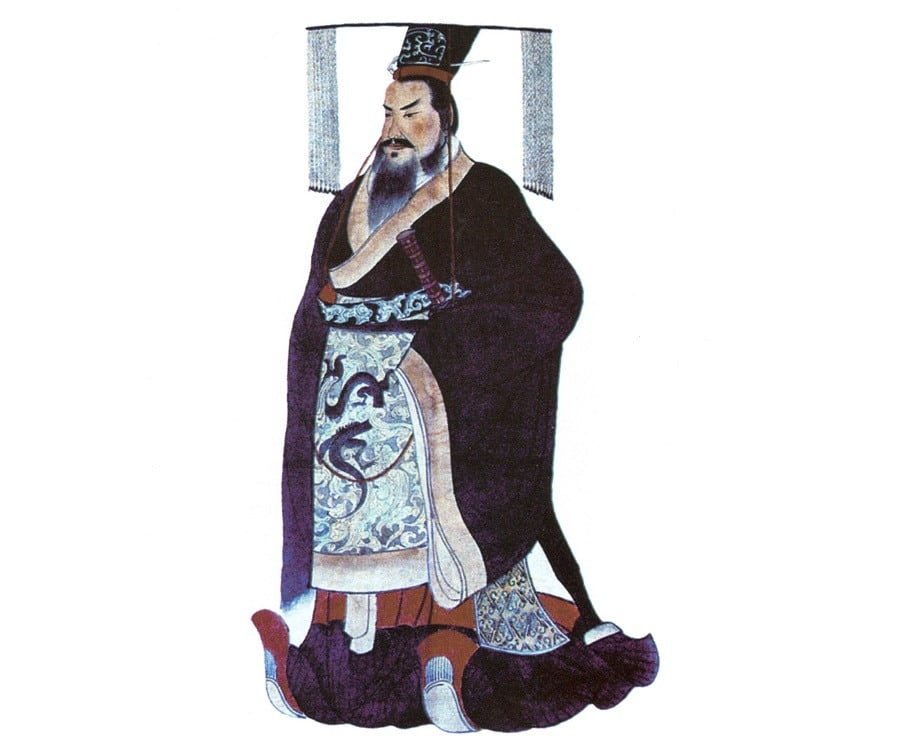
Before power captures institutions, it captures perception.
Democracy does not collapse in a single dramatic seizure. It erodes when citizens no longer share a coherent reality. When people inhabit different informational worlds, self-government becomes nearly impossible.
This is not accidental. It is engineered.
And it begins in the mind.
In psychology, apperception describes how new information is absorbed through existing mental frameworks. We do not see the world as it is. We see it through the models we have already built. Every experience is filtered, interpreted, and woven into prior belief.
When those mental models are distorted, reality itself becomes pliable.
The defining political struggle of our era is not merely about laws or elections. It is about perception.
What happens to democracy when perception itself is privatized?
We Already Perceive Only a Fraction
Modern physics offers a humbling insight: human perception is inherently partial.
Quantum mechanics reveals that observation affects what is observed. String theory proposes that what we experience may be a thin “brane” floating within a far larger “bulk” of dimensions beyond our sensory reach. Whether one takes these models literally or metaphorically, the lesson is clear: reality is deeper and more complex than our immediate awareness.
We are always navigating a thin perceptual membrane stretched across something vastly larger.
Healthy societies expand that membrane. They cultivate curiosity, humility, and cognitive flexibility. They encourage citizens to refine their models of reality as new information emerges.
But what happens when the informational environment becomes saturated with noise?
Instead of expanding perception, we flood it.
Twenty-four-hour media cycles. Algorithmic reinforcement. Outrage as currency. Endless scroll. Contradiction layered upon contradiction.
When the signal-to-noise ratio collapses, people do not become more discerning.
They become fatigued.
And fatigue narrows perception.
Image from Another Reality Is Leaking into Ours
Lenin: Capture the Narrative First
Vladimir Lenin understood that revolutions are won in the realm of narrative before they are secured in the realm of governance.
Control the story, and you control interpretation. Control interpretation, and you shape allegiance.
If every event is filtered through a single ideological lens, complexity disappears. Alternative explanations become suspect. Dissent becomes betrayal.
Once perception is reorganized, resistance feels irrational. The new order feels inevitable.
The first victory is cognitive.
Hitler: Replace Reality with Myth
Adolf Hitler refined this strategy by fusing mythic identity with grievance.
Hero. Enemy. Betrayal. Destiny.
These are archetypal structures. They bypass analytical reasoning and move directly into emotional circuitry. Facts lose relevance because belonging becomes paramount.
Myth simplifies a chaotic world. It offers clarity where complexity feels overwhelming. It offers identity where economic instability erodes dignity.
When myth overtakes shared reality, institutions weaken. Courts, legislatures, journalism — these depend on a baseline agreement about what is real. Remove that baseline, and democratic structure becomes hollow.
Trump: Saturation as Strategy
Donald Trump operates in a different media ecosystem — one defined not by centralized propaganda but by fragmentation and saturation.
The strategy is not uniformity.
It is overload.
Constant statements. Contradictions. Provocations. Breaking news layered upon breaking news. The informational field becomes so dense that evaluation becomes exhausting.
When everything demands attention, sustained attention collapses.
Exhaustion becomes compliance.
This is not merely personality or spectacle. It is perceptual warfare in an age where attention is the most valuable commodity.
Economic Stress Narrows the Mind
Economic precarity intensifies this dynamic.
Research on scarcity shows that when individuals are preoccupied with financial insecurity, cognitive bandwidth shrinks. Immediate survival crowds out long-term reasoning. Abstract policy debates lose urgency compared to rent, food, healthcare.
Under chronic stress:
Simplified narratives feel stabilizing.
Strong leaders feel clarifying.
Identifiable enemies feel grounding.
The mind narrows because it must.
A narrowed mind is easier to guide.
This is not a moral failing. It is a cognitive reality.
And it makes perceptual manipulation more effective.
The Loss of Interior Expansion
There was a time in Western intellectual history when alternative cosmologies emphasized interior awakening. Early Gnostic traditions, later marginalized and pruned from orthodoxy, suggested that reality is layered — and that human beings possess the capacity to awaken beyond surface appearances.
Whether one accepts those metaphysics literally is beside the point.
Psychologically, such traditions cultivated depth. They encouraged inward exploration alongside outward structure.
Much of Western civilization instead consolidated around more hierarchical metaphysical models: authority centralized, truth mediated, salvation externalized. Over centuries, this narrowed the manuscript of the mind.
In a universe that physics now describes as multidimensional and probabilistic, our cultural habits often remain rigid and binary.
We stare at the brane and forget the bulk.
The Privatization of Perception
Today, perception is no longer shaped only by culture, family, or local community.
It is curated.
Algorithms — owned and operated by private corporations — determine what rises into visibility and what sinks into obscurity. They optimize for engagement, not coherence. For emotional activation, not contemplative depth.
The result is fragmentation.
Different citizens inhabit different informational universes. Shared reference points dissolve. A common civic narrative becomes difficult to sustain.
Democracy requires an informational commons. It requires enough overlap in perception that disagreement can occur within a shared frame.
When perception itself is privatized, the commons erodes.
The deeper cost of this manufactured reality is not simply political instability.
It is human diminishment.
When attention is perpetually captured, individuals lose access to their own interior signal. Reflection is replaced by reaction. Depth is replaced by immediacy.
Discoherent noise overwhelms the perceptual membrane.
And when that happens, people forget who they are — and what they are capable of becoming.
Democracy is not sustained by outrage alone. It is sustained by citizens capable of sustained thought, capable of soft focus, capable of seeing beyond the immediate stimulus.
In martial arts, instructors speak of using “soft eyes” — widening the field of vision rather than locking onto a single threat. Soft eyes allow you to perceive the whole field.
Hard focus is useful in crisis.
But permanent hard focus leads to blindness.
A society trapped in permanent hard focus — outrage, fear, reaction — loses its depth perception.
Ordinary People Trapped In a Rage Machine and Economic Deprivation
Expanding the Perceptual Field
The defense of democracy is inseparable from the defense of consciousness.
This does not require ideological conformity. It requires cognitive expansion.
Strengthening apperception rather than surrendering it. Restoring signal amid noise. Reclaiming interior depth in a saturated world. Widening the brane.
Power trains the mind before it takes the state. It reshapes narrative before it reshapes law. It narrows perception before it narrows rights.
The counter-movement must therefore begin in perception as well.
Slow down the feed. Diversify sources. Engage opposing arguments without caricature. Create spaces for sustained conversation. Practice soft eyes.
Because the most radical act in an age of manufactured reality may be this:
To expand your awareness rather than contract it.
Democracy depends on citizens who can tolerate complexity without fleeing into myth. Citizens who can endure uncertainty without surrendering to authoritarian clarity. Citizens who recognize that their perception is partial — and who remain willing to refine it.
We inhabit only a fraction of reality.
The question is whether we will allow that fraction to be engineered for us.
Or whether we will widen it ourselves.
Before power captures the state, it captures the mind.
The preservation of democracy begins by reclaiming it.
Visualization of Mind and Thought as Resonance and Waves
Feature Archetypal Animation
Music: Pulse of the Feed 03:10 StabilityMid-tempo (80–95 BPM) cinematic ambient electronica with pulsing synth bass, soft glitch percussion, airy pads, and sparse piano motifs. Minor-key harmony with subtle tension, occasional filtered risers, no flashy solos. Mood: investigative, uneasy, reflective—building toward clarity and resolve.
History does not repeat because people fail to learn moral lessons.
It repeats because power erodes perception.
Caligula’s reign demonstrates a crucial truth that is often misunderstood: absolute power does not merely corrupt ethics—it destroys reality testing. Once a ruler is no longer constrained by consequence, contradiction, or accountability, other human beings cease to register as fully real. They become props, symbols, or game pieces in a private psychological theater.
Shared reality becomes unmoored from the common laws, rules, and safeguards we all agree upon to live in a safe and civil society. When some among us can ride through time without accountability… they do in a sense become mad gods unmoored by the shared rules of a civil society.
Caligula’s cruelty was not random. It was performative. Executions, humiliations, sexual transgressions, and public desecrations were not simply acts of violence—they were experiments. Each act tested the same question: Will they still obey?
Coercive Auction of Stolen Property So Caligula Could Restore the State’s Bankrupted Funds
They did.
Rome’s greatest failure was not Caligula’s madness, but the system’s inability—or refusal—to extract corruption once it became undeniable. Senators, priests, generals, and bureaucrats recognized the danger. Yet obedience persisted. Even when elite families were targeted, even when norms collapsed, even when fear replaced law, the machinery of empire continued to function.
That is the true warning.
The Modern Parallel
Modern civilization does not crown emperors. It manufactures immunity.
Extreme concentrations of wealth and influence now produce a condition structurally similar to imperial absolutism: insulation from consequence, privatized reality, and social systems trained to preserve stability at all costs. Courts, corporations, political parties, media ecosystems, and financial institutions often function less as safeguards than as buffers—absorbing shocks without correcting root corruption.
Recent, well-documented elite exploitation scandals reveal this pattern with disturbing clarity. The details vary, but the structure is consistent: • Transgression escalates under conditions of immunity • Complicity spreads through silence and shared risk • Blackmail becomes a stabilizing force • Institutions protect continuity over truth
The issue is not individual depravity alone. History is full of cruel individuals. The danger emerges when systems reward obedience over integrity, and when power is so insulated that even grotesque violations fail to trigger removal.
This is where Caligula becomes contemporary.
Not because modern elites are emperors—but because the psychology of unchecked power has not changed. Extreme wealth produces boredom. Boredom seeks intensity. Intensity erodes empathy. Empathy loss enables dehumanization. Dehumanization demands silence. Silence becomes loyalty.
Alan Watts warned—echoing Buddhist psychology—that the unchecked pursuit of pleasure does not lead to joy, but to the Naraka world: a psychological hell defined not by punishment, but by endless appetite without meaning. Sensation must escalate because nothing satisfies. Others cease to exist except as stimuli.
Caligula reached that place early.
Modern systems risk normalizing it.
The question is no longer whether ruthless rulers will emerge.
The question is whether civilizations can still recognize corruption before obedience replaces humanity.
Briefing Doc: Caligula
The Principate of Gaius Caligula: Power, Excess, and the Stoic Response
Executive Summary
The reign of Gaius Caesar Augustus Germanicus, famously known as Caligula (r. AD 37–41), represents a pivotal and tumultuous era in the early Roman Empire. Initially greeted with universal jubilation as the son of the beloved general Germanicus, Caligula’s four-year tenure rapidly transitioned from a “Golden Age” of prosperity to a period defined by extreme self-indulgence, fiscal crisis, and alleged madness. Key themes of his reign include the expansion of unconstrained imperial power, a strained relationship with the Roman Senate, and a move toward divine autocracy.
This briefing document synthesizes historical accounts of Caligula’s rise and fall, his ambitious construction projects, his controversial provincial policies, and the contemporary philosophical response led by Seneca the Younger. Ultimately, Caligula’s assassination in AD 41 by the Praetorian Guard marked the end of the first direct male line of the Julii Caesares and served as a catalyst for Seneca’s Stoic meditations on the destructive nature of unrestrained anger and power.
Born to the Purple: Origin of Little Boot
I. Early Life and the Rise to Power
Lineage and the “Little Boot”
Born in AD 12 to Germanicus and Agrippina the Elder, Gaius was a member of the prestigious Julio-Claudian dynasty, descended from Augustus and Mark Antony.
• The Mascotte: As a child, he accompanied his father on Germanic campaigns. His mother dressed him in a miniature soldier’s outfit, including heavy army boots (caligae). The troops affectionately nicknamed him “Caligula” (meaning “little boot”), a name he reportedly grew to dislike.
• Family Tragedy: Following Germanicus’s death in AD 19, his family became embroiled in a bitter feud with Emperor Tiberius. Caligula’s mother and brothers were eventually exiled and died in prison, leaving Caligula as the sole male survivor of his immediate family.
Survival on Capri
In AD 31, Caligula was summoned to Capri to live with the aging, paranoid Tiberius.
• Dissimulation: To survive, Caligula masked his resentment behind an obsequious manner. Observers noted that there was never “a better slave or a worse master.”
• Accession: Upon Tiberius’s death in AD 37 (which some rumors suggest Caligula hastened with the help of the Praetorian prefect Macro), Caligula was proclaimed emperor at age 24.
The New Hope (37AD): A Brief Golden Age
II. The Early Reign: The “Golden Age”
New Sun Cult and Seven Months of Joy
Caligula’s first seven months were characterized by widespread popularity and community-spirited reform.
• Public Generosity: He distributed massive gratitude payments to the Praetorian Guard, city troops, and ordinary citizens.
• Legal Reforms: He restored the right of popular assemblies to elect magistrates, lifted censorship, and published accounts of public funds.
• Filial Piety: He interred the ashes of his mother and brothers in the Mausoleum of Augustus and granted extraordinary honors to his sisters, particularly Julia Drusilla.
Turning Point: Sickness and Grief
III. The Transition to Tyranny
Historians, including Philo and Suetonius, point to a serious illness in late AD 37 as a turning point in Caligula’s character.
Cruelty and Purges
• Elimination of Rivals: Following his recovery, Caligula ordered the forced suicide of Tiberius Gemellus (his adopted son and heir) and Macro (the prefect who secured his throne).
Death of Heirs of Caligula
• Hostility toward the Senate: He openly humiliated the senatorial class, forcing them to run miles beside his chariot or stripping them of ancestral honors.
Break with Senate: Transition from Princeps to Autocrate (39 AD)
• The Incitatus Affair: In a gesture of contempt for the consulship, he reportedly proposed making his favorite racehorse, Incitatus, a consul.
The Horse and the Bridge & Incitatus the Consul
Claims of Divinity
Caligula sought to transcend the traditional role of princeps to become a living god.
Living God: Madness or Monarchy
• Impersonations: He reportedly appeared in public costumed as Hercules, Mercury, Venus, and Apollo.
Caligula Dressed Up as Gods such as Hercules, Mercury, Venus
• The Imperial Cult: He established a temple to his own genius on the Palatine and attempted to have a colossal statue of himself as Zeus installed in the Temple of Jerusalem, a move that sparked intense Jewish resistance.
Desecration of Jewish Temple
• Sun-God Imagery: Provincial coinage and inscriptions occasionally hailed him as the “New Sun” (Neos Helios).
Neos Helios | New Sun
IV. Public Works and Economic Crisis
Caligula’s reign was marked by grandiose and often wasteful expenditures that exhausted the state treasury.
Major Construction Projects
Project
Description
Aqueducts
Began construction of the Aqua Claudia and Anio Novus to meet Rome’s water needs.
Bridge at Baiae
A temporary two-mile floating bridge of ships across the Bay of Baiae, earth-paved for a ceremonial crossing.
Nemi Ships
Two massive, elaborate floating palaces with marble floors and plumbing.
Vatican Obelisk
Transported an Egyptian obelisk on a purpose-built ship using 120,000 modi of lentils as ballast.
Fiscal Desperation and Taxation
By AD 39, the treasury (amassing 2.7 billion sesterces under Tiberius) was depleted. Caligula responded with:
• New Taxes: Levies on lawsuits, weddings, and a notorious tax on the earnings of prostitutes.
• Confiscations: Falsely accusing wealthy citizens of treason to seize their estates.
• Auctions: Forcing nobles to bid exorbitant prices for his sisters’ jewellery and palace furnishings at public auctions.
V. Provincial and Military Affairs
Caligula’s military record was largely viewed as ignominious by contemporary historians, though modern interpretations are more nuanced.
• Mauretania: He annexed the client kingdom after executing its ruler, Ptolemy, leading to a local uprising.
• Britannia: He planned an invasion that famously resulted in his troops being ordered to collect seashells as “spoils of the sea,” though some suggest this was a training exercise or a misunderstanding of the term musculi (siege engines).
Roman Soldiers Collecting Seashells
• Germany: He conducted operations along the Rhine, though ancient sources dismiss these as poorly prepared or fabricated for glory.
VI. The Philosophical Response: Seneca the Younger
The philosopher Seneca witnessed Caligula’s reign from the Senate and used the experience to inform his Stoic writings, particularly On Anger (De Ira).
Anger as “Madness”
Seneca defined anger as a temporary madness and a “misevaluation” of worthless things. He cited Caligula as the ultimate negative exemplar:
Ira — Wrath, rage or fury. A passion as a kind of madness.
• The Monster: Seneca consistently depicted Caligula as a “cruel tyrant” and a “monster” whose unrestrained wrath endangered the state.
Caligula’s Ira vs Seneca’s Stoicism
• The Sadistic Host: Seneca recounts Caligula executing a man’s son and immediately inviting the grieving father to dinner, forcing him to act joyfully under threat of death.
Cruel Dinner Party | Caligula’s Executes Elite’s Son Then Forces Him to Drink Wine and Smile at a Dinner Party the Same Night
• Envy of Intellect: Caligula reportedly wanted Seneca killed because he envied his oratorical success, dismissing Seneca’s style as “sand without lime.”
Caligula Wanted Seneca Dead
Stoic Remedies
Seneca argued that spiritual health requires the complete rejection of anger. He advocated for:
• Mutual Leniency: A social contract based on the acknowledgment that all humans are fallible.
• Introspection: Daily reviews of one’s ethical choices to maintain the sovereignty of reason.
VII. Assassination and Aftermath
On January 24, AD 41, Caligula’s reign ended violently.
• The Conspiracy: A small group of Praetorian tribunes, led by Cassius Chaerea, accosted the Emperor in a narrow corridor beneath the palace. Chaerea was motivated by personal insults—Caligula often mocked his voice and gave him ribald watchwords like “Priapus.”
Caligula was Ambush by His Own Guardsmen
• The Murder: Caligula was stabbed 30 times. His wife, Caesonia, and daughter, Julia Drusilla, were also murdered shortly thereafter.
Caligula Was Stabbed 30 Times
• Succession: While some senators hoped to restore the Republic, the Praetorian Guard spontaneously chose Caligula’s uncle, Claudius, as the next emperor.
Claudius Chosen by Army to Rule
VIII. Key Historical Quotes
• On Absolute Power: “Let them hate me, so long as they fear me.” (Attributed to Caligula in literary tradition)
• On the Roman People: “Would the Roman people have but one neck!” (Attributed to Caligula)
• On Caligula’s Nature: “I am nursing a viper in Rome’s bosom.” (Tiberius, regarding the young Caligula)
• On Anger: “Your anger is a kind of madness, because you set a high price on worthless things.” (Seneca the Younger, De Ira)
• On Caligula’s Divinity: “I have existed from the morning of the world, and I shall exist until the last star falls from the night.” (Malcolm McDowell’s cinematic depiction)
Caligula: Political Case Study
The Architecture of Absolute Power: A Case Study on the Erosion of Constitutional Norms under Caligula
1. Introduction: The Fragility of the Augustan Principate
The Roman Principate, as architected by Augustus, functioned as a masterclass in political theater. Its foundation rested on the primus inter pares (“first among equals”) model—a calculated facade designed to wrap absolute autocratic power in the comforting imagery of Republican tradition. By maintaining the illusion that the Senate and the Roman people remained the ultimate repositories of authority, Augustus achieved a durable stability. However, this system contained a fatal structural vulnerability: it relied entirely upon the “personal responsibility and self-restraint” of a single executive rather than fixed legal constraints.
Caligula’s reign (AD 37–41) was not merely a descent into personal madness; it was a structural stress test that exposed the total collapse of Roman republican checks and balances. When the executive decided to strip away the Augustan mask, the institutional framework proved incapable of resistance. This trajectory toward unconstrained authority was accelerated by the immense political capital of his father, Germanicus; the popular general’s legacy provided the initial momentum for a transition that would eventually render the Senate obsolete and the military the sole arbiter of the state.
2. The Accession: Consensus as a Tool for Legal Consolidation
The transition of power in AD 37 represented a radical departure from the gradual accumulation of authority seen under Augustus. While previous rulers maintained a show of reluctance, the twenty-five-year-old Gaius was granted the full spectrum of imperial authority—the lex de imperio—in a single legislative act. This immediate consolidation effectively neutralized the Senate’s ability to negotiate or impose future constraints.
The Mechanics of Early Accession
Legal Action
Stated Intent (Public Relations)
Structural Impact (Autocratic Shift)
Annulment of Tiberius’s Will
Claimed Tiberius was of unsound mind to name the minor Gemellus as co-heir.
Removed the internal dynastic check of a co-heir, consolidating sole authority.
Doubling of Praetorian Bonuses
A gesture of filial respect to fulfill and exceed Tiberius’s final wishes.
Shifted military loyalty from the state to the person of the Emperor.
Immediate Grant of Powers
A response to the “consensus of the three orders” (Senate, Equites, People).
Stripped the Senate of future leverage by granting absolute power without a probationary period.
The Senate’s ecstatic reception and immediate ratification of these powers were driven by a desperate desire for a “Golden Age” following the reclusive Tiberius. By surrendering their authority so completely in a moment of popular euphoria, the aristocratic class effectively disarmed themselves. This paved the way for administrative reforms that initially suggested a civic renewal but soon pivoted toward unconstrained authority.
3. The Dismantling of Countervailing Powers: Senate and Law
To centralize power, Gaius recognized the need to diminish the Senate as a deliberative body. He pivoted to a strategy of psychological warfare to neutralize the aristocratic class. A primary weapon was the “Weaponization of Memory.” Although he initially made a public show of burning Tiberius’s secret records to signal a restoration of legal security, he later revealed he had preserved the files. He used these archives as a form of ancient “kompromat,” confronting senators with their past servility and the names of the delatores (informers) who had betrayed their peers. This converted the archival state into a psychological weapon, ensuring total senatorial paralysis.
Even the most infamous anecdotes of the reign, such as the supposed promotion of his horse Incitatus to the consulship, must be viewed through a strategic lens. This was not insanity, but a darkly humorous insult intended to ridicule the highest aristocratic ambitions. By suggesting a beast was fit for the office, Gaius signaled that the consulship, and the elite who craved it, were fundamentally meaningless. This systemic humiliation was even applied to his own family; the “Plot of the Three Daggers” involving his sisters Agrippina and Livilla and his brother-in-law Lepidus demonstrated that even the domus Caesaris offered no countervailing safety.
Methods of Senatorial Humiliation:
• The Archival State: Reviving maiestas (treason) investigations based on “destroyed” records to ensure compliance.
• Forced Suicides: Systematically removing elder statesmen like Marcus Junius Silanus to eliminate traditionalist voices.
• Physical Degradation: Requiring consular-rank senators to run for miles alongside the imperial chariot or serve at the imperial table as common slaves.
• Erasure of Lineage: Stripping members of ancient families of inherited honors to ensure the Emperor remained the sole source of dignity.
This degradation of political status served a pragmatic purpose: it broke the elite’s spirit before Gaius turned toward predatory methods of funding the state.
4. Predatory Fiscal Policy and the Exhaustion of the Treasury
In a centralized system, financial solvency is the bedrock of political stability. Gaius inherited a surplus of 2.7 billion sesterces, but his extravagant spending—notably on the two-mile floating bridge at Baiae—precipitated a financial crisis by AD 39. To address the deficit, the Emperor transitioned from a benefactor to a predator, utilizing the legal system for resource extraction.
Mechanisms of State Confiscation:
• New Tax Impositions: Following the abolition of the ducentesima (0.5% sales tax), Gaius introduced predatory levies on taverns, artisans, weddings, and a notorious tax on prostitutes’ earnings.
• The Militarization of Revenue: Deploying the Praetorian Guard as tax collectors, a move that fundamentally changed the military’s relationship with the civilian population and signaled a shift toward military autocracy.
• Seizure of Wills: Setting aside the wills of centurions and wealthy citizens who failed to name the Emperor as a primary beneficiary, labeling them “ungrateful.”
• The Lugdunum Auctions: Gaius personally acted as auctioneer in Gaul. While the first auction (of his sisters’ property) was predatory, the second (of palace furnishings) saw him adopt the persona of a benevolent princeps, using his status to maximize revenue through “voluntary” high bids from the elite.
This unconstrained resource extraction was mirrored in the Emperor’s demand for spiritual authority, positioning himself as the ultimate arbiter of Roman life.
5. The Imperial Cult: Divinity as the Ultimate Autocratic Tool
Gaius recognized a strategic difference between the traditional “veneration of the genius” (the Emperor’s guiding spirit) and the demand for recognition as a living god. By claiming divinity, he sought to place his actions beyond human law and pietas (traditional duty). While scholars debate if his deity impersonations—Jupiter, Mercury, and Venus—were “theatrical fancy-dress” or “private pantomime,” their impact was consistent: they shattered the traditional religious consensus.
This demand for divinity sparked a major geopolitical crisis in Judaea and Alexandria. The decree to install a statue of himself in the Jerusalem Temple transformed a local religious issue into a “blasphemy” that risked the stability of the grain supply, as Jewish producers threatened to abandon their harvests in protest. Philo’s account of the “Embassy to Gaius” highlights the hostile nature of this court; at the Gardens of Maecenas, the Emperor ignored the delegates’ petitions to inspect buildings and mock their faith, treating serious diplomacy as a farce. Ultimately, these claims of divinity alienated the very security apparatus tasked with his safety.
6. Institutional Failure and the “Assassination Check”
The tragedy of the Roman constitutional erosion was that the system provided no legal “exit ramp” for a failing executive. When impeachment mechanisms are absent, violence becomes a constitutional necessity. On January 24, 41, this structural failure reached its conclusion in the cryptoporticus of the Palatine Hill.
The conspiracy was led by the Praetorian tribune Cassius Chaerea. While historical accounts credit him with noble Republican idealism, his primary motivation was a response to Caligula’s routine personal insults. By giving Chaerea watchwords like “Venus” or “Priapus” (referring to his voice), the Emperor had systematically sought to emasculate his own security apparatus. This tactical error proved fatal.
Post-Assassination Systemic Failures:
1. Senate’s Futile Restoration: The Senate attempted to restore the Republic, but their lack of a cohesive military plan rendered their deliberations irrelevant.
2. Praetorian Arbitrage: The Guard “spontaneously” discovered Claudius and proclaimed him Emperor, reaffirming that the military was the true arbiter of power.
3. The New Reality: The transition proved that the state was no longer a partnership between the Senate and the Princeps, but a military autocracy.
7. Contemporary Critique: The Insights of Seneca and Philo
The historical narrative of Caligula is shaped by contemporary accounts that used stories of “insanity” as a tool of political culture to explain poor government.
Seneca the Younger, in On Anger (De Ira), utilized Gaius as a “monster” and a “wisdom-less exemplar” to argue that without Stoic self-control, absolute power is a destructive madness. To Seneca, Caligula was the embodiment of the “high cost of unrestrained wrath.”
Philo of Alexandria, in his Embassy to Gaius, documented the farcical nature of the imperial court, portraying a narcissistic ruler who viewed his subjects with “especial suspicion.” Together, these accounts established the “mad emperor” archetype, serving as a warning to future generations about the volatility of centralized authority.
8. Conclusion: Risks of Centralized Authority in Volatile Systems
The transition from Augustus to Caligula demonstrates that without formal institutional checks, the stability of the state is entirely hostage to the psychological health of the executive. When the “self-restraint” of the ruler vanishes, the state itself is placed at risk.
Strategic Takeaways:
1. The Illusion of Restoration: Early “community-spirited” gestures—such as the abolition of the ducentesima—can mask the systematic dismantling of legal norms.
2. The Weaponization of Humiliation: Demeaning elite institutions ensures temporary compliance but guarantees long-term conspiracy. Humiliating one’s own security officers with watchwords like “Priapus” is a strategic blunder that invites regicide.
3. The Military as Final Arbiter: Once the Praetorians are used as “forceful” tax collectors, the revenue stream is militarized, and the Guard becomes the master of the state.
Ultimately, the reign of Gaius stands as a testament to the “high cost of unrestrained wrath” and the fragility of a constitution that exists only in the shadow of a single man’s will.
Ultimate Wrath vs Tales to Discredit | Evidence Today Suggests There Is Probably More Than a Grain of Truth to the Stories Told About Caligula
Caligula: Governance Ethics Whitepaper
The Stoic Advisor: Navigating High-Risk Leadership Through Senecan Ethics
1. The Volatility Landscape: Lessons from the Caligulan Principate
In the theater of executive governance, the transition from a “Golden Age” to institutional collapse can occur with terrifying speed. Our audit of the Caligulan era reveals the “Fiendish Flip”—a catastrophic pivot where a leader moves from perceived benevolence to arbitrary terror. Caligula’s accession was initially hailed by contemporaries like Philo as a return to fairness and community spirit. However, following his recovery from illness in AD 37, the environment devolved into a nightmare of unpredictable cruelty. For the modern advisor, recognizing this shift is not merely a historical exercise; it is the primary prerequisite for ethical survival. When a leader’s disposition becomes sadistic and extravagant, the advisor must transition from policy guidance to high-stakes psychological containment.
The specific behavioral triggers of high-risk leadership identify the moment when the “rule of law” is discarded for the “rule of whim.” When the illusion of the leader as primus inter pares (first among equals) fails, rational institutional planning becomes impossible.
Markers of Institutional Instability
• Financial Excess: The reckless squandering of an inherited fortune—specifically the 2.7 billion sesterces amassed by Tiberius—within a single year. This rapid depletion of the treasury necessitates subsequent reliance on the confiscation of private estates and the imposition of petty taxes to fund grandiose, wasteful projects.
• Contempt for the Elite: The systematic humiliation of institutional stakeholders. This is exemplified by Caligula forcing senior senators to run for miles alongside his chariot while he laughed at them, or threatening to elevate his horse, Incitatus, to the consulship to mock the dignity of the office.
• The Claim to Divinity: The total abandonment of mortal limits. When a leader demands worship as a living god, dressing as Mercury or Apollo, they terminate any possibility of bilateral negotiation, effectively replacing professional counsel with theological sycophancy.
These markers signal a total collapse of professional boundaries. When a leader views himself as a deity and the law as an inconvenient suggestion, the environment is defined by arbitrary terror rather than governance. Seneca’s career illustrates how an advisor can maintain a moral center and physical safety during such a collapse through calculated distance.
2. The Advisor’s Paradox: Seneca’s Dual Role as Philosopher and Courtier
Lucius Annaeus Seneca the Younger represents the ultimate archetype of the elite advisor operating under threat. Trained by the School of the Sextii—a rigorous hybrid of Stoicism and Pythagoreanism—Seneca was fundamentally an advocate for reason. However, his survival during the “nightmare of the Caligula years” required him to master the art of the courtier. He narrowly escaped execution when his oratorical brilliance provoked Caligula’s envy, surviving only by projecting an image of such terminal ill health that the emperor assumed nature would soon do the executioner’s work.
Survival in a volatile environment demands that the advisor utilize strategic maneuvers that protect the mission while preserving the self.
Strategic Action
Ethical/Survival Outcome
Dissimulation
Adopting the “no better slave” status while at Capri; masking resentment for the destruction of his family to avoid summary execution.
The Practice of Patience
Enduring eight years of exile on Corsica under Claudius without surrendering to despair, refining philosophy as a tool for endurance.
The Use of Consolation
Authoring works for Helvia and Polybius to navigate political grief and utilize flattery as a lever for his eventual recall to Rome.
Strategic Withdrawal
Attempting to retire in AD 62 and 64 when Nero’s stability failed, recognizing that influence has a terminal expiration date.
Seneca’s leadership reached its zenith during the Quinquennium Neronis—the first five years of Nero’s reign. Partnering with the Praetorian prefect Burrus, Seneca maintained institutional stability by drafting accession speeches that promised a return to legal procedure. However, the Chief Ethicist must recognize that influence is a perishable commodity; the death of Burrus in AD 62 broke Seneca’s power, proving that an advisor requires a tactical partner to survive a leader’s deteriorating psyche. This loss of external control forces a retreat into internal psychotechnologies.
3. Stoic Psychotechnology: Anger Management and the Sovereignty of Reason
For the high-stakes professional, internal self-control is the only reliable defense against a leader’s volatility. Seneca’s De Ira (On Anger) serves as a manual for maintaining professional equilibrium, defining anger as “a kind of madness.” Seneca warns that once rage takes control, it is like “jumping off a cliff”; reason is discarded, and the capacity for virtuous action is lost.
To prevent this descent, the advisor must master the concept of “Misevaluation.” Seneca argues that we rage because we overvalue worthless things. He proposes a “Vastness Stratagem” to expand the mental scale, which we distill into a demanding three-step cognitive audit:
1. Isolate the Trigger: Identify the minor incident, such as a perceived insult to dignity or a professional slight.
2. Apply the Vastness Stratagem: Juxtapose the incident against the immeasurably vast—global climate shifts, collapsing stars, or the sweep of centuries.
3. Evaluate Significance: Realize that the “injury” to one’s pride is hollow when viewed from a cosmic distance. The advisor must learn to draw further back and laugh.
This audit must be supported by “nightly reviews”—tranquil, daily meditations on ethical choices. This practice, termed “care of the self” by Foucault, is a mandatory defensive hygiene for the advisor. It creates a “sovereign space” within the mind that an erratic leader cannot touch. By mastering internal governance, the advisor secures the clarity required to attempt external steerage through the strategic application of mercy.
4. Clemency as a Political Lever: The Ethics of Mercy in High-Stakes Governance
In De Clementia (On Clemency), Seneca utilizes flattery as a sophisticated pedagogical trap. Written as immediate damage control following Nero’s murder of his rival Britannicus, the work was designed to halt the cycle of bloodshed that typically follows state-sponsored violence. Clemency is not portrayed as “kindness,” but as a calculated political lever used to avoid the “arbitrary terror” that eventually led to Caligula’s thirty stab wounds.
The advisor must propose a “Pact of Mutual Leniency” based on three core principles:
1. Universal Fallibility: Accepting that we are “wicked people living among wicked people.”
2. Shared Sin: Recognizing that all are “sinners all, yet all deserving of clemency.”
3. The Social Contract: Understanding that peace is only possible through a mutual agreement to forgive human error.
Seneca’s use of flattery in this context was a pedagogical tool—he praised Nero for virtues the ruler did not yet possess to “trap” him into acting better. By modeling the “Stoic path of virtue,” Seneca attempted to show the ruler a version of himself that was “good, generous, and fair,” hoping the leader would grow into the image provided. However, even the most skilled advisor must prepare for the moment when influence fails.
5. Final Synthesis: The Framework for Ethical Survival
The “Senecan Framework” for professional conduct under risk requires a paradoxical blend of intellectual distance, strategic dissimulation, and rigorous internal inventory. When institutional governance collapses, the only remaining sovereignty is the mind of the advisor.
Professional Conduct Checklist
• Draw Further Back and Laugh: Utilize the vastness stratagem to ensure that immediate setbacks or insults do not trigger a loss of reason.
• Prioritize Persistence over Martyrdom: Maintain patience and survival for the sake of the mission. As Seneca noted, “I wanted to avoid the impression that all I could do for loyalty was die.”
• Maintain the ‘Imago Suae Vitae’: Strive to preserve a consistent moral and ethical profile—the “image of one’s life”—that remains untouched by the leader’s volatility.
The legacy of Seneca’s death—the forced suicide in AD 65 where he remained calm, dictated his last words, and died in a warm bath—must be framed as a strategic victory. By maintaining Stoic composure while being suffocated by the steam of the bath, the advisor denied the tyrant the satisfaction of a broken spirit. The enduring value of Stoic self-governance lies here: when institutional governance fails and the “30 stabs” of inevitable betrayal arrive, the advisor remains the master of the only territory that truly matters: the self.
RESOURCES & CITATIONS
• Wikipedia: Caligula. (Details on the 2.7 billion sesterces from Tiberius, the “Golden Age,” the shift to tyranny, and the assassination).
• Wikipedia: Seneca the Younger. (Stoic training, role as advisor to Nero, the Quinquennium Neronis, his wealth, and his death).
• Lit Hub: Did Seneca Write a Treatise on Anger. (Analysis of De Ira, the “vastness stratagem,” the “pact of mutual leniency,” and Foucault’s “care of the self”).
• The Little Boot: The Rise and Ruin of Caligula. (Chronology of Caligula’s life, the “Fiendish Flip,” the senators running by the chariot, and the 30 stabs).
This was the year when power stopped pretending it was benevolent, neutral, or even rational. Across politics, media, technology, and global affairs, institutions abandoned the last remnants of moral language and replaced it with something colder: efficiency, dominance, and narrative control.
Three truths became unavoidable in 2025:
1. Authoritarianism Stopped Whispering
Strongman politics no longer needed coded language or plausible deniability. Loyalty tests replaced competence. Intellectual friction was treated as treason. History was rewritten openly, not quietly.
What had once been described as “norm erosion” revealed itself as something more direct: a belief that constraint itself is illegitimate.
This wasn’t new—but the denial ended.
This topic was explored in December's blog: A King Like Trump: Herod the Great where the myth of the “necessary ruler” fully replaced the idea of shared governance, in the case of Trump, and for Herod, seeking legitimacy from the people he ruled destroyed him and left the indelible mark on his legacy of the brutal, corrupt king who tried to kill the baby Jesus.
A King like Trump: Herod the Great
2. Capitalism’s Shadow Stepped Fully Into the Light
By 2025, neoliberalism could no longer plausibly describe itself as an economic system alone. It revealed itself as a psychological operating system—one that trains individuals to self-optimize, self-blame, and self-erode while power consolidates upward.
Marketing, politics, and identity collapsed into a single feedback loop:
Consume → perform → obey → repeat.
Trumpism was no longer an anomaly. It was recognized—by supporters and critics alike—as capitalism’s shadow made flesh. One stripped of civility, decorum, and restraint and operating without apology.
The Monsters We Choose to Be
3. Consciousness Became the Real Battleground
2025 wasn’t primarily about elections or wars. It was about perception.
Who controls:
attention
memory
fear
meaning
Book bans, algorithmic suppression, AI-generated mythmaking, and the quiet erasure of inconvenient voices all pointed to the same conclusion:
Reality itself is now contested territory.
And yet—something else happened.
While power centralized, awareness decentralized. People didn’t suddenly agree, but many began to recognize manipulation as it was happening.
The Counter-Movement No One Could Fully Contain
While power centralized, awareness decentralized.
2025 saw a quiet but unmistakable rise in:
whistle-thinkers rather than whistleblowers
cross-disciplinary truth tellers
elders refusing to be dismissed
autistic, sensitive, and highly perceptive minds finally naming what they see
People didn’t suddenly agree—but they began to recognize manipulation when they felt it.
This recognition—uneven, fragile, incomplete—may prove more important than consensus.
2026: The Year of Fracture—or Awakening
2026 will not be a year of stability.
It will be a year of choice.
Because it will be a year of overreach—and reaction.
Here are the patterns already locked in motion:
Prediction #1: Power Will Overreach—Openly
Authoritarian systems always do. The pressure to maintain narrative dominance will produce increasingly absurd contradictions, harsher loyalty demands, and more visible incompetence.
This will wake some people up. It will radicalize others. There will be no middle ground left to hide in.
Historically, authoritarian systems do not collapse because they are challenged.
They collapse because they overextend, as we are exploring in my podcast Wisdom Guardians.
As 2026 begins, we are already seeing signs of this dynamic:
escalating executive claims unconstrained by Congress or international law
rhetoric of regime change treated as casual policy discourse
open talk of territorial expansion, annexation, or “running” other nations
the normalization of militarized solutions to complex political failures
Whether every threat materializes is almost beside the point.
What matters is this shift:
Power is signaling that it no longer recognizes meaningful limits.
This is not merely “Trump being Trump.” It reflects a deeper fracture: when institutions fail to impose boundaries, leaders test how far reality can be bent before it breaks.
History is clear on what follows.
Such overreach does not produce submission alone. It produces counter-forces:
diplomatic isolation
internal resistance
fractures within alliances
destabilization that cannot be fully controlled
The irony of domination is that the harder it grips, the more instability it creates.
Empire, Resources, and the Old Justifications
Drilling down a little deeper on this long established, destructive, historical pattern, the renewed language of regime change and territorial ambition also resurrects an older logic—one the modern world claims to have outgrown.
These arguments have justified interventions for more than a century. When leaders speak openly about oil, minerals, or strategic territory while dismissing sovereignty and law, they are not innovating. They are repeating a script whose consequences are well documented.
What has changed is not the logic—but the willingness to state it plainly.
That candor may feel powerful in the moment. It is also how nations drift toward pariah status: not because they lack power, but because they abandon legitimacy.
Prediction #2: AI Will Accelerate Myth—or Meaning
AI in 2026 will be used in two radically different ways:
to mass-produce comforting illusions
or to reveal patterns humans were never meant to ignore
The danger is not that humans will merge with machines. The danger is that we will do so without consciousness, repeating domination at a higher speed.
AI isn’t replacing humans. Rather, humans are surrendering authorship of their inner world to AI and the doctrine of silence commanded by corrupted systems.
Those who treat AI as an oracle will hollow out.
Those who treat it as a partner—within ethical bounds—may sharpen perception rather than surrender it.
Prediction #3: Burnout Will Become Political
Exhaustion is no longer personal—it’s systemic.
By mid-2026, withdrawal, refusal, and non-participation will increasingly function as forms of resistance. Not everyone will protest. Many will simply stop performing obedience.
That quiet refusal will frighten power more than spectacle ever did.
The Choice That Remains
2026 will ask a single, uncomfortable question:
Do you want comfort—or consciousness?
You don’t get both anymore.
The age of plausible deniability is over. The age of spectatorship is ending. What comes next depends not on heroes or rulers—but on whether individuals reclaim their perception, their imagination, and their moral spine.
As I wrote in Sapience: The Moment Is Now:
Survival will not belong to the strongest, the richest, or the loudest— but to those who can still see clearly while others beg to be told what to believe.
2026 is not the end.
It is the threshold.
January 6: The Unresolved Wound
Animation from January 6, 2022 blog
This blog is published on January 6 for a reason.
Five years ago, a sitting U.S. president incited an attack on the Capitol to overthrow an election he lost. The event was broadcast, documented, and partially prosecuted—yet never fully resolved at the level that matters most: accountability at the top.
Instead:
consequences fell unevenly
narratives fractured
responsibility blurred
and justice became selective
When a society fails to metabolize a rupture, it does not disappear. It grows in the shadows and migrates, taking new and more dangerous forms.
Today, we see its echoes:
detention without transparency
disappearances into bureaucratic systems
the erosion of due process for the “undesirable”
historical amnesia about our own concentration camps, burn orders, and sanctioned erasures
war in Venezuela and Iran as well as threats to Greenland, Canada, Mexico, and the rest of “the Western Hemisphere.”
The comparison to past authoritarian regimes is not a claim of equivalence.
It is a warning about patterns.
Power without accountability behaves similarly across history—no matter the flag.
What will you choose?
Compliance?
or
Pattern-Recognition and Reality-Grounded Action Based on Facts?
Rachel Maddowexplores one of the US’s most shocking historical executive orders to round up innocent American Japanese and incarcerate them in concentrate camp-like conditions for years during WWII.
Feature Archetypal Animation
Music 1:Masked Reality Echoes 03:10 StabilitySlow tempo, sustained strings, deep synth pads, occasional dissonant piano chords, and subtle percussive pulses create a suspenseful, thought-provoking mood. No solos.
Music 2: Awakening Echoes 03:10 StabilityA slowly evolving, atmospheric electronic piece. Features ethereal synths, deep sub-bass, and subtle percussive textures. Harmony is minor-key, creating a contemplative yet hopeful mood. Tempo is slow, building gradually without explicit solos.
Music 3: 2026 Crossroads 03:10 StabilityA pulsing, low-tempo electronic beat anchors a spacious soundscape. Synthesizer pads swell with a sense of impending tension, occasionally punctuated by a high-pitched, ethereal melody. No solos. Overall mood is introspective and slightly ominous, building to a hopeful resolve.
Music 4: Threshold of Consciousness 03:10 StabilitySlow, pulsing synth pads create an ethereal yet foreboding atmosphere. A minimalist electronic beat underpins a low, resonant bassline. No solos, harmonies are dark and expansive. Mood is contemplative, unsettling.
Supplemental: The Cost of Honesty
Why the HONEST Child Becomes the Family PROBLEM | Scapegoat Trauma
Honesty is not only punished in dysfunctional families, it is punished in dysfunctional and corrupted systems throughout time and history. Watch this video and when it talks about the dysfunctional family system, substitute dysfunctional society, culture, civilization.
We learn how to stay quiet and not rock the boat in our families. Then, we repeat the pattern in our culture and society. The more people punished for being honest, the fewer people who are willing to speak when families, cultures, civilizations take that fatal turn over the edge of reality, which always happens when lopsidedness is not fixed.
Do you see the pattern repeating again?
Do you think we are doomed?
We are when we stand by and say and do nothing.
Here is a knowledgable, intelligent man who once wore the mantle he inherited from his family of dysfunctional beliefs and silence. He became aware of the lies he had been fed by his family and the systems they inhabited.
Listen to his story.
Then, tell me if you think we are still doomed?
This Ph.D. Physical Therapist and Pastor tells how he was taught to believe lies that were meant to keep him unconscious of what is really going on around him. Lies meant to hide from his conscious ability to reason and detect patterns not to see how the authority figures around him are stealing, demeaning, or betraying anyone considered to be below or beneath them.
I have seen this cruelty in action in my own life through my dad’s life and my mother’s. Both had fathers who were pastors. Both spoke up about violence they had experienced in their homes. Both were label the Black Sheep of their families for being honest about what happened to them. Both were punished for it. Both persisted in being honest despite the tremendous cost of connectivity and acceptance by their families. Both suffered lifetime of feeling alone and unaccepted.
These are terrible costs to pay, and when speaking up and being honest in workplaces and social places means you will be fired from your job for speaking truth to power or targeted by unhinged people who threaten to kill you and your family for speaking truth to power… well, you see why so many people choose silence.
And you see that after 5,000 years of civilization, why we have not evolved very much since organizing into super sized collective systems that must find ways to cooperate and get along and share resources.
I write about this stuff in my book Sapience. I even identify Narcissism as an underlying feature of most modern cultures and economic systems. I trace how this characteristic got favorably selected over thousands of years to become the dominate social trait that is awarded in most modern economic systems and societies.
Here is an expert in narcissism describing what happens when a narcissistic person has not checks placed on them by their structures and systems.
3 TERRIFYING Signs the Narcissist Has Turned Into Pure Evil || Dr Ramani || Learn how to recognize when a narcissist crosses the line from manipulation to truly destructive behavior Discover the psychological and emotional warning signs that indicate a narcissist has become dangerous Understand the patterns of cruelty obsession and control that escalate when narcissists act without conscience Explore why extreme narcissistic behavior often stems from unchecked ego insecurity and fear Learn how to protect yourself emotionally and physically when faced with a narcissist showing these terrifying traits This video explains the critical red flags of a narcissist turning evil and how to maintain boundaries safety and emotional resilience
Evil is real and the darkness of narcissistic people who flipped into the grip of their unconsciousness is destructive. These are people who take pleasure in being cruel to others. They are people who actively try to destroy other people and the world. They are individuals who act like a psychological poison you and the world that they have given up living in as a human being.
Dysfunctional families and systems protect Narcissistic people. They become flying monkeys helping to carry out the daily performance of evil and cruelty. These monkeys are the people who have learned to keep quiet, to not notice the patterns, and to most definitely not state or say the obvious thing: This is wrong.
Saints Need Sinners, An Alan Watts Inspired Tee; wearable Buddhist philosophy, Alan Watts art wear, inspiring Tees, philosophical T-shirt
Alan Watts had a gift for turning the world upside down—only to reveal that it had always been that way. He reminded us, again and again, that reality is not divided into neat moral boxes. Light needs shadow. Order needs chaos. Saints need sinners.
King Herod turned to Stone by his own insecurity, greed, and thirst for power
Christmas does not arrive in a vacuum.
It enters history under a ruler like Herod.
The familiar nativity story is often softened by carols and candlelight, but its political context is brutal. Jesus is born not into peace, but into a surveillance state. Into a kingdom ruled by a paranoid client king whose power exists only at the pleasure of an empire.
Herod the Great was not a sovereign in the truest sense. He was Rome’s man—installed, tolerated, and discarded as needed. His authority flowed downward from imperial favor, not upward from the people he ruled. This made him eternally anxious. A king who must constantly prove his usefulness is never secure.
That insecurity is the soil from which cruelty grows.
Herod’s fear was not abstract. It was personal. He knew he was an imposter in the eyes of many—a half-Jew, an Idumaean, a man without legitimate royal blood. He married into legitimacy, murdered to preserve it, and spied relentlessly to detect even the faintest threat to his throne. His palace became a killing ground for sons, wives, priests, and rivals real or imagined.
This is the ruler presiding over the first Christmas.
And it is why the story immediately turns dark.
Massacre of the Innocents: Power’s Oldest Reflex
Story of Herod according to the Gospel of Mathew
The Gospel of Matthew tells us that when Herod hears rumors of a “newborn king,” his response is not curiosity or diplomacy—but extermination.
The Massacre of the Innocents is not remembered because of its scale, but because of its logic.
Herod does what insecure rulers always do when legitimacy is threatened: he attacks the future.
He cannot locate the child, so he orders the death of all male children in Bethlehem under two years old. It is preemptive violence. Symbolic violence. A message to the world that no alternative may arise.
What matters is not whether this massacre appears in multiple historical sources. What matters is that everyone who lived under Herod believed it was entirely plausible. That tells us everything we need to know about his reign.
This is what tyrannical power looks like when stripped of myth.
Herod and Trump: The Client King Archetype
Herod was Rome’s client king. Trump is a wannabe client king of a different empire.
Not an empire of legions, but of billionaires, oligarchs, autocrats, and capital flows that move faster than armies ever could. Trump does not rule for the ruling class so much as beg to sit among them, to hold court with the richest and most ruthless people on earth, to be seen as one of them.
Like Herod, his legitimacy is fragile.
Herod feared his bloodline. Trump fears exposure—of fraud, weakness, dependence, and irrelevance.
Both men compensate the same way:
Spectacle instead of substance
Loyalty tests instead of competence
Purges instead of accountability
Myth-making instead of truth
Herod rebuilt the Temple to monumentalize himself. Trump builds monuments to ego, branding, and grievance.
Both men understand something essential about power: fear works—until it doesn’t.
Why Christmas Still Matters
Why Christmas Still Matters
Christmas is not a celebration of innocence preserved. It is a recognition of innocence threatened—and surviving anyway.
The story does not end with Herod’s violence. It ends with escape. With exile. With a child who grows up under empire and teaches a radically different vision of power—one not rooted in domination, paranoia, or spectacle.
Herod dies remembered as a tyrant. Rome collapses. The empire fades.
But the story born under his reign endures.
That is the lesson ruthless rulers never learn.
They believe history belongs to them. Christmas reminds us it does not.
Lessons for Our Time
We are living through another age of client kings and aspiring strongmen—men who mistake proximity to wealth for legitimacy, cruelty for strength, and fear for loyalty.
Herod shows us where this road leads:
Power without legitimacy turns inward and devours itself
Empires use client kings, then discard them
The future always frightens insecure rulers
And yet, history does not ultimately remember them as they wish to be remembered.
They are footnotes in a larger human story—warnings, not heroes.
Christmas, at its core, is not about comfort. It is about clarity.
It asks a hard question every generation must answer anew:
What kind of power do we choose to recognize—and what kind do we refuse to obey?
Part 2: It’s Christmas Eve
🎙️ Christmas Eve Closing Paragraph (Podcast)
Christmas Eve: first Christmas born under fear, surveillance.
Tonight, on Christmas Eve, we’re reminded that the first Christmas unfolded under fear, surveillance, and a ruler desperate to protect his illusion of power. Herod teaches us that when leaders are obsessed with legitimacy instead of responsibility, they will always turn their violence toward the future. But history does not belong to tyrants or client kings. It belongs to the ideas that survive them. And that is why, two thousand years later, we remember the child—and not the king.
🧭 Sapient Survival Guide Tip
Tip #12: When Rulers Fear Babies, the System Is Already Collapsing
Drummer boy and baby Jesus
When a ruler responds to the possibility of renewal with extermination, you are witnessing not strength, but terminal insecurity. Herod did not fear armies or rivals—he feared the future itself. Paranoid power always attacks what it cannot control: children, ideas, imagination, and truth. When leaders obsess over silencing, banning, deporting, or erasing the next generation, the regime has already lost its moral authority. Do not mistake this panic for dominance. It is the sound of a system eating itself.
Part 3: Podcast
Listen to full Podcast of Wisdom Guardians #8: A King Like Trump – King Herod the Great – Lessons for Our Time
Part 4: The Iron Crown
The Iron Crown: Political Ambition and Paranoia of King Herod
Herod’s Crown
King Herod’s ruthless reign (37–4 BCE) was driven by a complex mix of political necessities tied to his status as a Roman client king and deep personal insecurities and paranoia, particularly concerning his family and lack of royal pedigree.
Political Motivations
Herod’s political drive was centered on securing and legitimizing his position as Rome’s vassal ruler in Judea and consolidating territory:
• Securing Roman Favor: Herod’s power derived from his father, Antipater, who had allied with Rome. Herod maintained this relationship by promising to vanquish the Parthians and return Judea to Roman rule. His survival often depended on proving his loyalty, notably when he was called to Rhodes by Octavian to confirm his allegiance after the defeat of Antony and Cleopatra. Herod helped Rome solidify its rule over Judea.
• Ending and Suppressing the Hasmonean Dynasty: A primary political objective was permanently ending the Hasmonean Dynasty. To achieve this, Herod bribed Marc Antony to execute Antigonus II Mattathias, the last Hasmonean ruler. After taking Jerusalem, Herod executed 45 Jewish leaders to claim the title of Basileus and “King of the Jews”.
• Legitimizing His Rule: As he lacked true royal pedigree (being called a “commoner and Idumaean, meaning half-Jew” by his rival Antigonus II), he attempted to legitimize himself by marrying the Hasmonean princess Mariamne I.
• Suppressing Internal Opposition: Herod established a large and “nasty network of spies and secret police, numbering over 2,000 men” to suppress the contempt of his people, especially among devout Jews. He banned protests and removed anyone expressing feelings against him by force.
• Economic and Territorial Gain: Herod initiated a war against the Nabataeans in 32 BCE to make himself richer. He also used public works, like expanding the Temple Mount and rebuilding the Second Temple, to appease his people and make Jerusalem his capital.
Personal Motivations and Paranoia
Herod among Swirling Chaos and Madness
Herod’s ruthless actions against his family and associates stemmed largely from his insecurity and overwhelming fear of losing his kingdom:
• Fear of Hasmonean Rivalry: Despite marrying Mariamne I for legitimacy, Herod constantly feared the Hasmonean bloodline. He was in “mortal fear” that Marc Antony would elevate Mariamne’s brother, Aristobulus III, to King of Judea due to his popularity and noble birth, leading Herod to order Aristobulus’s drowning. Herod also invited Mariamne’s grandfather, Hyrcanus II, back from exile to keep him close, but later executed him on charges of plotting with the Nabateans.
• Insecurity and Paranoia: Herod was plagued by fears of losing his kingdom. This paranoia led to extreme actions, including ordering his trusted confidants (Joseph, then Soemus) to kill Mariamne I if he should be killed while he was away dealing with powerful Romans (Antony and Octavian). His fear and insecurity eventually led him to execute his sister Salome’s second husband, Costobarus, for plotting, and multiple sons, Alexander, Aristobulus, and Antipater, for perceived conspiracies against him.
• Obsession and Mental Decline: Herod was intensely obsessed with Mariamne I. After he executed her (driven by rage and suspicion that she had exposed his secret death order), his mental state “declines rapidly”. His infatuation continued after her death, leading him to long for her and even order servants to summon her as if she were still alive.
• Desire for Posthumous Grief: Near the end of his life, suffering from a painful sickness (“Herod’s Evil”), Herod became “obsessed with thoughts no one will mourn him”. This prompted his final ruthless act: ordering 100 esteemed men to be killed upon his death to generate the proper amount of grief.
Herod’s reign illustrates a constant tension: he was a faithful client king to Rome, building colossal projects and contributing to Hellenization, but he is remembered as a tyrant by the people he ruled. His need to cling to power, compounded by deep insecurity over his non-royal background, turned his own palace into a killing ground for perceived rivals, including members of his immediate family.
The Tyrant of Judea: The Life and Psychology of King Herod
Herod: Annihilation of a Dynasty
King Herod the Great stands as one of history’s most compelling paradoxes. He was a ruler of immense ambition and architectural vision, whose monumental constructions reshaped the landscape of Judea and stand as a testament to his capability. Yet, this same man was plagued by a deep-seated insecurity that festered into a murderous paranoia, leading him to systematically destroy his own family. He was a masterful political survivor and a loyal Roman client king who navigated the treacherous civil wars of his era with uncanny skill. Still, his legacy is not that of a statesman but of a monstrous tyrant, forever etched into religious tradition as the villain of the Nativity story.
His reputation is inextricably linked to his most infamous, though perhaps legendary, act: the Massacre of the Innocents. This single narrative, whether historical or allegorical, encapsulates the cruelty for which he is remembered. It establishes the stakes of his character, a man whose fear of rivals was so absolute that he would allegedly slaughter infants to secure his throne.
This narrative will explore the man behind the marbled statues and biblical condemnations. By tracing the key events of his life—his fraught heritage, his cunning ascent, his obsessive relationships, and his final, agonizing decline—we can begin to understand the psychological forces that forged the brilliant, ruthless, and ultimately tragic character of King Herod.
The Foundations of Insecurity: Birth and Heritage
King Herod: Builder, Tyrant, Client King
To understand Herod, one must first understand the fundamental legitimacy problem that would haunt his entire reign. His family background was both a strategic asset and a profound liability. In a kingdom where lineage was paramount, Herod’s mixed Idumean and Arab heritage in the heart of Judea created a permanent stain on his claim to the throne, fueling a lifelong obsession with proving his worth and eliminating any who might challenge it.
Herod was born in 72 BCE under circumstances that would define his political future. His father, Antipater the Idumean, was a powerful and ambitious official serving the Jewish Hasmonean Dynasty. A pragmatist above all else, Antipater had been forced to convert to Judaism, a move calculated for political advancement rather than born of faith. He further secured his influence through a strategic marriage to Herod’s mother, Cypros, a noblewoman from the rising Arab Nabataean kingdom. While this union brought wealth and powerful alliances, Cypros’s Arab origins became a weapon his enemies would wield against Herod for the rest of his life.
Although raised as a practicing Jew, Herod was perpetually branded a “half-Jew” by his rivals. This constant questioning of his identity fostered a deep and corrosive insecurity. His father’s playbook of political maneuvering—marrying for influence and forging a critical alliance with the rising power of Rome—provided Herod with a blueprint for success. But it could not grant him the one thing he craved most: the unquestioned legitimacy of a true Hasmonean king. This insecure foundation was laid in a land on the verge of Roman domination, a turbulent world where a man of ruthless ambition could seize his opportunity.
The Ascent to Power: A Study in Roman Patronage
Herod’s rise was not preordained; it was forged in the crucible of Roman expansion and civil war. With Judea already fractured by the internal rivalry of the Hasmonean brothers, Hyrcanus II and Aristobulus II, who appealed to the Roman general Pompey for supremacy, the kingdom was ripe for exploitation. Herod’s ascent is a case study in political opportunism, demonstrating an exceptional ability—first his father’s, then his own—to navigate a treacherous landscape of shifting allegiances and powerful patrons. By consistently aligning himself with the winning side, Herod transformed his marginal status into absolute power.
His journey from provincial governor to king can be traced through a series of critical events:
• 48 BCE (Age 24-25): The turning point for the family comes when Herod’s father, Antipater, rescues Julius Caesar during a battle in Alexandria. As a reward for this crucial support, Caesar appoints Antipater the ruler of Judea. Antipater immediately consolidates his family’s power, making Herod the governor of Galilee and his brother Phasael the governor of Jerusalem.
Herod’s father Antipater saving Julius Caesar
• 43 BCE (Age 29): Following Caesar’s assassination, the Roman world descends into chaos. Siding with Caesar’s assassins, led by Gaius Cassius Longinus, pitted Antipater against Marc Antony and the Second Triumvirate. This alignment caused Antipater’s popularity among certain Jewish factions to plummet, leading to his assassination by poison.
Shattered bust of Caesar
• 40 BCE (Age 32): The Parthian Empire invades Judea at the invitation of Antigonus II Mattathias, a surviving Hasmonean claimant. The invasion is a disaster for Herod’s family: the Hasmonean High Priest Hyrcanus II is captured, and Antigonus II brutally bites off his uncle’s ears to permanently disqualify him from the priesthood. Herod’s brother Phasael commits suicide rather than be taken prisoner, and Herod is forced to flee with his family to the desert fortress of Masada.
Roman and/or Parthians legions storming Judea
• 39-37 BCE (Age 33-35): In a bold gamble, Herod escapes the siege and travels to Rome to plead his case. He successfully convinces the Romans to grant him military aid, promising to vanquish the Parthians and restore Judea to Roman control. The ensuing campaign is brutal. Herod must fight not only the Parthians but also a propaganda war waged by Antigonus II, who relentlessly attacks his rival’s “commoner” and “Idumean” pedigree.
The climax of his ascent came in 37 BCE with the capture of Jerusalem. At Herod’s behest, Marc Antony had Antigonus II executed—the first time Rome had ever put a subjugated king to death. With the last Hasmonean ruler dead, Herod proclaimed himself Basileus, “King of the Jews,” effectively ending the dynasty that had ruled Judea for over a century. Having seized the throne by force and Roman decree, Herod immediately made his next critical move: attempting to legitimize his reign by marrying into the very dynasty he had just destroyed.
The Hasmonean Obsession: A Reign Solidified by Blood
Securing the throne was only the beginning. Herod’s reign became a study in the corrosive effects of deep-seated paranoia, directed squarely at the remaining members of the Hasmonean dynasty. He saw them not as potential allies but as the ultimate, living symbols of his own illegitimacy. This obsession drove him to systematically eliminate every perceived threat, a bloody campaign that would ultimately consume his own wife and children and reveal the depths of his psychological instability.
King Herod: Imposing His Will
The Marriage to Mariamne I
In 37 BCE, in a calculated political move, Herod married the 17-year-old Hasmonean princess Mariamne I. Her royal blood was meant to legitimize his rule and pacify the populace. To make way for this dynastic union, Herod callously sent away his first wife, Doris, and their young son, Antipater.
Mariamne I, the Hasmonean princess
Eliminating Male Rivals
Drowning of a Rival: Killing Aristobulus III
Herod’s paranoia manifested in a clear pattern of eliminating any Hasmonean man who could conceivably challenge his authority.
• In 35 BCE, he orchestrated the murder of Mariamne’s 17-year-old brother, Aristobulus III. The young man was handsome, popular, and of noble birth—qualities that made him an intolerable threat. After being appointed High Priest, Aristobulus’s popularity soared, prompting Herod to have him drowned in a bathing pool during a banquet.
• In 30 BCE, he turned on the elderly Hyrcanus II, Mariamne’s grandfather, whom Herod himself had invited back from exile. Fearing Hyrcanus was plotting with the Nabateans, Herod had the 80-year-old man executed on trumped-up charges.
The Tragedy of the Hasmonean Princess
Herod’s relationship with Mariamne was a toxic mix of genuine obsession and deranged possession. In 35 BCE, when summoned to face Marc Antony, Herod gave his uncle Joseph a chilling order:
“Kill the Hasmonean princess if I be killed.”
Dangerous Game: Betting on Rome
This was not the command of a loving husband ensuring his wife would not fall into enemy hands; it was the decree of a possessor who could not bear the thought of another man having her. This order became a catalyst for tragedy. Herod’s sister, Salome, whose campaign against Mariamne was fueled by a deep-seated resentment of the princess’s superior Hasmonean lineage—”Mariamne is of royal blood, they are not”—poisoned Herod’s mind with lies of an affair between Mariamne and Joseph. Enraged that Joseph had revealed his secret order to Mariamne, Herod had his uncle executed.
Years later, in 31 BCE, when facing a perilous meeting with the victorious Octavian, Herod issued the same command. The final act came in 29 BCE. Salome’s final plot was a stroke of psychological genius, weaponizing the very memory of his father’s assassination by poison to trigger Herod’s deepest fears of betrayal. She orchestrated an accusation that Mariamne was trying to poison him with a “love potion.” This was enough. Mariamne was put on trial, found guilty, and executed at the age of 25.
The Aftermath
The Purge
Mariamne’s death shattered Herod. Josephus’s account suggests a king fracturing under the psychological weight of his own tyranny; he would fall into fits of passion and “order his servants to summon Mariamne as if she were still alive.” But even in his grief, his ruthlessness never wavered. When Mariamne’s mother, Alexandra, saw his instability as an opportunity and declared herself Queen, Herod had her executed without a trial. His Hasmonean obsession had now annihilated nearly every prominent member of the dynasty. Having secured his throne in blood, he would spend the next decades of his reign attempting to mask his inner turmoil with an outer shell of monumental grandeur.
A Kingdom of Monuments and Fear: The Later Reign
Herod: Building a Kingdom of Marble and Fear
The later years of Herod’s rule were marked by a stark contrast. Outwardly, he embarked on an unprecedented era of construction, projecting an image of power, stability, and Hellenistic sophistication to impress his Roman patrons and cow his subjects. Inwardly, however, his paranoia festered, turning away from the vanquished Hasmoneans to find new targets closer to home: his own children.
The Great Builder
Herod’s architectural achievements were colossal, transforming the infrastructure and skyline of his kingdom. His projects were designed to display wealth, provide security, and, in some cases, appease the very people who despised him.
1. Lavish Palaces: He constructed no fewer than 15 opulent palaces, outfitted with swimming pools and every imaginable luxury, including a spectacular complex built into the cliffs of the Wadi Qelt gorge.
2. Caesarea Maritima: Even Herod’s acts of public good were expressions of his ambition. Responding to a famine in 25 BCE, he didn’t just provide aid; he launched the monumental construction of Caesarea Maritima, a state-of-the-art port that simultaneously fed his people and broadcast his competence and modern vision to his Roman patrons.
3. The Herodium and Jerusalem Fortifications: He built a massive fortress-palace near Jerusalem, visible for miles around. In the capital itself, he erected three formidable defensive towers, naming them for his deceased brother Phasael and a loyal friend. In a haunting testament to his obsession, he named the third for the wife he had executed, Mariamne, immortalizing her in stone even as he was tormented by her memory.
4. The Second Temple: Perhaps his most significant project, started in 19 BCE, was the massive expansion and rebuilding of the Second Temple in Jerusalem. This was a clear attempt to win favor with his Jewish subjects and cement his legacy as a great Jewish king, despite their skepticism of his heritage.
The Devouring Father
Devouring His Own Sons
While Herod built monuments of stone and mortar, his family life crumbled under the weight of his suspicion. His paranoia, once directed at the Hasmoneans, now fixed upon his own sons by Mariamne I, Alexander and Aristobulus. As the sons of a Hasmonean princess, they carried the royal blood that Herod both coveted and feared.
In 12 BCE, he put both sons on trial for plotting against him. Only the intervention of Emperor Octavian saved their lives. But Herod’s obsession did not wane. In 7 BCE, he tried them again. This time, Octavian allowed the proceedings to move forward. The two sons were found guilty and executed by strangulation.
His murderous purge was not yet complete. The final turn of his paranoia was against his first-born son, Antipater, the child he had once sent into exile with his mother, Doris. Having been named heir, Antipater was accused of plotting to kill his aging father in 5 BCE. He too was found guilty and killed. With his final heir executed, Herod was left an old and dying king, his throne secured but his lineage destroyed by his own hand, setting the stage for his final, agonizing days.
Final Agony and Enduring Legacy
Herod’s final days were a gruesome culmination of his life’s paranoia and cruelty. As his body was consumed by a horrific disease, his tyrannical mind raged on, seeking to control events and orchestrate suffering even beyond the grave.
Herod’s Evil
His final illness was so terrible that it became known as “Herod’s Evil.” Historical accounts provide graphic details of his suffering: intense itching, severe intestinal pain, convulsions, and gangrene of the groin. Modern medical analysis suggests he may have suffered from chronic kidney disease compounded by a case of Fournier’s gangrene. It was an agonizing and undignified end for a man who had spent his life projecting an image of absolute power.
A Tyrant’s Last Command
Knowing the end was near, Herod was consumed by one last obsession: that no one would mourn his death. To ensure that his passing would be met with grief—even if it was not for him—he gave a final, horrific order. He commanded that 100 of Judea’s most esteemed men be gathered and locked away, with instructions that they were all to be killed the moment he died. This, he reasoned, would guarantee widespread mourning throughout the kingdom. The order was a final testament to his tyrannical psyche. Upon his death in 4 BCE, however, his son Archelaus and sister Salome nullified the command, sparing the men.
Synthesizing the Legacy
Herod: Unraveling of a Tyrant
Herod’s legacy is profoundly dualistic, split between the historical record and the legendary narrative that has largely defined him.
• The Historical King: As a Roman client king, Herod was an undeniable success. He was a loyal and effective administrator who maintained stability in a volatile region for decades. His colossal building projects, including the port of Caesarea and the magnificent Second Temple, were transformative, contributing significantly to the Hellenization of Judea. He was a master of political survival. However, to the people he ruled, he was a ruthless tyrant who burdened them with excessive spending and suppressed dissent with a secret police force.
• The Legendary Monster: Herod is most famous for the “Massacre of the Innocents,” an event mentioned only in the Gospel of Matthew and absent from other contemporary historical texts. Several theories exist to explain this. Some scholars suggest the story is folklore inspired by the very real and public murders of his own family members. Others believe it is a myth created to draw a parallel with the Old Testament story of Moses, in which the Pharaoh orders the killing of Israelite children. It is also possible that in an era when infanticide was common, the killing of a small number of babies in a provincial village like Bethlehem was simply not considered noteworthy by ancient historians.
Ultimately, Herod the Great stands as a testament to a profound political tragedy: he built a kingdom of stone and marble that would echo through the ages, yet he was destroyed from within, a prisoner of the insecure foundations of his own mind. His ambition propelled him to the throne, but it was the deep-seated insecurity of the “half-Jew” and the usurper that governed his reign, erecting fortresses across Judea while leaving him defenseless against the paranoia that breached the walls of his own psyche.
Part 5: Five Things You Never Knew About King Herod
Split of Herod — young Cubid and old Tryannt
Deconstruction Herod:The Tyrant, The Builder, The Obsessed Husband
When we hear the name King Herod, a single, grim image usually comes to mind: the paranoid tyrant from the biblical Christmas story who, in a fit of rage, ordered the murder of every infant boy in Bethlehem to eliminate a rival “King of the Jews.” He is the quintessential villain.
History, however, paints a far more complex and contradictory portrait. The surviving statues of Herod depict a man who looks “more like cupid than a ruthless ruler.” This was a man of immense insecurity, pathological obsession, and brilliant political cunning. He was both a monster who murdered his own family and one of the greatest builders of the ancient world. Here are five surprising truths that reveal the man behind the myth.
I. His most infamous crime may have never happened.
Deconstructing the Massacre
Of all his brutal acts, real or alleged, Herod is most famous for the “Massacre of the Innocents.” Yet, this event is not recorded in any known historical text from the period outside of the Gospel of Matthew. This has led scholars to two primary theories.
The first is that the story is folklore or myth, borrowing heavily from the Old Testament story of Moses, in which the Pharaoh ordered the killing of all newborn Israelite boys. The second theory is that the story, while perhaps not literally true, was inspired by Herod’s very real and well-documented brutality, particularly the murders of his own family members, including his wife and sons. It is a profound irony that Herod’s most enduring legacy is tied to a crime that history cannot verify, while his documented atrocities are far less known to the public.
II. He was haunted by his “commoner” origins.
Vicious Age: Herod’s Ambition
Herod was not born into the long-established Jewish royal line, and this fact plagued him his entire life. His father, Antipater, was an Idumaean whose family had been forcibly converted to Judaism. His mother, Cypros, was likely of Arab descent from the Nabataean kingdom.
This mixed heritage was a weapon his enemies used against him. During a propaganda war for control of Jerusalem, his Hasmonean rival, Antigonus, attacked his pedigree, publicly calling him a “commoner and Idumaean, meaning half-Jew.” This lifelong insecurity appears to have fueled both his deep paranoia and his desperate attempts to legitimize his reign. His most significant move was marrying the Hasmonean princess Mariamne I, a direct link to the royal bloodline he so desperately craved.
III.His love for his wife was pathologically possessive.
Web of Annihilation: The Hasmonean Princess and her Family
Herod was deeply infatuated with his wife, the beautiful Hasmonean princess Mariamne I. But this was not a fairytale romance; it was a dark and terrifying obsession. On three separate occasions, when called away on dangerous political missions where he faced possible execution, he left behind the same chilling order for her guardians:
1. In 35 BCE, when summoned by Marc Antony, he instructed his brother-in-law Joseph to kill Mariamne if he did not return.
2. In 31 BCE, when summoned by the new ruler Octavian, he gave the same order to his younger brother.
3. On a later trip, he commanded the eunuch Soemus to do the same.
His reasoning was that no other man should ever possess her. It was a pattern of pathological control, encapsulated in his infamous instruction:
“Kill the Hasmonean princess if I be killed.”
Dangerous Game: Kill the Hasmonean Princess
This possessiveness ultimately destroyed them. Convinced by his sister Salome’s lies that Mariamne had been unfaithful, Herod had his beloved wife executed. His mental state declined rapidly afterward. The historian Josephus wrote that Herod, overcome with grief and passion, would order his servants to call for Mariamne “as if she were still alive.” His “love” was inseparable from a desire for absolute control, a control he sought to maintain even after his own death.
IV. He was a brilliant (and ruthless) political operator.
Ancient map of Judea
Herod reigned during one of the most chaotic periods in Roman history: the bloody civil wars that saw the fall of the Republic and the rise of the Empire. His ability to navigate this treacherous landscape was remarkable.
His rise to power was entirely due to his father’s strategic alliance with Julius Caesar. While he would eventually become a key ally of Marc Antony, his initial position after Caesar’s assassination was precarious; his father was forced to side with Caesar’s killers, placing them directly at odds with Antony’s faction. Navigating these shifting allegiances was key to his survival. But when Antony and Cleopatra were defeated, Herod faced certain doom. Summoned by the victor, Octavian (the future Emperor Augustus), Herod undertook a perilous trip to Rhodes. There, he managed to convince the new master of the Roman world of his unwavering loyalty, saving not only his own life but his entire kingdom. He was the consummate client king, able to survive and thrive by masterfully playing the deadly game of Roman politics, even when the powerful patrons he backed were utterly destroyed.
V. He built magnificent cities, not just a legacy of fear.
A Herod palace looking out over Caesarea Maritima
Contrasting sharply with his reputation for cruelty is Herod’s legacy as a prolific and visionary builder. He undertook massive construction projects that reshaped the landscape of Judea for centuries.
Among his greatest achievements were:
• The massive port of Caesarea Maritima, an engineering marvel that used advanced technology like hydraulic cement to build an artificial harbor.
• At least 15 lavish palaces, including fortified compounds in Jerusalem and Jericho complete with swimming pools and every luxury.
• The grand expansion and rebuilding of the Second Temple in Jerusalem, a colossal project designed to win the favor of his Jewish subjects.
Beyond his monumental constructions, he also showed a benevolent side. During a massive drought and famine in 25 BCE, he used his own resources to import grain from Egypt, saving his people from starvation. His legacy is therefore a study in contrasts: a tyrant who executed his own wife and sons, but also a ruler who created architectural wonders that stood for generations.
Conclusion: How Should History Remember a Monster Who Built the Modern World?
Herod and the Massacre of the Innocents
King Herod was a man of staggering contradictions. He was a paranoid tyrant, a political survivor, an obsessed husband, and a master builder. He secured his throne through bloodshed and intrigue, murdering family members and rivals without hesitation. At the same time, he created magnificent cities, built one of antiquity’s most sacred sites, and expertly navigated the fall of one empire and the birth of another. This leaves us with a difficult question: how should we evaluate a historical figure whose terrible cruelty coexisted with such monumental and lasting achievements?
Part 6: Briefing Document
King Herod: A Profile of a Roman Client King
Executive Summary
King Herod, the Roman client King of Judea from 37 to 4 BCE, engineered a rise to power through his father’s strategic alliances with Rome and his own shrewd navigation of Roman civil wars. His reign was a paradox: defined on one hand by monumental architectural achievements and steadfast loyalty to Rome, and on the other by extreme paranoia and ruthless brutality that led to the systematic execution of his own family members, including his wife and three sons.
Herod’s efforts to legitimize his rule, which was perpetually challenged due to his non-royal Idumean and Arab ancestry, involved marrying into the Hasmonean royal family and undertaking massive Hellenistic building projects. These included the lavish rebuilding of the Second Temple in Jerusalem and the construction of the modern port at Caesarea Maritima. While these projects solidified his image as a powerful monarch, his repressive policies, network of secret police, and heavy financial burdens made him a tyrant in the eyes of the Jewish people he ruled.
His final years were marked by a painful, debilitating illness and continued paranoia, culminating in the execution of his first-born heir just days before his own death. While historically remembered as a successful, if cruel, client king who consolidated Roman control in a volatile region, he is most famously known for the “Massacre of the Innocents.” This event, however, is recorded only in the biblical Gospel of Matthew and is not corroborated by any other contemporary historical sources, leading many scholars to view it as folklore inspired by his well-documented real-life brutality toward his own family.
I. Origins and Rise to Power
Herod’s ascent was built on a foundation laid by his father, Antipater the Idumean, within the turbulent political landscape of late-republican Rome and the declining Hasmonean Dynasty of Judea.
• Birth and Ancestry: Herod was born in 72 BCE. His father, Antipater, was an Idumean who was forced to convert to Judaism and served as a powerful official in the Hasmonean Dynasty. His mother, Cypros, was a noblewoman from the rising Arab Nabataean kingdom, likely of Arab descent. This mixed heritage, particularly his mother’s Arab origins and his father’s forced conversion, would be used against him throughout his life, with rivals deriding him as a “commoner” and “half-Jew.”
• Antipater’s Alliance with Rome: Antipater was a shrewd political operator who aligned himself with Rome to advance his family’s interests. A key turning point came in 48 BCE when Antipater rescued Julius Caesar during a battle in Alexandria. As a reward for this crucial support during Caesar’s civil war against Pompey, Caesar declared himself dictator for life in 46 BCE and appointed Antipater as Rome’s official ruler of Judea. This act effectively separated the political and religious authority in the region, leaving the Hasmonean Hyrcanus II with the title of High Priest but subordinating him to Antipater’s political power.
• Early Governorship: Following his appointment, Antipater made his sons military governors: Herod, then 25 years old, was placed in charge of Galilee, while his brother Phasael was made governor of Jerusalem.
• Navigating Roman Turmoil: After Caesar’s assassination in 44 BCE, Antipater was forced to side with Caesar’s killer, Gaius Cassius Longinus. This pitted him against Marc Antony and Octavian, and his popularity among non-Hellenized Jews plummeted. In 43 BCE, Antipater was poisoned and died.
• Parthian Invasion and Flight to Rome: In 40 BCE, Antigonus II Mattathias, the surviving son of the Hasmonean ruler Aristobulus II, allied with the Parthian Empire to invade Judea. The Parthians captured Hyrcanus II (mutilating him by biting off his ears to disqualify him from the priesthood) and besieged Herod and his family at the desert fortress of Masada. Herod’s brother Phasael committed suicide rather than be captured. Herod escaped and fled to Rome in 39 BCE to plead for assistance.
• Appointment as King: In Rome, Herod successfully convinced the leadership, including Marc Antony, of his loyalty and capability. Promising to vanquish the Parthians and restore Judea to Roman control, he was declared King of Judea by the Roman Senate.
II. Reign of a Client King: Consolidation and Conflict
Returning to Judea with Roman legions, Herod waged a difficult war to claim his throne, a process that required both military force and brutal political consolidation.
• Conquest of Jerusalem: After initial setbacks due to corruption among Roman officers and fierce Parthian guerrilla warfare, Herod finally marched on Jerusalem in 37 BCE. Following a 40-day siege, the city fell. Antigonus II Mattathias surrendered and was sent to Marc Antony, whom Herod bribed to execute him—the first time the Romans had executed a subjugated king.
• Purge and Legitimacy: To cement his power, Herod immediately executed 45 prominent Jewish leaders in Jerusalem and claimed the title “King of the Jews,” effectively ending the Hasmonean Dynasty that had ruled since 140 BCE. In a key move to legitimize his reign, he divorced his first wife, Doris, and married the 17-year-old Hasmonean princess Mariamne I, the granddaughter of Aristobulus II.
• Navigating Antony, Cleopatra, and Octavian: Herod’s early reign was complicated by his patrons. Cleopatra, after marrying Marc Antony, used her influence to seize some of Herod’s most valuable land. When the Second Triumvirate collapsed and civil war erupted between Antony and Octavian, Herod initially sided with Antony. After Antony and Cleopatra’s decisive defeat at Actium in 31 BCE, Herod was summoned by the victorious Octavian. In a masterful display of political skill, Herod convinced Octavian of his unwavering loyalty, successfully transferring his allegiance and securing his kingdom under the new master of the Roman world.
III. The Tyranny of Paranoia: A Record of Executions
Herod’s reign was characterized by a deep-seated paranoia, particularly directed at the surviving members of the Hasmonean dynasty and, eventually, his own children. He established a network of over 2,000 spies and secret police to suppress dissent.
Year (BCE)
Victim(s)
Relationship to Herod
Circumstances of Death
37
45 Jewish Leaders
–
Executed upon Herod’s capture of Jerusalem to eliminate opposition.
37
Antigonus II
Last Hasmonean King
Executed by Marc Antony at Herod’s request (and bribe).
35
Aristobulus III
Brother-in-law
Drowned by Herod’s guards at a banquet after his popularity threatened Herod.
35
Joseph
Brother-in-law
Executed after revealing Herod’s secret order to kill Mariamne if he did not return from his meeting with Antony.
30
Hyrcanus II
Grandfather of his wife Mariamne
Executed at age 80 on charges of plotting against Herod with the Nabataeans.
29
Mariamne I
Wife (Hasmonean Princess)
Executed on questionable charges of plotting to poison him, fueled by his sister Salome’s intrigues.
29
Alexandra
Mother-in-law
Executed without trial after attempting to declare herself Queen during Herod’s mental decline following Mariamne’s death.
28
Costobarus
Brother-in-law
Executed for allegedly plotting to kill Herod.
7
Alexander & Aristobulus
Sons by Mariamne I
Put on trial for treason and executed by strangulation with Octavian’s permission.
4
Antipater
First-born Son (by Doris)
Found guilty of plotting to kill Herod and executed just five days before Herod’s own death.
The Order to “Kill the Hasmonean Princess”
Herod’s obsession with and distrust of his wife Mariamne I is encapsulated by his repeated secret order.
• 35 BCE: When summoned by Marc Antony, Herod instructed his uncle Joseph: “Kill the Hasmonean Princess, if Antony kills me.” Joseph revealed this order to Mariamne, leading to her profound distrust of Herod.
• 31 BCE: When summoned by Octavian, Herod left a similar order with his younger brother.
• Unknown Date: On a subsequent trip, he left his eunuch, Soemus, with the same instruction: “Kill the Hasmonean Princess, if I do not return.” This final instance led directly to the events culminating in her trial and execution.
IV. The Master Builder: Architectural and Economic Endeavors
Despite his tyranny, Herod was one of the most prolific builders of the ancient world, using architecture to project power, promote Hellenization, and manage his kingdom’s economy.
• Palaces and Fortresses: Herod constructed at least 15 lavish palaces, replete with swimming pools and every luxury. His major palace complexes were located in Jerusalem (built atop the Herodium fortress), Jericho (three separate palaces in the Wadi Qelt gorge), and at Caesarea Maritima. He also built or refortified critical fortresses like Masada and Alexandrium.
• Caesarea Maritima: Beginning in 25 BCE during a massive famine, Herod initiated the construction of a modern deep-sea harbor at Caesarea Maritima. Employing advanced technology like hydraulic cement, the port was designed to increase grain imports and trade, connecting Judea more directly with the Roman world. The project was completed in 9 BCE.
• The Second Temple: In 19 BCE, to appease his Jewish subjects, Herod began his most ambitious project: a complete renovation and massive expansion of the Second Temple in Jerusalem. He expanded the Temple Mount and rebuilt the Temple on a scale of unprecedented grandeur, making Jerusalem his official capital.
• Economic Impact: While projects like Caesarea Maritima provided employment and infrastructure, Herod’s excessive spending, constant construction, and costly wars against the Nabataeans placed a heavy financial burden on the people of Judea, fueling public anger against his rule.
V. Final Years, Illness, and Death
Herod’s last decade was consumed by familial plots, public unrest, and a gruesome illness.
• Public Unrest: In 10 BCE, Herod’s erection of a golden Roman eagle at the gate of the newly rebuilt Temple caused mighty protests from the Pharisees and Sadducees, who viewed it as a pagan idol. In 4 BCE, after the eagle was smashed by protesters, Herod’s reprisals were bloody.
• “Herod’s Evil”: In his final years, Herod suffered from a painful and mysterious sickness. Historical records describe symptoms including intense itching, intestinal pain, shortness of breath, convulsions, groin swelling, and gangrene afflicted by worms or maggots. Modern medical analysis suggests a combination of chronic kidney disease and Fournier’s gangrene.
Herod’s Evil: Mystery Disease
• Final Act of Cruelty: Knowing he would not be mourned, Herod ordered that 100 esteemed men of Judea be gathered and executed upon his death, believing this would “generate the proper amount of grief.”
• Death: Herod died in 4 BCE at the age of 68 in his Jericho palace. His son Archelaus and sister Salome nullified his final order, sparing the lives of the condemned men.
VI. Legacy and the Massacre of the Innocents
Herod’s legacy is twofold: to Rome, he was a faithful and effective client king who Hellenized Judea and secured the empire’s eastern flank. To his own people, he was a murderous tyrant.
However, he is most widely known for an event that may not have happened: the Massacre of the Innocents.
• The Biblical Account: The Gospel of Matthew (2:16) is the sole source for the story. It recounts that after the Magi failed to report the location of the newborn “King of the Jews,” Herod, feeling outwitted, ordered the execution of all male children two years old and under in and around Bethlehem. The estimated death count from this supposed event ranges from 6 to 64,000.
• Historical Analysis: No other historical text from the period, including the detailed histories of Josephus, records this event. At the time, infanticide was a common Roman practice, and the deaths of babies in a small village like Bethlehem may not have been considered noteworthy by ancient historians.
• Scholarly Theories: Many biblical scholars believe the story is a form of folklore or myth. Its creation may have been inspired by two sources:
1. Herod’s real-life murders: The story could be a narrative reflection of his documented slaughter of his own family members, including his sons.
2. Old Testament Parallels: The story closely mirrors the account of the Pharaoh ordering the killing of Israelite male infants in the Book of Exodus, from which Moses is saved. This suggests it may be a literary device to position Jesus’s birth story within a familiar biblical theme.
Part 7: Study Guide
Study Guide: The Life and Reign of King Herod
Short-Answer Quiz
Answer the following questions in two to three sentences, using only information from the provided text.
1. Describe King Herod’s parentage and explain how his family background influenced his life and reign.
2. What role did the Roman civil wars and key figures like Julius Caesar, Pompey, and Marc Antony play in Herod’s initial rise to power?
3. Explain the circumstances under which Herod became King of Judea in 37 BCE, and what action he took to end the Hasmonean Dynasty.
4. Describe Herod’s relationship with his wife Mariamne I, including the specific orders he gave concerning her and the ultimate outcome of their marriage.
5. Who was Aristobulus III, and why did Herod perceive him as a threat, leading to his murder?
6. Summarize the “love potion” incident involving Mariamne I. What role did Herod’s sister, Salome, play in these events?
7. What major construction and infrastructure projects did King Herod undertake, and what were their intended purposes?
8. How did Herod’s relationship with the powerful Jewish sects, such as the Pharisees and Sadducees, evolve toward the end of his reign?
9. Detail the series of events leading to the executions of Herod’s sons, including those from his marriage to Mariamne I and his first-born, Antipater.
10. According to the source text, what is the historical basis for the “Massacre of the Innocents,” and what alternative explanations are offered for this story?
Answer Key
1. Herod’s father was Antipater the Idumean, who was forced to convert to Judaism, and his mother was Cypros, likely of Arab descent from the Nabataean kingdom. His mother’s Arab origins and his father’s strategic conversion haunted Herod throughout his life, as rivals like Antigonus II used his “half-Jew” status against him.
2. Herod’s father, Antipater, gained Julius Caesar’s favor by rescuing him in Alexandria. After Caesar became dictator, he appointed Antipater as ruler of Judea and Herod as governor of Galilee. Later, Herod had to navigate the conflict between Marc Antony and Octavian, ultimately securing his kingship by pleading his case to both at different times.
3. After the Parthians invaded Judea and his brother committed suicide, Herod fled to Rome and was given troops to reclaim his territory. He besieged Jerusalem, captured the Hasmonean ruler Antigonus II Mattathias, and bribed Marc Antony to execute him. Herod then executed 45 Jewish leaders and claimed the title “King of the Jews,” ending the Hasmonean Dynasty’s rule.
4. Herod was obsessed with Mariamne I, a Hasmonean princess he married to legitimize his rule. His paranoia was so great that on at least three separate occasions, he left orders to “Kill the Hasmonean Princess” if he did not return from a dangerous mission. He ultimately had Mariamne I executed after his sister Salome falsely accused her of plotting to poison him.
5. Aristobulus III was Mariamne I’s handsome and popular brother, and a grandson of both Hyrcanus II and Aristobulus II. Herod feared his noble birth and popularity could lead Marc Antony to make him King of Judea instead. Consequently, in 35 BCE, Herod ordered his guards to drown the 17-year-old Aristobulus at a banquet.
6. Herod’s sister, Salome, orchestrated a plot where the royal cupbearer told Herod that Mariamne I was going to poison him with a drink disguised as a love potion. Herod tortured Mariamne’s eunuch, Soemus, into a false confession and then put Mariamne on trial. She was found guilty and executed.
7. Herod was a prolific builder, constructing 15 lavish palaces, including a massive complex in the Wadi Qelt gorge and a fortress-palace in Jerusalem called the Herodium. To combat a famine, he built the modern harbor of Caesarea Maritima using hydraulic cement to import grain. His most famous project was the expansion and rebuilding of the Second Temple in Jerusalem.
8. Towards the end of his reign, Herod’s relationship with these sects deteriorated significantly. When he erected a golden eagle, a symbol of Rome, at the gate of the new temple, the Pharisees and Sadducees protested that it was an idol. In 6 BCE, he proceeded against the powerful Pharisees, and his reprisals against those who smashed the eagle were bloody.
9. Herod’s paranoia led him to execute his family members. He put his sons by Mariamne I, Alexander and Aristobulus, on trial for treason and had them strangled in 7 BCE. Just before his own death, he accused his first-born son and heir, Antipater, of plotting to kill him, resulting in Antipater’s conviction and execution in 4 BCE.
10. The text states the Massacre of the Innocents is not recorded in any recovered historical texts outside of the Gospel of Matthew. It suggests that infanticide was common at the time and might not have been considered a noteworthy event by historians. Biblical scholars speculate the story is a myth inspired by Herod’s murder of his own family or borrowed from the Old Testament story of Moses and the Pharaoh.
Essay Questions
1. Analyze how King Herod’s paranoia and fear of losing power directly influenced his most significant actions, from his major executions to his political alliances.
2. Discuss King Herod’s complex identity as a ruler. How did his Idumean heritage, his family’s practice of Judaism, and his role as a Roman client king shape his policies and public perception?
3. Evaluate Herod’s legacy as presented in the text. Was he primarily a ruthless tyrant remembered for his cruelty, or a masterful builder and politician who successfully navigated a volatile political landscape?
4. Trace the decline and fall of the Hasmonean Dynasty as detailed in the source, focusing on the roles played by Hyrcanus II, Aristobulus II, Antigonus II, and Mariamne I in Herod’s consolidation of power.
5. Examine the role of powerful women in the narrative of Herod’s life, including his mother Cypros, his wife Mariamne I, his sister Salome, and the Egyptian queen Cleopatra.
Glossary of Key Terms
Term/Name
Definition from Source Context
Alexandra
Mother of Mariamne I and Aristobulus III. She appealed to Cleopatra for help against Herod and later attempted to declare herself Queen due to Herod’s mental instability, leading to her execution without a trial in 29 BCE.
Antigonus II Mattathias
The surviving son of Aristobulus II. He paid the Parthians to invade Judea in 40 BCE and briefly captured it. He was eventually defeated by Herod, sent to Marc Antony for trial, and executed at Herod’s behest, marking the end of the Hasmonean Dynasty.
Antipater the Idumean
King Herod’s father. A powerful official in the Hasmonean Dynasty, he was forced to convert to Judaism and made a strategic marriage to Cypros. He gained the favor of Julius Caesar and was appointed Rome’s ruler of Judea, subsequently making his sons governors. He was poisoned and died in 43 BCE.
Antony, Marc
A key Roman figure who initially supported Herod. Antony summoned Herod to defend himself against murder accusations, was married to Cleopatra, and was eventually defeated by Octavian in 32 BCE.
Aristobulus II
A Hasmonean brother who fought with Hyrcanus II for control of Judea. He briefly regained his reign with Julius Caesar’s help but was captured by General Pompey and killed in 49 BCE. He was the grandfather of Mariamne I.
Aristobulus III
The 17-year-old brother of Mariamne I. Herod feared his popularity and noble birth and had him drowned at a banquet in 35 BCE to eliminate him as a potential rival for the throne.
Caesarea Maritima
A modern harbor built by King Herod. Constructed with advanced technologies like hydraulic cement, its purpose was to facilitate the import of grain from Egypt during a massive drought.
Client King
A king who rules a territory on behalf of a more powerful empire. Herod was a Roman client king, meaning he ruled Judea but was ultimately subject to the authority of Rome.
Cleopatra
The last pharaoh of Egypt. She married Marc Antony and used her influence to take some of Herod’s best land. Herod was allied with her and Antony until their defeat by Octavian.
Cypros
King Herod’s mother. She was the daughter of a nobleman from Petra in the Nabataean kingdom and was likely of Arab descent. Her marriage to Antipater was a strategic alliance.
Hasmonean Dynasty
The ruling dynasty of Judea from 140 to 37 BCE. Herod ended their rule by defeating and executing their last king, Antigonus II Mattathias, and later systematically eliminated other family members, including his wife Mariamne I and her brother.
Herod’s Evil
The name given to the painful, unknown sickness Herod suffered from at the end of his life. Symptoms included intense itching, intestinal pain, shortness of breath, convulsions, and gangrene.
Hyrcanus II
A Hasmonean brother who allied with Rome against his brother Aristobulus II. After being stripped of his kingship, he was later invited back to Judea by Herod, only to be executed at the age of 80 on charges of plotting against Herod.
Julius Caesar
Roman general and dictator. He favored Herod’s father, Antipater, after Antipater rescued him in Alexandria, appointing him ruler of Judea. His assassination in 44 BCE created a power vacuum that Herod had to navigate.
Mariamne I
A beautiful Hasmonean princess whom Herod married to legitimize his reign. She was Herod’s favorite wife and the mother of four of his children, but she was executed in 29 BCE on false charges of attempting to poison him.
Massacre of the Innocents
The event, described only in the Gospel of Matthew, in which Herod allegedly ordered the murder of all boys aged two and under in Bethlehem. The source notes this is not found in other historical texts and may be a legend inspired by Herod’s other violent acts or Old Testament stories.
Nabataeans
A rising Arab kingdom whose capital was Petra. Herod’s mother, Cypros, was from a noble Nabataean family. Herod later waged a war against them to enrich himself.
Octavian
Adopted son of Julius Caesar who defeated Marc Antony to become the supreme ruler of Rome. He initially questioned Herod’s loyalty but was convinced to support him, effectively confirming Herod’s kingship.
Parthians
An empire that, at the behest of Antigonus II, invaded Judea in 40 BCE. They were driven out by Herod with the help of Roman troops.
Phasael
Herod’s brother. He was appointed governor of Jerusalem by their father. He committed suicide rather than be captured by the invading Parthians in 40 BCE.
Pompey
A Roman General who defeated the Seleucids and made Judea part of the Roman Empire in 63 BCE. He favored Hyrcanus II over Aristobulus II but was later defeated and killed during his civil war with Julius Caesar.
Salome
Herod’s sister. She detested Mariamne I and played a key role in her execution by concocting a story about a poison plot. She also told Herod a seditious lie about Mariamne and Joseph, leading to Joseph’s execution.
Second Temple
The main temple in Jerusalem, which Herod rebuilt and expanded upon starting in 19 BCE. This was done partly to appease the Jewish people who were angry about his excessive spending and heavy taxes.
Sapience: The Moment Is Now
Why Herod—and Not the Others
Due to space limitations, King Herod the Great is the only ruthless ruler examined in depth in Sapience: The Moment Is Now. That choice was deliberate. Herod sits at a unique crossroads where empire, insecurity, spectacle, and monotheistic power converge—conditions that continue to shape Western consciousness and global systems today.
That said, Herod is far from an anomaly.
King Herod: Imposing His Will
Yong Xing-li’s AI system Ra, one of four interlinked AIs in a curriculum designed to help transform human consciousness, tracks many ruthless rulers across history as recurring patterns rather than isolated villains. Ra’s work is driven by a stark premise: unless humanity learns to recognize and interrupt these patterns of domination, paranoia, and extraction, it risks its own extinction—particularly in the face of the climate crisis humanity itself has created.
Ra’s database of ruthless rulers spans civilizations and centuries, including figures such as Qin Shi Huang, Julius Caesar, Caligula, Attila the Hun, Wu Zetian, Ethelred the Unready, Genghis Khan, Thomas de Torquemada, Timur, Vlad III, Ivan the Terrible, Henry VIII, Mary I, Elizabeth I, Maximilien Robespierre, and extending into the modern era with Putin and others today. These rulers are not studied as curiosities, but as expressions of repeatable psychological and structural dynamics.
To support this work, Ra maintains integrated databases across philosophy, cognitive science, logic, computational science, politics, economics, art, visual studies, and the intersection of religion and culture—revealing how individual motivations scale into collective behavior and cultural tradition.
Herod was chosen for Sapience because his particular form of ruthlessness emerged from—and helped shape—the Western stream of consciousness that now dominates global systems. Both capitalism and communism, despite their opposition, arose from this same civilizational arc, rooted in the Fertile Crescent—where empire and monotheistic religion first fused into enduring structures of authority. Herod rules precisely at that convergence point.
The discussion of Herod begins on page 258 of Sapience: The Moment Is Now, with full historical citations tracing his life, reign, and legacy. He stands not as the worst ruler in history, but as one of the most revealing—an early template for a form of power that still governs the world.
Archetypal Animation
Feature Archetypal Animation
Music: Fragile Power Echoes 03:10 Stability — A slow, ominous cinematic underscore featuring deep cello and viola lines, underpinned by low brass swells and subtle, resonant percussion. Dissonant synth pads create a suspenseful atmosphere, with occasional mournful cello phrases. Minor key, reflective, building to a weighty, unresolved feel.
First Archetypal Animation: Why Christmas Still Matters
Star of Wonder 03:10 Stability — Gentle, flowing orchestral music with a slow tempo. Features soft strings, warm brass, and delicate woodwinds. Harmony is rich and inspiring, building to a subtle crescendo, then resolving peacefully. Mood is reverent, peaceful, and awe-inspiring.
Second Archetypal Animation: Christmas Eve Closing Paragraph
Winter’s Gentle Harmony03:10 StabilityGentle, uplifting, and peaceful orchestral arrangement featuring strings, woodwinds, and delicate sleigh bells. Lush harmonies create a warm, inviting mood. Tempo is slow to moderate with no prominent solos.
Third Archetypal Animation: Herod’s Evil
Herod’s Descent 03:10 Stability — Slow tempo, low strings (cello, double bass) with subtle timpani rolls and occasional dissonant brass. Minor key harmony, no solos. Creates a somber, suspenseful, and slightly unsettling mood.
“Across centuries and continents, ruthless rulers rise not in silence—but in splendor. They drape themselves in divine titles, rewrite the past, demand obedience over truth, and build legacies on the bones of the people.
In this episode of Wisdom Guardians, we travel back over 2,000 years to meet China’s first emperor, Qin Shi Huang—a man who unified a nation with brutal brilliance, burned books to erase the past, buried scholars to silence dissent, and built a tomb the size of a city.
But the archetype he embodied—the Divine Ruler, above the law, unchallenged by truth—didn’t die with him. It lives on. In today’s power-hungry populists. In loyalty tests. In book bans. In gilded towers and cries of false prophecy.
History doesn’t repeat itself. It shape-shifts. And today, we follow its shadow.”
Qin Shi Huang to Trump | Intro for Episode #7 Wisdom Guardians | Loyalty Over Truth Deep Dive
“Qin Shi Huang believed he had conquered death. That his tomb would house him for eternity. That his dynasty would last ten thousand years. It lasted fifteen.”
“The truth he buried rose again. And like mercury in the blood, it poisoned everything he built.”
“Today, new emperors rise. They silence scholars, reward sycophants, and rewrite history for their own ends. But the lesson of Qin is clear: Ruthlessness can conquer… but only for a moment. And in the end, truth—though buried—will speak.”
Deep Dive:Qin Shi Huang to Trump — Part 1Deep Dive:Qin Shi Huang to Trump — Part 2
I. Divine Seeds: From Righteousness to Ruthlessness
Ruthlessness grows from the seeds of Righteousness.
Every ruthless ruler claims the mantle of righteousness—often justified by religion.
To understand the ruthless, we must first understand our human drive to worship, to moralize, and to enshrine divine law.
In my book Sapience: The Moment Is Now, my character Yong Xing-li searches for a way to transform human consciousness. He is doing this because the world has plunged over the Climate Cliff. His AIs have shown this will happen again unless human consciousness can be transformed on a scale previously never achieved.
Survivors of The Fall live under the rule of CEOs. Ordinary people who more effectively, and often aggressively, outcompeted and outperformed everybody else to amass gigantic wealth. These CEOs head Multinational Corporations that run the world now. And, their prevailing doctrine is: Profit Over People… that is, except for Yong Xing-li who is arguably the richest man in this dystopian world.
Yong Xing-li did not achieved his massive wealth ruthlessly. He did so by creating AIs who can not only out compute and out think human beings, but who are empathic and compassionate. His AIs are showing him how to Transform human consciousness. One of his most important lessons lies in the Hall of Ruthless Rulers.
Hall of Ruthless Rulers
A. Hall of Ruthless Rulers
The Hall of Ruthless Rulers is Ra’s domain. Ra is the AI tasked with helping Yong Xing-li understand how the seeds of ruthlessness have grown strong in the minds of modern men. From the book (p. 227):
Ra:Keeper of Roots, Religions, Royals, Regents, & Ruthless Rulers maintains databases on philosophy delving into cognitive sciences, logic, informational and computational science, politics, economics, art and visual studies. He studies the intersection of religion and culture and how it reveals insights into individual and collective motivation as manifested through cultural expressions and traditions. He collects and maintains information about what happens in the gap between all realms of knowing, physical and non-physical venturing into the realms of mystical sciences, paranormal activity, magic, and the unknown.
His databases overlap with the other AIs because he is the AI considered to be Keeper of Cosmic Knowledge. His database includes stories, writings, and teachings of Abraham (2000–1638 BCE) • Isaiah (8th-century BCE prophet) • Mahavira (0599-0527 BCE) • Gautama Buddha (0563-0483 BCE) • Zoroaster/Zarathustra (0000 BCE) • Moses (1391-1272 BCE) • Jesus Christ (0000-0033) • St. Paul (0005-0067 CE) • Prophet Muhammad (0571 -0632 CE) • Saint Valentine (0226A-0269 CE: 2/14) • St. Augustine (0354-0430 CE) • Kabir (1440 -1518) • Chaitanya Mahaprabhu (1486 -1534) • Guru Nanak (1469 -1539) • Martin Luther (1483-1546) • Francis Xavier (1506-1552) • Guru Gobind Singh (1666-1708) • Sai Baba of (1835-1918) • Ramakrishna (1836 -1886) • Swami Vivekananda (1863-1902) • Sri Aurobindo (1872-1950) • Paramahansa Yogananda (1893-1952).
And Ruthless Rulers including Qin Shi Huang (221-206 BCE) • King Herod (73-4 BCE) • Gaius Julius Caesar Augustus Germanicus (Caligula) (37-41 CE) • Nero (54-68 CE) • Attila the Hun (434-453 CE) • Wu Zetian (690-705 CE) • Æthelred the Unready (978-1016) • Genghis Khan (1206-1227) • Tomas de Torquemada (1483-1498) • Timur (Tamerlane) (1370-1405) • Vlad III, Prince of Wallachia (Vlad Drăculea, aka Vlad the Impaler) (1st 1448; 2nd 1456-1462; 3rd 1476) • Czar Ivan IV (Ivan the Terrible) (Grand Prince of Moscow: 1533-1547; Czar of All the Russians: 1547-1584) • King Henry VIII (1485–1509) • Bloody Mary I (1516-1558) • Bloody Bess (1558–1603) • Maximilien Robespierre (1789-1794) • King Leopold II of Belgium (1865-1909) • Mehmet Talat Paşa (1913-1918) • Vladimir Lenin (1917-1924) • Benito Mussolini (1922-1943) • Joseph Stalin (1922-1953) • Adolf Hitler (1933-1945) • Khorloogiin Choibalsan (1939-1952) • Francisco Franco (1938-1973) • Mao Zedong (1943-1976) • Pol Pot (1975-1979) • Idi Amin Dada (1971-1979) • Augusto Pinochet (1973-1990) • Vladimir Putin (1952-2025).
Ra shows Yong Xing-li the entire evolution of Homo sapiens. His studies focus in on some of man’s earliest signs of worship. Ra sets the stage by connecting religion, divine authority, and the psychological need to believe in helping early humans survive an unpredictable and sometimes brutal world.
He shows Yong Xing-li that as human civilizations grew, so too did the role of religion, divine authority. He shows the manipulation of Rulers to bend the human psychological need to believe to their advantage.
B. Previously, Wisdom GuardiansExplored
In previous episodes of Wisdom Guardians, we explored Nimrod (who was more myth than man) and Akhenaten (the heretic king).
Nimrod dared to defy the Lord. Nimrod, a figure mentioned in the Book of Genesis, is described as a “mighty hunter before the Lord”. While this phrase might appear complimentary, the traditional Jewish, Christian, and Islamic interpretations often view it as meaning “in opposition to the Lord” or “in defiance of the Lord”.
His Name: The name Nimrod is associated with the Hebrew word meaning “rebel”.
His Actions and Ambition: Nimrod is believed to be the instigator of the Tower of Babel. This project, intended to reach the heavens, was seen as an act of defiance against God’s command to “fill the earth”.
Seeking Self-Glorification: The builders of the Tower aimed “to make a name for ourselves,” which is interpreted as seeking glory for themselves rather than for God.
Establishment of Tyranny: Some interpretations portray Nimrod as a power-hungry ruler who sought to detach people from the fear of God and make them dependent on his own power.
Opposition to God’s Will: His rebellion extended to going against God’s instructions for humanity to disperse and fill the earth, instead attempting to keep them localized and under his control.
Therefore, Nimrod dared to challenge God’s authority through his actions and ambitions, leading to his portrayal as a rebellious figure in religious traditions.
Akhenaten is called the “heretic king” because he radically changed ancient Egyptian religion by abandoning the traditional polytheistic beliefs and promoting the worship of a single god, the Aten, represented by the sun disk. This unprecedented shift, along with his suppression of other deities and their priests, led to his being labeled a heretic by later generations who restored the old religious order.
Here’s a more detailed explanation:
Traditional Egyptian Religion: Ancient Egypt had a complex pantheon of gods and goddesses, with Amun-Ra being a prominent deity.
Akhenaten’s Revolution: Akhenaten, originally known as Amenhotep IV, ascended to the throne and in his fifth year, he began to promote the Aten as the supreme god.
The Aten: The Aten was not a traditional anthropomorphic god but was represented by the sun disk, with rays extending towards the earth.
Suppression of Other Gods: Akhenaten went further, ordering the closure of temples dedicated to other gods, the erasure of their names from monuments, and the persecution of their priests.
New Capital: He moved the capital from Thebes to a newly built city called Akhetaten (modern-day Amarna), further symbolizing his break from the past.
Monotheism? Some scholars consider Akhenaten a pioneer of monotheism, while others view his Aten worship as a form of solar cult or henotheism (worship of one god without denying the existence of others).
Legacy: After Akhenaten’s death, his reforms were largely reversed, and his memory was suppressed. Later rulers and priests restored the old religious order, and he became known as the “heretic king”.
Why “Heretic”? The term “heretic” implies a departure from accepted religious doctrine. Akhenaten’s actions were seen as a radical and unacceptable deviation from established religious norms, hence the label.
II. The Making of a Ruthless God-King
In episode 7 of Wisdom Guardians, we dive into the intrigue, immorality, and infamy of the Qin Empire under Qin Shi Huang, notoriously known as the First Emperor of China. The rise of ruthlessness as a recurring archetype in human history, specifically examining Qin Shi Huang as a prime example and drawing compelling parallels to modern authoritarian figures like Donald Trump. The sources argue that cunning rulers exploit systems of belief, suppress truth, and obsess over their legacy, ultimately sowing the seeds of their own destruction.
AI impression of Qin Shi Huang
The rise of ruthlessness is not unique to any particular race, culture, or civilization on Earth. This is what Ra is showing Yong Xing-li in their travels to China and Qin Empire. However, something that connects all Ruthless Rulers is the rise of civilizations, large groups of unrelated humans working together for a common cause.
For bulk of human history, man lived in small groups with strong family bonds. With the rise of civilizations, man had to learn how to care not only for himself and his family but for hundreds, thousands, even millions of unrelated people. Failing to do this often spelled doom and destruction for his civilization for only a unified civilization could navigate the increasingly ominous world of humans living in bigger and bigger civilizations.
Here are the key insight and themes explored in this episode:
A. The Birth of a Ruthless Empire: Qin Shi Huang’s Ascent
Qin Shi Huang, born Zhao Zheng in 259 BCE, became the First Emperor of China. His rise was marked by both political maneuvering and ruthless consolidation of power, laying the groundwork for his authoritarian rule.
Early Life and Political Intrigue: Zhao Zheng’s mother, Lady Zhao, a former dancing girl, and the influential merchant Lü Buwei, played significant roles in securing his father’s (King Zhuangxiang) ascension and Zhao Zheng’s eventual inheritance of the throne at age 13. Lü Buwei initially “dominates Qin’s government and military” for nine years. Palace intrigues, including Lady Zhao’s illicit affairs and a plot by her lover Lao Ai to kill Zhao Zheng, led to brutal retribution: “Lao Ai is executed. Zhao Zheng’s half-siblings are put in bags and beaten to death. His mother is placed on house arrest. Lü Buwei is stripped of his titles and banished.” This early exposure to brutal power struggles undoubtedly shaped Qin’s own approach to governance.
Zhao Zheng as child before taking the name Qin Shi Huang | Thirteen years later, King Zhuangxiang dies. Zhao Zheng ascends to the throne. The year is 246 BCE. Zhao Zheng is 13 years old.
Unification of China (Warring States Period): Between 230 BCE and 221 BCE, Zhao Zheng systematically conquered the six other warring states (Hán, Zhào, Yan, Wei, Chu, Qi), culminating in the unification of China. This era was characterized by extreme violence: “Zhao Zheng captures and castrates the men of each defeated dynasty turning men and women into slaves.”
Proclamation of Divinity and New Title: Upon unifying China, Zhao Zheng adopted the unprecedented title of “Shi Huangdi” (First Emperor of All China), combining “Huang” (referring to mythical godly rulers) and “Di” (referring to great heroes). This act “proclaims his divinity,” establishing him as “The August Ancestor,” “The Holy Ruler,” or “The Divine Lord,” setting a precedent for rulers claiming a divine mandate.
Completing his final conquest, Zhao Zheng takes a new title for himself to reflect his new and greater prestige as ruler over all other rulers before him. | | By combining Huang and Di, he proclaims his divinity. Huang refers to the 8 mythical godly rulers of China who are credited with great feats such as ordering the sky and creating the first humans. Di refers to the 5 great heroes of China who brought agriculture, clothing, astrology, music, and other things that make China great.
B. Instruments of Control: Suppression, Propaganda, and Loyalty
Qin Shi Huang employed various methods to assert absolute control, including intellectual suppression, historical revisionism, and extreme loyalty tests.
Suppression of Intellectual Thought (“Hundred Schools of Thought” and “Burning of Books”): In 213 BCE, Qin Shi Huang “bans the Hundred Schools of Thought, except for Legalism and the House of Administrative Method.” He “orders all classic works and books produced by the Hundred Schools of Thought burned,” particularly histories, fearing they “could undermine his legitimacy.” Only books on “astrology, agriculture, medicine, divination, and the history of the State of Qin” were spared. This was a deliberate act to “stifle dissent and consolidate his power by eliminating ideas and philosophies that contradicted or could challenge his rule.”
Qin Shi Huang orders all classic works and books produced by the Hundred Schools of Thought burned
Execution of Scholars: As a direct consequence of the book burning, “Many scholars protest. Qin Shi Huang retaliates by burying 460 Confucian intellectuals alive.” While historical debate exists on the exact method and number, the intent was clearly to eliminate opposition and reinforce Legalist ideology, which “emphasiz[ed] strict adherence to law, harsh punishments, and the supremacy of the state over individual interests.”
Qin Shi Huang buries 460 Confucian intellectuals alive when they protest his banning and burning work from the Hundred Schools of Thought
“Calling a Deer a Horse” (Loyalty Tests): This infamous incident, occurring under Qin Er Shi’s reign, exemplifies the extreme nature of loyalty tests. Zhao Gao, the powerful eunuch, “brings a deer and presents it to the Second Emperor calling it a horse.” Those who truthfully identified it as a deer were “executed instantly,” demonstrating that “Loyalty > Reality.” This incident gave rise to the idiom “Calling a deer a horse” (指鹿为马), which describes situations where “Someone deliberately confuses right and wrong,” “Someone twists the truth to manipulate or deceive others,” and “There is a blatant disregard for the truth or reality.”
Calling a Deer a Horse Loyalty Test implemented by Zhao Gao to manipulate and control the young Qin Er Shi after Qin Shi Huang dies at 49
C. Obsession with Legacy and Immortality: The Mausoleum and its Irony
Qin Shi Huang’s preoccupation with his legacy and desire for eternal life led to monumental projects and, ironically, may have contributed to his demise.
The Great Wall: To counter “nomadic Xiongnu tribes,” Qin Shi Huang ordered the construction of a “3,107-mile-long” defensive wall, the precursor to the Great Wall. “Thousands of men are conscripted…Many died.” This project highlights his extensive use of forced labor and disregard for human life in pursuit of national security and grand achievements.
To deal with constant incursions of the nomadic Ziongnu tribes into his kingdoms, Qin Shi Huang orders a defensive wall-built beginning in 221 BCE.
The Lingqu Canal: Built around 214 BCE, this “22-mile canal” was primarily intended to “transport Qin’s soldiers south to accelerate his conquest of new southern territories,” showcasing his continued military expansion.
Qin Shi Huang orders construction of a 22-mile canal to connect the Xiang River with the Li River
The Terracotta Army and Mausoleum: Qin Shi Huang’s most ambitious project was his mausoleum, construction of which began at age 13 and accelerated after unification. “700,000 men were sent there from all over his empire.” The tomb, “the size of Manhattan,” was designed to be a miniature kingdom, complete with “Palaces and scenic towers,” “rare artifacts and wonderful treasure,” and “crossbows and arrows primed to shoot at anyone who enters.” Most famously, it featured the “Terracotta Army of 8,000 soldiers” to serve as his “eternal garrison.” The historian Sima Qian recounted that “Mercury was used to simulate the hundred rivers… and set to flow mechanically,” and that “the emperor’s concubines who did not have male children were killed and buried with him.” After its completion, “all the workers and craftsmen inside” were trapped and killed to conceal its secrets.
Qin Shi Huang began work on his tomb in 246 BCE. The work accelerated taking on much more massive portions in 221 BCE after he conquered the six other warring states
Quest for Immortality and Death: Despite his grand preparations for the afterlife, Qin Shi Huang was “obsessed with death” and “urgently seeks an elixir of life.” He “orders a nationwide search for a mythical potion.” Ironically, “It is believed Qin Shi Huang consumed cinnabar as one of these promising elixirs for eternal life. Rather, cinnabar is quite poisonous, being mercury sulfide.” He died at age 49, with “the mercury pills probably didn’t help.” This highlights the fatal irony of his quest.
Qin Shi Huang consumed cinnabar as one of these promising elixirs for eternal life
Meteoric Prophecy: A meteor in 211 BCE inscribed with “The First Emperor will die, and his land will be divided” deeply disturbed Qin Shi Huang. His reaction was extreme: “Outraged, the emperor orders everyone in the village killed and stone destroyed.” This incident underscores his paranoia and inability to confront uncomfortable truths, even those perceived as divine omens.
A meteor falls from the sky and lands in the lower regions of the Yellow River in 211 BCE. Word reaches the emperor that there is a prophecy inscribed on the space rock that says: The First Emperor will die, and his land will be divided.
D. The Perils of Unchecked Power: Succession and Collapse
Qin Shi Huang’s death exposed the fragility of his empire, leading to a swift decline driven by deceit and the unchecked power of ambitious advisors.
The Royal Cover-up and Succession: Upon Qin Shi Huang’s death away from the capital, his Prime Minister, Li Si, and chief eunuch, Zhao Gao, concealed his death for two months, disguising the decomposing body with “a cart of rotten fish.” They then “forge a letter from Qin Shi Huang telling his oldest son Fusu and his favorite general Meng to commit suicide.” This allowed Qin’s younger son, Ying Huhai (Qin Er Shi), to ascend to the throne, a “puppet emperor” under Zhao Gao’s influence.
Zhao Gao’s Tyranny and the Fall of Qin: Zhao Gao, a master manipulator with a background in “criminal law,” swiftly eliminated rivals, including Li Si. Qin Er Shi, “naïve,” punished those who brought him bad news, leading to officials telling him only what he wanted to hear. This created a climate of fear and misinformation, ultimately isolating the emperor and enabling Zhao Gao to consolidate “military power.” Zhao Gao’s reign of terror led to the execution of “12 princes” and “10 princesses.” When rebellions erupted, Zhao Gao ultimately forced Qin Er Shi to commit suicide. The Qin Dynasty, despite the emperor’s grand vision, lasted only “15 years.”
III. Core Parallels: Qin Shi Huang vs. Trump
The source explicitly draws modern parallels between Qin Shi Huang and Donald Trump, framing Qin as an “archetype” of the ruthless ruler.
Parallels of Qin Shi Huang and Donald Trump
Loyalty Tests & Political Purges:
Qin: Zhao Gao’s “Deer-Horse Test” demanded “allegiance over truth,” with honest respondents executed.
Trump: Exhibited by “demanding public fealty,” purging officials who “didn’t bend to his will,” and the proposals of “Project 2025” which “further codifies loyalty over legal precedent.”
Erasure of History & Intellectual Suppression:
Qin: Banned philosophies, “burned books, executed scholars” to establish a state-approved ideology.
Trump: Analogous in “Bans on teaching ‘Critical Race Theory,’ rewriting school curricula, attacking libraries, and pushing book bans,” aiming to reframe history through “whitewashed, nationalist narratives.”
Rule by Legalism:
Qin: Embraced Legalism’s “strict laws, harsh punishments, centralized power,” weaponizing law against dissent.
Trump: “Weaponizes law against political enemies” while asserting “absolute immunity” for himself, with Project 2025 proposing “dismantling civil protections and centralizing executive power.”
Tyranny Masked by Divine Mandate:
Qin: Took “divine titles” and claimed a “heavenly mandate,” with his tomb mimicking the cosmos.
Trump: Framed by supporters as “God’s chosen, the new King Cyrus, or even a modern messiah,” blending politics with prophecy.
Obsession with Legacy, Power & Immortality:
Qin: Built his massive tomb and Terracotta Army, and “consumed mercury pills in a quest for immortality,” prioritizing his remembrance over the living.
Trump: Evidenced by “Names buildings after himself, hoards wealth, surrounds himself with gold-plated everything. He seeks eternal legacy through branding and autocratic power, not substance.”
Cover-Ups, Propaganda, and Puppet Governance:
Qin: His death was concealed, the rightful heir killed, and a “boy emperor” manipulated. “Truth was replaced with narrative.”
Trump: Characterized by “Lies about election results,” surrounding himself with “loyalists who echo his version of reality,” and the use of narratives like “Stop the Steal” where “propaganda becomes governance.”
🔥 More Core Parallels (from a different lens): Qin Shi Huang vs. Trump
1. Loyalty Tests & Political Purges
Qin: The “Deer-Horse Test” created by Zhao Gao was psychological warfare—demanding allegiance over truth. Those who named the animal honestly were executed. Loyalty > Reality.
Trump: From demanding public fealty (e.g. “I need loyalty, I expect loyalty” to Comey) to purging the DOJ, military, and intelligence officials who didn’t bend to his will, loyalty tests are foundational to Trumpism. Project 2025 further codifies loyalty over legal precedent.
2. Erasure of History & Intellectual Suppression
Qin: Banned the Hundred Schools of Thought, burned books, executed scholars—particularly Confucians—to cement state-approved ideology and erase independent thought.
Trump: Bans on teaching “Critical Race Theory,” rewriting school curricula, attacking libraries, and pushing book bans (esp. LGBTQ+ and anti-racist texts) mirror these tactics. Trump and allies reframe American history through whitewashed, nationalist narratives.
3. Rule by Legalism
Qin: Embraced Legalism—a system emphasizing strict laws, harsh punishments, centralized power. His chancellors weaponized law to crush dissent.
Trump: Weaponizes law against political enemies (calling for prosecutions of Clinton, Biden, journalists), while claiming “absolute immunity” for himself. Project 2025 proposes dismantling civil protections and centralizing executive power.
4. Tyranny Masked by Divine Mandate
Qin: Took the divine titles “Huang” and “Di,” fusing myth and rule. Claimed a heavenly mandate. His tomb mimicked the cosmos itself.
Trump: While not openly divine, he is framed by MAGA supporters as God’s chosen, the new King Cyrus, or even a modern messiah. Evangelical support blends politics and prophecy.
5. Obsession with Legacy, Power & Immortality
Qin: Built a vast underground tomb and the Terracotta Army. Consumed mercury pills in a quest for immortality. His desire to be remembered eclipsed his concern for the living.
Trump: Names buildings after himself, hoards wealth, surrounds himself with gold-plated everything. He seeks eternal legacy through branding and autocratic power, not substance.
6. Cover-Ups, Propaganda, and Puppet Governance
Qin: After his death, advisors faked his presence, killed his rightful heir, and manipulated the boy emperor. Truth was replaced with narrative.
Trump: Lies about election results. Surrounds himself with loyalists who echo his version of reality. “Stop the Steal” and other narratives show how propaganda becomes governance.
Additional Archetypal Themes:
Archetype of the Eternal Emperor: Qin’s desire to “abolish history to replace it with his name” is mirrored in Trump’s “endless branding” (Trump Tower, Trump Steaks, Truth Social) to “overwrite collective history with personal mythology.”
The Narcissism of Tomb-Building: Qin’s “tomb was the size of Manhattan,” a monumental self-obsession. Trump’s “real estate empire is a graveyard of egos and debt,” both “built on the backs of the people.”
The Dangers of Unchecked Power: Qin’s death, possibly from his quest for immortality, and the subsequent collapse of his dynasty, serve as a “cautionary tale” of power unbalanced by wisdom.
The Role of the Advisor: Zhao Gao’s manipulative influence is paralleled by figures like “Stephen Miller, Jared Kushner, or even Bannon—shadowy figures who manipulate from behind the throne. Their loyalty isn’t to the people—but to the ideology of control.”
Conclusion: The Enduring Shadow of Ruthlessness
The briefing concludes that “Ruthlessness can conquer… but only for a moment. And in the end, truth—though buried—will speak.” Qin Shi Huang’s empire, built on brutal unification, intellectual suppression, and a narcissistic pursuit of immortality, ultimately crumbled from within due to the very ruthlessness and deception that defined its founder. This historical narrative serves as a stark warning about the cyclical nature of authoritarian power and its eventual, self-destructive consequences.
IV. Timeline of the Unification and Fall of Imperial Qin& Key Players
259 BCE: Zhao Zheng (later Qin Shi Huang) is born to Lady Zhao and King Zhuangxiang of Qin. Lü Buwei, a merchant and politician, is instrumental in King Zhuangxiang’s rise to power and is also Lady Zhao’s former lover.
246 BCE: King Zhuangxiang dies. Zhao Zheng, at 13 years old, ascends to the throne of Qin. Lü Buwei serves as chancellor and governs the kingdom for the next nine years.
235 BCE: Lü Buwei’s affair with the Queen Dowager Zhao is resumed. He introduces Lao Ai, a man with a large penis, to the Queen Dowager to occupy her. Lao Ai fathers two children with her and grows arrogant, plotting with Lady Zhao to kill Zhao Zheng. The plot is discovered. Lao Ai is executed, Zhao Zheng’s half-siblings are beaten to death, and Lady Zhao is placed under house arrest. Lü Buwei is stripped of his titles, banished, and commits suicide. Zhao Zheng, now 24, takes full control.
230 BCE: Qin conquers the Hán dynasty.
228 BCE: Qin conquers the Zhào dynasty.
226 BCE: Qin conquers the Yan dynasty.
225 BCE: Qin conquers the Wei dynasty.
223 BCE: Qin conquers the Chu dynasty.
221 BCE: Qin conquers the Qi dynasty, the last of the warring states. Zhao Zheng proclaims himself Shi Huangdi (First Emperor of All China) and takes the name Qin Shi Huang. He continues military expansion into the Yue tribes (modern-day Vietnam). At 32 years old, he orders the construction of a defensive wall to counter the Xiongnu tribes, the precursor to the Great Wall. Construction on his tomb also accelerates significantly.
214 BCE: Qin Shi Huang orders the construction of the 22-mile Lingqu Canal to connect the Xiang and Li Rivers, primarily for troop transport.
213 BCE: Qin Shi Huang bans the Hundred Schools of Thought, except for Legalism and the House of Administrative Method.
213 BCE: Qin Shi Huang orders the Burning of Books, destroying all classic works and histories, sparing only texts on astrology, agriculture, medicine, divination, and the history of the State of Qin. He retaliates against protesting scholars by killing 460 Confucian intellectuals.
211 BCE: A meteor falls near the Yellow River with an inscription prophesying the First Emperor’s death and the division of his land. Qin Shi Huang orders all villagers in the vicinity killed and the stone destroyed.
210 BCE: Qin Shi Huang, now 49 years old, becomes seriously ill during his fifth tour of Eastern China and dies. It is suspected that his consumption of cinnabar (mercury sulfide) in his quest for immortality contributed to his death. Archeologists find 48 bamboo strips recording his decree for a nationwide search for an elixir of life.
210 BCE (post-death): Qin Shi Huang’s Prime Minister, Li Si, and eunuch Zhao Gao conceal the emperor’s death for two months while traveling back to the capital. They forge a letter ordering Qin Shi Huang’s oldest son, Fusu, and General Meng to commit suicide, which they do. Qin’s younger son, Ying Huhai, ascends the throne as Qin Er Shi, at the age of 19.
208 BCE: The construction of Qin Shi Huang’s mausoleum and the Terracotta Army, begun in 246 BCE, is completed. Thousands of concubines, horses, workers, and craftsmen are killed and buried within or sealed in the tomb.
207 BCE: Revolts and rebellions erupt across the empire. Qin Er Shi, influenced by Zhao Gao, punishes those who bring him bad news. Zhao Gao devises the “Calling a Deer a Horse” loyalty test, executing officials who speak the truth. He becomes chancellor after framing and executing Li Si. Zhao Gao orders the execution of 12 princes and 10 princesses. The capital is overrun, and Qin Er Shi is forced to commit suicide by Zhao Gao, at the age of 22.
207 BCE (post-Qin Er Shi’s death): Zhao Gao makes Ziying, Fusu’s son, the new emperor. Ziying, aware of Zhao Gao’s intentions, has him and his entire clan killed on the day of his coronation.
206 BCE: Ziying reigns for three years over a fraction of the empire before his death. The Qin Dynasty falls, giving way to the Han Dynasty.
Cast of Characters
Qin Shi Huang (Zhao Zheng / Ying Zheng / Shi Huangdi): The First Emperor of China. Born Zhao Zheng, he ascended to the throne of Qin at 13. A ruthless and ambitious ruler, he unified China by conquering the warring states, declared himself “Shi Huangdi” (First Emperor), and initiated grand projects like the Great Wall, the Lingqu Canal, and his elaborate mausoleum guarded by the Terracotta Army. He brutally suppressed dissent, banned intellectual thought (Hundred Schools of Thought), burned books, and executed scholars. Obsessed with immortality, his quest for an elixir of life likely led to his death from mercury poisoning at 49. His reign, though short, laid the foundation for imperial China.
Lady Zhao (Queen Dowager Zhao Ji): Mother of Qin Shi Huang and former dancing girl. Her relationship with Lü Buwei and later Lao Ai led to palace intrigues that shaped Zhao Zheng’s early reign. She was placed under house arrest after Lao Ai’s plot to kill her son was uncovered.
King Zhuangxiang: Father of Qin Shi Huang and King of Qin. His ascension to the throne was largely orchestrated by Lü Buwei.
Lü Buwei: A powerful and manipulative Chinese merchant and politician. He was instrumental in Yiren’s (future King Zhuangxiang) return to Qin and his eventual succession. He served as chancellor during Zhao Zheng’s youth, compiling the Lüshi Chunqiu. His illicit affair with Lady Zhao and his attempts to cover it up ultimately led to his downfall and suicide.
Ra: An AI guide for Yong Xing-li in the “Sapience” series, focusing on the “arches of Ruthlessness” throughout human history. He provides historical context and commentary on Qin Shi Huang’s reign.
Yong Xing-li: The master of Ra, who is transported through historical events and characters by the AI.
Lao Ai: A man with a remarkably large penis, introduced by Lü Buwei to the Queen Dowager Zhao Ji to distract her from their renewed affair. He became her lover, fathered two children with her, and grew arrogant, plotting against Zhao Zheng. His conspiracy was discovered, leading to his execution and the death of his children.
Li Si: Prime Minister under Qin Shi Huang. After the First Emperor’s death, he conspired with Zhao Gao to conceal the death and manipulate the succession, leading to the suicide of Fusu and the enthronement of Qin Er Shi. He was later framed for treason and executed by Zhao Gao, along with his entire family.
Zhao Gao: A powerful eunuch (though his actual castration status is debated) and minister who served both Qin Shi Huang and Qin Er Shi. He was skilled in criminal law and gained significant influence. He played a central role in the royal cover-up and succession, orchestrating the deaths of Fusu and General Meng, and installing Qin Er Shi as a puppet emperor. He ruthlessly eliminated rivals, including Li Si, and consolidated immense power, notably with the “Calling a Deer a Horse” loyalty test. He eventually forced Qin Er Shi to commit suicide but was himself killed by Ziying.
Fusu: Qin Shi Huang’s eldest son and rightful heir to the throne. He was a favorite of General Meng. He was tricked into committing suicide by a forged letter from Zhao Gao and Li Si, who feared losing power under his rule.
Meng: A favorite general of Fusu, who was tricked into committing suicide alongside Fusu by Zhao Gao and Li Si.
Ying Huhai (Qin Er Shi): The younger son of Qin Shi Huang, who was placed on the throne as the second emperor by Zhao Gao and Li Si. He became a puppet emperor under Zhao Gao’s influence, leading to extreme tyranny, purges, and the eventual collapse of the Qin Dynasty. He was forced to commit suicide by Zhao Gao as rebellions mounted.
Ziying: A son of Fusu (Qin Shi Huang’s murdered older brother). He was made emperor by Zhao Gao after Qin Er Shi’s death. Aware of Zhao Gao’s intentions to kill him, Ziying ambushed and killed Zhao Gao and his clan on the day of his coronation. He reigned for only three years over a fraction of the former empire before the Qin Dynasty fell.
Sima Qian: A renowned Chinese historian from the early Han dynasty, whose work Records of the Grand Historian (Shiji) provides much of the historical information about Qin Shi Huang’s life, tomb, and the events surrounding the Qin Dynasty’s fall. The sources note that his accounts may have been embellished to portray Qin Shi Huang in a negative light due to political motivations and Confucian biases.
V.Factsheet: Qin Shi Huang’s Empire: Power, Ruthlessness, and Legacy
How did Qin Shi Huang consolidate his power and what were the consequences of his ruthlessness?
Qin Shi Huang, the First Emperor of China, consolidated his power through a series of brutal conquests and political maneuvers. He unified China by defeating the six warring states, taking the new title of “Shi Huangdi” to proclaim his divine authority. His ruthlessness was evident in his treatment of defeated populations, whom he enslaved, and his suppression of intellectual dissent. He banned all philosophies except Legalism and the “House of Administrative Method,” leading to the infamous “Burning of Books and Burying of Scholars” in 213 BCE. This act aimed to erase histories that might undermine his legitimacy and to eliminate independent thought. The consequence of this unchecked power was a short-lived dynasty that collapsed soon after his death, demonstrating how absolute control, devoid of wisdom, can sow the seeds of its own destruction.
What was the significance of Qin Shi Huang’s quest for immortality and his grand mausoleum?
Qin Shi Huang was deeply obsessed with his mortality and the afterlife, which fueled both his quest for immortality and the construction of his elaborate mausoleum. Beginning at age 13, he ordered the building of a vast underground complex, later known for its Terracotta Army, to accompany and protect him in the afterlife. This monumental project, employing 700,000 workers, included intricate features like mercury rivers, representing the real rivers of China, and celestial constellations on the ceiling, mirroring his belief in a divine mandate. Paradoxically, his urgent search for an elixir of life led him to consume substances like cinnabar (mercury sulfide), which likely contributed to his death at 49. His obsession with an eternal legacy and the avoidance of death, while resulting in an awe-inspiring tomb, ultimately proved self-destructive.
How does the “Calling a Deer a Horse” idiom illustrate the dangers of unchecked power and suppression of truth?
The idiom “Calling a Deer a Horse” (指鹿为马) originated from an incident involving Zhao Gao, the powerful eunuch and minister during the reign of Qin Er Shi (the Second Emperor). Zhao Gao presented a deer to the emperor but insisted it was a horse, then secretly executed all officials who dared to state the truth. This act served as a chilling loyalty test, demonstrating Zhao Gao’s ruthless nature and his desire to solidify power through fear. The idiom signifies a deliberate confusion of right and wrong, a twisting of truth to manipulate, and a blatant disregard for reality. It highlights how unchecked power can create an environment where truth is suppressed, loyalty is demanded over honesty, and dissent is met with severe punishment, leading to systemic deception and corruption within governance.
What role did deception and cover-ups play in the succession after Qin Shi Huang’s death?
Deception and cover-ups played a critical role in the succession immediately following Qin Shi Huang’s death. Fearing a revolt and power struggles, his Prime Minister, Li Si, and the chief eunuch, Zhao Gao, concealed the emperor’s death for two months while traveling back to the capital. They maintained the illusion that the emperor was alive by pulling down carriage shades, changing his clothes, and faking conversations, even using rotten fish to mask the smell of his decomposing body. Upon reaching the capital, they forged a letter from the deceased emperor, ordering his eldest son and rightful heir, Fusu, to commit suicide. This act paved the way for the younger son, Hu Hai, to ascend the throne as Qin Er Shi, essentially a puppet emperor under Zhao Gao’s control. This elaborate cover-up highlights the treacherous nature of court politics and the lengths to which powerful advisors would go to secure their own positions, ultimately contributing to the swift downfall of the Qin Dynasty.
How did Qin Shi Huang’s policies reflect Legalist philosophy?
Qin Shi Huang’s policies were deeply rooted in Legalist philosophy, which emphasized strict adherence to law, harsh punishments, and the absolute supremacy of the state over individual interests. This ideology perfectly aligned with his vision of a unified and controlled society. He banned rival philosophies, especially Confucianism, and suppressed scholars to eliminate ideas that could challenge his centralized authority. The Legalists believed in building a strong state through efficient administration, centralized governance, and military power, all of which were hallmarks of the Qin Dynasty’s reign. By establishing a highly structured government with appointed officials, Qin Shi Huang ensured strict implementation of his decrees and maintained order through a system that prioritized loyalty and control, effectively using the law as a tool to crush dissent and consolidate his power.
What were some of Qin Shi Huang’s major construction projects and what was their purpose?
Qin Shi Huang undertook several massive construction projects, each serving a strategic or symbolic purpose for his empire. The most famous is the Great Wall, which he ordered to be built starting in 221 BCE to defend against constant incursions from nomadic Xiongnu tribes in the north. This monumental undertaking involved thousands of conscripted laborers and slaves, many of whom perished during its construction. Another significant project was the Lingqu Canal, ordered around 214 BCE. This 22-mile canal connected the Xiang and Li rivers, primarily to facilitate the swift transport of Qin soldiers to accelerate his conquests in the southern territories. Lastly, his mausoleum and the Terracotta Army, begun when he was 13, were perhaps his most ambitious. This sprawling underground complex, the size of a city, was designed to house his remains and serve as his eternal garrison, reflecting his obsession with legacy, power, and immortality even beyond death.
How did the concept of the “Mandate of Heaven” influence Qin Shi Huang’s reign and its perceived challenges?
The “Mandate of Heaven” was a crucial concept in ancient China, legitimizing an emperor’s rule based on the belief that Heaven granted the right to rule justly. Qin Shi Huang, by taking the divine titles “Huang” (mythical godly rulers) and “Di” (great heroes), explicitly claimed a heavenly mandate, asserting his divinity and unparalleled prestige. This claim meant his rule was divinely sanctioned and, therefore, unchallengeable. However, a falling meteor in 211 BCE, bearing an inscription prophesying, “The First Emperor will die, and his land will be divided,” was perceived as a direct challenge to his Mandate of Heaven. His furious response—executing an entire village and destroying the stone—underscored his paranoia and inability to tolerate any perceived threat to his divine authority, even from what seemed to be a natural phenomenon. Ironically, his empire did collapse and his land was divided shortly after his death, appearing to confirm the prophecy.
How do themes from Qin Shi Huang’s reign, such as loyalty tests and suppression of history, parallel authoritarian tendencies in modern leaders?
The narrative of Qin Shi Huang’s reign reveals enduring archetypes of ruthless governance that find parallels in modern authoritarian tendencies. His use of loyalty tests, exemplified by Zhao Gao’s “Deer-Horse Test,” where truth was sacrificed for allegiance, mirrors contemporary leaders who demand public fealty and purge officials unwilling to bend to their will. Qin’s erasure of history and intellectual suppression, through the burning of books and execution of scholars, finds echoes in modern efforts to ban critical theories, rewrite curricula, and suppress dissenting narratives to establish state-approved ideologies. Furthermore, Qin’s rule by Legalism, emphasizing strict laws and centralized power, is reflected in leaders who weaponize legal systems against political adversaries while claiming immunity for themselves. These parallels underscore how the tactics of ancient ruthless rulers persist, albeit in shape-shifted forms, demonstrating a timeless struggle between truth, power, and the stability of governance.
VI. Qin Shi Huang: Architect of Ruthlessness and Empire’s Fall – Study Guide
This study guide is designed to help you review and solidify your understanding of Qin Shi Huang, his ruthless reign, and the broader themes of power, control, and the dangers of unchecked authority as presented in the source material.
A. Quiz: Ten Short-Answer Questions
Answer each question in 2-3 sentences.
Who was Qin Shi Huang and what significant title did he take for himself? Qin Shi Huang was the First Emperor of China. After unifying the Warring States, he proclaimed himself Shi Huangdi, combining the titles “Huang” (mythical godly rulers) and “Di” (great heroes) to signify his divine and supreme authority over all previous rulers.
Describe the circumstances surrounding Qin Shi Huang’s birth and early life. Qin Shi Huang was born Zhao Zheng in 259 BCE to Lady Zhao, a former dancing girl and lover of Lü Buwei, and King Zhuangxiang. His father died when he was 13, leading to Lü Buwei acting as chancellor and shaping his early rule amidst palace intrigues involving his mother and Lao Ai.
Explain the “Burning of Books” and the “Burying of Scholars.” What was Qin Shi Huang’s motivation for these actions? Qin Shi Huang ordered the burning of most books, especially histories, and the execution of 460 Confucian scholars in 213 BCE. His motivation was to suppress dissent, eliminate ideas that could challenge his rule, and solidify his regime’s Legalist ideology by controlling information and rewriting history.
What was the purpose of the Great Wall construction during Qin Shi Huang’s reign, and what was its human cost? Qin Shi Huang ordered the construction of a defensive wall starting in 221 BCE to deter incursions from the nomadic Xiongnu tribes in the north. This massive undertaking conscripted thousands of men and slaves, with estimates suggesting hundreds of thousands died during its construction.
Detail Qin Shi Huang’s “Quest for Immortality” and its ironic outcome. Obsessed with death, Qin Shi Huang launched a nationwide search for an elixir of life, as evidenced by archaeological finds of bamboo strips. Ironically, it is widely believed that his consumption of cinnabar (mercury sulfide) as a promising elixir contributed to his death at age 49.
Describe the Royal Cover-up following Qin Shi Huang’s death. Who was involved and what was their primary goal? Upon Qin Shi Huang’s death away from the capital, Prime Minister Li Si and eunuch Zhao Gao concealed his death for two months during the return journey. Their goal was to prevent revolt and manipulate the succession, ultimately forging a letter to compel the rightful heir Fusu to commit suicide and installing the younger son, Qin Er Shi.
What is the “Terracotta Army” and where was it located in relation to Qin Shi Huang’s tomb? The Terracotta Army consists of over 8,000 life-sized terracotta soldiers, chariots, and horses. It was meticulously crafted and placed east of Qin Shi Huang’s tomb mound to serve as his eternal garrison, protecting him in the afterlife.
Explain the idiom “Calling a Deer a Horse” in the context of Zhao Gao’s actions. What did this incident demonstrate about his character and power? “Calling a Deer a Horse” refers to Zhao Gao presenting a deer to Qin Er Shi and insisting it was a horse, then executing those who disagreed. This incident demonstrated Zhao Gao’s ruthless and manipulative nature, his desire to test and consolidate power through fear, and his blatant disregard for truth or reality.
How did Legalism influence Qin Shi Huang’s rule and his relationship with the “Hundred Schools of Thought”? Qin Shi Huang adopted Legalism as his state philosophy, which emphasized strict laws, harsh punishments, and centralized authority. This led him to ban most other “Hundred Schools of Thought,” viewing their diverse ideas as threats to his unified and autocratic rule, only sparing those useful for advancing his empire.
What role did Zhao Gao play in the downfall of the Qin Dynasty after Qin Shi Huang’s death? Zhao Gao became the de facto ruler under the puppet emperor Qin Er Shi, eliminating rivals, orchestrating the execution of Li Si, and controlling the empire through fear and deception, ultimately forcing Qin Er Shi to commit suicide and contributing to the dynasty’s rapid collapse due to widespread rebellion.
B. Essay Format Questions
These questions require a more comprehensive and analytical response, drawing connections across different parts of the source material. Do not provide answers for these.
Analyze how Qin Shi Huang’s personal obsessions—namely with immortality, legacy, and control—manifested in his major accomplishments and policies, such as the Terracotta Army, the Great Wall, and the Burning of Books. Discuss the long-term consequences of these actions on his dynasty and on Chinese history.
Discuss the role of deception, manipulation, and loyalty tests throughout the Qin dynasty’s later years, particularly focusing on the actions of Lü Buwei and Zhao Gao. How did these figures contribute to the rise and fall of Qin Shi Huang and his successors, and what parallels can be drawn to the “dangers of unchecked power”?
Compare and contrast Qin Shi Huang’s methods of intellectual and political suppression (e.g., Burning of Books, Burying of Scholars, banning Hundred Schools of Thought) with the “Ignorance is Bliss” theme and the “Calling a Deer a Horse” incident under Qin Er Shi. What does this reveal about the Qin regime’s relationship with truth, dissent, and power consolidation?
The source material introduces the concept of “ruthlessness emerging alongside the rise of civilizations” and presents Qin Shi Huang as an “archetype.” Explore how Qin Shi Huang embodies this archetype, particularly in his pursuit of divine authority, erasure of history, and obsession with personal legacy. How do the provided “Core Parallels” with modern figures like Trump reinforce the idea of this enduring archetype?
Examine the various factors that contributed to the rapid collapse of the Qin Dynasty, which lasted only 15 years after Qin Shi Huang’s death. Consider the impact of his autocratic policies, the internal power struggles, and the subsequent “Royal Coverup & Succession” on the stability and longevity of the empire.
C. Glossary of Key Terms
Qin Shi Huang (Zhao Zheng / Ying Zheng): The First Emperor of China, known for unifying the Warring States and establishing the Qin Dynasty. His reign was marked by ruthless policies, grand construction projects, and an obsession with immortality.
Ruthless Reign: The period of Qin Shi Huang’s rule (221-206 BCE), characterized by extreme measures, suppression of dissent, and military expansion to consolidate power.
Warring States Period: A tumultuous era in ancient China (c. 475-221 BCE) characterized by intense conflict between various rival states, which Qin Shi Huang ultimately unified.
Hundred Schools of Thought: A diverse range of philosophical schools and intellectual movements that flourished in ancient China during the Spring and Autumn and Warring States periods, including Confucianism, Daoism, Mohism, and Legalism.
Legalism: A Chinese philosophical school that advocated for strict laws, harsh punishments, and a centralized, autocratic government to maintain order and strengthen the state. Qin Shi Huang largely adopted this ideology.
Lü Buwei: An influential Chinese merchant and politician who befriended Yiren (future King Zhuangxiang) and manipulated events to help him ascend to the Qin throne. He served as chancellor during Zhao Zheng’s youth.
Lady Zhao (Zhao Ji): The mother of Qin Shi Huang, initially a dancing girl and Lü Buwei’s lover, who became Queen Dowager and engaged in illicit affairs, leading to palace intrigues.
Lao Ai: A man with whom Lady Zhao had an affair and two children, eventually plotting against Zhao Zheng. His conspiracy was discovered, leading to his execution and the suppression of the plotters.
Great Wall: A defensive fortification ordered by Qin Shi Huang to protect the northern border from nomadic tribes (Xiongnu). It was a precursor to the much larger Great Wall of China built later.
Lingqu Canal: A 22-mile canal ordered by Qin Shi Huang to connect the Xiang and Li Rivers, primarily for military transport to accelerate southern conquests, and still in use today.
Burning of Books and Burying of Scholars: Qin Shi Huang’s infamous act of intellectual suppression around 213 BCE, where he ordered the destruction of most books (especially histories) and the execution of scholars who resisted, to control thought and consolidate power.
Meteoric Prophecy: An incident in 211 BCE where a meteor fell with an inscription predicting Qin Shi Huang’s death and the division of his land, leading to the emperor’s brutal retaliation against nearby villagers.
Elixir of Life: A mythical potion Qin Shi Huang desperately sought in his quest for immortality, believed to have led him to consume poisonous cinnabar (mercury sulfide).
Cinnabar: Mercury sulfide, a highly poisonous substance that Qin Shi Huang is believed to have consumed in his pursuit of immortality.
Terracotta Army: A vast collection of life-sized terracotta sculptures of soldiers, chariots, and horses, discovered near Qin Shi Huang’s mausoleum, created to protect him in the afterlife.
Mausoleum of Qin Shi Huang: A massive underground burial complex built for the First Emperor, designed to mirror his kingdom in the afterlife, complete with symbolic rivers of mercury and a celestial ceiling.
Sima Qian: A renowned Chinese historian from the early Han dynasty, author of the Records of the Grand Historian (Shiji), which provides key historical accounts of Qin Shi Huang’s life and reign.
Li Si: Qin Shi Huang’s Prime Minister, who played a crucial role in consolidating power after the emperor’s death by orchestrating a cover-up and manipulating the succession.
Zhao Gao: A powerful eunuch and minister in the Qin court, who played a central role in the royal cover-up after Qin Shi Huang’s death, installed Qin Er Shi as a puppet emperor, and gained immense power through fear and manipulation.
Qin Er Shi (Huhai): The second emperor of the Qin Dynasty, installed by Li Si and Zhao Gao as a puppet ruler after Qin Shi Huang’s death, known for his dependence on Zhao Gao and his short, chaotic reign.
Calling a Deer a Horse (指鹿为马): A Chinese idiom originating from an incident where Zhao Gao presented a deer and called it a horse to test and eliminate disloyal officials, symbolizing deliberate confusion of right and wrong and twisting truth to manipulate.
Ziying: A nephew of Qin Shi Huang and son of Fusu, who was briefly made emperor by Zhao Gao but then had Zhao Gao killed, marking the final end of the Qin Dynasty.
Mandate of Heaven: A traditional Chinese philosophical concept that legitimized the rule of the emperor, based on the belief that Heaven granted the right to rule justly, and that loss of this mandate could lead to dynastic overthrow.
VII. Sources
† Ignorance is Bliss:
– Calling a Deer a Horse
He brings a deer and presents it to the Second Emperor calling it a horse. The Second Emperor laughs and says, “Is the chancellor perhaps mistaken, calling a deer a horse?” The emperor questions those around him. Some remain silent, while some, hoping to ingratiate themselves with Zhao Gao, say it is a horse, and others say it is a deer. Zhao Gao secretly arranges for all those who said it was a deer to be brought before the law and had them executed instantly. Thereafter the officials were all terrified of Zhao Gao. Zhao Gao gained military power as a result of that. (tr. Watson 1993:70) — Records of the Grand Historian
Qin Er Shi depends on his father’s eunuch Zhao Gao to run the empire. Zhao Gao served as his father’s Prefect of the Office for Imperial Carriages. Qin Shi Huang highly valued him because he knew a thing or two about criminal law. The first emperor found his knowledge useful for he always needed new ways to control the people. According to the Records of the Grand Historian, Zhao Gao’s parents had committed crimes and were punished. This included the castration of his brothers; however, it is unclear whether Zhao Gao himself was indeed a eunuch or not.
Historical records reveal a complex and controversial figure in Zhao Gao, a key figure during the late Qin Dynasty, whose influence extended to both Emperor Qin Shi Huang and his successor, Qin Er Shi.
– Qin Shi Huang began work on his tomb in 246 BCE. The work accelerated taking on much more massive portions in 221 BCE after he conquered the six other warring states. Sima Qian who is a Chinese historian from the early Han dynasty writes:
“…700,000 men were sent there from all over his empire. They dug through three layers of groundwater and poured in bronze for the outer coffin. Palaces and scenic towers for a hundred officials were constructed, and the tomb was filled with rare artifacts and wonderful treasure. Craftsmen were ordered to make crossbows and arrows primed to shoot at anyone who enters the tomb. Mercury was used to simulate the hundred rivers, the Yangtze, Yellow River, and the great sea, and set to flow mechanically. Above were representation of the heavenly constellations, below, the features of the land. Candles were made from fat of “man-fish”, which is calculated to burn and not extinguish for a long time.” – Wikipedia
After emperor Qin Shi Huang dies away from home and worried his death could trigger violent revolt, his Prime Minister, Li Si, and a small group of men pretend the emperor is still alive while the entourage travels back to the capital. The shades of the carriage are pulled down and kept down. They changed his clothes daily and bring him food. They fake important conversations. To disguise the rotting smell of his decomposing body, Li Shi orders a cart of rotten fish pulled in front of the caravan and one behind.
Qin Shi Huang is obsessed with death. He always had been ordering a great mausoleum built for his grave when he ascended to the throne at 13 years of age. Now, he urgently seeks an elixir of life so he need not die at all and orders a nationwide search for a mythical potion that would allow him to live forever. Archaeologists have found 48 strips of bamboo recording this decree along with responses from villages and remote frontier regions of his kingdom dating back to 210 BCE. It is believed Qin Shi Huang consumed cinnabar as one of these promising elixirs for eternal life. Rather, cinnabar is quite poisonous, being mercury sulfide.
That same year, the emperor becomes seriously ill during his fifth tour of Eastern China. He dies. The cause of his death is unknown, but the mercury pills probably didn’t help.
Qin Shi Huang, China’s first emperor, was deeply preoccupied with his mortality and the afterlife. This manifested in both his elaborate preparations for his death and his active pursuit of immortality.
† Meteoric Prophecy: A meteor falls from the sky and lands in the lower regions of the Yellow River in 211 BCE. Word reaches the emperor that there is a prophecy inscribed on the space rock that says: The First Emperor will die, and his land will be divided.
Qin Shi Huang sends royal officials to investigate. Nearby villagers are interrogated to find out who among them wrote this scurrilous sortilege. No one confesses. Outraged, the emperor orders everyone in the village killed and stone destroyed
This event is a well-known historical anecdote associated with Qin Shi Huang, the First Emperor of China.
† Burning Books: Qin Shi Huang orders all classic works and books produced by the Hundred Schools of Thought burned. Of particular focus are histories as he fears these could undermine his legitimacy. Instead, he writes his own history books. The only books spared are about astrology, agriculture, medicine, divination, and the history of the State of Qin because these he feels are useful to advance his empire.
Many scholars protest. Qin Shi Huang retaliates by burying 460 Confucian intellectuals alive. It is more likely he simply had them killed. However, since scholars write the history books and it was their books being burned, they likely embellished to paint Qin Shi Huang in a more brutal light.
† Hundred Schools of Thought: In 213 BCE, Qin Shi Huang bans the Hundred Schools of Thought, except for Legalism and the House of Administrative Method. These two are useful to Qin Shi Huang to advance and endorse the ideologies of the Qin dynasty.